REVIEW · FOOD
Thai Bus Food Tour Experience in Bangkok
Book on GetYourGuide →Operated by Thai Bus Food Tour · Bookable on GetYourGuide
Dinner with a city view beats a restaurant. This tour turns Thai food into sightseeing on a double-decker dining bus with panoramic windows rolling through Bangkok’s historic core. If you want your first day in Bangkok to feel organized, this is a smart way to stack meals and landmarks into one outing.
I especially like two things: the views from up high and the fact that you eat a real, full-course meal with professional service while you’re moving through the city. The menu is Michelin-recognized Thai cuisine, and you can choose the timing option (lunch, afternoon tea, dinner, or night) that best matches the kind of Bangkok you want to see. Vegetarian and halal options are available depending on the chosen menu.
One drawback to weigh: it’s mainly a pass-by route, not a walking tour, so you won’t get to go inside the major sights. Also, the ride can include some looping time around the Chinatown area, so if you want lots of new scenes every few minutes, keep your expectations tied to panoramic viewing rather than stop-and-explore.
In This Review
- Key Things I’d Flag Before You Go
- Thailand’s First Dining Bus: What the Experience Feels Like
- Michelin-Recognized Thai Menu: What You’ll Actually Eat
- Rattanakosin Island From the Bus: Stop-by-Stop Landmarks You’ll See
- Hua Lamphong Railway Station and the start of the loop
- Wat Traimit: early temple geometry
- Chinatown Gate and Chinatown: the busy arrival
- Maen Sri Waterworks: a less obvious stop with city context
- Wat Saket, Loha Prasat, and Democracy Monument: Bangkok’s varied architecture
- Wat Bawon Niwet and Phra Sumen Fort: quieter fort-and-temple presence
- National Museum and Sanam Luang: big institutions and open space
- Grand Palace, Wat Phra Kaew, and Wat Pho: the must-see cluster
- Wat Arun and the riverside feeling across from the palace area
- Ministry of Defence and the Giant Swing area: the city’s scale shows up
- Wat Mangkon Kamalawat: finishing with temple flair near Chinatown
- Returning to the tour start
- Lunch, Afternoon Tea, Dinner, or Night: Picking the Best Time Slot
- Price and Value at $47: When It Makes Sense
- Who This Tour Is Best For (and Who Should Skip It)
- Should You Book This Thai Bus Food Tour?
- FAQ
- How long is the Thai Bus Food Tour?
- Where does the tour start?
- What meals are included?
- Can I choose lunch, dinner, or night options?
- Are vegetarian and halal menus available?
- Is there a welcome drink?
- What kind of bus is used?
- What onboard facilities are available?
- Do I need hotel pickup?
- What languages do the guides speak?
Key Things I’d Flag Before You Go
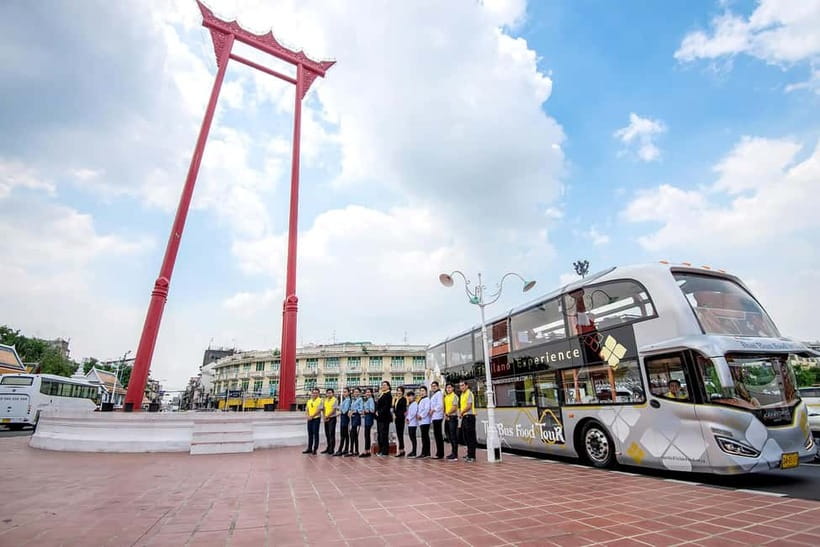
- A double-decker dining bus with panoramic windows means you’re sightseeing while you’re eating
- Full-course Thai meal with a welcome drink and attentive service crew
- Michelin-recognized menus that rotate by season and option (lunch, dinner, afternoon tea, night)
- Halal and vegetarian options are available depending on the selected menu option
- WiFi, USB charging, and an onboard restroom make the 90 minutes feel easier
Thailand’s First Dining Bus: What the Experience Feels Like
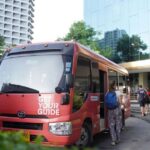
The core idea is simple: you eat Thai food on a sightseeing bus that’s built for views. The bus is double-decker, with panoramic windows, so you get that elevated angle over the streets you’d usually only see from the ground. The route runs through Bangkok’s historic Rattanakosin area, which is ideal for a first “big-picture” day.
Onboard, you’re not just sitting and waiting. There’s a guide on the experience, plus a service crew to handle meals and keep things moving. For longer trips, I always look for practical comfort items, and this one has an onboard restroom, plus USB charging ports and WiFi.
This is also a good way to reduce decision fatigue. Instead of figuring out a restaurant, then mapping a route, then fitting in landmarks, you’re doing one planned loop. The tradeoff is that it’s not a slow, walk-everywhere temple day. You’ll be watching from the bus, taking in the architecture and landmarks as they slide past.
You can also read our reviews of more food & drink experiences in Bangkok
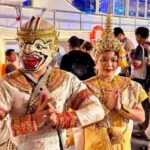
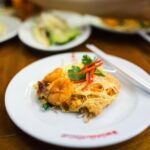
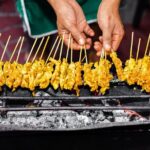
Michelin-Recognized Thai Menu: What You’ll Actually Eat
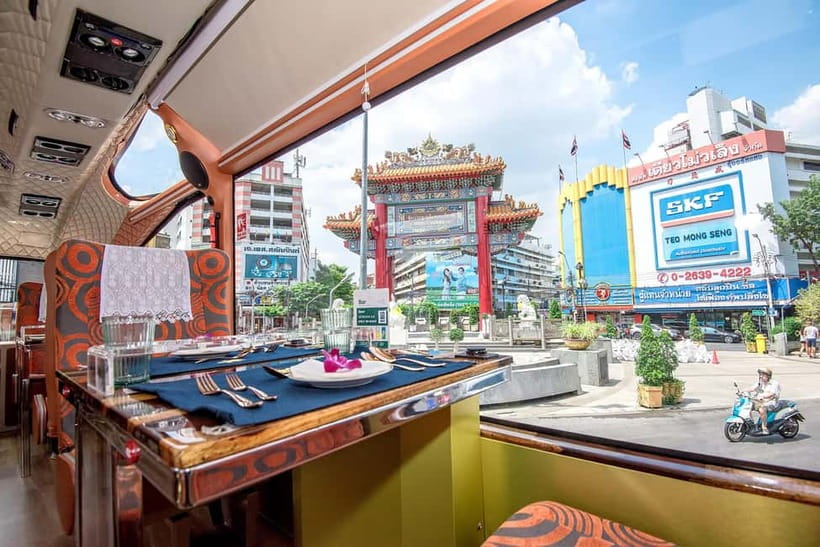
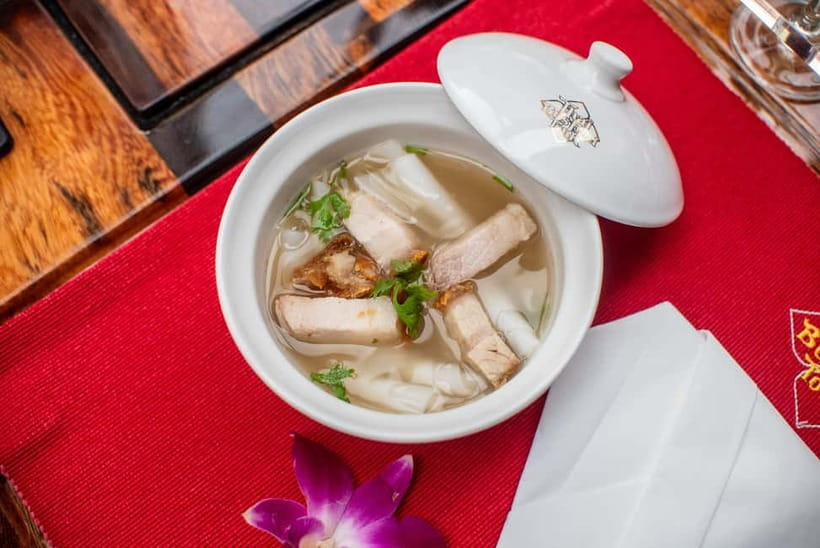
You’re not just getting snacks. The meal is built as a full-course experience with a welcome drink and multiple courses that typically include appetizers, main courses, dessert, and beverage. The menus are Michelin-recognized Thai cuisine, and the menu changes by season and availability, so don’t expect the exact same dish list every time.
The strongest practical advantage here is the option choices. You can pick lunch, afternoon tea, dinner, or a nightlife-style outing, and each option comes with its own menu. If you’re the type who loves restaurants but hates committing too early, afternoon tea can be a nice middle ground, while dinner or night is the better fit for city-light views.
Food restrictions are handled in the info you’re given. Vegetarian and halal options are available depending on the selected option, and kids’ menus exist too. Menus rotate seasonally, so I’d treat the menu description as a promise of style and structure, not a guarantee of exact items down to the last ingredient.
One small reality check: since menus change, if you have a very specific allergy or dietary need beyond vegetarian/halal, you’ll want to verify details with the operator when you book. The tour data confirms these options exist, but it doesn’t list allergy specifics.
Rattanakosin Island From the Bus: Stop-by-Stop Landmarks You’ll See
This route is packed with recognizable names, and the best part is how quickly you get orientation in Bangkok. Most stops are pass-by, so you’ll see the landmarks from the bus rather than going inside. Still, from a double-decker height, you’ll catch details on façades, rooftops, and the way the river-and-temple layout works.
Hua Lamphong Railway Station and the start of the loop
You begin around Hua Lamphong Railway Station. Even though it’s a transit hub, it sets the tone: this is Bangkok’s link between old-world city layers and modern movement. It’s a good starting point if you’re curious how the city’s rail era connects to the historic center.
Wat Traimit: early temple geometry
From the bus, you’ll pass Wat Traimit. If you’ve seen Bangkok’s temple roofs before, you’ll recognize the style right away. The practical value here isn’t learning every fact—it’s getting your eye trained early so later stops make more sense.
You can also read our reviews of more tours and experiences in Bangkok

Chinatown Gate and Chinatown: the busy arrival
Then you roll past the Chinatown Gate and through Chinatown. This is where you’ll feel the city’s energy. One consideration: the ride can include looping around this area, so you may see repeated stretches. If you’re hoping for constant novelty every minute, keep in mind that Chinatown areas can repeat between photo angles.
Maen Sri Waterworks: a less obvious stop with city context
You also pass Maen Sri Waterworks. This isn’t a “typical postcard” landmark, but it adds context for how Bangkok supports its dense neighborhoods. It’s a nice reminder that the city’s story isn’t only temples and palaces.
Wat Saket, Loha Prasat, and Democracy Monument: Bangkok’s varied architecture
You’ll pass Wat Saket, Loha Prasat, and Democracy Monument on the circuit. Wat Saket brings a spiritual silhouette into the mix. Loha Prasat is all about distinctive tower design, and Democracy Monument shifts the mood into public space and national symbolism.
The value of seeing these from the bus is that you start to understand Bangkok’s “layers.” You’re not stuck in one theme. You’re watching religion, civic life, and architecture in the same half-day window.
Wat Bawon Niwet and Phra Sumen Fort: quieter fort-and-temple presence
On the route you’ll also pass Wat Bawon Niwet and Phra Sumen Fort. These can feel less famous than the biggest names, but that can be a plus. From the bus, you’ll notice how the historic city is organized around forts, temple compounds, and open spaces.
National Museum and Sanam Luang: big institutions and open space
You pass the National Museum and Sanam Luang, a major open area. Even if you don’t go inside, open land in central Bangkok is visually important. It helps you map where you are relative to palaces and river sights.
Grand Palace, Wat Phra Kaew, and Wat Pho: the must-see cluster
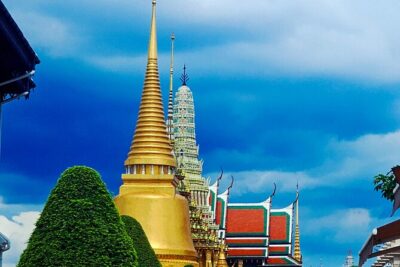
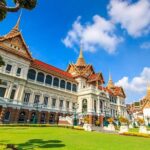
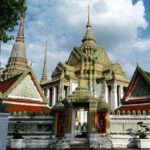
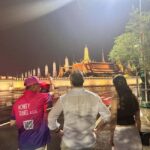
Now you reach the top-tier sights: Grand Palace Bangkok, Wat Phra Kaew (Temple of the Emerald Buddha), and Wat Pho. These are the names most people come to Bangkok for, and seeing them from the bus gives you a strong first impression of how concentrated this area is.
Because you’re not walking inside on this format, your best approach is to treat these moments as orientation. Look at the scale, the wall shapes, the rooflines, and the way the complex sits in relation to nearby roads. After this, if you want to return for a walking visit, you’ll know exactly what to target.
Wat Arun and the riverside feeling across from the palace area
You pass Wat Arun and you’ll see it in the context of the river crossing views. Wat Arun is famous for a reason, and even from a bus window you can usually spot the tower shape and the iconic look of the riverside temple scene. The tour info notes illumination for Wat Arun across the river, which makes night or dinner options especially appealing.
Ministry of Defence and the Giant Swing area: the city’s scale shows up
Later you pass Ministry of Defence, then reach Wat Suthat and the Giant Swing area. The Giant Swing is a standout landmark, and from the bus you’ll likely spot it as a dramatic vertical presence in the streetscape. This part of the route is useful if you like seeing Bangkok’s big-city scale as much as its temple culture.
Wat Mangkon Kamalawat: finishing with temple flair near Chinatown
Finally, you pass Wat Mangkon Kamalawat, which sits right in the Chinatown orbit. It’s a satisfying closer because it merges temple architecture with the neighborhood feel you’ve been moving through all evening (or afternoon).
Returning to the tour start
You’ll arrive back at the Thai Bus Food Tour meeting point after the circuit. Plan to be ready for a relaxed pace. This is a “see a lot without exertion” outing, so you’ll get your landmark fix without committing to a full day of walking.
Lunch, Afternoon Tea, Dinner, or Night: Picking the Best Time Slot
You’ll have four menu-and-vibe options, and your best choice depends on what you care about most.
If you want the simplest energy level, go with lunch. You’ll likely have enough daylight to clearly see palace and temple exteriors. If you prefer a lighter meal rhythm and a more flexible schedule, afternoon tea can be a good way to avoid a heavy dinner commitment while still getting dessert and beverages as part of the full-course structure.
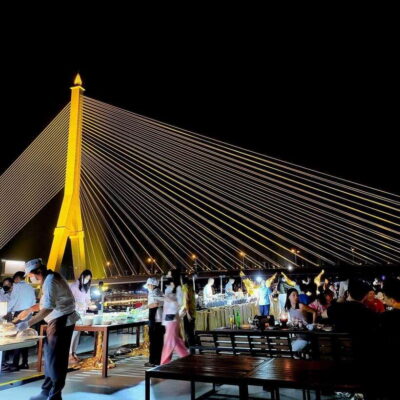
For the city at its most photogenic, choose dinner or night, especially since Wat Arun is noted as illuminated. That timing can make the entire experience feel more like “Bangkok in one ride” rather than “eat first, look later.”
Practical tip: pick the option that matches your tolerance for Bangkok traffic at that time of day. The route can vary due to traffic and weather, so I’d avoid planning another tight activity immediately after if you’re sensitive to timing.
Price and Value at $47: When It Makes Sense
At $47 per person, you’re paying for three things at once: a guided sightseeing loop, a full-course Thai dining experience, and the convenience of a comfortable double-decker setup. If you were to separately book a guided tour plus a sit-down meal, the total can creep up fast in central Bangkok.
Where the value lands best is when you want:
- a guided, structured first look at the Rattanakosin area
- a meal that’s more than casual street snacks
- comfort features like onboard restroom, WiFi, and charging
Where the price might feel less justified is if your ideal Bangkok day is lots of stops you can walk into and explore slowly. This tour passes many key landmarks, but it’s not built around extended visits inside temples or palaces.
Also, double-check the price basis when you book. One concern raised is that people may not realize what the $47 refers to. Make sure you’re comparing like-for-like so there are no surprises.
Who This Tour Is Best For (and Who Should Skip It)
This is a great fit if you’re:
- in Bangkok for a short time and want a high-hit list of sights
- food-first, but still want a planned sightseeing component
- looking for an easy introduction to historic central Bangkok
It also works well for families with the right age range. The tour data says children under 3 aren’t suitable, and pricing for ages 3–8 follows kids’ menu rates. Kids 9+ are charged the adult rate.
If you hate group timing or want full control over where you go next, you might find the pass-by format limiting. Same goes if you’re hoping for nonstop new views every minute, since the route can include some looping, particularly around Chinatown.
Should You Book This Thai Bus Food Tour?
If you want a smooth, guided “first Bangkok” outing that pairs Michelin-recognized Thai dining with panoramic sightseeing, I think it’s worth booking. The best reason is the combination: you’re not choosing between food and landmarks. You get both in a fixed 90-minute package with real service and comfort.
Book it if you can accept that it’s mainly a viewing experience from the bus, not an extended temple walk. If you’d rather explore slowly on foot, you’ll likely prefer a walking-based temple route plus a separate restaurant plan.
My practical advice: choose your time slot based on what you want to see most. If Wat Arun illumination appeals, lean toward dinner or night. If you want clarity and ease, lunch or afternoon tea will feel more comfortable. And when you book, confirm how the pricing is structured so it matches your expectations.
FAQ
How long is the Thai Bus Food Tour?
The tour lasts 90 minutes.
Where does the tour start?
The starting point is listed as Thai Bus Food Tour, and the route begins around Hua Lamphong Railway Station.
What meals are included?
You get a full-course meal with beverages as part of the dining option you choose.
Can I choose lunch, dinner, or night options?
Yes. You can select lunch, afternoon tea, dinner, or a night tour option, and each option has its exclusive Michelin-recognized menu.
Are vegetarian and halal menus available?
Vegetarian and halal menus are available depending on the selected option.
Is there a welcome drink?
Yes, the experience includes a welcome drink.
What kind of bus is used?
It uses a luxury double-decker sightseeing bus with panoramic city views.
What onboard facilities are available?
There is an onboard restroom, plus USB charging ports and WiFi available.
Do I need hotel pickup?
Hotel pickup and drop-off are not included.
What languages do the guides speak?
The live tour guide offers English and Thai.