Bangkok turns into a living food market when you walk Talad Noi and Chinatown. This 2.5-hour small-group stroll mixes street food samples with two real landmark stops: Holy Rosary Church and Chow Sue Kong Shrine. I love how the guide ties it all together with practical local context as you move street to street.
My favorite part is the food plan. You don’t just get pointed at stalls. You sample specific dishes like turnip cake and chwee kueh, plus options such as duck noodles and phad thai, with the guide making sure the group stays fed.
One consideration: you’ll cover about 2 km of walking through narrow lanes and busy market areas. If you hate crowds or you’re not steady on your feet, you’ll want to think twice.
In This Review
- Key points worth clocking before you go
- Why Talat Noi and Chinatown click together on this route
- Getting started at River City Bangkok Pier without stress
- Talat Noi lanes, Chinese roots, and the street-art payoff
- Holy Rosary Church: Gothic Revival in a very Thai setting
- Chow Sue Kong Shrine: asking for protection and guidance
- Sol Heng Tai Mansion and Hong Sieng Kong: older house meets local art
- The street food sampling plan (and what you’ll actually eat)
- Crossing into Chinatown: old streets, modern influences
- Wat Mangkon Kamalawat finish and how the night moves afterward
- Price and value: is $42.48 a fair deal?
- Who this tour suits best (and who should skip it)
- The guide factor: Nana, Pam, Gof, Dong, and Joe as examples
- My booking recommendation: should you do it?
- FAQ
- How long is the Talad Noi, Chinatown & street food tour?
- Where is the meeting point?
- What time does the tour start?
- How much walking is included?
- What’s included in the food?
- Can you request vegetarian options?
- Do you need to buy tickets for the stops?
- How big are the groups?
- What sites do you visit?
- What if a site is closed on the day?
Key points worth clocking before you go
- Small-group size (max 12) so you get actual attention when ordering and eating.
- Holy Rosary Church + Chow Sue Kong Shrine give you religion and architecture, not just food.
- Thai and Chinese favorites in sampling format (turnip cake, chwee kueh, duck noodles, phad thai).
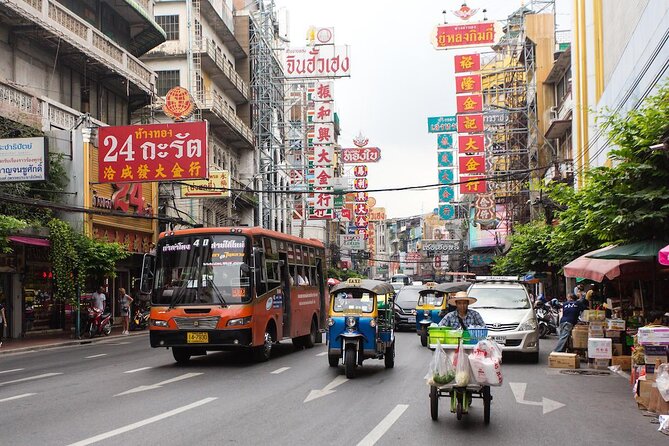
- Street art and historic lanes in Talad Noi make the walk feel like Bangkok, not a theme park.
- English-speaking local guides vary by night, but stories and crowd-handling are a consistent theme.
- Expect plan tweaks if a site is closed; the tour keeps the day moving with alternatives.
Why Talat Noi and Chinatown click together on this route
If you only hit Bangkok’s big-name sights, you miss how the city actually eats. Talat Noi and Chinatown let you do two things at once: learn the neighborhood pattern and sample what people order in the moment. The timing helps too—starting at 4:00 pm means you catch late-day energy and a shift into evening market life.
Talad Noi is older, tighter, and more local-feeling. Chinatown then ramps up the mix of heritage and today’s commerce. You’ll notice the blend fast: older buildings and shrines sitting beside newer shops and signs.
You can also read our reviews of more food & drink experiences in Bangkok
Getting started at River City Bangkok Pier without stress
Your guide meets you at River City Bangkok (River City Gate 1, in front of Starbuck on the first floor). It’s an easy anchor point because it’s near the Chao Phraya Express boat zone, and you can also connect through MRT at the nearby area (including Wat Mangkon stations listed for connections).
Practical tip: arrive a few minutes early. A couple of people in the group meeting stories had trouble locating the meetup spot at first, and the walk afterward can’t really start until everyone is together.
Once you’re matched up with your guide, the rhythm is simple: walk, stop, eat, walk again. This is not a sit-and-watch tour. It’s a “use your senses” tour.
Talat Noi lanes, Chinese roots, and the street-art payoff
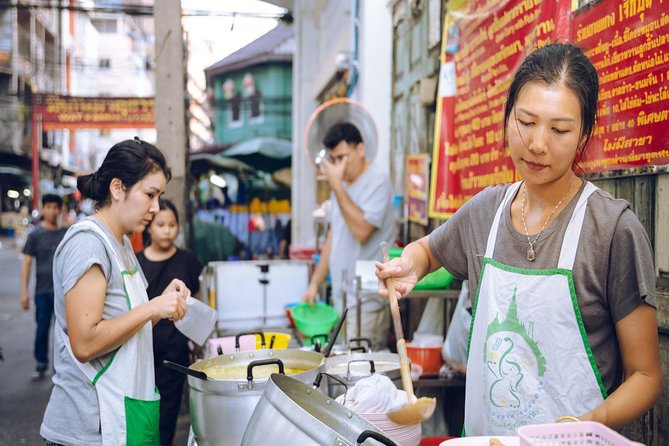
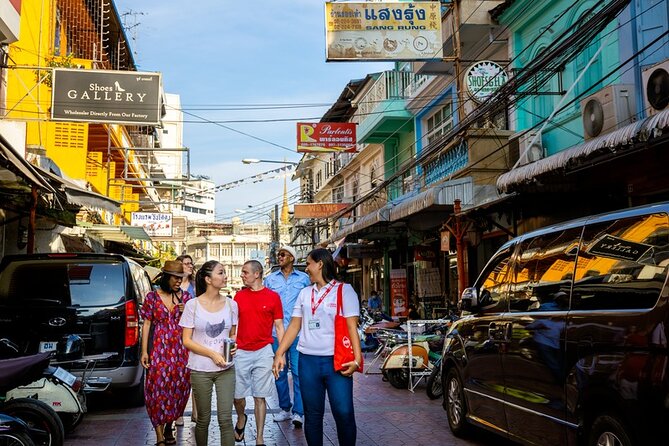
After River City, you head into Talad Noi, a neighborhood with Chinese community ties going back over 300 years. That matters because the area isn’t just decorative. It’s shaped by the market routes and family-run trade that grew over generations.
You’ll walk through narrow lanes where you can see everyday Bangkok life: storefronts, small eateries, and bits of local street art. Guides often use these quick pauses to explain what you’re looking at—why certain foods show up here, and how the neighborhood’s identity stayed Chinese while Bangkok modernized around it.
If you’re hoping for postcard views at every turn, temper that expectation. This walk is about texture and motion—small discoveries, not one big vista.
Holy Rosary Church: Gothic Revival in a very Thai setting
One of your first major culture stops is Holy Rosary Church. It’s described as a European-style Roman Catholic church built in Gothic Revival style by Portuguese settlers, founded in 1787.
Why this stop is worth your attention: it gives you a counterpoint to the Chinese lanes. You’re not just bouncing between temples. You’re seeing how Bangkok absorbed different communities and architectural styles and kept building.
Time here is limited (about 15 minutes on the plan), so don’t expect an in-depth tour inside the church. Instead, use it to spot details, look around the exterior setting, and reset your brain before the next food round.
Chow Sue Kong Shrine: asking for protection and guidance
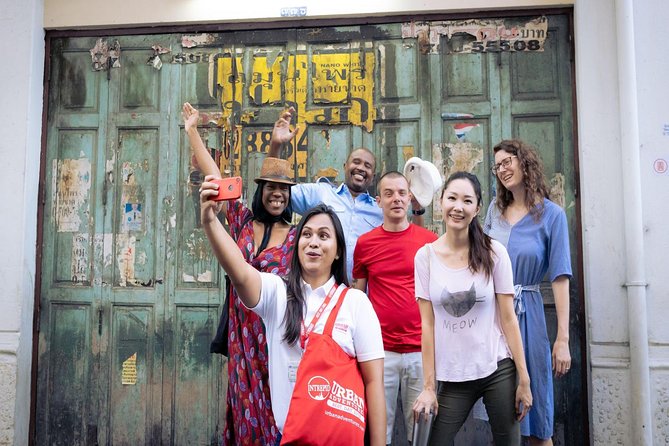
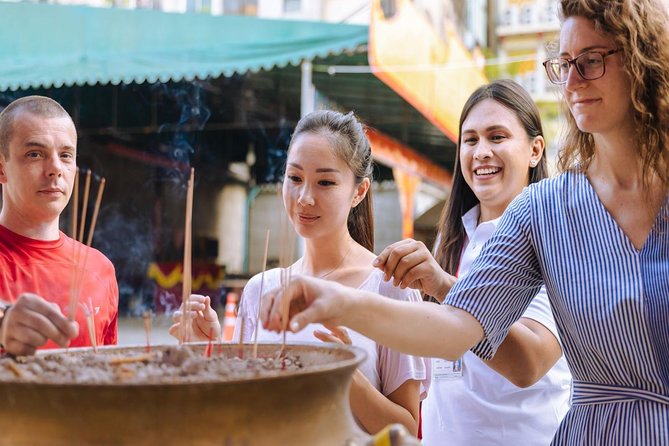
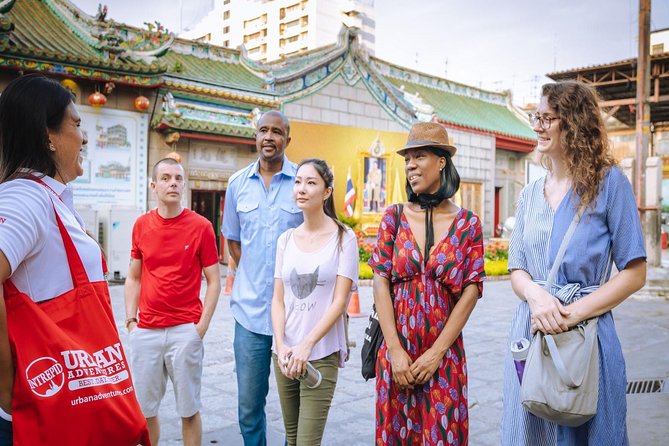
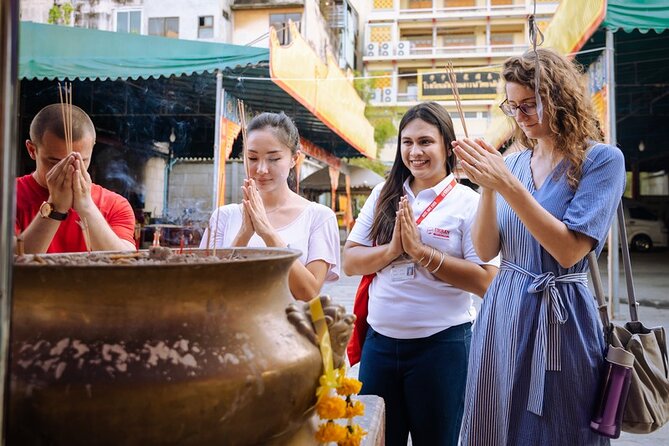
Next comes Chow Sue Kong Shrine (ศาลเจ้าโจวซือกง), noted as more than 200 years old and tied to Hokkien tradition. This is one of the tour’s more meaningful stops because it’s not just sightseeing. You can ask for blessings for well-being, protection, and guidance.
If you’re curious but unsure what to do, don’t overthink it. The tour gives you time to stand, look, and participate at a comfortable distance. Think of it as learning how devotion looks in daily life, not as a performance.
It’s also a nice break from constant eating. You’ll likely feel less like you’re in a food queue after this stop.
You can also read our reviews of more tours and experiences in Bangkok
Sol Heng Tai Mansion and Hong Sieng Kong: older house meets local art
After the shrine, the route includes Sol Heng Tai Mansion, described as one of the last remaining traditional Chinese houses in Bangkok. This stop is short, but it helps you connect the dots between the food you’re tasting and the built environment that carried families and businesses for generations.
Then you pivot to Hong Sieng Kong, which mixes present-day culture with history. The plan includes a visit to a local artist’s gallery and a café by the Chao Phraya River, housed in a building dating to the reign of King Rama II and the Rattanakosin era.
What you’re getting here is contrast:
- More intimate street scenes earlier
- Then a calmer pause by the river
- Then back out into Chinatown energy
Even if you’re not an art fan, this stop helps you cool down before the crowd density rises.
The street food sampling plan (and what you’ll actually eat)
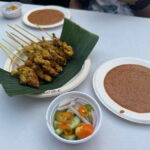
This is why most people book the tour. You’re sampling local Chinese and Thai food samples, not paying full price for a full meal at every stop. Dishes called out include:
- Turnip cake (Chinese dim sum style)
- Chwee kueh (steamed rice cake with preserved radish)
- Chao Tha (duck noodles soup)
- Phad Thai Uncle Pom
You’ll also likely try more items along the route, with the guide choosing stalls and pacing your stops so you’re not overwhelmed. One consistent theme from strong guide experiences is fairness: the guide helps the group taste what’s available and doesn’t leave anyone behind when lines form.
A reality check: sampling doesn’t mean you’ll feel stuffed on day one. If you have a big appetite, treat this as “street-food education plus a solid snack set.” You’ll still want to consider a light dinner afterward depending on how hungry you get.
Also, you can request vegetarian options if you tell the provider at least 24 hours in advance. The tour data lists vegetarian as the only dietary accommodation explicitly supported.
Crossing into Chinatown: old streets, modern influences
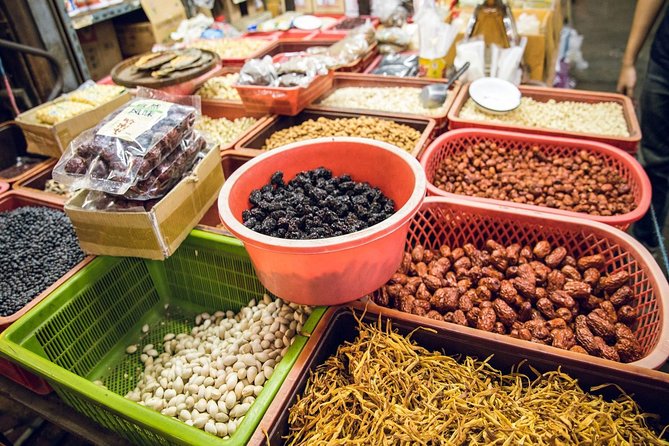
Once you cross into Chinatown, the pace changes. This is where the city feels busiest and brightest. Modern-day influences show up in everyday commerce, while the historical neighborhood fabric stays visible in the street structure and the feel of the blocks.
You’ll have time to experience how Chinatown’s present blends with the past. That might mean crowded market aisles, quick detours around bottlenecks, and the guide steering you to food rather than letting you get stuck in the first line you see.
A useful expectation: Chinatown can get crowded around major events. Strong guides have experience guiding groups through dense areas without losing anyone.
Wat Mangkon Kamalawat finish and how the night moves afterward
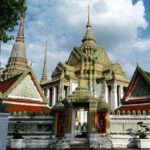
The tour ends at Wat Mangkon Kamalawat. The plan lists the finish time as short (about 5 minutes), and it’s mainly a final landmark moment before the route hands you back toward city connections.
This ending matters for practical reasons. You’re not stuck at some random middle-of-nowhere market street. You end near a well-known temple area, and that’s usually easier for planning your next ride or walking back if you’re close.
Price and value: is $42.48 a fair deal?
At $42.48 per person for about 2 hours 30 minutes, this isn’t a bargain-basement street-snack crawl. But it’s also not overpriced for what you’re getting.
Here’s the value math that matters:
- You pay for a local English-speaking guide who handles ordering and routing.
- You get multiple food samples included, not just one or two bites.
- You also get structured cultural stops (church + shrine + historic house context), which would cost you time and navigation skills on your own.
What you may not be paying for is a sit-down meal. This tour is more active and more tasting-focused. If you want a guided “see everything” Chinatown tour plus dinner, this is closer to the “taste and learn fast” end of the spectrum.
Also, the group size is capped at 12. That’s a big deal in Chinatown, where crowds can turn independent wandering into an expensive lesson in lost time.
Who this tour suits best (and who should skip it)
This tour fits best if you:
- Want an introduction to Talad Noi + Chinatown without getting lost
- Like food but don’t want to plan six stalls yourself
- Enjoy culture stops that explain why the neighborhood looks the way it does
You might skip it if:
- You need minimal walking. The tour covers about 2 km.
- You hate crowded streets. Chinatown can be dense.
- You’re looking for big museum-style time at each site. This is short-stop sightseeing with frequent food breaks.
If you’re traveling with kids, the listed minimum age is 8. For older teens and adults who can handle a couple of hours walking, it’s a great fit.
The guide factor: Nana, Pam, Gof, Dong, and Joe as examples
The tour’s success often comes down to the guide’s personality and pacing. Names that show up include Nana, Pam, Gof, Dong, and Joe. Across those guides, the best experiences share a few traits:
- Energetic explanations and entertaining storytelling while you walk
- Care that everyone eats enough
- Practical crowd control in busy areas
- Helpful problem-solving when weather hits
One nice touch to expect: when rain surprises the route, good guides handle it on the spot—sometimes by finding rain gear quickly for the group. Even if you bring a compact umbrella, it’s smart to stay flexible.
My booking recommendation: should you do it?
I’d book this if you’re a first-timer who wants Chinatown and Talad Noi in one guided loop, with real food sampling and two landmark spiritual stops. It’s also a smart option if you like street life but don’t want the headache of figuring out which stalls are worth your money.
I’d think twice if you’re prone to fatigue, you dislike crowd navigation, or you need lots of quiet time at religious sites. The tour moves. You walk. You sample. That’s the point.
If you do book, pick a day when you can handle a little walking and some market density, and you’ll come away with practical knowledge you can use the next time you’re hungry in Bangkok.
FAQ
How long is the Talad Noi, Chinatown & street food tour?
It runs about 2 hours 30 minutes.
Where is the meeting point?
Meet at River City Bangkok, at River City Gate 1 in front of Starbuck on the first floor.
What time does the tour start?
The start time is 4:00 pm.
How much walking is included?
The tour covers about 2 km (1.2 mile) on foot.
What’s included in the food?
Food samples include items such as turnip cake, chwee kueh, chao tha (duck noodles soup), and phad thai (listed as Phad Thai Uncle Pom), plus other Thai and Chinese street food samples.
Can you request vegetarian options?
Yes, the tour can cater for vegetarians if you provide the request at least 24 hours before your date.
Do you need to buy tickets for the stops?
The stops listed (church, shrine, and other included sites) show admission ticket free on the tour plan.
How big are the groups?
The tour has a maximum of 12 travelers, so it stays small.
What sites do you visit?
The tour includes Holy Rosary Church, Chow Sue Kong Shrine, Sol Heng Tai Mansion (traditional Chinese house), Hong Sieng Kong (artist gallery and café area), Chinatown, and ends at Wat Mangkon Kamalawat.
What if a site is closed on the day?
If any listed sites are closed for reasons beyond control, the tour will visit an alternative site, especially using the many available street food options to keep your food stops going.