REVIEW · HISTORICAL TOURS
Bangkok China Town ,a Bangkok historic neighbourhood
Book on Viator →Operated by Plan Vacation Asia Co.,Ltd. · Bookable on Viator
Chinatown has a hidden backstory. This Talat Noi tour gives you Bangkok’s pre–founding port roots plus a close look at everyday faith and art, not just photo stops. I especially like the Kuan Yim Shrine moment with its 900-year-old Guan Yin and how the walk connects that sacred space to Portuguese, Chinese, Vietnamese, and Khmer settlement stories. The one catch: you’ll be moving on foot for about three hours, so comfortable shoes matter.
The main drawback is timing. With a 3:00 pm start, you may hit crowds in the lanes and brighter daylight near the river and church areas, so plan for some heat and sun.
In This Review
- Key highlights worth your attention
- Talat Noi is Bangkok Chinatown, but it tells a different story
- Price and timing: is $78.73 worth a 3-hour walk?
- Stop 1: Kuan Yim Shrine (Thian Fa Foundation) and the 900-year-old Guan Yin
- Stop 2: Talat Noi wall art plus Earsae Coffee’s 94-year mark
- Stop 3: More Talat Noi wall art and the neighborhood that keeps its own voice
- Stop 4: Holy Rosary Church (Kalawar Church) and the Portuguese thread from 1786
- The real value: how a guided route helps you read Talat Noi
- Who should book this Talat Noi Chinatown walk?
- Quick practical tips for your afternoon
- Should you book this tour?
- FAQ
- FAQ
- How long is the Talat Noi Chinatown tour?
- What is the price per person?
- Is the tour ticket mobile?
- What stops are included?
- What time does the tour start, and where does it end?
- How large is the group?
- Is public transportation nearby?
- Can I get a full refund if I cancel?
- Is the tour suitable for most people?
Key highlights worth your attention
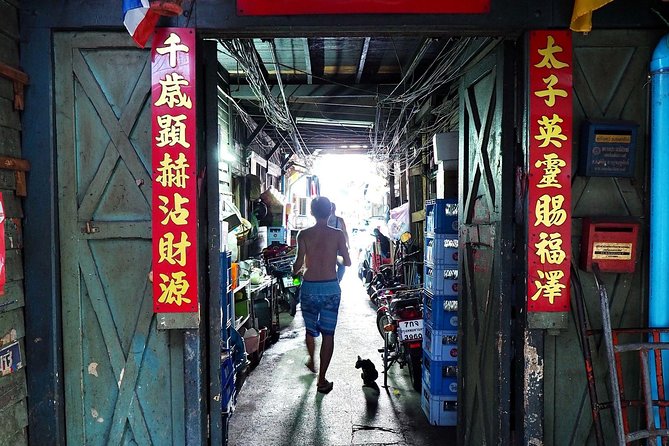
- Kuan Yim Shrine (Thian Fa Foundation): A 900-year-old Guan Yin statue and constant local prayer energy
- Talat Noi wall art in the lanes: Graffiti and murals that explain how the neighborhood thinks now
- Earsae Coffee, 94 years old: A classic coffee shop stop tied to the area’s long memory
- Portuguese influence made visible: Holy Rosary Church traces back to a church built in 1786
- Small group pace (max 8): More questions answered, less waiting around
Talat Noi is Bangkok Chinatown, but it tells a different story
Bangkok Chinatown often gets treated like one big, loud map spot. Talat Noi feels more specific. This neighborhood carries a long timeline that reaches back before Bangkok itself was founded, with the area functioning as Bangkok’s first port—where immigrants landed and communities began taking root.
What I like about this tour is that it doesn’t treat history like a museum label. It links people and places: Portuguese settlers from Ayutthaya, Chinese communities, and also Vietnamese and Khmer residents. You can see the result in how locals keep their speech patterns, food habits, and folk beliefs—things that don’t get wiped out just because a city modernizes.
You’re not just “seeing Chinatown.” You’re getting the logic of why Talat Noi looks and feels the way it does: a place shaped by arrivals, languages mixing, and later generations keeping their identity in daily life.
You can also read our reviews of more historical tours in Bangkok



Price and timing: is $78.73 worth a 3-hour walk?
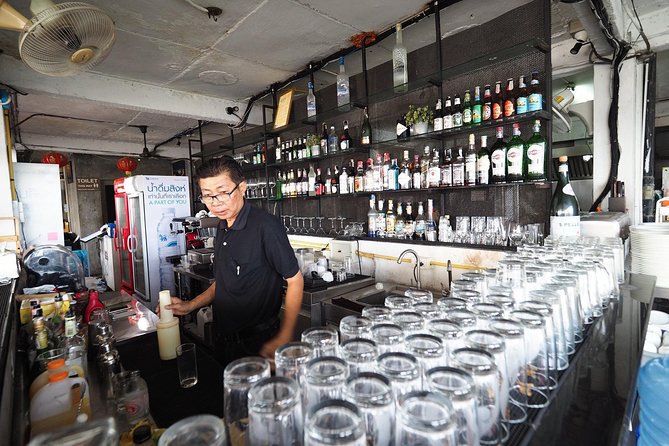
At $78.73 per person for roughly 3 hours, this isn’t a rock-bottom deal. But the value is in how tight the experience is: it’s a focused neighborhood route with key stops where you’d usually pay entry anyway.
You also benefit from a small group size (up to 8). That matters in Talat Noi because the best moments come from details—what’s written, who prays, why a church is where it is, and how wall art fits into the community. Smaller groups keep those conversations from feeling rushed.
One more practical note: it starts at 3:00 pm and runs until you finish near River City Bangkok. That end point is helpful if you want to keep the afternoon going with river-side plans, a meal, or an easy public-transport hop. The pacing also means you’re seeing the neighborhood in the late-day light, which is when some walls and shopfronts look their most photogenic.
Stop 1: Kuan Yim Shrine (Thian Fa Foundation) and the 900-year-old Guan Yin
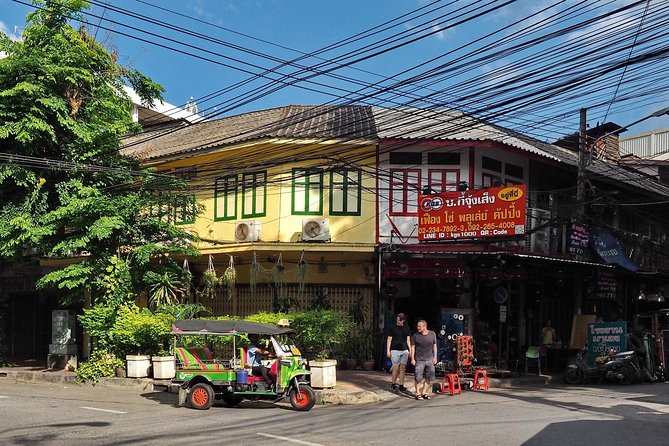
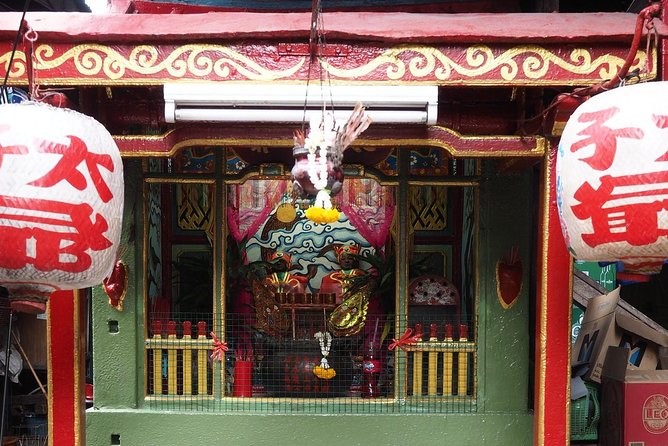
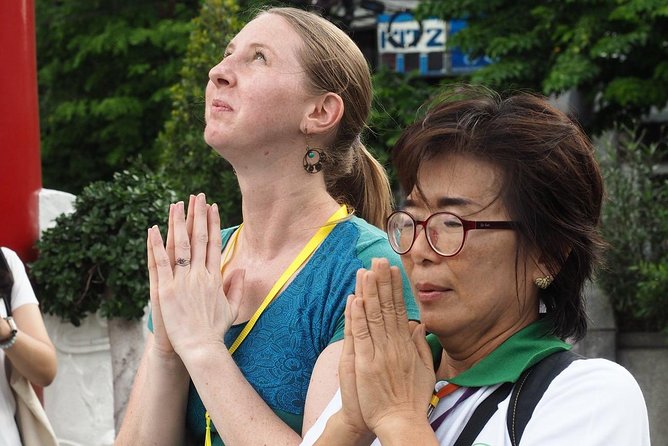
The first stop sets the tone: calm devotion inside one of Chinatown’s most visually striking shrines. You’ll visit the Kuan Yim Shrine (Thian Fa Foundation), dedicated to Guan Yin, the Chinese Goddess of Mercy. The centerpiece is a 900-year-old Guan Yin statue, which is said to stand on the altar inside the shrine.
This isn’t just “pretty religious decor.” It’s a living place. Thousands of locals come to pray here, and that changes the feel of the visit from sightseeing to observing how people actually use space.
A practical tip: go in with a respectful mindset and slow down your photos. Shrines like this tend to reward quiet attention—notice the offerings, the flow of visitors, and how people speak their prayers. Even if you don’t know the language, you’ll pick up the rhythm fast.
This stop lasts about 30 minutes, and admission is included, so it works well as your anchor point before the day shifts back to street level.
Stop 2: Talat Noi wall art plus Earsae Coffee’s 94-year mark
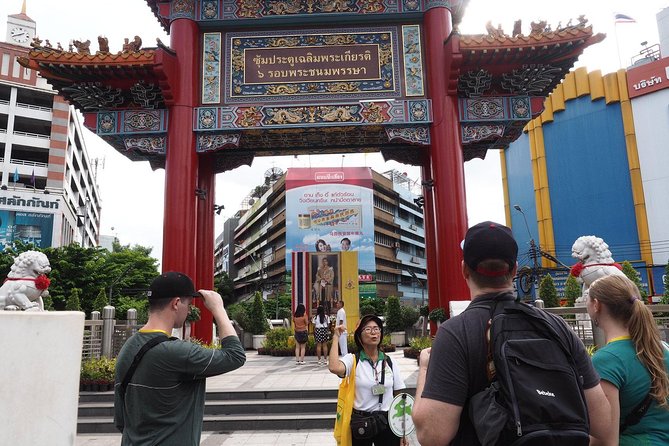
Right after the shrine, the tour moves into Talat Noi’s visual language: wall art in the lanes. This is where the neighborhood shifts from faith-focused to identity-focused.
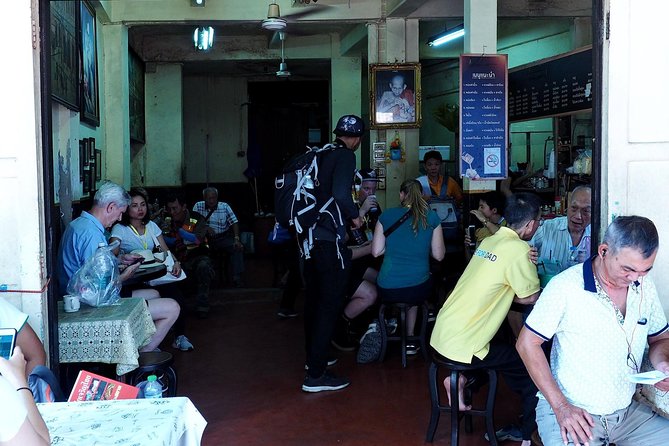
You’ll also stop at Earsae Coffee, a shop that’s described as 94 years old. That’s the kind of detail that makes a walking tour feel real. Instead of treating coffee as a random refresh break, this one becomes a marker for continuity—how neighborhood life keeps going across generations.
What you’ll notice in Talat Noi wall art is that it’s not just decoration. It’s a record of what people care about right now: personalities, local humor, and social commentary mixed into everyday alley walls. The tour’s timing and route help you see those layers without getting lost in the maze.
This segment runs about 20 minutes, so it’s short. If you love street art, you’ll want to slow down anyway and look for small elements you might miss while moving with the group. Bring your phone, but don’t forget to look with your eyes first.
Stop 3: More Talat Noi wall art and the neighborhood that keeps its own voice
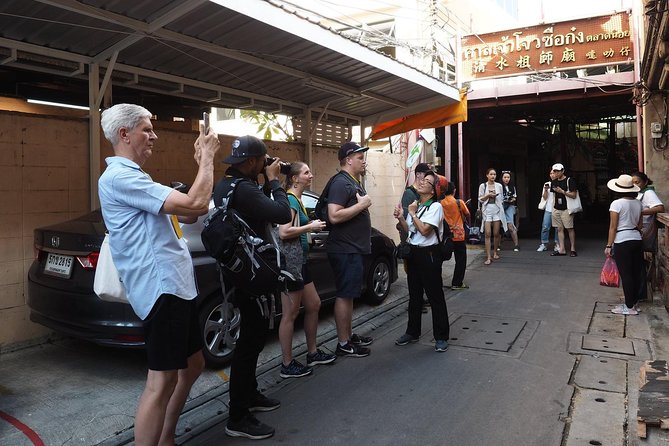
The tour gives Talat Noi time to breathe with a longer wall-art focus—about 1 hour in this section. This is where the area earns its reputation as a cultural attraction, but in a very specific way: locals keep parts of their identity through speech, food, and folk beliefs as before.
You’ll see how the lanes and houses carry graffiti and artwork. It’s popular with teenagers and hipsters, but the key word for you is “popular” in the local sense. In other words: this is where people actually hang out and express themselves, not just a themed photo zone built for outsiders.
A small caution: graffiti-heavy areas can be tricky for timing and movement. Wear shoes that won’t punish you, because you’ll be walking and turning through lanes. If it’s warm out, take a few seconds to step aside when the path narrows—Talat Noi’s sidewalks can be tight.
This stop is included in the experience, and admission is included for the parts listed. The practical win is that you get context while you look. The tour doesn’t ask you to guess what you’re seeing.






Stop 4: Holy Rosary Church (Kalawar Church) and the Portuguese thread from 1786
The final stop ties the neighborhood’s immigrant history to a physical landmark. You’ll visit the Holy Rosary Church, also known as Kalawar Church (and referenced in Thai as Wat Kalawa). It’s a Roman Catholic church in Bangkok, located in Samphanthawong District on the eastern bank of the Chao Phraya River.
Here’s the story detail that makes this stop click: the neighborhood’s Portuguese community built a Portuguese church in 1786. That older church is connected to what you’re seeing today as the Holy Rosary Church / Kalawar Church.
This is where Talat Noi’s “pre–Bangkok” identity becomes more than a timeline. It becomes a map of migration. Portuguese settlers came first, other ethnic groups followed, and the area became a landing place where communities established their own institutions.
If you’re a person who likes your history grounded in real buildings, this is the moment. Churches like this also help you understand how Bangkok absorbed different cultures without fully erasing them. The result is one neighborhood where you can shift from Chinese devotional art to a Portuguese-linked Catholic church just by following the street line.
The visit is about 30 minutes with admission included, which is a good length. Long enough to look closely, short enough to avoid fatigue.
The real value: how a guided route helps you read Talat Noi
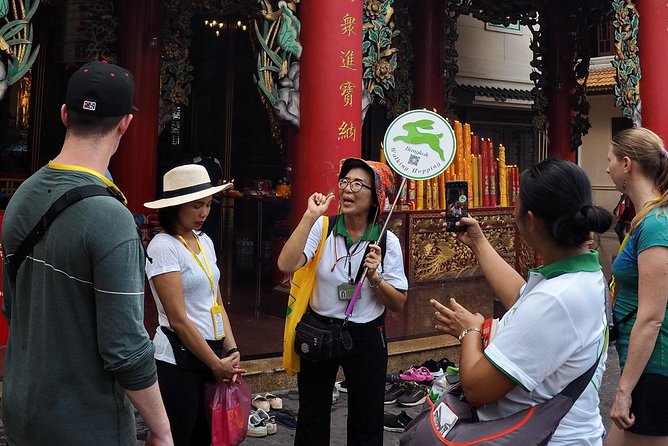
Talat Noi can be easy to “wander through,” but hard to truly understand without context. A good guided walk gives you the connective tissue. In this tour, the connective tissue is the way different communities show up in different forms: shrine and statue, coffee shop and shopfront age, graffiti and lane energy, and a church with Portuguese roots.
That’s why the small group matters. With up to 8 people, it’s easier to ask questions and get answers that connect one stop to the next. In particular, the guide experience has been highlighted for being actively responsive—like Kaew, who was praised for answering lots of questions beyond the basics. That kind of guide tone changes your pace. You stop rushing your own curiosity.
I also think the route timing works. Starting at 3:00 pm means you’re not only seeing the neighborhood in the cold morning hush. You get late-day energy: people moving through lanes, more shop activity, and better natural light for both wall art and the church setting near the river.
Who should book this Talat Noi Chinatown walk?
This tour fits best if you want a neighborhood story rather than a “checklist of famous spots.”
Book it if you:
- Like history that explains why a place looks like it does, not history as dates
- Enjoy mixing faith sites with street-level culture like wall art and long-running local shops
- Want a guided route that keeps you oriented in Bangkok’s older areas
- Prefer small groups and time for questions
It’s also a good first-day or early-trip option because it helps you get bearings in Bangkok Chinatown—especially Talat Noi specifically—before you start exploring on your own.
Quick practical tips for your afternoon
You’re walking through lanes and between culturally different sites, so a few smart moves help:
- Wear comfortable shoes. The stops are short, but the walking adds up.
- Plan for sun and warmth at a 3:00 pm start, especially near exposed stretches.
- Be respectful at the shrine and church—quiet observation beats loud photo sessions.
- If you’re into street art, slow your steps briefly and scan for small details before moving on.
If you want to pair it with a later plan, finishing near River City Bangkok makes it easier to continue by the river rather than immediately needing another transport step.
Should you book this tour?
If your goal is to understand Talat Noi as a neighborhood—Portuguese influence from the 1786 era, the 900-year-old Guan Yin devotion at Kuan Yim, and the way wall art shows present-day identity—this is a strong bet. The included admissions, the small group size, and the way the stops connect make it feel like more than a random walk.
I’d pass or look for another option if you hate walking or you only want the biggest headline sights with zero side streets. Talat Noi rewards people who enjoy details, lanes, and patient looking.
FAQ
FAQ
How long is the Talat Noi Chinatown tour?
The tour is approximately 3 hours.
What is the price per person?
The price is listed as $78.73 per person.
Is the tour ticket mobile?
Yes, the tour uses a mobile ticket.
What stops are included?
The tour includes stops at Kuan Yim Shrine (Thian Fa Foundation), Talad Noi wall art with a stop at Earsae Coffee (94 years old), and Holy Rosary Church (Kalawar Church).
What time does the tour start, and where does it end?
It starts at 3:00 pm and ends near River City Bangkok.
How large is the group?
The tour has a maximum of 8 travelers.
Is public transportation nearby?
Yes, the tour is listed as being near public transportation.
Can I get a full refund if I cancel?
Yes. You can cancel for a full refund if you cancel at least 24 hours before the experience’s start time.
Is the tour suitable for most people?
It’s listed as suitable for most travelers.