REVIEW · BANGKOK CITY HIGHLIGHTS & WALKING TOURS
Bangkok Authentic Tasting Thai-Chinatown Walking Food Tour
Book on GetYourGuide →Operated by Siam Adventures Tour · Bookable on GetYourGuide
Street food is a map in disguise. This Bangkok Chinatown walk turns Thai street classics into a guided tasting menu, with 10–12 Michelin Guide–style stops that make the chaos feel manageable. I like how you get both food and context, so each bite has a reason—not just a name.
I also love the way guides like TK and Kwan keep the group moving through the crowds and still find time to explain what you’re eating. One big drawback to plan for: most vendors include pork with no replacement, and the tour is not set up for vegetarian, vegan, gluten-free, halal, or pescetarian diets.
In This Review
- Key takeaways at a glance
- Bangkok Chinatown Street Food: Why This Walk Works
- Meeting at I’m Chinatown Mall (Under Golden Dragon) and How the Start Usually Feels
- What You’ll Taste: 10–12 Thai Street Food Dishes in a Smart Order
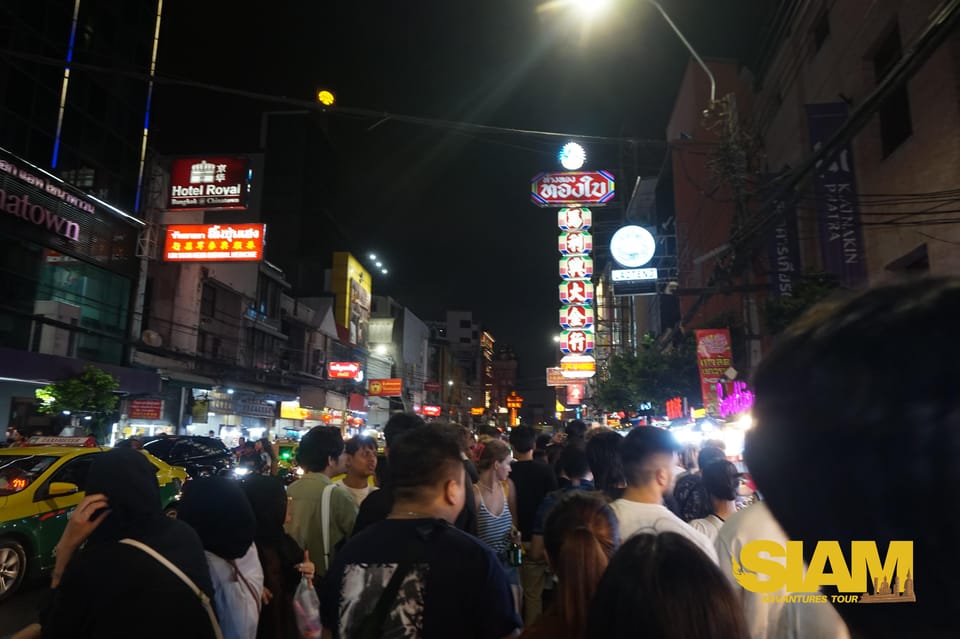
- The Chinatown Walk: Crowds, Timing, and Staying With Your Group
- Why the Guide Matters: Vendor Visits and Real Cooking Craft
- Dietary Reality: Pork-Centric Stops and Limited Substitutions
- Value for $43: What You’re Really Paying For
- What to Bring for a Smooth Night Market Walk
- Who This Tour Suits Best (and Who Should Skip It)
- The Final Call: Should You Book This Bangkok Chinatown Food Tour?
- FAQ
- Is this tour vegetarian or vegan-friendly?
- Do they offer gluten-free options?
- Is halal food available?
- Are there pescetarian options?
- Will there be pork-free choices?
- How many foods will I taste?
- Where is the meeting point?
- Is hotel pickup included?
- What languages are the tours offered in?
- Is there free cancellation?
Key takeaways at a glance
- 10–12 tastings in 3 hours means you’ll eat enough to skip a full dinner.
- Chinatown on foot helps you find small stalls and restaurants you’d miss alone.
- Food + story from the guide keeps things interesting even when the area is loud and busy.
- Michelin Guide food tasting adds credibility to the quality and variety.
- Strong dietary limits (especially pork, plus no gluten-free/halal/vegetarian options) shape who this tour fits.
Bangkok Chinatown Street Food: Why This Walk Works
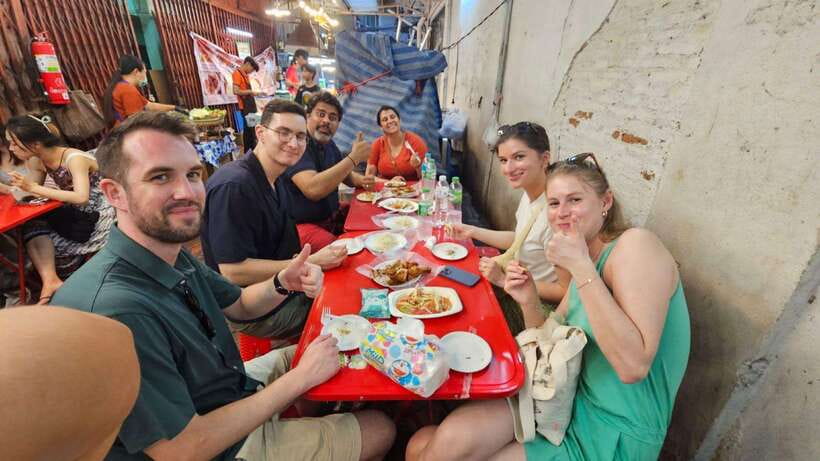
Bangkok’s Chinatown can feel like sensory overload: lots of people, loud kitchens, and vendors calling out at the same time. What makes this tour work is the structure. You don’t spend 3 hours guessing what’s safe, popular, and worth your money. You follow a local food expert to stalls and small places where the ordering process is faster, and the context is already built in.
The other reason I like this format: Chinatown food is a mix of Thai flavors and Chinese influence. The guide’s job isn’t just to hand you food. It’s to connect ingredients, cooking style, and neighborhood history so you taste the logic behind the dishes. That’s why even familiar items like Pad Thai and Som Tam feel different when you understand where they fit in the local mix.
One practical note: this is a walking tour, not a bus tour with quick stops. You’ll cover enough ground to feel like you traveled through a real neighborhood, but the pace is designed to let you stop, eat, and regroup without racing.
You can also read our reviews of more walking tours in Bangkok

Meeting at I’m Chinatown Mall (Under Golden Dragon) and How the Start Usually Feels
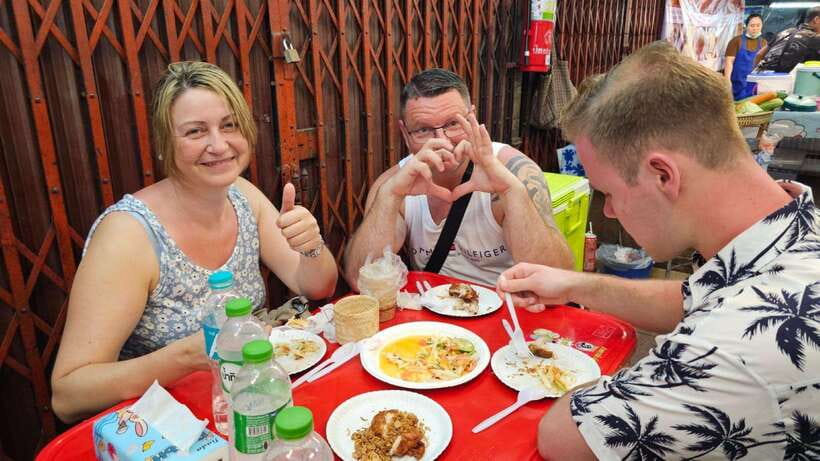
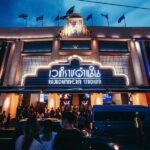
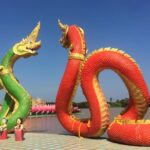
You meet in front of I’m Chinatown Mall, under the Golden Dragon. After you book, you get a guide photo so you can match faces quickly in a crowded area. That matters because Chinatown can be a maze, and arriving a few minutes late can throw off your whole timing.
There’s no hotel pickup included, so plan to reach the meeting point on your own (and build in buffer time if you’re dealing with heat or rain). The tour runs for 3 hours, and the walk is central to the experience—so come ready for footwear that can handle uneven pavement and long stretches.
Language support is a plus: guides can run in English, Thai, German, or Spanish. In practice, that improves confidence when you’re asking small questions like what’s spicy, what’s sweet, or what to try next.
What You’ll Taste: 10–12 Thai Street Food Dishes in a Smart Order
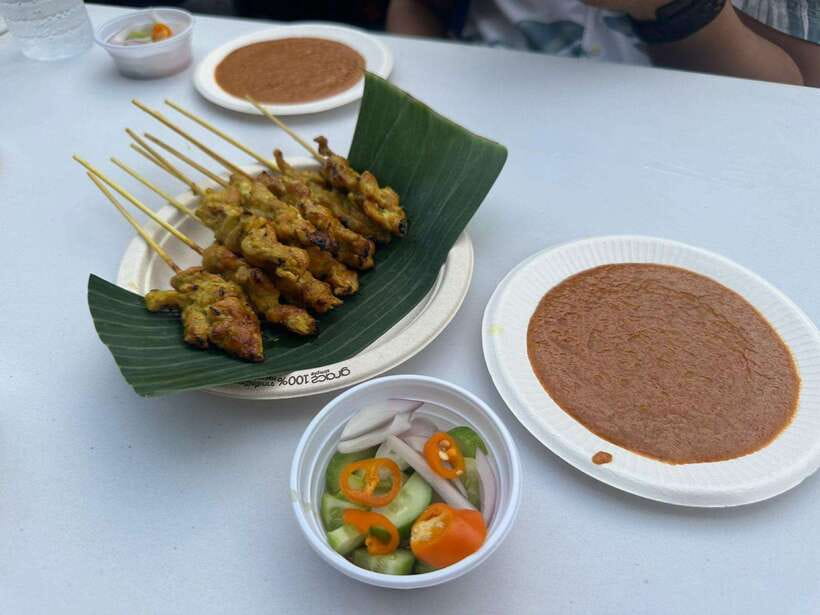
This tour is built around 10–12 tastings. That number is the core value: you’re paying for access to multiple vendors and multiple styles of Thai food, instead of picking one restaurant and hoping it hits all your cravings.
You can expect a blend of:
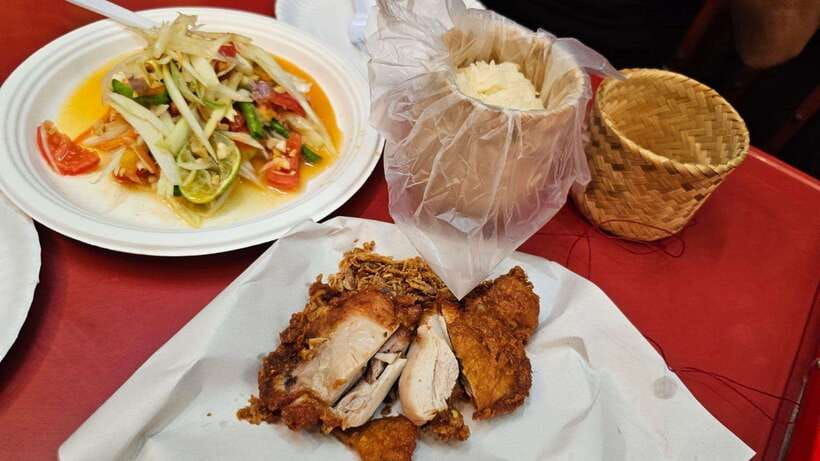
- Famous Thai street staples (Pad Thai and Som Tam are explicitly mentioned).
- Savory small plates that make good “starter pacing.”
- Heavier items that show up later, when you’re ready to slow down and eat more.
- Dessert at the end is part of the experience on this kind of route.
A few dish types show up again and again in the provided info: Thai green curry, Thai sausages, and dishes involving green papaya (including the sort of hands-on moment where you help make green papaya salad). Not every group will get the same bonus moments, but it’s a good sign that the tour sometimes includes interaction beyond eating.
The ordering also matters. The tour is designed so you don’t get stuck with all the mild dishes first and all the intense flavors last. You’ll move from lighter tastes toward richer ones, and you’ll have water and refreshments along the way.
The Chinatown Walk: Crowds, Timing, and Staying With Your Group
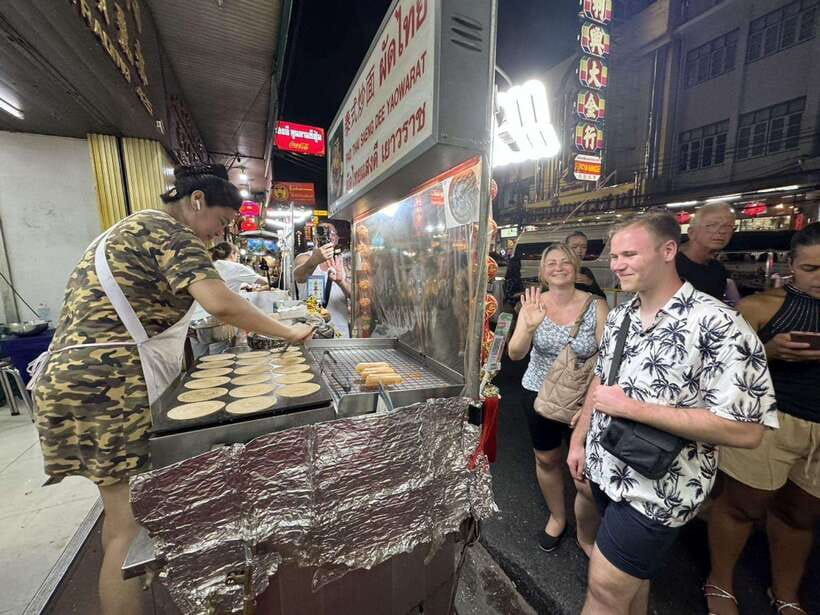
This is one of those tours where good guide logistics makes or breaks the night. Chinatown is busy and the lanes are tight, so you’ll want to keep your focus during transitions between stops.
A key detail from the experience info: if you booked as a join group, the operator says they may separate groups without notice. If you want to stay together with friends, you should tell the provider in advance. This isn’t just a formality; it affects how quickly you regroup after each food stop.
Pace-wise, the tour aims to be leisurely enough that you’re not rushing your photos or asking questions between bites. Still, it’s a 3-hour walking food experience, so bring the same mindset you would for a busy night market: keep moving, but expect to stop often.
One more reality check: in a noisy market, if your guide speaks more softly, you may need to lean in. If something is unclear, ask right away while you’re standing near the stall. Waiting until you’re away from the food station can make it harder to catch context.
Why the Guide Matters: Vendor Visits and Real Cooking Craft
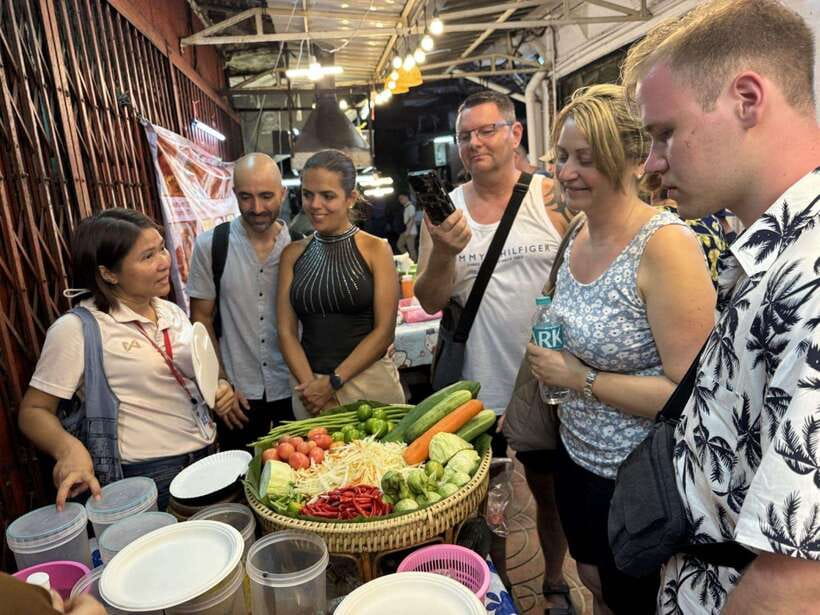
The biggest “quality control” here is the guide’s role at the vendor level. You’re not just tasting randomly. The tour is built to connect each dish with ingredients and cooking technique, and to help you understand what makes a Thai street version different from something you’d order in a Western menu.
The vendor side is practical too. Guides help you get seated, get served fast, and order what makes sense for tasting. That means less time standing around while your group waits for a table or a confusing menu.
Some stops may also include demonstrations or hands-on moments. The green papaya salad example is a good case of how the tour can go beyond eating and turn into a skill you can actually picture later at home.
You can also read our reviews of more food & drink experiences in Bangkok

Dietary Reality: Pork-Centric Stops and Limited Substitutions
This is the part you should read twice.
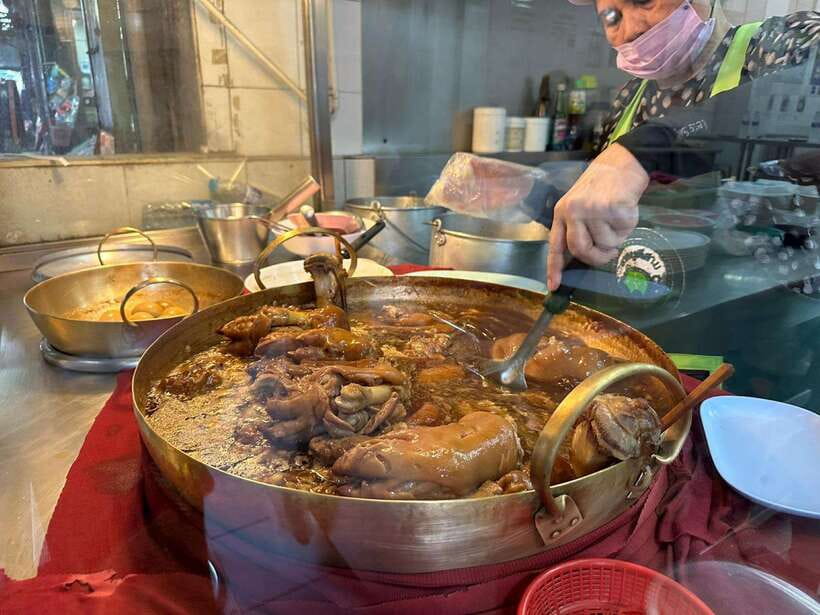
Most vendors on this tour have pork, and the tour info states there is no replacement. On top of that, it’s explicitly not suitable for:
- Vegans and vegetarians
- People with gluten intolerance
- Halal diets
- Pescetarians (not all vendors can provide fish/seafood)
So if you’re even slightly on the fence, treat that as a warning sign. The operator is recommending private tours for customization when restrictions are part of the plan, which makes sense: you can’t redesign an entire Chinatown food route on the fly when the vendor base is pork-heavy and not set up for gluten-free or halal sourcing.
If you’re traveling with friends and some people eat meat while others don’t, decide early how you want to handle it. This tour is best for groups where the dietary expectations match the pork-based street food reality.
Value for $43: What You’re Really Paying For
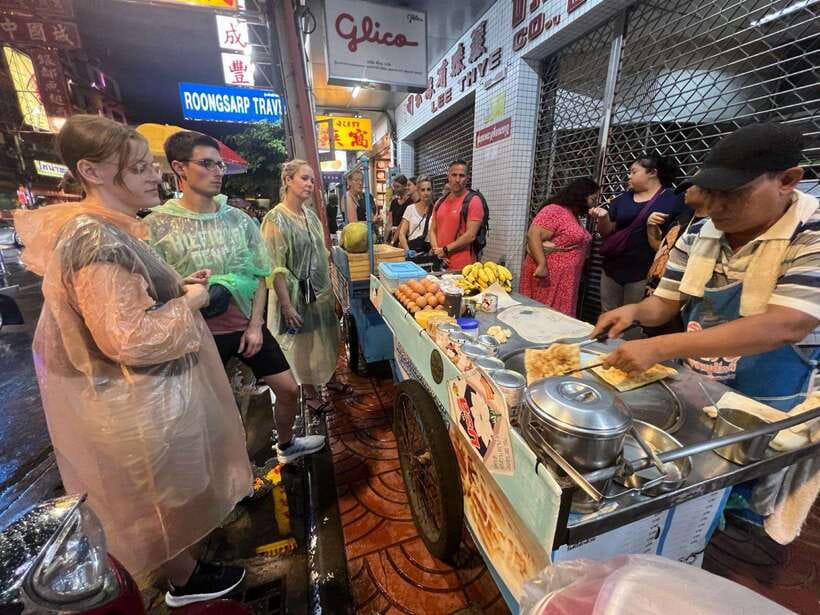
At $43 per person for 3 hours, this is priced like a “smart access” experience. The cost isn’t just the food. It’s:
- Multiple vendor stops you’d struggle to coordinate on your own.
- Guide time and ordering help (which can save you real frustration).
- A tasting volume (10–12 foods) that adds up quickly in street food portions.
In the provided info, guides sometimes exceed the advertised range of tastings, counting beyond 10–12 on at least some evenings. That’s not a guarantee, but it supports the idea that the tour doesn’t feel stingy. You’ll likely leave full, not hungry.
Also included: bottled water and refreshments. That’s not glamorous, but in Chinatown heat, it’s a big comfort factor. It helps you taste more without feeling wiped out halfway through.
What to Bring for a Smooth Night Market Walk
This tour is simple, but the “small things” help a lot. Bring:
- Comfortable shoes for walking and crowded pavement
- Umbrella and rain gear (weather can change fast)
- A camera
- Cash (stated as a bring-this item)
If you hate carrying stuff, keep your bag minimal. Oversize luggage and similar items aren’t allowed, and you don’t want to wrestle your belongings while following a guide through tight lanes.
Who This Tour Suits Best (and Who Should Skip It)
This Bangkok Chinatown tasting tour is a great match if you:
- Eat pork and are comfortable with street food variety
- Want to learn as you go, not just snack your way through
- Like being led through a crowded area with someone who knows where to go
- Enjoy Thai classics like Pad Thai and Som Tam, plus the less-obvious dishes
It’s the wrong pick if you:
- Need vegetarian/vegan options
- Have gluten intolerance
- Follow halal dietary rules
- Can’t eat pork and need true substitutions
- Need reliable pescetarian-friendly seafood stops
For anyone with restrictions, the info strongly points you toward a private tour so the food list can be adjusted. That’s often the only way to make the experience match your needs without compromise.
The Final Call: Should You Book This Bangkok Chinatown Food Tour?
Book it if you want a high-value night out built around real street food, and you’re ready for the pork-forward reality of Chinatown eating. The guide-led pacing, multiple vendor stops, and the included drinks are exactly what you want when you’d otherwise spend too much time figuring out what to order.
Skip it (or switch to a private setup) if your diet is restrictive or you need guaranteed substitutions. The tour explicitly does not fit several dietary categories, and most vendors include pork with no replacement.
If you do book, come hungry, wear shoes you can trust, and plan your meeting time carefully. Once you’re with your guide, this is one of the easiest ways to understand Chinatown through food—without getting lost in the noise.
FAQ
Is this tour vegetarian or vegan-friendly?
No. The tour info says it won’t suit vegans or vegetarians, and it also states that most food vendors contain pork with no replacement.
Do they offer gluten-free options?
No. Gluten-free options are not available on this tour.
Is halal food available?
No. Halal food options are not offered.
Are there pescetarian options?
Not reliably. The tour info says no pescetarian options are available because not all vendors can provide fish or seafood.
Will there be pork-free choices?
Most vendors include pork and there is no replacement, so you should not expect pork-free dishes.
How many foods will I taste?
You should expect 10–12 foods during the 3-hour tour.
Where is the meeting point?
You meet in front of I’m Chinatown Mall, underneath Golden Dragon. A guide photo is sent after you book.
Is hotel pickup included?
No. Hotel pickup and drop-off are not included.
What languages are the tours offered in?
The live tour guide languages listed are English, Thai, German, and Spanish.
Is there free cancellation?
Yes. The tour offers free cancellation up to 24 hours in advance for a full refund.