REVIEW · COOKING CLASSES
Hands-On Thai Cooking Class Bangkok with Local Chef (Small Group)
Book on Viator →Operated by Mahanakorn Thai cooking class · Bookable on Viator
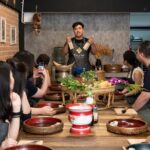
A Bangkok cooking class should feel like food with a passport stamp. This one is hands-on, small-group, and led by Chef Joyce, so you learn Thai flavors you can actually recreate later. You’ll cook from fresh ingredients, then sit down to eat what you made.
I especially like the step-by-step coaching for beginners and the way the chef explains ingredients in plain language. I also like that you get a four-course lunch (included), plus photos and a PDF recipe booklet so you can keep cooking after you go home.
One possible consideration: it’s not a quick tasting tour. Expect real chopping, paste-making, and cooking at your station, which can be a lot if you prefer to watch rather than do.
In This Review
- Key highlights
- Bangkok Thai Cooking Class: The Setup That Makes You Feel Capable Fast
- Where You Meet Up and Why the Neighborhood Matters
- How the Cooking Class Flows: Your Station, the Chef, and the Tasting
- The Four-Course Lunch Experience (and What You Learn in Each Course)
- 1) Dongyin Gong soup: Learning Thai soup flavor balance
- 2) Thai fried river flour: Texture and seasoning control
- 3) Green curry chicken: Paste-making and deep curry flavor
- 4) Sweet mango glutinous rice: Getting the finish just right
- Thai Flavor Pillars You’ll Be Able to Cook With at Home
- What’s Included (and Why the Extras Are Worth Paying Attention To)
- Price and Value: What $38.72 Buys You in Bangkok
- What You’ll Want to Think About Before Booking
- Who This Bangkok Thai Cooking Class Fits Best
- Should You Book This Bangkok Thai Cooking Class?
- FAQ
- How long is the Bangkok Thai cooking class?
- Do I need cooking experience to join?
- How big is the group?
- What’s included in the lunch cooking class?
- What dishes will I cook?
- Do I get recipes to take home?
- Are alcoholic beverages included?
- What is the cancellation policy?
Key highlights
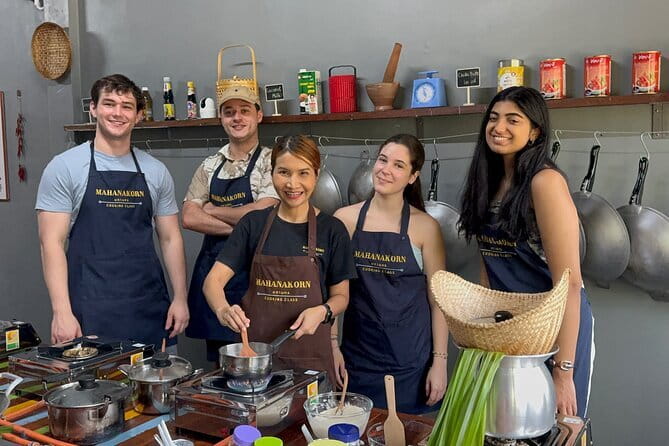
- Small group (max 8) means you get personal attention while you cook
- Chef Joyce leads the class with clear, patient instruction and plenty of questions welcomed
- Fresh ingredients + hands-on prep so you understand the why behind each flavor
- Four-course lunch included, plus bottled water, photos, and a PDF recipe booklet
- You’ll learn core Thai flavor building blocks, like making Thai chili paste from scratch
Bangkok Thai Cooking Class: The Setup That Makes You Feel Capable Fast
This class is built for real people, not just food pros. From the start, the chef makes it clear you’re there to learn by doing, with guidance at every step. If you’re worried you’ll be slow or mess something up, that anxiety usually drops fast once you’re at your station.
The small group size is a big part of that. With a maximum of 8 travelers, it doesn’t turn into a crowded show-and-tell. You’ll have time to ask questions, and the chef can actually notice what you’re struggling with.
And while it’s fun, it isn’t vague. You’re working through traditional flavors and techniques, not just following a script. That’s the difference between a cooking class that’s entertaining and one that sticks.
You can also read our reviews of more cooking classes in Bangkok

Where You Meet Up and Why the Neighborhood Matters
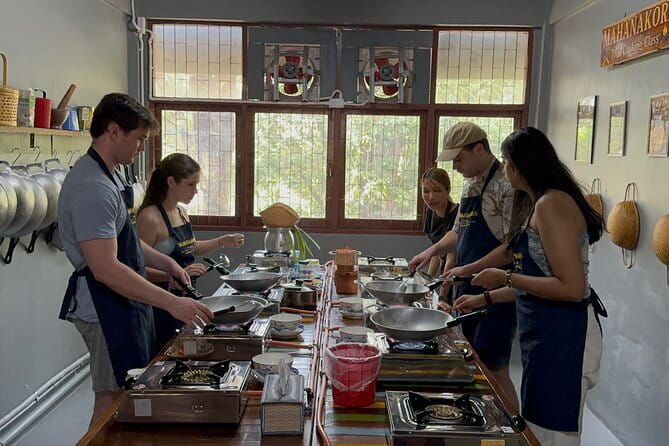
You meet at Mahanakorn Thai Cooking Class, at 139 35 Soi Ratchamongkhon Prasat 5, in Pak Khlong Phasi Charoen (Phasi Charoen district). The location is near public transportation, which matters in Bangkok, where “close” can mean very different things depending on your route.
What I like about this area is that it feels local. One key appeal of classes like this is that you’re not cooking inside a hotel bubble. You’re in a real Bangkok neighborhood, and that makes the whole experience feel more tied to everyday life in Thailand.
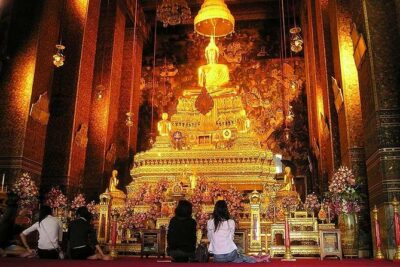
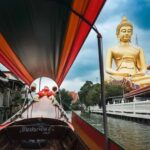
Also, the location is near a temple you can often pair with your timing. If you like adding a short walk to your day, you may find you can visit before or after cooking without turning the trip into a logistics puzzle.
How the Cooking Class Flows: Your Station, the Chef, and the Tasting
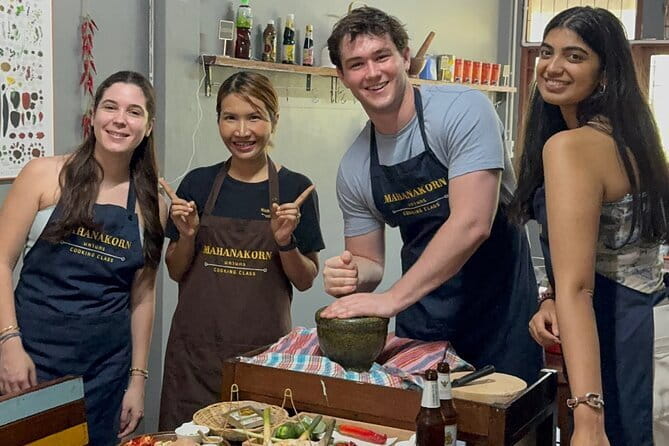
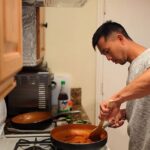
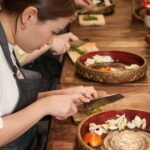
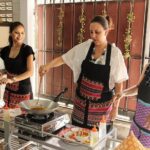
The structure is straightforward. You’ll start with instructions from the chef, then cook with guidance while you work at your own station. You don’t have to have prior experience. The class is explicitly designed for all skill levels, and you’re encouraged to ask questions freely.
A big part of the value here is the pace. It’s not a frantic class where you keep up or fall behind. The chef guides you step by step and explains ingredients clearly, which helps you understand what you’re making instead of copying it blindly.
You’ll also taste along the way. That turns cooking into learning rather than just assembling. When you taste, you start recognizing balance: how sweet, salty, sour, and spicy should feel in Thai dishes.
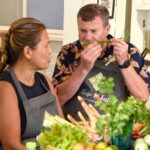
If you’re the type who wants to know why something works, this is where it happens. The chef doesn’t just hand you a result. She explains ingredients and techniques so you can improve at home, even with a different kitchen setup.
The Four-Course Lunch Experience (and What You Learn in Each Course)
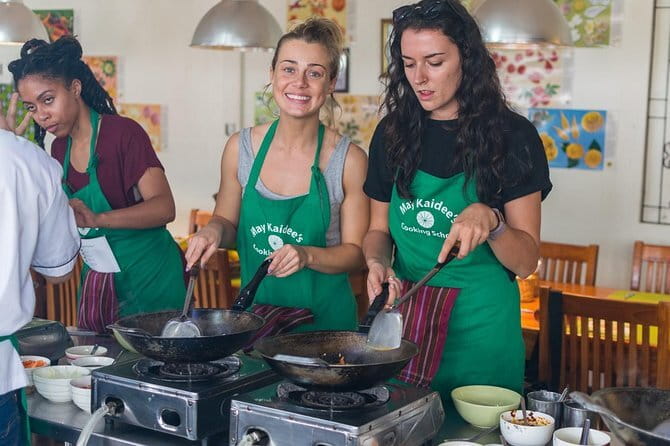
This class includes a lunch Thai cooking session with four courses (plus bottled water). You’ll cook from scratch using fresh ingredients, and you’ll end by eating the dishes together.
While exact menus can vary, the cooking skills you’ll practice tend to cluster around a few core Thai foundations: herbs and aromatics, curry paste building, balance of seasonings, and finishing with the right texture and sweetness.
Here’s a clear picture of the kind of four-course lineup you may cook, based on dish examples taught in this class:
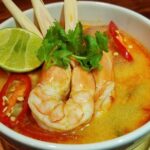
1) Dongyin Gong soup: Learning Thai soup flavor balance
Soup in Thai cooking is rarely just broth. You’ll be learning how Thai flavors layer rather than hit all at once. Even when you focus on one soup, you’re practicing the same fundamentals used across the cuisine: aromatic base, seasoning balance, and the way heat and texture interact.
You can also read our reviews of more tours and experiences in Bangkok
2) Thai fried river flour: Texture and seasoning control
This course is about crispness and handling batter or flour-based ingredients correctly. Fried items teach you quickly where flavor lives: in seasoning choices before cooking, in how heat affects texture, and in timing.
If you’ve ever made something fried that turned out flat or oily, this is the kind of course that helps you spot what went wrong and how to fix it.
3) Green curry chicken: Paste-making and deep curry flavor
This is often the star course in cooking classes because it demands more technique. You’ll learn how curry gets its personality from paste, and you’ll practice traditional methods. One great detail: instruction includes using a mortar-and-pestle style approach for paste work rather than relying on shortcuts.
The result is more than just a sauce. Curry paste technique teaches you how Thai cooking builds flavor from scratch.
4) Sweet mango glutinous rice: Getting the finish just right
Dessert is not an afterthought here. Mango sticky rice requires correct texture and sweet-coconut balance. It’s also the course that makes the whole meal feel complete, because it turns your cooking day into a full experience instead of ending on a “second-best” finale.
And honestly, it’s hard to stop yourself from going back for one more bite.
Thai Flavor Pillars You’ll Be Able to Cook With at Home

A good cooking class leaves you with skills, not just recipes. This one is built around Thai cuisine’s core flavor patterns and ingredient roles.
You’re taught how different ingredients create the pillars of Thai taste, and you don’t just rely on store-bought shortcuts. One of the most practical parts: you can learn to make Thai chili paste from scratch, so you understand what changes when you go homemade.
That matters because chili paste is usually the flavor engine behind so many Thai dishes. If you can recreate that foundation, you can make curries, stir-fries, and dipping sauces without feeling like you’re winging it.
You’ll also get tips on improving cooking techniques. Even if you never become a “mortar and pestle every day” person, you’ll learn which steps make the biggest difference, like when to toast, when to simmer, and when flavors need adjusting.
Bottom line: you walk away with a mental map of Thai cooking, not just a list of ingredients.
What’s Included (and Why the Extras Are Worth Paying Attention To)
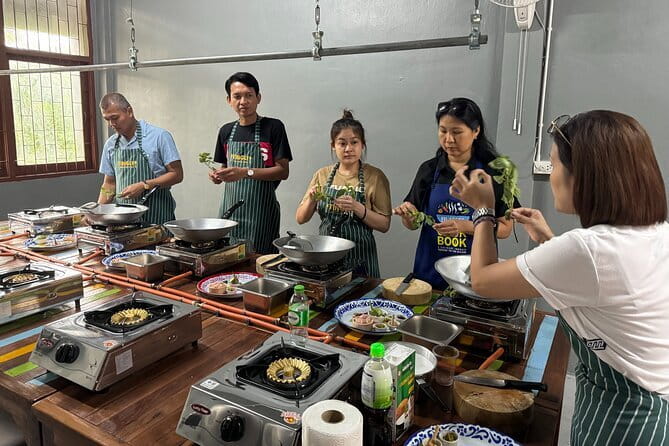
This class includes a lot for the price point:
- Lunch Thai cooking class with four courses
- Bottled water
- Cooking and hygiene equipment
- Guide (chef-led instruction)
- All fresh ingredients
- Photos from your experience
- Recipe booklet (PDF)
Let’s translate that into real value. Food-only classes are fun, but you don’t always leave with something usable. Here, you leave with documentation: a PDF recipe booklet, plus photos you can use to remember the look and build of each dish.
Photos matter more than people think. When you cook at home, it’s helpful to compare your final texture and color. And the included equipment and fresh ingredients remove a lot of the guesswork and extra shopping you’d otherwise do.
If you’ve cooked Thai food at home before, you’ll likely appreciate the clarity. If you haven’t, the included instruction and materials make it easier to start.
Price and Value: What $38.72 Buys You in Bangkok
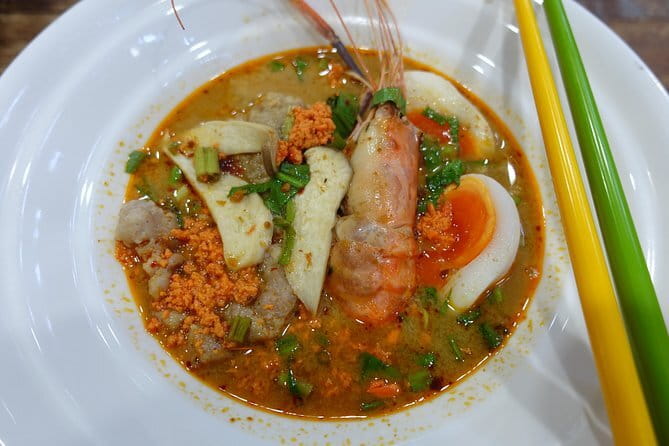
At $38.72 per person, this doesn’t feel like a souvenir-style experience. You’re paying for an expert teacher, fresh ingredients, and a full meal you cook yourself.
Here’s the real value math I like to use: you’re not just buying lunch. You’re buying ingredients, technique instruction, and the ability to repeat what you learned later through the PDF recipe booklet. You’re also buying time with a chef in a small group, which is harder to replicate on your own.
Also, the class includes cooking and hygiene equipment, which removes hidden costs. Even though there’s no mention of transport pickup, the meeting point is near public transportation, so you can plan your trip without needing complicated arrangements.
If you’re deciding between doing a market tour versus doing a cooking class, this is the choice that gives you an end product you can replicate, not just knowledge you can admire.
What You’ll Want to Think About Before Booking

This class is hands-on. That’s good, but it’s also something to consider.
If you’re someone who wants to watch everything happen while you sit back, you might feel busy rather than entertained. You’re there to chop, mix, paste-build, cook, and plate.
Also, the experience duration is listed at around 3 hours (approx.). The pace is active, and you should treat it like a focused cooking block rather than an easy afternoon.
Finally, alcoholic beverages aren’t included. That’s usually fine since this is more about the meal you cook than a party vibe. If you do plan to drink, the class only allows alcoholic beverages for travelers 20 years old and above, but again, they aren’t part of the included package.
Who This Bangkok Thai Cooking Class Fits Best
This is a strong match if you want one of the most practical souvenirs you can take home: cooking knowledge.
It fits especially well for:
- Couples and friends who like doing something together and then eating together
- Food lovers who want authentic Thai flavors but also want clear instruction
- Beginners who don’t want to feel intimidated
- Home cooks who already make Thai food and want to fix techniques they’ve been doing a certain way
It may be less ideal if you only want light snack-size sampling, or if you have a schedule where you absolutely can’t be in an active, station-based setting.
Should You Book This Bangkok Thai Cooking Class?
If you want a Bangkok experience that’s fun, hands-on, and genuinely useful later, I’d book it. The combination of small group size, chef-led step-by-step instruction, and a full four-course lunch makes it a high-value way to learn Thai cooking without stress.
Book it if:
- you want to cook Thai dishes from scratch
- you like recipes and technique, not just eating
- you want a class that works whether you’re new to cooking or already cook at home
Skip it if:
- you’d rather observe than participate
- you don’t want to spend a few hours actively cooking
- you’re looking for a class that centers on tasting only, with minimal hands-on work
FAQ
How long is the Bangkok Thai cooking class?
The experience is listed at about 3 hours (approx.).
Do I need cooking experience to join?
No. The class is designed for all skill levels, including people with no cooking experience.
How big is the group?
This is a small-group experience with a maximum of 8 travelers.
What’s included in the lunch cooking class?
Lunch Thai cooking class includes four courses, bottled water, cooking and hygiene equipment, a guide, all fresh ingredients, photos from your experience, and a recipe booklet (PDF).
What dishes will I cook?
The class includes a four-course lunch. The kinds of dishes you may make include items such as Dongyin Gong soup, Thai fried river flour, green curry chicken, and sweet mango glutinous rice.
Do I get recipes to take home?
Yes. You receive a recipe booklet as a PDF.
Are alcoholic beverages included?
No. Alcoholic beverages are not included.
What is the cancellation policy?
You can cancel for a full refund if you cancel at least 24 hours before the experience start time. If you cancel less than 24 hours before, the amount you paid is not refunded.