REVIEW · COOKING CLASSES
Hands on Thai Cooking Class and Market Tour
Book on Viator →Operated by House of Taste Thai Cooking School · Bookable on Viator
Make curry paste, not just memories. In Bangkok, this hands-on class at House of Taste Thai Cooking School gets you shopping at Asok market (morning) or learning mango carving (afternoon/evening) before you cook classic Thai dishes with guidance from instructors like Jay, April, or May. It’s fun, practical, and very doable even if you think you can’t cook.
I love that you’re taught step-by-step in an air-conditioned kitchen, and you also get a free standard recipe sheet you can take home. I also like the menu mix, which covers Thai staples like Tom Yum Goong, curries (Red/Green/Massaman/Panang), and Pad Thai, plus mango sticky rice for dessert. One thing to consider: only the morning option includes the market tour—afternoon and evening switch to mango carving instead.
In This Review
- Key points to know before you go
- Where This Bangkok Cooking Class Fits in a 3.5-Hour Plan
- Getting There and Meeting Point Reality (Soi Sukhumvit Isn’t Hard, Just Plan It)
- Asok Market Morning: Buying Ingredients Like a Thai Home Cook
- The Tuk-Tuk + School Transition: Quick Change, Then Real Cooking
- Curry Paste From Scratch: The Skill That Makes Home Cooking Work
- The Daily Menu: What You’ll Cook and Why It’s a Smart Mix
- Appetizers and soups (examples from the fixed menu)
- First main dish
- Second main dish (served with rice)
- Dessert
- Four Dishes, Plus a Real Meal: Eating What You Made
- Mango Carving Workshop: Afternoon and Evening Version
- Vegetarian, Halal, and Allergy-Friendly Options
- How the Instructors Keep You Comfortable (Even If You’re Nervous)
- Value Check: Is $45.66 Worth It?
- Best Fit: Who Should Book This Cooking Class?
- Should You Book This Bangkok Thai Cooking Class?
- FAQ
- How long is the hands-on Thai cooking class?
- Is the market tour included?
- What dishes will I learn?
- Can you accommodate vegetarian or halal diets?
- Does the tour include hotel pickup?
- How big are the groups?
- What should I wear and expect in terms of walking?
- Is alcohol included?
Key points to know before you go
- Asok market in the morning: shop for ingredients first, then cook with what you bought
- Hands-on curry paste: you make paste from scratch, not just assemble dishes
- Four dishes plus dessert: you learn a core set of Thai flavors, including mango sticky rice
- Mango carving workshop later in the day: if you pick afternoon/evening, you’ll trade market time for carving
- Small class size: capped at 18 travelers, so you can ask questions
- No hotel pickup: plan your own way to 147/4 Soi Sukhumvit 4
Where This Bangkok Cooking Class Fits in a 3.5-Hour Plan
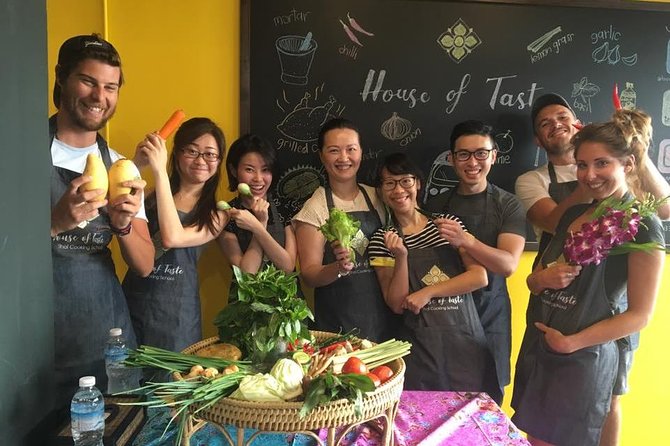
This is the kind of Bangkok activity that’s easy to slot into your day because it’s about 3 hours 30 minutes and you’re not bouncing between half the city. The action starts at House of Taste Thai Cooking School, at 147/4 Soi Sukhumvit 4 in Khlong Toei, and the schedule is built around what you’ll do in that time: either market shopping and cooking, or cooking and mango carving.
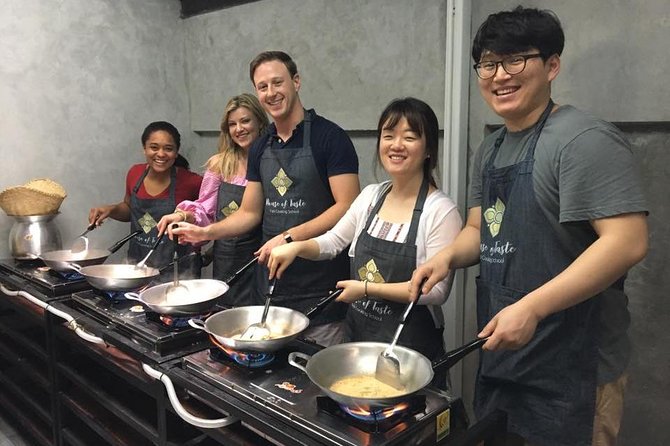
The setting matters. You’ll work in an air-conditioned class space, and you’ll get introduced to common Thai ingredients—vegetables, herbs, and spices—so the food makes sense beyond the taste. Then you get your hands on the real work: prep, mixing, cooking, and plating, followed by a sit-down meal.
You’ll also have practical support that makes the class feel smoother than the average cooking-tour mashup. There’s a personal locker, plus cold and hot drinking water. And since the group is capped at 18 travelers, it doesn’t feel like you’re shouting over a crowd to ask a question.
You can also read our reviews of more shopping tours in Bangkok


Getting There and Meeting Point Reality (Soi Sukhumvit Isn’t Hard, Just Plan It)
This activity does not include hotel pickup and drop-off. That’s normal for Bangkok and it’s also good news: you’re not stuck waiting for a pickup window.
Your meeting point is:
147/4 Soi Sukhumvit 4, Khwaeng Khlong Toei, Khet Khlong Toei, Krung Thep Maha Nakhon 10110, Thailand
The activity ends back at the meeting point.
What I’d do: use the nearby transit and set a simple plan for the morning. The school is described as near public transportation, so you’re not completely reliant on a taxi. And wear comfortable shoes—there’s only a small amount of walking, but you’ll be moving around enough that sandals can turn annoying.
If you’re doing the morning market version, you’ll also see tuk-tuk transport from the market. That’s a fun Bangkok detail, but still keep a little buffer in your schedule so you’re not stressed about timing.
Asok Market Morning: Buying Ingredients Like a Thai Home Cook
If you book the morning departure, you’ll start with a guided visit to Asok market to shop for ingredients. This isn’t just scenic wandering. The point is to see what goes into Thai cooking and learn what’s worth buying versus what you can substitute.
Here’s why that market time is valuable: Thai flavor comes from combining aromatics—chiles, garlic, herbs, citrus notes, fermented or umami ingredients, and spice profiles. When you pick ingredients up close, you start understanding what each curry or salad is built on.
You’ll also likely notice that Thai cooks don’t treat spices as one “mystery powder.” They use specific herbs and aromatics for specific effects. In class, you’ll then get to connect those ingredients to what you’re tasting and making.
A real practical tip: if you can, avoid the super last-minute approach of wandering the market on your own. The guided shopping is paced so you end up with what the kitchen will actually use. You’ll then head back to cook with the same types of ingredients you just picked.
The Tuk-Tuk + School Transition: Quick Change, Then Real Cooking
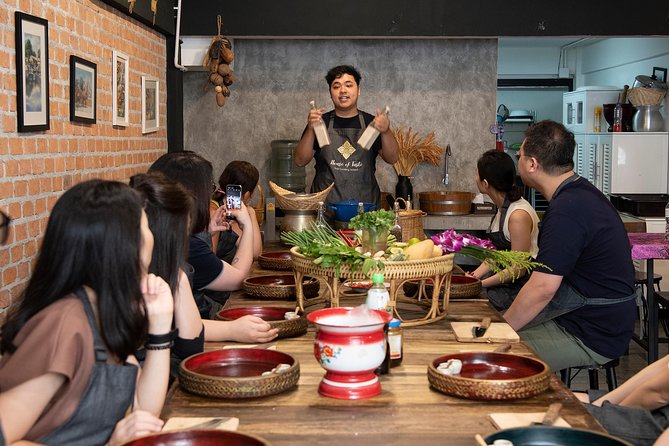
After the market, you’ll head to the cooking school. Morning classes use tuk-tuk transport from the market, which adds a slice of Bangkok street energy without turning your day into a logistics puzzle.
What to expect when you arrive: the class is set up so you can move between prep areas and cooking areas. The kitchen is described as clean and well organized, and the staff help keeps you from waiting around. You’re not just watching someone cook while you take notes.
Curry Paste From Scratch: The Skill That Makes Home Cooking Work
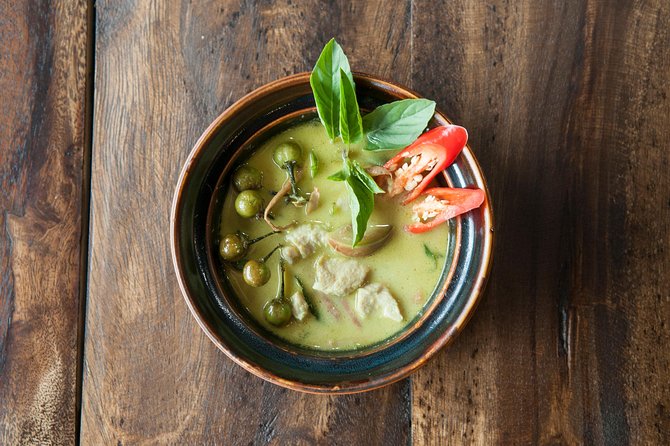
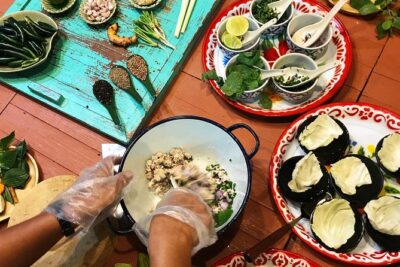
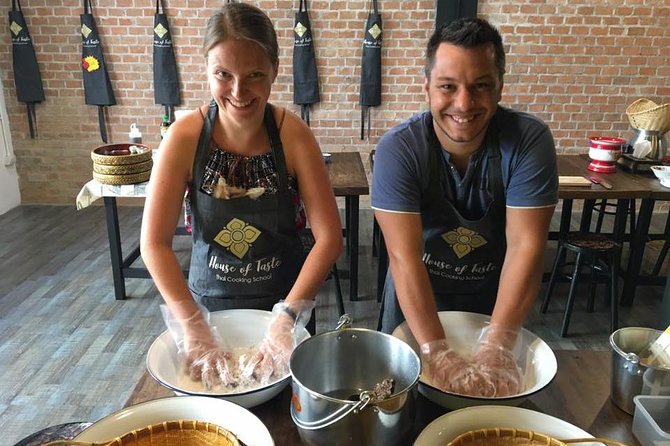
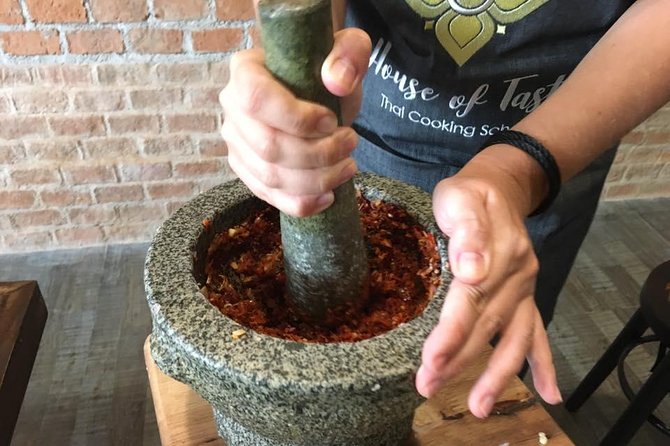
One of the best parts here is that you don’t just learn recipes—you learn technique, especially with curry paste. You’ll make curry paste from scratch, which is where most Thai cooking tours stop short.
Why it matters: when you understand how paste gets built (aromatics, chiles, seasoning elements, texture), your results at home improve fast. You’ll also start understanding why some curries taste smoky, others more floral, and others deeper and more complex.
In the kitchen, you’ll get step-by-step guidance in an air-conditioned space. The classes are described as suitable for all abilities, and many people specifically call out that even novices can follow along and get good results. If you’re an experienced cook, you’ll probably enjoy the ingredient talk and the small technique cues.
And yes, expect to taste what you’re building as you go—Thai food is about balance. Sweet, sour, salty, spicy. If one ingredient is off, the whole dish starts telling on you. The instructors focus on preventing that.
You can also read our reviews of more tours and experiences in Bangkok



The Daily Menu: What You’ll Cook and Why It’s a Smart Mix
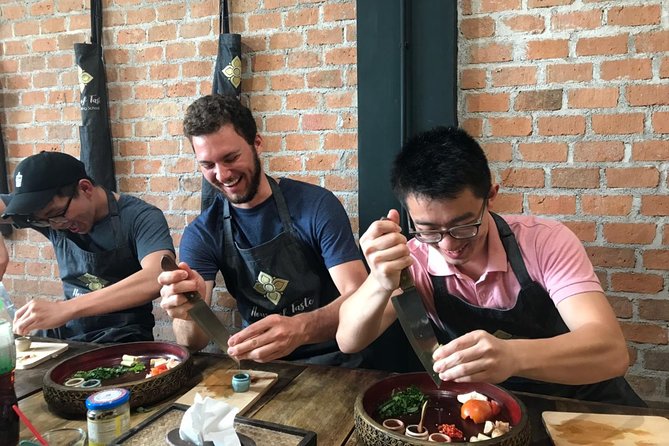
The school uses a daily fixed menu, and the dishes are real Thai classics. You’re not getting a random “tourist Thai” list. The included menu elements cover the major Thai flavor lanes:
Appetizers and soups (examples from the fixed menu)
- Spicy Lemongrass Salad
- Spicy Shrimp Salad
- Green Papaya Salad
- Deep Fried Spring Rolls
- Tom Yum Goong (spicy and sour shrimp soup)
- Tom Kha Gai (spicy coconut soup with chicken)
First main dish
- Pad Thai Goong (stir-fried rice noodle with shrimp)
Second main dish (served with rice)
- Red Curry with Chicken
- Green Curry with Chicken
- Massaman Curry with Chicken
- Panang Curry with Chicken
Dessert
- Mango Sticky Rice
The key point for your planning: you’re learning core building blocks, not just “one specialty dish.” You’ll cook a set of favorites from this menu, and then you sit down for a homemade lunch or dinner.
Also, instructors explain ingredients and alternatives. That’s especially useful if you cook at home later and have to swap local supermarket options for Thai-specific ones.
Four Dishes, Plus a Real Meal: Eating What You Made
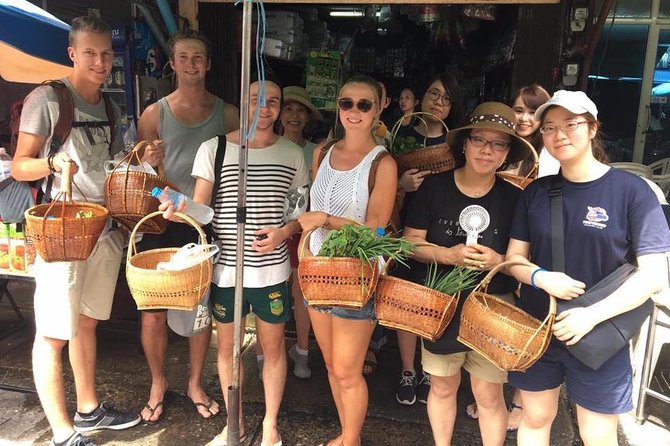
This class isn’t only about cooking. You also eat the results. Meals are included—either lunch or dinner depending on departure time—and you’ll have water and everything needed for the class.
Many people end up surprised by how much food they’re served. It’s not a tiny tasting plate. If you’re trying to keep your appetite under control, don’t overdo breakfast before you go—some folks specifically warn that you’ll likely want to arrive hungry enough to enjoy everything.
That’s also why the menu choice is smart: you get a mix of soups/salads, noodles, curries with rice, and dessert. It’s a full Thai meal arc, not a list of separate cooking projects.
Mango Carving Workshop: Afternoon and Evening Version
Pick the afternoon or evening departure and your market time gets replaced with a mango carving workshop.
This is a great option if:
- you want something fun and visual alongside cooking
- you’ve already been shopping in Bangkok and don’t need another market stop
- you’d rather spend more time learning an art-style Thai skill
Mango carving is still part of learning Thai culture, but in a different way than the ingredient-buying market tour. You’ll be focused on a hands-on craft, and then you’ll return to cooking the Thai dishes included with the class.
For some people, this ends up being the better choice because it balances two different kinds of engagement: technique in the kitchen and creativity with fruit.
Vegetarian, Halal, and Allergy-Friendly Options
If you have dietary needs, you don’t have to assume the class will be only one style. The school notes that substitute ingredients can be provided for vegetarian, halal, kosher, and for allergy needs. You should advise your requirements at booking.
Practical advice: list your specific restrictions clearly (for example, egg, dairy, shellfish, peanuts) so the team can swap ingredients safely. With a class that includes curries, salads, soups, and noodles, the substitutions need to happen across multiple dishes, not just one component.
How the Instructors Keep You Comfortable (Even If You’re Nervous)
The experience has a repeat pattern in the feedback: the instructors are described as friendly, engaging, and very supportive, with teaching that keeps the vibe fun while still giving strong guidance. People also mention humor and a lively classroom feel.
You’ll see named instructors like Jay, April, and May come up in the class context, and the consistent message is that you’re not left alone at your station. Staff help with the flow, and there’s enough structure that even beginners can follow.
If you’re traveling with kids or a mixed-skill group, this kind of instruction style matters. Cooking classes can get frustrating if the pace is too fast or if you can’t ask questions. Here, the group size cap and the teaching approach make it easier to keep up.
Value Check: Is $45.66 Worth It?
For $45.66 per person, you’re basically paying for a few things at once:
- guided ingredient sourcing (morning) or mango carving (afternoon/evening)
- instruction from a professional chef
- hands-on cooking (including curry paste from scratch)
- a full meal setup (homemade lunch or dinner)
- recipes you can take home
- water and basic class comforts (locker, included drinks)
Thai cooking classes vary a lot in Bangkok. Some are demo-heavy, some are just one dish, and some treat recipes as optional handouts. This one is priced in a way that makes sense for the time and the amount of food: you’re not only tasting—you’re building and cooking multiple items from a real Thai menu.
If your goal is to learn enough to cook at home, pay attention to the curry paste piece and the four-dish structure. That’s where the value lives.
Best Fit: Who Should Book This Cooking Class?
This class is a strong match if you:
- want a hands-on cooking experience in Bangkok that’s not intimidating
- care about learning techniques and not just collecting photos
- like the idea of either a morning Asok market ingredient run or a fruit-carving workshop later
- want a meal that’s part of the activity, not something you do separately
It may be less perfect if you:
- are only free at a time that prevents you from doing the market tour (morning is the market option)
- hate walking at all (there’s only a small amount, but it’s still walking)
- expect hotel pickup (you’ll need your own transport)
Should You Book This Bangkok Thai Cooking Class?
Yes, if you want a practical, chef-led way to learn Thai cooking and leave with recipes you can actually use. The combination of curry paste from scratch, a menu built around core Thai dishes, and a meal you eat right afterward makes it feel worth the time.
Book the morning option if you want ingredient context and shopping momentum at Asok market. Book the afternoon or evening option if mango carving sounds fun—and you’d rather spend your time on a Thai craft than another market.
If you’re heading in with a plan to eat steadily and ask questions, this class is the kind of Bangkok activity that turns into a skill, not just a memory.
FAQ
How long is the hands-on Thai cooking class?
It’s about 3 hours 30 minutes.
Is the market tour included?
The market visit is included with the morning class only. Afternoon and evening classes include a mango carving workshop instead.
What dishes will I learn?
The school’s daily fixed menu includes items like Tom Yum Goong, Tom Kha Gai, Pad Thai Goong, several curry choices (Red/Green/Massaman/Panang with chicken), and mango sticky rice for dessert. You’ll cook four favorites as part of the class.
Can you accommodate vegetarian or halal diets?
Yes. The school can provide substitute ingredients for vegetarian, halal, kosher, and allergy needs. Vegetarian option is available—advise at booking.
Does the tour include hotel pickup?
No. Hotel pickup and drop-off are not included.
How big are the groups?
The class has a maximum of 18 travelers.
What should I wear and expect in terms of walking?
A small amount of walking is involved. Wear comfortable shoes.
Is alcohol included?
Alcoholic drinks aren’t included, but they may be available to purchase.