REVIEW · COOKING CLASSES
Tingly Thai Cooking School Evening Class
Book on Viator →Operated by Tingly Thai Cooking School · Bookable on Viator
A Thai cooking class can be an upgrade to dinner. In Bangkok, this one turns pad thai, curries, and soup into hands-on work you can actually repeat later. You also get dinner with what you cook, so there’s no need to eat beforehand.
I like the way the evening format stays organized and friendly, with instructors such as Song and Nam keeping the pace clear and the room upbeat. One thing to plan around: this specific evening timing notes that a market tour is excluded, so you should treat it as a cooking-focused night rather than an ingredient-hunt day.
In This Review
- Key things to know before you go
- The Suriyawong kitchen, start point, and the 6:00 pm rhythm
- How the evening class really plays out (prep tables to cooking stations)
- Your Bangkok menu: curries, tom yum, noodles, and mango sticky rice
- Spice level: customizing heat without turning the dish into something else
- Instructors and teaching style: clear cues, humor, and hands-on confidence
- Beyond recipes: Thai ingredients, where to buy them, and proper storage
- What’s included in your $40.76 and why it feels like good value
- Who this class is best for (and who might want to choose something else)
- Quick practical tips for a smoother evening
- Should you book Tingly Thai Cooking School’s evening class?
- FAQ
- How long is the Tingly Thai Cooking School evening class?
- What time does the class start in Bangkok?
- Where does the class meet?
- What’s included with the ticket price?
- Is there an option for vegetarians?
- Are alcoholic beverages included?
- Is a market tour included with the evening class?
Key things to know before you go
- 3 hours, max 12 people: small-group cooking and less standing around
- Dinner is included: you cook multiple courses, then you eat what you made
- English and Thai guidance: helps you follow along even if your Thai is zero
- Vegetarian options are available: ask ahead if you need them
- Menu varies by day: expect classic dishes like curry, tom yum, noodles, and mango sticky rice
The Suriyawong kitchen, start point, and the 6:00 pm rhythm
The class meets at Tingly Thai Cooking School on Suriyawong (Suriyawong 17/1 Soi Prachum, Bang Rak area). The start time is 6:00 pm, and it runs for about three hours, ending back near the meeting point. If you’re using public transport, you’re in a workable part of Bangkok, and the classroom is reachable on foot.
One small detail that matters: some mapping apps show two different addresses for the same operation. In practice, there’s a reception office where you’re checked in, then you’re walked a short distance to the actual air-conditioned kitchen classroom. Build in a little buffer so you’re not stressed about finding the right door at 5:55 pm.
This is also a good setup for first-timers to Bangkok: you’re not zigzagging all night across the city. You’re starting in one place, cooking in one place, eating in one place, then leaving from the same area.
You can also read our reviews of more cooking classes in Bangkok
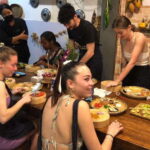

How the evening class really plays out (prep tables to cooking stations)
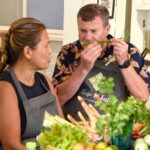
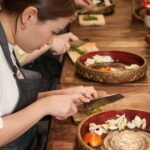
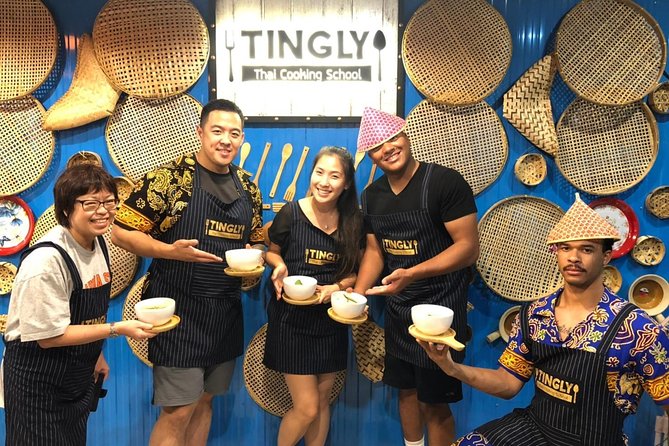
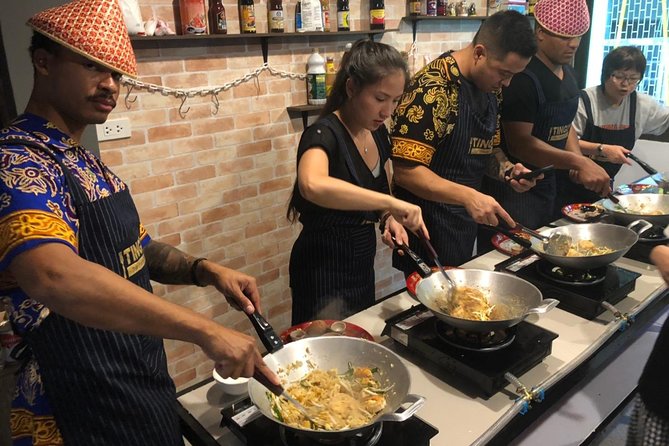
This isn’t a “watch and clap” dinner show. You’ll move through stations: prep, then cooking, then eating. The layout is staged so you can follow each step without losing your group. You’ll prep ingredients first, then take them to the cooking area when your instructor cues the timing.
The pace is structured, which I really appreciate in a foreign-language environment. You’re told when to add ingredients, and you’re not left guessing. That said, the cooking can move faster than you might expect if you’re new to stir-frying or balancing herbs. If you’re prone to taking things slow, keep your attention on the instructor’s cues so you don’t fall behind.
After cooking, the courses are eaten as part of dinner. The point of the whole class is that you’re tasting the payoff immediately, not hours later. If you want a hands-on meal that also teaches you how to think like a cook, this format does it.
And yes, plan for the fact you’ll finish hungry—but in a good way. Multiple instructors emphasize coming with an empty stomach, because dinner is substantial.
Your Bangkok menu: curries, tom yum, noodles, and mango sticky rice
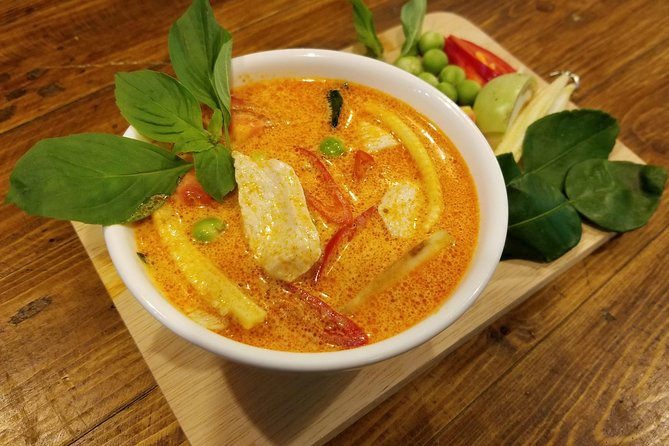
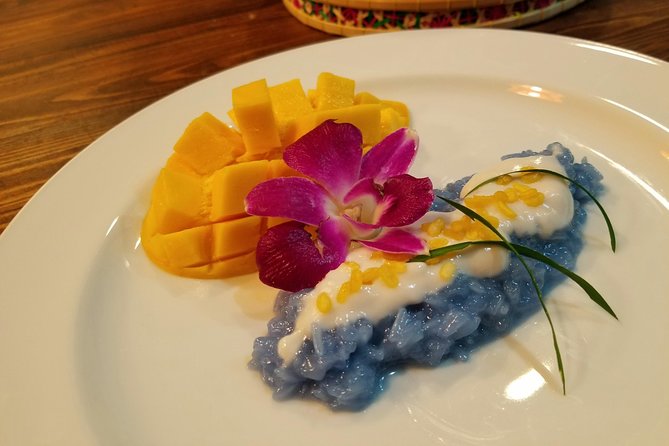
The menu changes during the week, so you can’t assume the exact dishes each night. But you can expect the core lineup of classic Thai comfort foods: curries, hot-and-sour soup, stir-fried noodles, and often a sweet finish.
From the kinds of dishes listed, and the menus people describe, you’re in the neighborhood of:
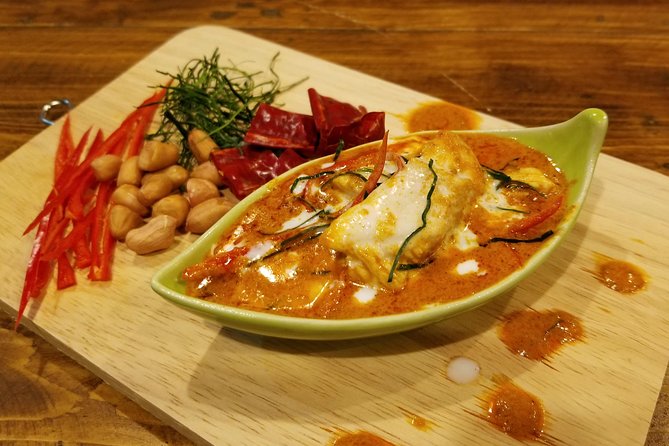
- Chicken green curry (or another curry variation like panang curry)
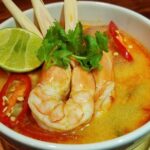
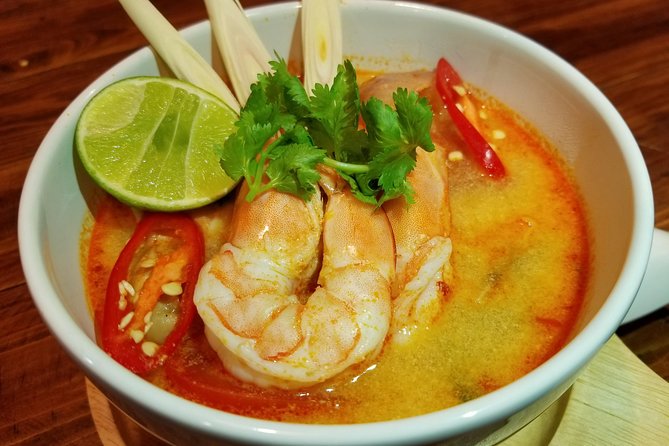
- Hot and sour soup (often similar to tom yum)
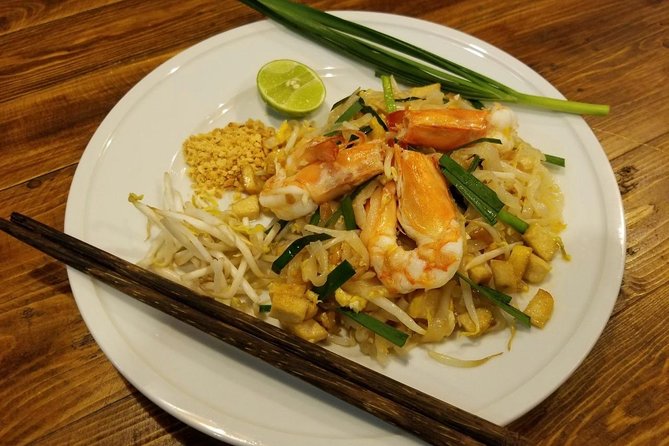
- Fried Thai-style noodles with prawns (often pad thai-style)
- Sticky rice with mango (a very common Thai finale)
In one example menu, the class flowed with tom yum soup, phad thai, panang curry, and sticky rice with mango. Even if your evening’s exact dishes differ, you’ll likely get a similar “mains + soup + dessert” arc.
That matters because Thai cooking is about building flavors in layers. Curries teach how aromatics and curry paste develop. Noodles teach timing and balance in stir-fry. Tom yum-style soup teaches how sour, salty, and spicy sit together. Then mango sticky rice closes the loop with something sweet and coconut-forward.
If you’re a vegetarian, the class states vegetarian options are available, which is a big deal. You’ll want to confirm what “vegetarian” means for that specific menu day when you book, but the option itself is there.
Spice level: customizing heat without turning the dish into something else
Thai food is not shy about chili. You’ll likely see that right away in curry colors and noodle spice.
One real consideration: instructors can adjust spice for preferences, but it isn’t always a simple switch. For example, in one case the curry was too hot for the participant’s desired level, and the instructor noted there wasn’t an easy way to keep it mild while also preserving the look and character the peppers bring. The lesson for you is practical: speak up early about your spice tolerance, and treat mild requests as a best-effort adjustment rather than a guarantee.
If you’re traveling with spice sensitivity (or you’re cooking for kids or teens), go in with two strategies:
- Tell them your comfort level at the start.
- Expect that some dishes naturally carry more heat due to the curry paste or chili components.
The good news is that the class is designed for different skill levels. You’re not expected to have mastered Thai flavor balancing before walking in.
Instructors and teaching style: clear cues, humor, and hands-on confidence
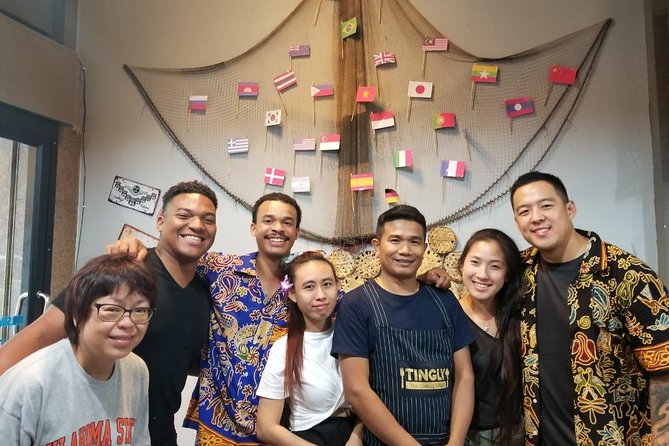
The quality of the instruction is one of the strongest reasons people love this class. You’ll get English and Thai guides, and the teaching style is interactive. Names you may encounter include Cho, Song, Nam, and Chon/Scho (spelling can vary depending on how it appears in booking systems).
The common thread in how the class is run is confidence-building. Instructors keep the energy up, explain ingredient use in plain steps, and make sure everyone participates in tasks instead of watching from the sidelines.
There’s also a comfort factor: the classroom is described as clean and air conditioned, and the flow is organized enough that you don’t feel like you’re drowning in pans and chopped herbs. Even if you’re slow at chopping, you’ll still understand what you’re doing and why.
You can also read our reviews of more evening experiences in Bangkok



Beyond recipes: Thai ingredients, where to buy them, and proper storage
A good Thai cooking class doesn’t just hand you a list of ingredients. It helps you shop and cook the dish again at home.
This one includes practical teaching on Thai ingredients, including guidance on what to look for when you buy items in a store. Several people specifically mention tips about ingredient packages and what to seek out so the flavors translate back home.
You’ll also learn about methods for properly storing Thai food. That’s a detail many cooking classes skip, but it matters because Thai dishes often rely on fresh aromatics and sauces. If you’re planning to cook beyond one night, knowing how to store leftovers without ruining texture or flavor is genuinely useful.
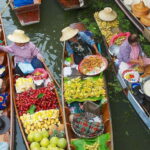
And even though this evening class notes the market tour is excluded, the broader course approach includes learning ingredient sources through market visits. On your cooking-only night, you may not walk through markets, but you still get the “how to find and handle the ingredients” part that lets the recipes travel with you.
What’s included in your $40.76 and why it feels like good value
At $40.76 per person, you’re not just paying for a seat. You’re paying for:
- Dinner based on what you cook (so you’re effectively getting a full meal out of the class)
- Kitchen equipment and guided instruction
- Bottled water
- Recipe materials you can take home
- English/Thai support
Also, the group size is capped at 12 travelers, which tends to improve the experience. In a larger class, your questions can get lost. Here, you’re more likely to get individual attention when something doesn’t make sense.
One thing to factor in: alcoholic beverages are not included. So if you’re planning on drinking at dinner, you’ll need to budget for that separately.
Compare this to a typical Bangkok restaurant meal. A restaurant can be delicious, but you usually leave with a full stomach and no clue how you made the flavors happen. This class gives you a path to repeat the food, plus a cookbook-style takeaway.
Who this class is best for (and who might want to choose something else)
This class is a strong fit if you:
- Want authentic Thai dishes you can recreate at home
- Enjoy active tasks and prefer learning by doing
- Travel with teens or mixed-age groups who still want a fun evening activity
- Are new to Thai cooking and want clear, step-by-step guidance
It’s also great if you like recipes that are grounded in real ingredients, not just abstract instructions. The focus on what to buy and how to handle flavors makes the difference between a one-off meal and a real cooking skill.
If you specifically want a market experience in the same night, you should know that this evening schedule indicates the market tour is excluded. In that case, you might consider choosing an option that includes the market portion, if that’s available on the program calendar.
Quick practical tips for a smoother evening
- Come hungry. Dinner is included and the class emphasizes having an empty stomach.
- Ask about vegetarian options when booking if you need them.
- Tell them your spice tolerance early. Adjustments may be limited by how curry paste and peppers contribute to color and character.
- Expect a walk between check-in and the classroom if your map pin doesn’t match the kitchen entrance you’re headed to.
- Skip alcohol expectations. Alcoholic beverages are not included, but bottled water is.
Should you book Tingly Thai Cooking School’s evening class?
If you want a Bangkok night that’s fun, hands-on, and built around classic Thai flavors you can recreate, I’d book it. The biggest win is that you’re not choosing between “seeing Bangkok” and “learning Thai cooking.” You’re trading restaurant time for a guided skill you’ll actually use later, and you get dinner out of the deal.
Book it especially if you value a small group (up to 12) and clear instruction with English/Thai support. The teaching style also seems to work well across experience levels, including beginners and younger travelers.
The one reason to think twice is if your top priority is a market walk and ingredient sourcing in the same evening. This evening timing is cooking-focused, not a full ingredient tour night.
FAQ
How long is the Tingly Thai Cooking School evening class?
It runs for about 3 hours (start time 6:00 pm to around 9:00 pm, approximately).
What time does the class start in Bangkok?
The start time is 6:00 pm.
Where does the class meet?
You start at Tingly Thai Cooking School, Suriyawong 17/1 Soi Prachum, Khwaeng Suriya Wong, Khet Bang Rak, 10500, Thailand, and the activity ends back at the meeting point.
What’s included with the ticket price?
Inclusions are English and Thai guides, dinner, bottled water, vegetarian options, kitchen equipment, and a recipe.
Is there an option for vegetarians?
Yes. The class offers vegetarian options.
Are alcoholic beverages included?
No. Alcoholic beverages are not included.
Is a market tour included with the evening class?
The evening class time noted for this experience indicates the market tour is excluded.