REVIEW · COOKING CLASSES
Bangkok: Tingly Thai Cooking School Half-Day Cooking Class
Book on GetYourGuide →Operated by N Bangkok Best Tour · Bookable on GetYourGuide
Thai cooking turns practical fast. This half-day class sends you to the market, then back to the school to cook real Thai flavors from scratch and leave with recipes you can repeat at home.
I love that you don’t just watch. You actively make curry paste, cook dishes like Tom Yum Kung and Pad Thai Kung, and finish with mango sticky rice Khao Neeaw Mamuang, all while an English-speaking instructor guides you step by step. One catch: hotel pickup and drop-off aren’t included, so you’ll want to plan your own way to the meeting point opposite the Marriott Hotel Surawong.
In This Review
- Key highlights worth clocking
- Tingly Thai Cooking School: the setup that keeps it easy
- Morning market walk: choose ingredients like you mean it
- The 3-hour rhythm: from chopping to bowls of Tom Yum and Pad Thai
- Your four-course menu: what you’ll cook and when it changes
- What stays the same every time
- What changes by day: your curry course
- Spice control is part of the lesson
- Mango sticky rice: the sweet finish that makes the class feel complete
- Learn techniques you can actually use at home
- Value for $41: what you’re really getting in 3 hours
- Logistics that can trip you up: plan your arrival, then relax
- Who should book this class, and who might skip it
- Should you book Tingly Thai Cooking School Half-Day?
- FAQ
- Where is the meeting point for this cooking class?
- How long is the class?
- Is a market tour included?
- What dishes will I cook during the class?
- Which curry is cooked on different days?
- Are vegetarian options available?
- Is hotel pickup or drop-off included?
- Can I cancel, and is there a refund?
- Are alcoholic drinks included?
Key highlights worth clocking
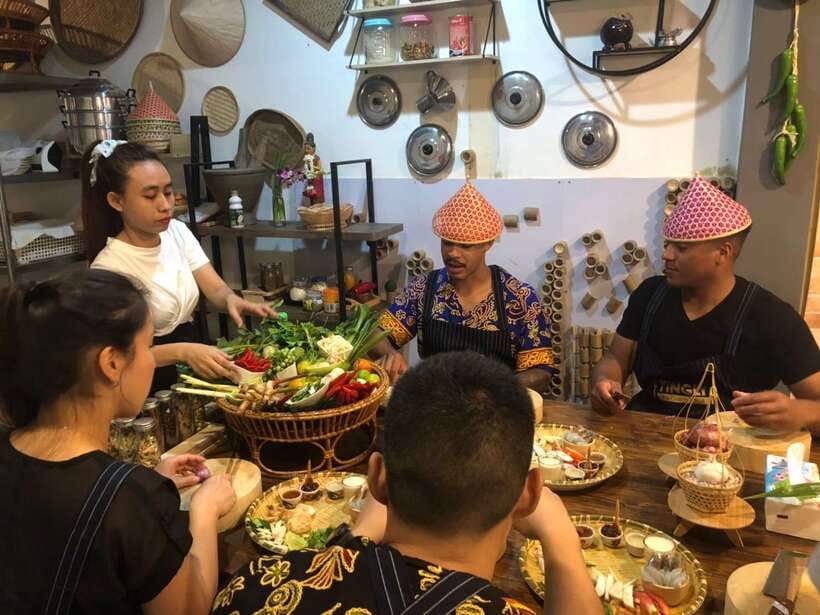
- Morning market walk to pick ingredients with your guide
- Curry paste from scratch so the flavors make sense, not just taste good
- Four dishes you make yourself, including Tom Yum Kung and Pad Thai Kung
- Thai techniques plus storage tips so leftovers and reheats are more doable
- Take-home recipes designed to help you cook again later
- Vegetarian options available so you can still join in fully
Tingly Thai Cooking School: the setup that keeps it easy
The experience is based at Tingly Thai Cooking School, meeting at a clear landmark: opposite the Marriott Hotel Surawong. That’s helpful in Bangkok, where walking directions and rides can get messy fast, especially if it’s your first day.
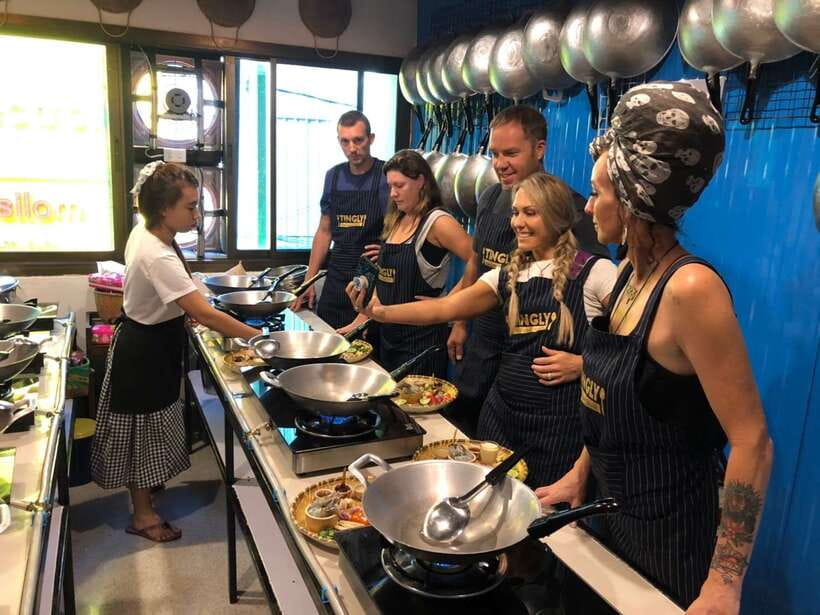
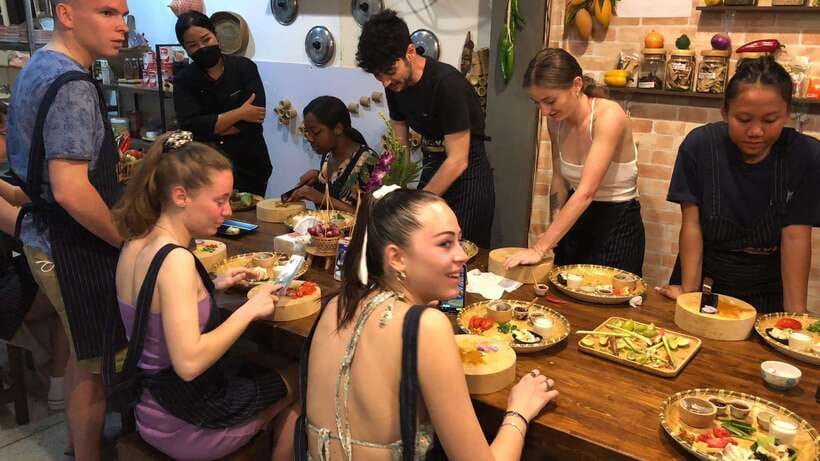
Once you’re set up, the class style is built for making. Expect hands-on prep and cooking, plus enough equipment and organization that even first-time cooks can follow along. Several instructors are mentioned by name in the feedback, including Song, Cho, Nam, and Naam, and the common thread is energy plus clear instruction in English.
Also, this is short by design: 3 hours. That’s great if you want a rewarding food activity without losing your whole day, but it also means you won’t get to freestyle a menu beyond what’s planned.
You can also read our reviews of more cooking classes in Bangkok
Morning market walk: choose ingredients like you mean it
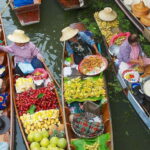
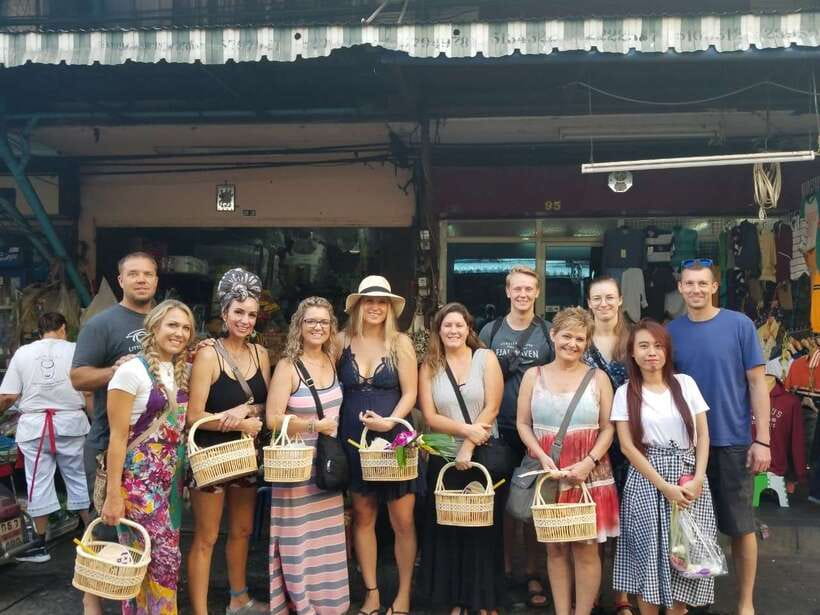
If you book the morning session, you’ll head out with your guide to local markets. This is one of the most useful parts of the day because you start learning what Thai cooks look for before you ever step into the kitchen.
Your guide shows you what’s available at the stalls and helps you pick fresh ingredients for the class. One practical tip you’ll feel right away: Thai cooking depends on balance, and ingredient choice affects the final taste. A green curry, for instance, starts long before the pan heats up.
If you’re wondering about timing, there’s a clear clue in the details: the market walkthrough is tied to the morning schedule, and it closes by 10am in at least some class timing. So don’t show up hungry and late. Go early, and you’ll get more out of the browsing.
The 3-hour rhythm: from chopping to bowls of Tom Yum and Pad Thai
The day runs in a loop you’ll repeat in your own kitchen later: prep, cook, taste, adjust. You meet at the school, prep ingredients for a four-course meal, and learn core techniques while everything stays moving at a real cooking pace.
Here’s what the class structure centers on:
- Ingredient prepping and group work so the kitchen doesn’t turn into chaos
- Learning curry paste from scratch (a big flavor step)
- Cooking the planned dishes together, then eating what you made
Two dishes are constant across every class: Tom Yum Kung and Pad Thai Kung. Tom Yum Kung is a hot and sour prawn soup, so you’ll learn how Thai-style sourness and heat land in the same bowl. Pad Thai Kung is a Thai-style fried noodle dish with prawns, which usually means you’ll be practicing timing and heat control so noodles don’t turn gummy or dry.
You also get guidance on Thai food handling and even how to store Thai food, which is the unglamorous part people skip but home cooks actually need. It’s one of those small add-ons that makes the recipes more usable after the class ends.
Your four-course menu: what you’ll cook and when it changes
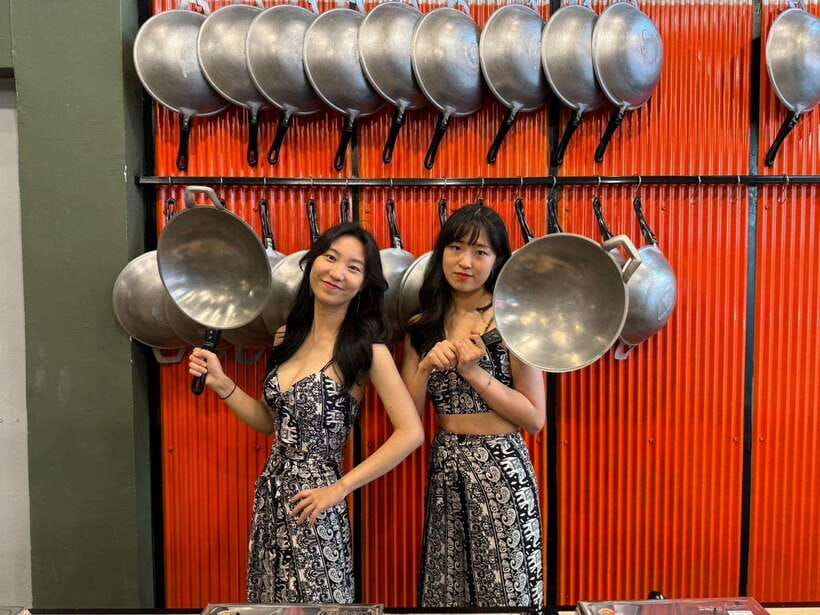
Everyone does the same two anchoring dishes and the same dessert. The rest swaps depending on the day of the week and what ingredients are available.
What stays the same every time
You’ll make:
- Tom Yum Kung (hot and sour prawn soup)
- Pad Thai Kung (Thai-style fried noodles with prawns)
- Khao Neeaw Mamuang (mango with sticky rice dessert)
That consistency matters. You get a clean learning arc: soup, noodles, curry, then dessert, all connected by Thai seasoning techniques.
You can also read our reviews of more tours and experiences in Bangkok

What changes by day: your curry course
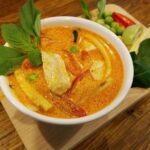
Your curry choice depends on the weekday:
- Green curry with chicken on Mondays and Fridays
- Red curry with chicken on Tuesdays and Saturdays
- Panaeng chicken curry on Wednesdays and Sundays
- Massaman curry with chicken on Thursdays
If you care about picking the “best match” for your taste, this is the decision point. Green and red curry tend to feel brighter and sharper, while Massaman usually reads more mellow and aromatic in many Thai menus. Panaeng often feels deeper and more rounded. You don’t need to guess blindly—choose your day based on the curry you want to master.
Spice control is part of the lesson
More than one class write-up emphasizes that you can adjust spice levels. That’s a big deal in Thailand, where chili heat can go from pleasant to intense fast. In a class setting, spice adjustment means you learn the dish first, not just the burn.
Mango sticky rice: the sweet finish that makes the class feel complete
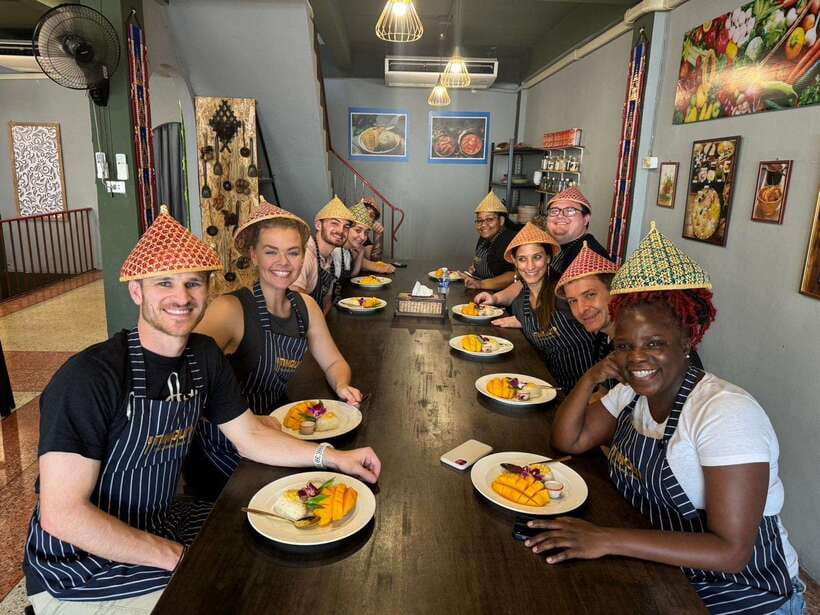
The dessert is mango sticky rice (Khao Neeaw Mamuang). Thai desserts don’t always translate well at home when people try to shortcut ingredients, so it’s smart that you cook it here as part of a structured menu, not as an afterthought.
You’ll also get a clearer sense of how Thai meals move from savory to sweet. Eating a full meal you cooked yourself is one of those underrated moments where it clicks: you’re not just learning techniques, you’re learning the way Thai cooking builds a rounded experience.
And yes, come ready to eat. Multiple instructors-in-action write-ups stress that you end up properly full. That’s a good sign for value.
Learn techniques you can actually use at home
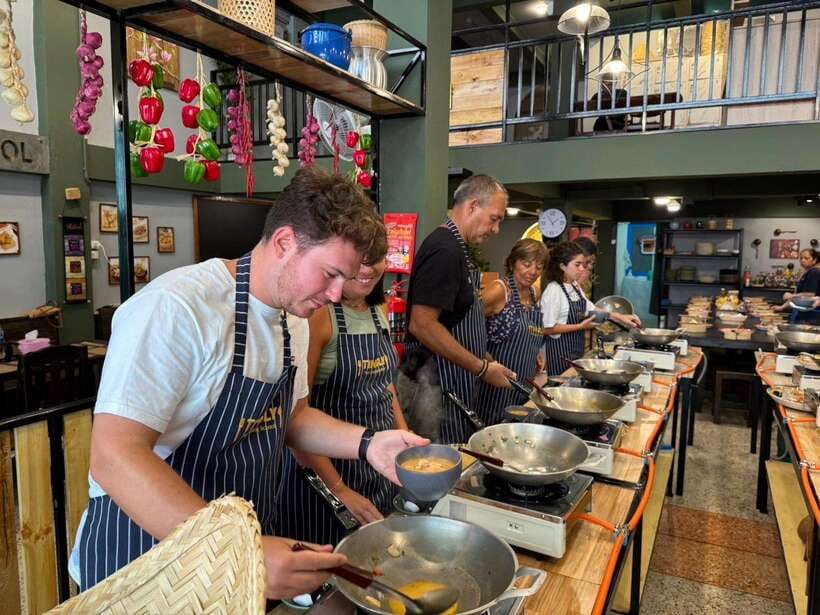
The big promise here is recipes you can remake. But the class goes beyond a paper handout by focusing on what makes Thai dishes taste like Thai food.
A few technique takeaways that matter:
- Curry paste from scratch: you’ll understand flavor building blocks, not just follow a shortcut
- How to manage the cooking flow so each dish has its moment
- Storing Thai food: practical guidance so the food stays good the next day
- You’re guided enough to cook independently, not just repeat steps robot-style
The other useful part is that the instruction feels broken into doable actions. Even people who don’t cook much seem to manage well because the class is organized and supervised. One of the most consistent notes is how fun instructors make it without turning it into a chaotic show.
Value for $41: what you’re really getting in 3 hours
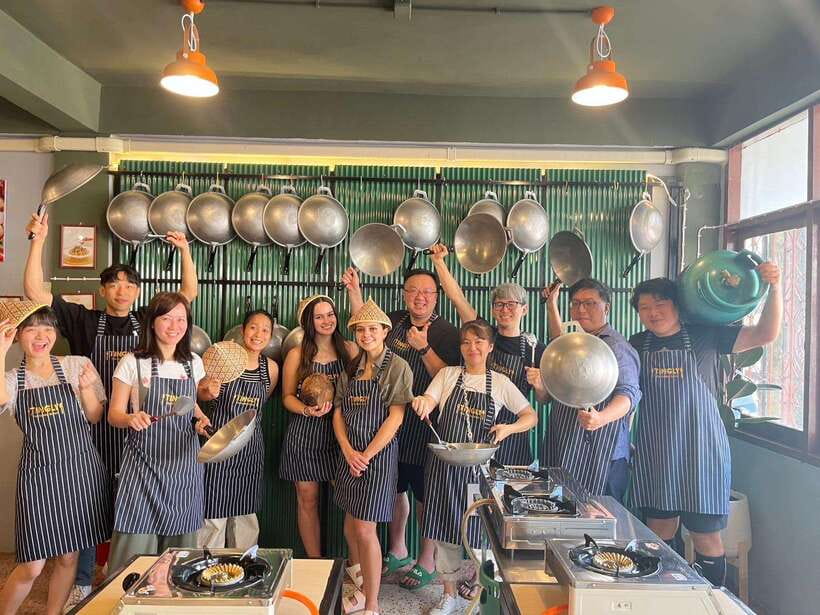
At $41 per person for about 3 hours, you’re paying for more than the cooking class. You’re paying for:
- A four-course meal you make yourself
- All ingredients and cooking equipment
- An English-speaking instructor
- Drinking water
- Recipes to take home and repeat
- A market tour if you choose the morning session
Alcohol isn’t included, but it’s available for purchase. That’s normal for cooking schools, but it affects your budgeting—plan on water and expect the meal itself to be the centerpiece.
From a value angle, the key is that you’re not just tasting Thai food. You’re learning repeatable processes—especially curry paste—so this can turn into future dinners instead of a one-time experience.
Logistics that can trip you up: plan your arrival, then relax
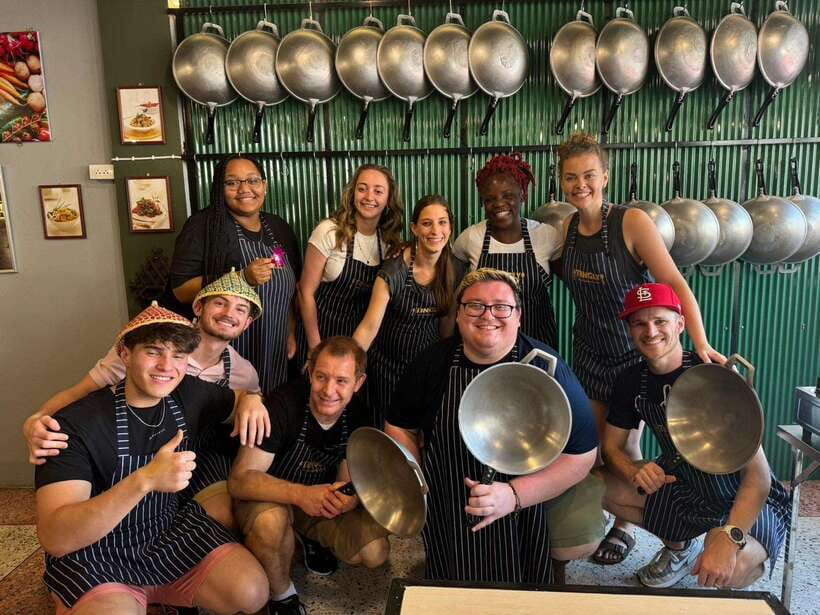
You’ll want to plan around the fact that hotel pickup and drop-off aren’t included. Meeting opposite the Marriott Hotel Surawong is easy if you know where you’re going, but it’s still on you to get there reliably.
Also, this experience isn’t designed as a sit-and-watch cultural show. It’s cooking, prep, tasting, and eating. If you want hands-on, that’s perfect. If you only want a light snack-and-stroll type activity, you might feel it’s too focused on the kitchen.
Who should book this class, and who might skip it
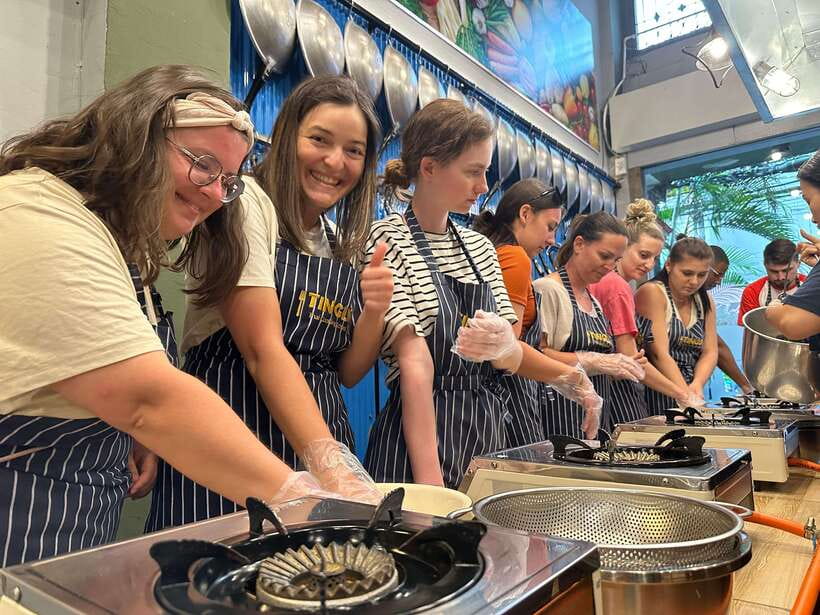
This is a great fit if:
- You want a hands-on Thai cooking experience that ends with a meal
- You’re a beginner cook who wants structure
- You want to shop for ingredients at a market (especially for the morning version)
- You like the idea of taking recipes home and actually using them
It might not be the best match if:
- You strongly prefer an instructor-led activity with minimal mess and minimal time in a kitchen
- You’re relying on hotel pickup and don’t want to handle getting to a fixed meeting point
Family-wise, the details provided include that it’s not suitable for babies under 1 and children under 3. Other write-ups show that kids can participate depending on age and comfort with the cooking format, so for older teens it can work well.
Should you book Tingly Thai Cooking School Half-Day?
I’d book it if your goal is clear: learn how Thai dishes are built, not just how they taste. The strongest reasons are the market ingredient shopping, making curry paste from scratch, and leaving with recipes so the class doesn’t vanish after the last bite.
Book the morning if you can. The market walk adds real context and helps you understand what you’re cooking with. Pick your day based on the curry you want to master, since the curry course changes by weekday.
If you’re okay handling your own ride to the school and you want to spend a full block of time cooking, this is one of the most practical ways to bring Thai cooking home to your own kitchen.
FAQ
Where is the meeting point for this cooking class?
You meet at the Tingly Thai Cooking School, opposite the Marriott Hotel Surawong.
How long is the class?
The duration is 3 hours.
Is a market tour included?
Yes, the market tour is included for the morning class only.
What dishes will I cook during the class?
You will make Tom Yum Kung (hot and sour prawn soup) and Pad Thai Kung (Thai-style fried noodles with prawns). You’ll also make a dessert of mango with sticky rice called Khao Neeaw Mamuang. The curry dish depends on the day.
Which curry is cooked on different days?
Mondays and Fridays: green curry with chicken. Tuesdays and Saturdays: red curry with chicken. Wednesdays and Sundays: panaeng chicken curry. Thursdays: massaman curry with chicken.
Are vegetarian options available?
Yes, vegetarian options are available.
Is hotel pickup or drop-off included?
No, hotel pickup and drop-off are not included.
Can I cancel, and is there a refund?
Free cancellation is available up to 24 hours in advance for a full refund.
Are alcoholic drinks included?
Alcoholic drinks are not included, but they are available for purchase.