REVIEW · BANGKOK CITY HIGHLIGHTS & WALKING TOURS
Small-Group: Unseen Bangkok’s Chinatown Walking Tour
Book on Viator →Operated by LJ Tour Co.LTD. · Bookable on Viator
Chinatown has a quieter side. This small-group walk through Bangkok’s Chinese community is built around Sampeng Market alleyways, temple stops, and the kind of food stops you can smell before you even see them. I especially liked the Thai-Chinese lunch plus snack tastings, and I also loved how guides like Bobby and Aom connected what I was seeing to local life and community history.
One thing to keep in mind: this isn’t a pure shopping spree. If you’re hoping for a long, bargain-focused retail crawl, you’ll want to manage expectations, because the tour leans more toward stories, shrines, and market texture than hours of shopping.
In This Review
- What makes this Chinatown walk different
- Key highlights you should care about
- Entering Chinatown via Hua Lamphong, not chaos
- The pace: 3 to 4 hours of walking with actual breaks
- Stop-by-stop: what you’ll actually see and why it’s worth it
- Coffee and first look at the community’s old bones
- Street art zone, Chinese shrine, and the oldest Chinese house idea
- A former red-light district walk for the real history layer
- The 150-year-old fresh market: short visit, strong payoff
- Snack walk and the Thai-Chinese lunch that closes the loop
- Food and tastings: how to eat smart on a 3-hour plan
- Bargain hunting: fun, but not a retail-only mission
- Guide quality is the real variable (and it shows in past tours)
- Logistics that keep the day smooth
- Price and value: $52.14 for food + admissions + a guide
- Who should book this Chinatown walk
- Should you book Unseen Bangkok’s Chinatown Walking Tour?
- FAQ
- How long is the Small-Group Unseen Bangkok Chinatown Walking Tour?
- What time does the tour start?
- Where do I meet the guide?
- Is the lunch included?
- Are food tastings included?
- Does the tour include admission tickets?
- What is the group size?
- Does the tour run in bad weather?
- What isn’t included in the price?
- Is cancellation free?
What makes this Chinatown walk different
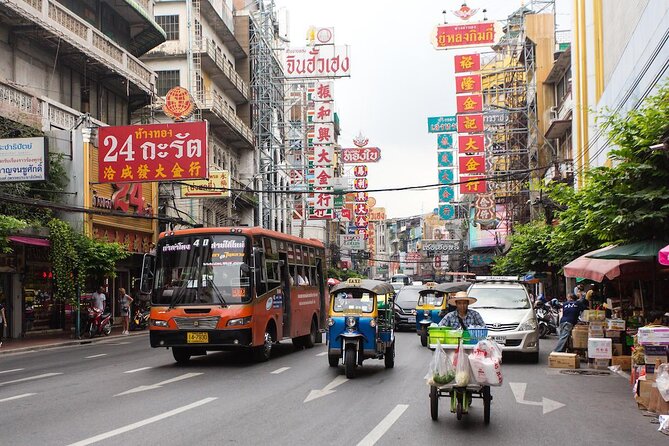
I walked away with a stronger sense of how Chinatown works day to day, not just the postcard version. The route is compact and the pace feels designed for real streets—tight turns, short visits, and frequent stops. If you like learning while you wander (and you’re comfortable with walking), this is a great way to see Bangkok’s Chinatown like a local.
Also, the group size matters. With a cap around 8-10 people, you’re not stuck listening over someone’s shopping cart wheels.
Key highlights you should care about
- Small group size (capped around 8-10) for a more personal pace
- Sampeng Market alley navigation with help finding what’s worth stopping for
- Street food tastings + a sit-down Thai-Chinese lunch (drinks sold separately)
- Temple and shrine visits paired with context about the community
- Less-mainstream Chinatown stops, including a former red-light district area
- Guides with strong storytelling, including names like Bobby, Aom, Mai, Eng, Gee, George, and Pat from past tours
You can also read our reviews of more walking tours in Bangkok


Entering Chinatown via Hua Lamphong, not chaos
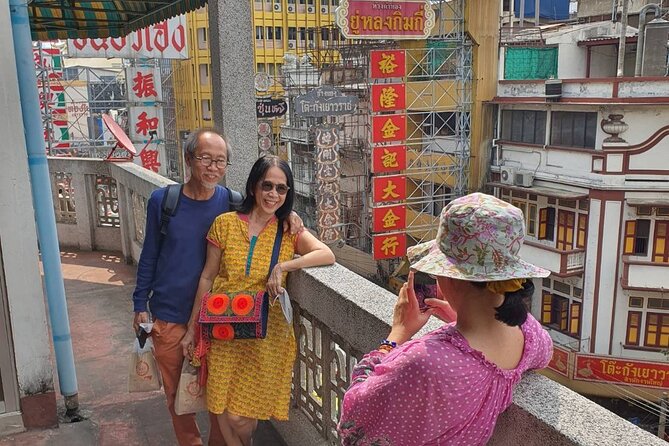
The meeting point is tied to Bangkok’s rail system: you meet the guide near MRT Hua Lamphong, at street level (Exit 1). The address is also listed near Better Coffee Building, so if you arrive a few minutes early, you’ll be able to orient quickly without playing guessing games.
This matters because Chinatown day can start with a traffic-and-taxi headache. Starting near a major metro hub keeps your morning straightforward, and it puts you on a route that’s easy for you to repeat later if you want to come back.
Tip: show up a few minutes early. Chinatown streets are full of turns, and you’ll feel calmer if you’re not rushing to catch the first photo spot or first explanation.
The pace: 3 to 4 hours of walking with actual breaks
This tour runs about 3 to 4 hours and is designed around short stops rather than one long slog. You’ll be walking, but you’ll also get pauses—food stops, coffee, and quick visits to key points that help you process what you’re seeing.
The physical requirement is “moderate walking.” If you’re fine with several hours on your feet and can handle crowded sidewalks, you’ll be comfortable. If you’re sensitive to uneven pavement or long stretches of standing, wear supportive shoes and plan to move slower when you need to.
Also, it runs in all weather conditions. Bangkok can turn on humidity fast, and occasional rain can happen without warning. Bring a light layer you can move in, and don’t rely on umbrellas that turn into a wind sail.
Stop-by-stop: what you’ll actually see and why it’s worth it
Coffee and first look at the community’s old bones
Before you hit the core market areas, you start with time that usually includes a local coffee shop stop and nearby historical sights like ancient Chinese temples and a hidden school. Even though these first stops are short, they set the tone: this is about how Chinatown grew, how people organized their lives, and how religious and educational spaces show up in the neighborhood.
You’ll also start seeing the rhythm of Yaowarat and surrounding lanes—small shop fronts, family-run services, and streets that don’t revolve around big tour groups.


Street art zone, Chinese shrine, and the oldest Chinese house idea
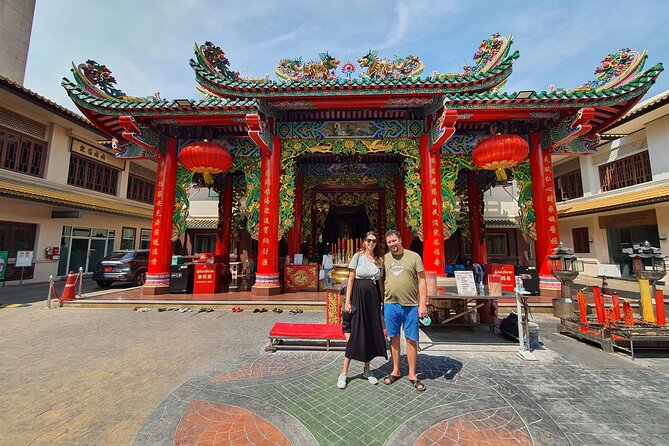
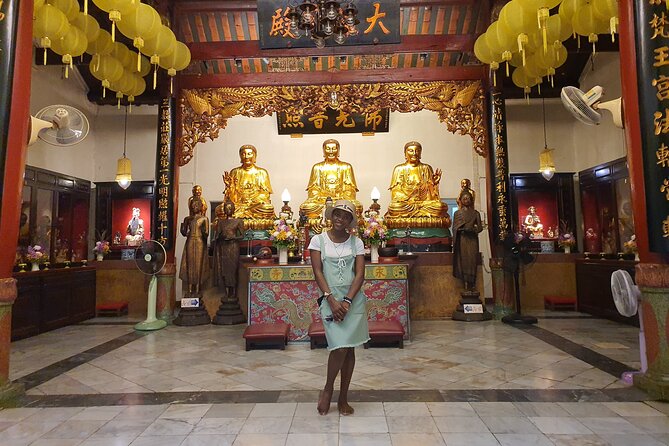
Next, you walk toward a street art area and then visit a Chinese shrine plus the oldest Chinese house in Bangkok. There’s a reason this cluster works early in the tour: you get both the visual layer (street art) and the spiritual layer (shrine), then you anchor it with the idea of an old house that ties the neighborhood to its earlier generations.
One of the best parts here is the participation with local people in the Chinese community. You’re not just photographing buildings. You’re seeing how community life continues around these landmarks.
What you might miss on your own: the specific significance of these places. Without a guide, you can walk right past and just see a sign, a door, and a courtyard.
A former red-light district walk for the real history layer
A later stop looks at the former red-light district in Chinatown. This is one of those “don’t just skip the uncomfortable facts” moments. Chinatown’s history includes both enterprise and exploitation, and the tour treats this as part of the story—not as spectacle.
If your ideal Chinatown experience is only food and temples, you may find this section heavier than expected. But if you want the full picture of how neighborhoods evolve, it’s a valuable stop.
The 150-year-old fresh market: short visit, strong payoff
Then you head to a fresh market said to be about 150 years old. This isn’t long enough to become a shopping marathon. Instead, it’s a quick hit that helps you understand how goods move, what people buy daily, and how markets function as community infrastructure.
You’ll likely notice how fast everything happens—quick exchanges, crowded aisles, and the practical logic of wholesale and retail sharing the same streets.
Practical note: markets are loud and busy. Keep your phone accessible but not glued to your hand the whole time. You’ll enjoy it more if you sometimes look up and around.
Snack walk and the Thai-Chinese lunch that closes the loop
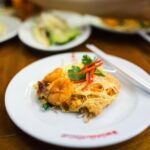
During the walk, you get snacks and then finish with lunch at a restaurant that’s been open for around 30 years. This is the heart of the “Thai-Chinese” angle: you’re not just eating random bites. You’re trying dishes that reflect the blend of Chinese community life and Thai street-food instincts.
Drinks are available for purchase, but alcoholic beverages aren’t included. So if you love pairing meals with beer or spirits, plan to buy it yourself.
One reason the lunch stop is a big deal: it’s not just a break. It’s a checkpoint. After temples, shrines, street life, and market textures, you finally sit down and taste the neighborhood’s day-to-day flavors.
Food and tastings: how to eat smart on a 3-hour plan
This tour includes food and drink samples, plus lunch. That means you’ll eat more than a casual “one snack” walk—but you still won’t be full for the whole rest of the day.
Here’s how I’d handle it so you get the best value:
- Eat slowly during tastings so you can actually tell what you’re trying.
- Skip a big breakfast if you can. You’ll be thankful when lunch shows up.
- Have small cash or a card ready for drinks you want at lunch, since alcohol isn’t included.
If you’re the kind of eater who likes to ask questions (what is this, why here, what’s typical?), a good guide can turn lunch into a mini lesson without making it feel like class.
Bargain hunting: fun, but not a retail-only mission
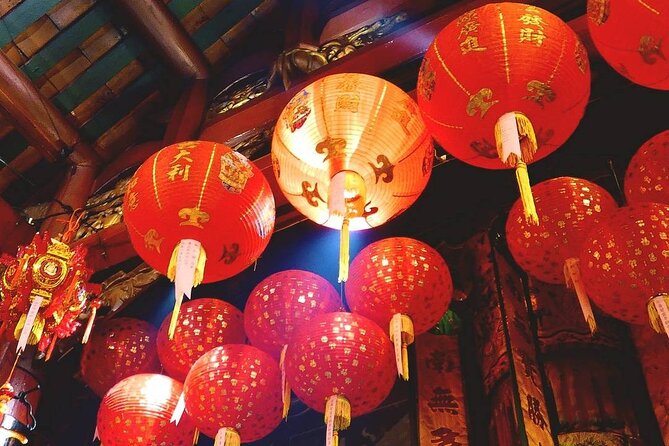
The tour includes a chance to shop for bargains and explore wholesale-style stalls at Sampeng Market. But again, this isn’t built like a dedicated shopping tour. Think of it as market education with shopping moments—not hours of “buy only” browsing.
So if you want a specific kind of product (souvenirs, specific snacks, or certain household items), set a practical goal: browse with a list in mind. That way, you get the benefit of being guided through local lanes without ending up disappointed that you didn’t spend half your life comparing prices.
Guide quality is the real variable (and it shows in past tours)
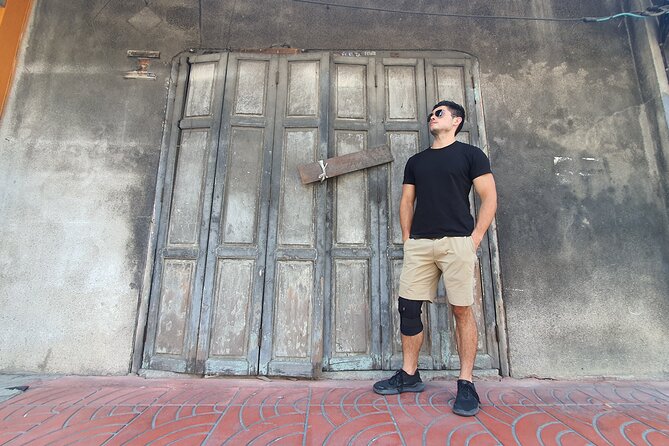
The biggest difference-maker here is the guide. Past tours have featured guides with standout personalities—names like Bobby, Aom, Eng, Mai, Gee, George, and Pat show up repeatedly. People consistently describe guides as friendly, clear in explanations, and willing to adjust pace to the group.
Sometimes that friendly attention goes beyond the basics, like helping with photos and extending the walk a bit longer when the group still wants more street time.
What does that mean for you? Choose this tour if you want a guide who talks, not just points.
Logistics that keep the day smooth
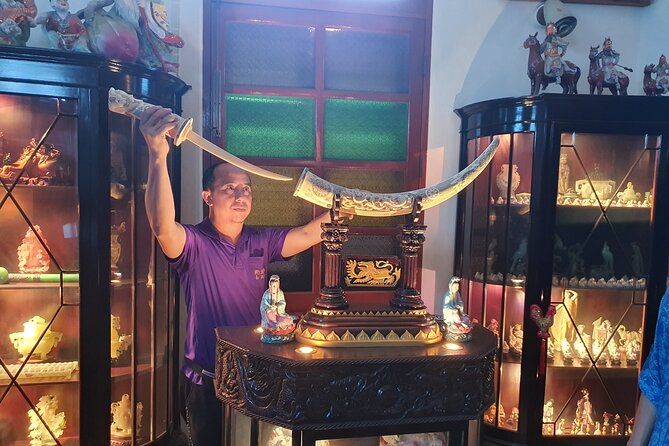
This is a walking tour, near public transit, with a mobile ticket. No hotel pickup is included, so you’ll want to plan your own route to Hua Lamphong.
Also, transportation fees during the trip are included as a local transfer element. That helps the day stay efficient, especially when you’re crossing from one market and temple cluster to another.
If you’re traveling with limited time in the city, starting at 10:00am is convenient. You’ll finish early enough to go back out for dinner or a second wander.
Price and value: $52.14 for food + admissions + a guide
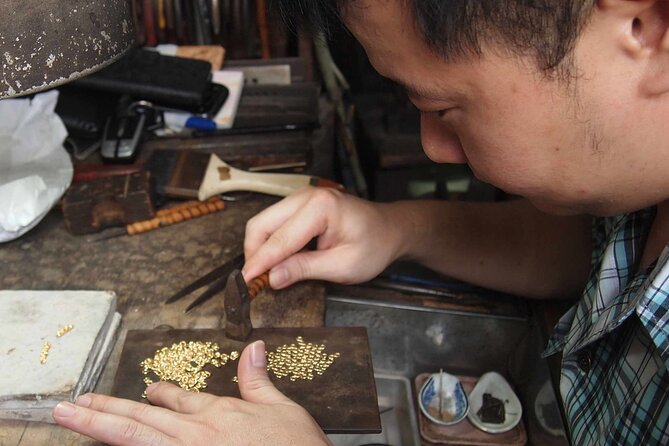
At $52.14 per person, the price can look small or big depending on what you compare it to. Here’s what makes it work:
- You’re paying for a local guide for roughly 3 to 4 hours.
- You get food and drink samples and a sit-down lunch.
- Admissions are included for multiple stops (temple/shrine and market-related entries where applicable).
- Local transportation fees during the trip are included.
If you were to do the same day on your own, you’d still pay for lunch and snacks, and you’d likely spend time figuring out what’s worth your attention. You’re buying shortcut value: guided context plus practical navigation through tight lanes.
It’s also popular—booked on average about 28 days in advance—which usually signals that people like the experience and the schedule.
Who should book this Chinatown walk
You’ll probably love this tour if:
- You want to see Chinatown’s less touristed streets and daily life, not just the main highlights.
- You enjoy short stops with stories—temples, shrines, market texture, and neighborhood history.
- You want Thai-Chinese food as part of the experience, with lunch included.
- You like small groups (capped around 8-10), where you can ask questions.
You might want to skip it or pair it with something else if:
- You mainly want a long, focused shopping spree with lots of time in stores.
- You don’t like walking for hours, even with breaks.
- You dislike history topics that include tougher parts of the neighborhood’s past.
Should you book Unseen Bangkok’s Chinatown Walking Tour?
I think it’s a strong pick if you want a guided, food-forward walk through Chinatown that feels connected to community life. The value comes from the mix: market lanes + shrine/temple stops + Thai-Chinese lunch, all paced for a short, satisfying day.
Book it if you’re the type who enjoys hearing why places matter. Skip it if your whole goal is shopping time above everything else.
If you do book, wear comfortable shoes, show up a few minutes early near MRT Hua Lamphong, and come hungry enough to enjoy tastings without needing a second meal immediately after.
FAQ
How long is the Small-Group Unseen Bangkok Chinatown Walking Tour?
It runs for about 3 to 4 hours.
What time does the tour start?
The tour start time is 10:00am.
Where do I meet the guide?
You meet at the area of MRT Hua Lamphong station, Exit 1 at street level. The meeting point is also listed near Better Coffee Building, first floor, at 320 TangHuaPak.
Is the lunch included?
Yes. You’ll enjoy a lunch of typical Thai-Chinese dishes. Drinks are available for purchase.
Are food tastings included?
Yes. The tour includes food and drink samples, plus snack stops during the walk.
Does the tour include admission tickets?
Admission is included for multiple stops (temple/shrine and market-related stops are listed as having admission tickets included).
What is the group size?
It is a small-group tour. It is described as limited to eight, and the maximum is listed as 10 travelers.
Does the tour run in bad weather?
Yes. It operates in all weather conditions, so you should dress appropriately and wear comfortable walking shoes.
What isn’t included in the price?
Hotel pickup and drop-off isn’t included. Alcoholic beverages aren’t included.
Is cancellation free?
Yes, you can cancel for a full refund up to 24 hours in advance of the experience start time.