REVIEW · BANGKOK CITY HIGHLIGHTS & WALKING TOURS
Bangkok: Discover a Taste of Chinatown – 2 Hr Walking Tour
Book on GetYourGuide →Operated by TripGuru Thailand · Bookable on GetYourGuide
Chinatown feeds you fast, even on foot. I like the small-group pacing and how your guide helps you order and taste with confidence, from Guay Jub Ouan Pochana to Pa Tong Go Savoey. I also love the no fixed itinerary style—if you want more noodles or sweets, you can ask for it. One thing to plan for: the food tasting itself costs extra, so bring cash and expect to add to the tour price.
You meet outside Exit 3 of Wat Mangkon MRT station, then spend about two hours roaming into Yaowarat’s night-market lanes. This tour is built for real-world eating: you’re walking, sampling, and learning how different stalls fit into Chinatown life.
It also has a practical safety and responsibility layer. You get an English-speaking guide (and Thai support), insurance coverage, and carbon emissions offset credits through a GSTC-certified format, which is a nice plus when you’re squeezing a lot into 2 hours.
In This Review
- Key things I’d look for before you book
- Chinatown at night: why this 2-hour format works
- Meeting at Wat Mangkon MRT: the easiest way to start strong
- The walking plan in plain English (what you’ll actually do)
- No fixed itinerary: how the flexibility helps you eat better
- The big-name stalls you should expect: Guay Jub Ouan Pochana and Pa Tong Go Savoey
- Guay Jub Ouan Pochana: rice noodle soup for your first bite
- Pa Tong Go Savoey: crispy dough sticks that turn into a habit
- Other stops that round out the night: noodles, dim sum, and dessert
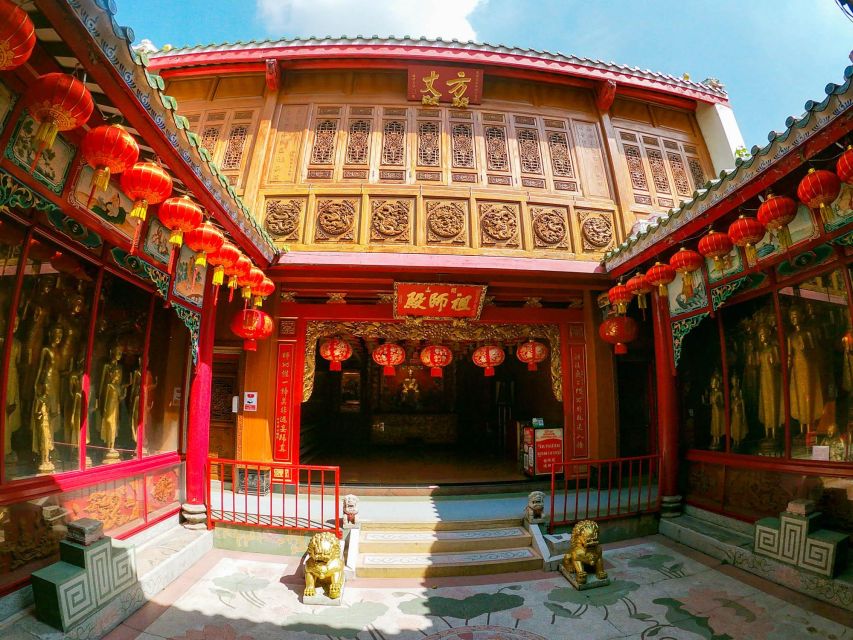
- Buddhist temple moments: what you might see and why it fits
- Price and value: what $64 buys you (and what it doesn’t)
- Group size and pacing: why “up to 9” matters in Yaowarat
- What to bring: your Chinatown packing list
- Practical safety and health notes you shouldn’t skip
- Responsible travel angle: GSTC-certified with insurance and offsets
- Who this tour suits best
- Should you book the Bangkok Chinatown Taste Walk?
- FAQ
- Where do I meet for the Bangkok Chinatown walking tour?
- How long is the tour?
- Is the tour in English?
- How big is the group?
- What’s included in the price?
- What’s not included?
- Do I get to choose what I eat?
- Is the tour suitable for anyone with mobility issues?
- What should I bring with me?
- What are the cancellation and payment options?
Key things I’d look for before you book
- Flexible tasting: skip what doesn’t sound good and spend time on what does
- Anchor stalls: Guay Jub Ouan Pochana (rice noodle soup) and Pa Tong Go Savoey (crispy dough sticks)
- Small group: limited to 9 participants, so you’re not stuck waiting on a crowd
- Food variety across styles: noodles, dim sum, savory snacks, and dessert stops
- Food + culture moments: your guide may include Buddhist temple context and customs alongside street food
- Responsible tour setup: GSTC-certified, with insurance and carbon offset credits
Chinatown at night: why this 2-hour format works
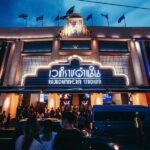
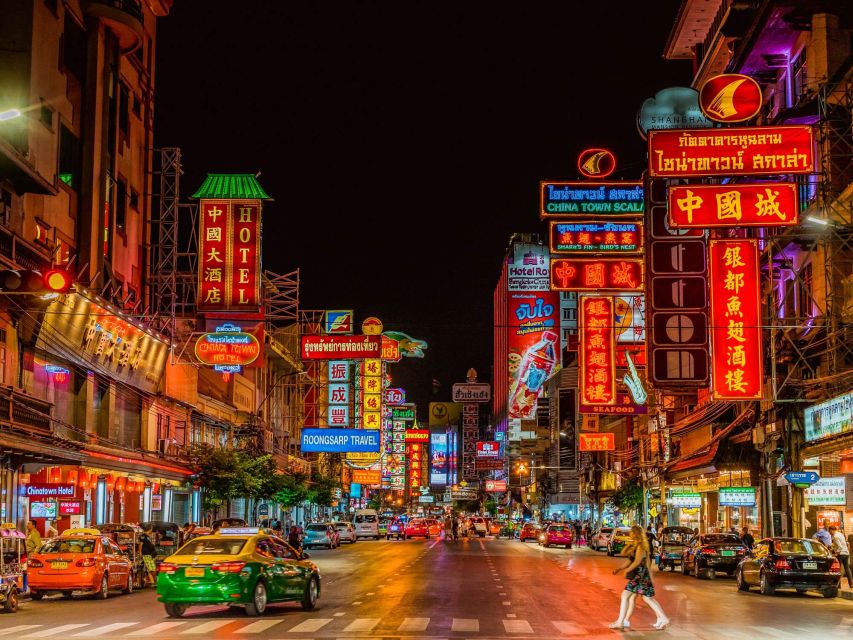
Bangkok’s Chinatown (Yaowarat) is one of those places where your appetite and your curiosity both get loud. This tour is smart because it stays short. Two hours is enough time to eat several things and learn how to navigate the area without turning the night into a marathon.
The value is also in the structure, not just the snacks. A guided walk in Yaowarat helps you avoid the common mistake: standing in front of a stall you picked randomly and ordering the wrong thing for your tastes. Here, your guide nudges you toward popular dishes like rice noodle soup and crispy dough sticks, then adjusts as you go.
You can also read our reviews of more walking tours in Bangkok

Meeting at Wat Mangkon MRT: the easiest way to start strong
Your meeting point is simple: outside Exit 3 of Wat Mangkon MRT station. The guide holds a TripGuru sign, and you’ll want to arrive about 10 minutes early so you don’t lose time to the first handoff.
There’s also a useful reminder built in: your pickup/meeting details are emailed the evening before. That matters in Bangkok, where routes and timing can shift. I’d treat that message like your “mission briefing”—read it before you leave the hotel and screenshot it.
The walking plan in plain English (what you’ll actually do)
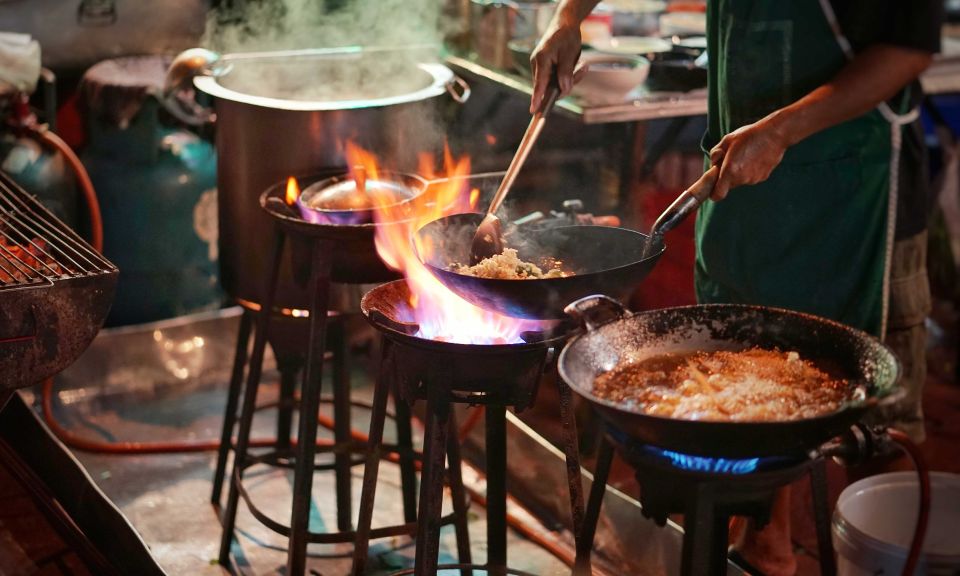
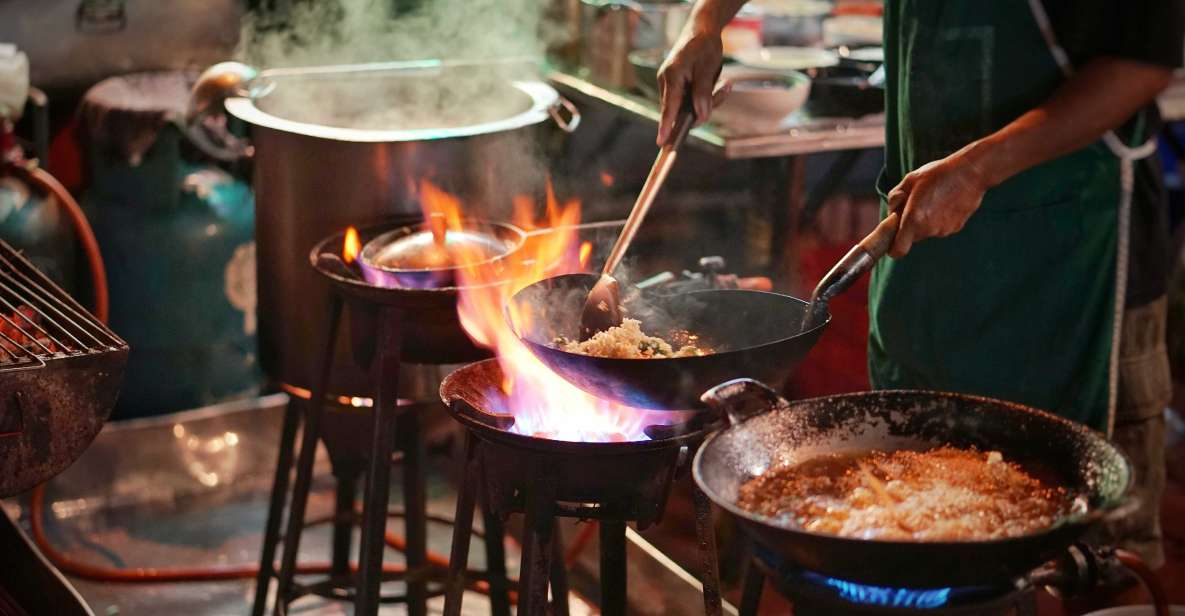
There’s one main block: Yaowarat Night Market for about 2 hours. The walk focuses on food stalls and short transfers between spots, with your guide doing the heavy lifting—pointing, explaining, and keeping you moving at a pace that works for tasting.
Unlike rigid tours that push you stall-to-stall no matter what, this one is designed for your appetite. So if you fall in love with noodles, you can linger. If you want something sweet, you can pivot. In a place as crowded as Yaowarat, that flexibility is more than a perk—it’s what makes the experience feel personal.
No fixed itinerary: how the flexibility helps you eat better
“No fixed itinerary” can sound vague until you use it to your advantage. What it means here is that you’re not locked into a script where you’re forced to eat things you don’t like just because it’s stop #3.
I like how this creates a practical feedback loop:
- You taste something.
- You react (more please, different please, skip that).
- Your guide adjusts in real time.
That becomes especially useful if you have dietary limits. One of the tour experiences is described as being personalized for a nut allergy, which tells me the guide can respond to real needs—not just talk about them. If you have allergies, tell your guide clearly at the start (and keep expectations realistic: you’ll still rely on what the stall can accommodate).
The big-name stalls you should expect: Guay Jub Ouan Pochana and Pa Tong Go Savoey
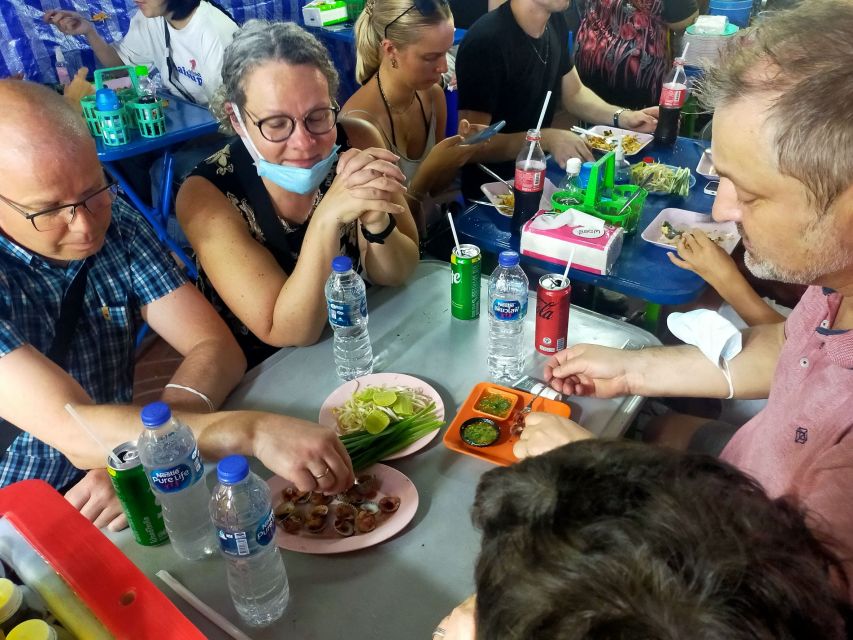
Two dishes are repeatedly part of the tour’s “anchor” lineup, and they’re good choices for first-time Chinatown eaters.




Guay Jub Ouan Pochana: rice noodle soup for your first bite
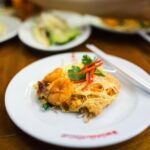
You’ll get introduced to Guay Jub Ouan Pochana, known for MICHELIN Bib Gourmand rice noodle soup. This matters because bib gourmand status isn’t a marketing gimmick—it usually indicates consistent quality and value. In a street-food setting, that’s exactly what you want: something that tastes worth the line.
If you’re worried about ordering blind, noodle soup is also forgiving. You can often find something familiar (broth, noodles, meat or toppings) even when the flavor profile is new.
Pa Tong Go Savoey: crispy dough sticks that turn into a habit
Next up is Pa Tong Go Savoey, famous for crispy dough sticks. This is the kind of snack that makes sense in Chinatown. It’s handheld, shareable, and fast to eat while you’re walking.
It also works as a “texture reset” between heavier items. After soup, dough sticks feel like a crunchy payoff. Expect something that’s meant to be eaten immediately, not saved for later.
Other stops that round out the night: noodles, dim sum, and dessert
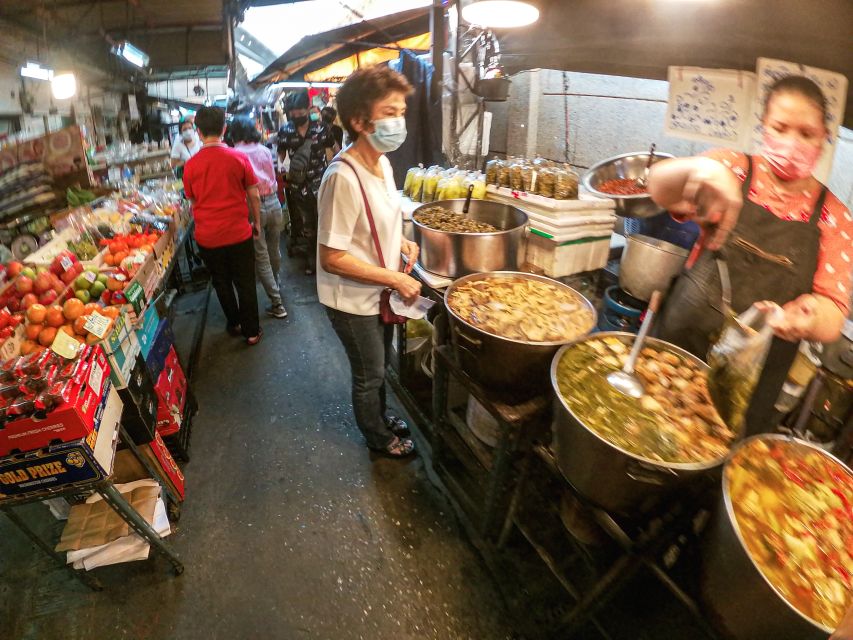
The tour isn’t only about those two anchors. You also get chances to try additional styles that help Chinatown feel like a full food ecosystem, not just two famous dishes.
Here are specific examples mentioned in the experience details:
- HKN Hong Kong Noodle for more noodle variety
- HAGOW Yaowarat for authentic dim sum choices
Then there’s room for the sweet side. Dessert is mentioned in the experience feedback, and there’s also talk of taking away packaged items like white rice and Thai spicy soup. That’s a sneaky-smart option if you don’t want to eat everything on the street. You can snack now, then bring a Chinatown flavor ticket back to your room later.
Buddhist temple moments: what you might see and why it fits
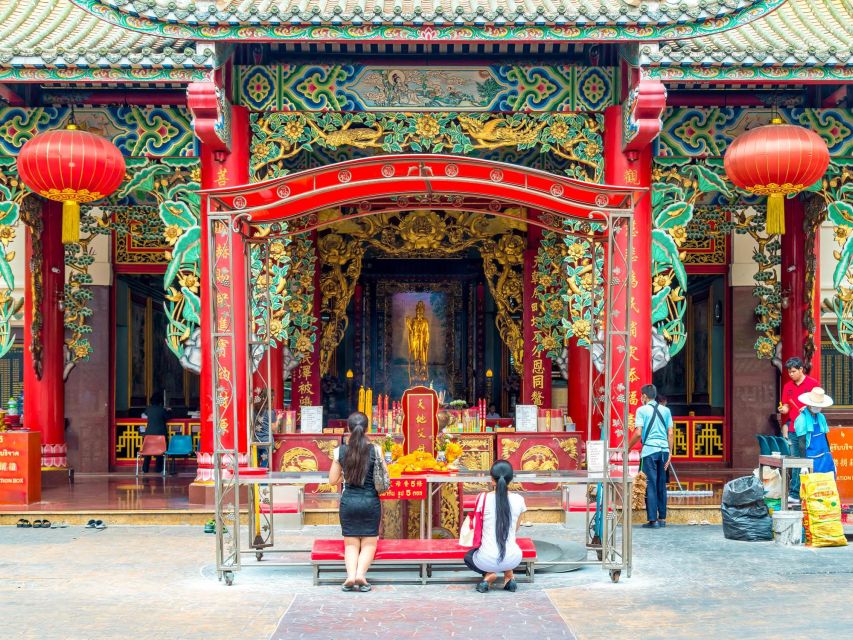
Chinatown isn’t only about Chinese food. Bangkok’s communities overlap, and faith shows up in daily routines. Some guides add pauses at Buddhist temples, including guidance on prayer customs and even time inside temple areas in certain situations.
This is valuable for two reasons:
- It explains why the street food smells the way it does—temples, markets, and daily life pull the same crowd.
- It gives you a cultural context that makes the neighborhood feel less random.
That said, temple access can depend on timing and conditions. If this is a priority for you, I’d bring it up early with your guide so they can steer the route when possible.
Price and value: what $64 buys you (and what it doesn’t)
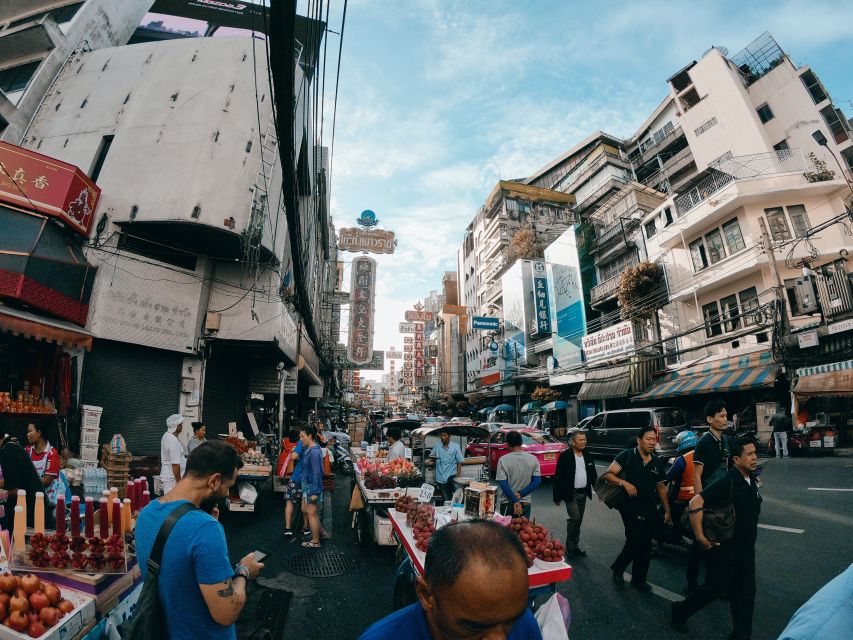
At $64 per person for 2 hours, you’re paying for the guide and the logistics, not an all-you-can-eat feast. The tour includes:
- An English- and Thai-speaking tour guide
- A walking tour
- Insurance
- Carbon emissions offset credits
Food tasting expenses are not included. So the real question is: what will you spend during the walk?
From the way the tour is described—multiple stalls, snacks, and optional take-away—you’ll likely spend extra, but the big upside is that you’re choosing what you actually want to eat rather than being forced into a fixed set menu. You also reduce risk. A good guide often helps you avoid paying for items that aren’t worth it for your tastes.
A practical budgeting approach: treat the tour price as your “navigation and ordering fee,” then plan your food budget separately with cash.
Group size and pacing: why “up to 9” matters in Yaowarat
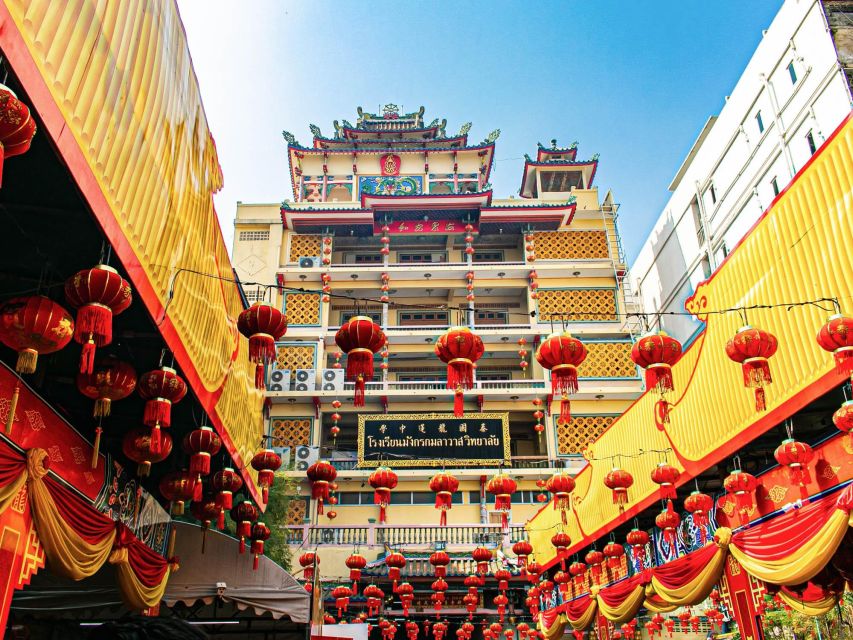
Small group size isn’t a luxury here—it’s a functional advantage. Yaowarat is tight in places. With a larger group, you’d spend more time waiting and less time eating.
With a cap of 9 participants, the guide can:
- keep people together without rushing
- respond faster if someone wants to try something different
- tailor pacing so you’re not sprinting between stalls
This is also why people mention feeling safer. When the guide is managing crossing, crowd flow, and stall introductions, you’re spending your attention on flavors—not on logistics.
What to bring: your Chinatown packing list
This is one of those tours where small gear choices make your night easier. Bring:
- Comfortable shoes (you’ll be walking)
- Cash (for stalls since food tasting isn’t included)
- Hat or sunglasses
- Umbrella (weather can change fast)
- Camera and sunscreen
- Insect repellent
Also consider the “small comfort” items: a scarf or sarong can help in crowded places, and it’s handy if you’re walking into areas with strong AC or temple conditions that require coverage.
Practical safety and health notes you shouldn’t skip
The tour is not suitable for wheelchair access, and it’s also listed as not appropriate for people who are pregnant or have mobility impairments, heart problems, or respiratory issues. That’s not just paperwork—this style of street walking can mean uneven pavement, crowding, and limited room to pause.
If you’re on the cautious side health-wise, I’d take the posted guidance seriously. It’s better to choose a slower, more accessible food experience than to push your limits in a dense night market.
Responsible travel angle: GSTC-certified with insurance and offsets
This tour is GSTC-certified, and it includes insurance plus carbon emissions offset credits. Even if you don’t care about paperwork, these pieces matter. Insurance coverage is a baseline comfort on any food-and-walking activity, and carbon offsets show the operator is thinking about environmental impact rather than pretending it doesn’t exist.
Also, being GSTC-certified usually signals that the tour has basic standards around how it operates. It’s not a guarantee of perfection, but it’s a good sign that safety and responsibility aren’t afterthoughts.
Who this tour suits best
I’d point this one at three types of travelers:
- First-timers in Bangkok who want Chinatown context fast, without getting lost in a food chaos maze
- Food-focused travelers who like street snacks but want help choosing and ordering
- People who enjoy a human guide—the tour is built around stories, explanations, and Q&A, not just passing by stalls
If you hate crowds, you might find Chinatown intense. But with a guide managing the route and pace, it’s usually manageable.
Should you book the Bangkok Chinatown Taste Walk?
If you want a short, guide-led way to eat your way through Yaowarat, this is a strong pick. The best part is the combination of flexible tasting plus specific anchor dishes like Guay Jub Ouan Pochana and Pa Tong Go Savoey, all while you’re learning how the food fits into daily life.
I’d book if you:
- have 2 hours and want to use it well
- like street food but don’t want to guess at every order
- want a small-group experience
I’d think twice if:
- you want food fully included in the price (here, food costs are separate)
- you’re looking for a fully seated “restaurant tour” vibe
- you fall into the health or mobility categories listed as not suitable
If you book, do one simple thing: message your needs clearly up front (allergies, what you hate, what you love), then show up with good shoes and cash. Chinatown will do the rest.
FAQ
Where do I meet for the Bangkok Chinatown walking tour?
Meet outside Exit 3 of Wat Mangkon MRT station. Your guide will be holding a TripGuru sign, and you should be ready about 10 minutes before the pickup time.
How long is the tour?
The tour lasts about 2 hours.
Is the tour in English?
Yes. The tour provides an English live guide, and it’s also described as English- and Thai-speaking support.
How big is the group?
It’s a small group limited to 9 participants.
What’s included in the price?
Included are the tour guide, a walking tour, insurance, and carbon emissions offset credits.
What’s not included?
Food tasting expenses are not included, along with hotel pickup/drop-off and personal expenses. You’ll want to bring cash.
Do I get to choose what I eat?
This is described as having no fixed itinerary, so you can taste what you want instead of being locked into one set schedule.
Is the tour suitable for anyone with mobility issues?
No. It’s not suitable for wheelchair access and it’s also listed as not suitable for people with mobility impairments.
What should I bring with me?
Bring comfortable shoes, cash, sunglasses and/or a hat, an umbrella, sunscreen, insect repellent, a camera, and items like a scarf or sarong if you want extra comfort.
What are the cancellation and payment options?
Free cancellation is available up to 24 hours in advance for a full refund, and there’s a reserve now & pay later option (you can book and pay later).