REVIEW · 2-DAY EXPERIENCES
River Kwai Jungle Rafts: 2-Day Kanchanaburi Escape from Bangkok
Book on Viator →Operated by Asian Trails LTD · Bookable on Viator
The River Kwai looks calm. Under the surface, this 2-day trip mixes WWII memorial stops with an off-grid jungle raft overnight. I love how the history is explained in plain language, and I love that the overnight forces you to slow down and actually feel the river setting. One consideration: you’ll trade comfort for atmosphere, since the raft stay can be hot and simple.
The payoff is worth it, but the schedule is early and active. You start at 6:00 am, you’ll spend time on boats and in vehicles, and some walking and uneven paths can be tiring in the heat.
Key points to know before you go
- A guided WWII route that connects the museum sites to the bridge and memorial area
- Overnight on the Jungle Rafts with simple rooms and an off-grid feel (plan for no modern comforts)
- Hellfire Pass by boat plus a dedicated interpretive centre to frame what you see
- Death Railway on an actual train ride over the route built by POWs
- Small-group feel (max 15) that’s better than a big bus scramble
- Mon culture time: a Mon dance at the raft and a village visit with a jungle walk
In This Review
- Your Two-Day Kanchanaburi Plan: History + River Life
- Pickup in Bangkok and the Pace You’ll Actually Feel
- Day 1 First Stop: Thailand–Burma Railway Centre
- River Kwai Bridge Photos, Then a Long-Tail Boat Ride
- Hellfire Pass Interpretive Centre: Cruising to a Hard Place
- Jungle Rafts Overnight: Off-Grid Comfort and Quiet River Sounds
- Day 2 Mon Village and Jungle Walk: Meeting a Local Community
- Death Railway Train Ride: The Track Still Runs Today
- Price and Value: Is $209 a Good Deal for This Combo?
- What to Pack and What to Expect on the Rafts
- Who Should Book This Tour (and Who Might Rethink It)
- Should You Book the River Kwai Jungle Rafts 2-Day Escape?
- FAQ
- What time does the tour meet in Bangkok?
- Is the tour guided in English?
- What size group is this tour?
- What meals are included?
- Do I sleep on a raft during the tour?
- Is there electricity on the Jungle Rafts?
- What WWII-related stops are included?
- Is the Death Railway train ride included?
- Do you provide pickup from anywhere in Bangkok?
Your Two-Day Kanchanaburi Plan: History + River Life
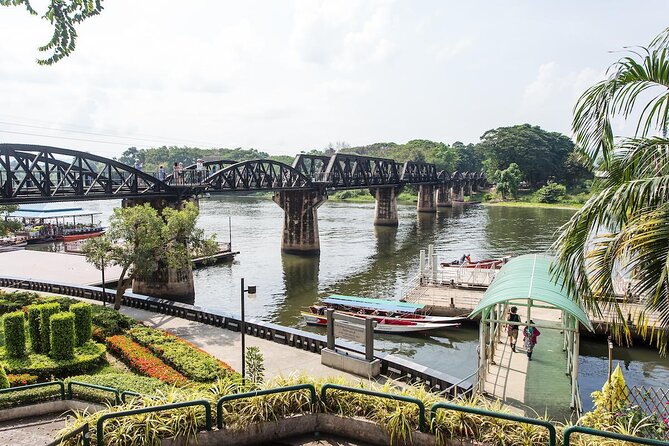
This is the kind of trip that doesn’t sit still. You’ll be in vehicles early, then on long-tail boats, then riding the train over the Death Railway tracks. In between, you’ll hit the major WWII landmarks in Kanchanaburi Province and learn what they meant in real, human terms.
What makes it compelling is the combination. Museum time and interpretive stops do the heavy lifting for context. Then you sleep on a raft near the river and wake up to jungle paths and rural village life. That contrast is the point. It turns a lesson into something you remember when you’re back in Bangkok.
You’re also not stuck figuring out the tricky logistics yourself. With a professional English-speaking guide, included admissions, and a set overnight, you can focus on seeing and understanding instead of wrangling transport between sites.
Pickup in Bangkok and the Pace You’ll Actually Feel
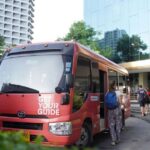
The meeting time is 6:00 am. That’s early enough that you’ll want to be awake before the driver even arrives—coffee, water, and a hat help. Pickups run only within downtown Bangkok areas for main hotels, and some neighborhoods (and both international airports) are excluded from the standard service, with possible supplementary charges.
The schedule is efficient, but it’s not slow travel. Plan on a fair amount of time in the mini-van or coach and on boat transfers. Also, the itinerary includes driving over uneven paths and bumpy roads. If you have limited mobility, neck/back issues, or you’re pregnant, this won’t feel easy.
Group size is capped at 15 travelers max. That’s a sweet spot: you usually get a guided experience without the chaos of a large tour bus. Still, you should know that English clarity can vary by guide—some guides in this program are excellent at explaining, while others can be harder to follow on longer segments. If language precision matters a lot to you, consider booking a private option.
You can also read our reviews of more tours and experiences in Bangkok
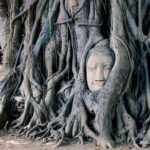
Day 1 First Stop: Thailand–Burma Railway Centre
Day 1 begins with a scenic drive from Bangkok to Kanchanaburi. Your first history anchor is the Thailand–Burma Railway Centre. This is an interactive museum, which is useful because it gives you a mental map before you see the more emotional memorial locations later.
This stop matters because it reframes everything you’ll visit afterward. The Death Railway wasn’t just a line on a map—it was a massive, brutal project. Getting the background early helps you connect the bridge, the memorial pass, and the train ride on Day 2.
Admission here is free as part of the included program. Time-wise, it’s about an hour—enough to get grounded without turning Day 1 into a full museum day.
River Kwai Bridge Photos, Then a Long-Tail Boat Ride
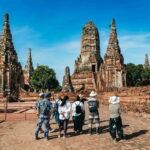
Next, you’ll head to the River Kwai Bridge for snapping photos. The bridge is famous for a reason, but it’s also a reminder of how war turned engineering into suffering. This is one of those moments where the scenery looks iconic, yet the context makes it heavy.
After the photo stop, you board a long-tail boat and drift along the river toward the Jungle Rafts—your home for the night. This transfer is more than transport. It’s your transition from city mornings to river-country life, and it sets expectations for what the next day will feel like.
The program lists this time at around 30 minutes. If you’re prone to motion sickness, bring what you normally use. Boats plus heat isn’t everyone’s favorite combo.
Hellfire Pass Interpretive Centre: Cruising to a Hard Place
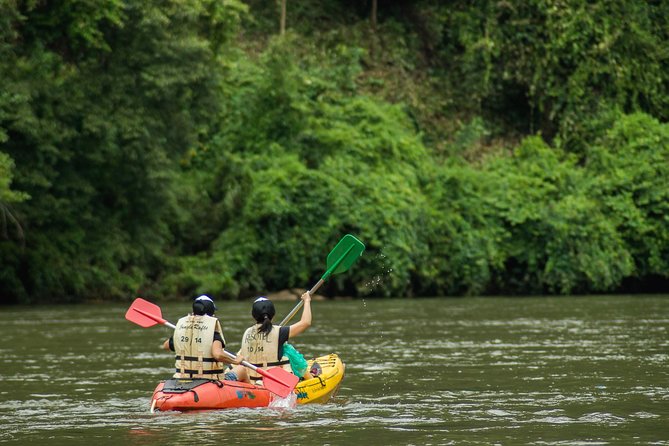
After lunch at the floating restaurant linked to your raft area, you’ll take a boat to the Hellfire Memorial Pass and visit the Hellfire Pass Interpretive Centre. This is the moment when the tour turns somber in a real way.
Hellfire Pass is where POWs used hand tools and explosives to cut through sheer rock. The interpretive centre is important because it explains what you’re looking at—why that pass is so significant, and what it cost the people who built it.
Time on this stop is about 1.5 hours. That’s the right length: long enough to understand the story, short enough that you’re not stuck indoors while your tour group moves on.
One practical note: if the memorial area is closed due to holiday timing, the tour may use a substitute site instead of Hellfire Pass itself. If you’re traveling during major Thai holidays, it’s worth asking the operator about current access.
Jungle Rafts Overnight: Off-Grid Comfort and Quiet River Sounds
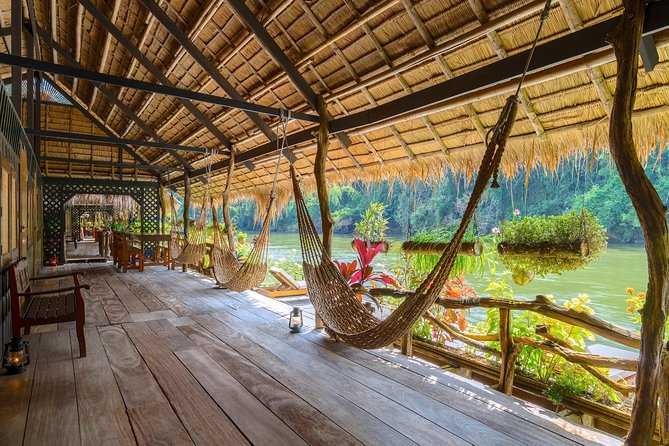
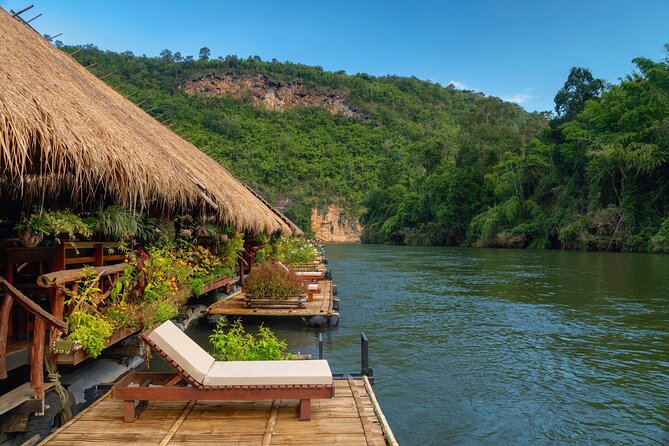
This is the part many people book for: sleeping on a raft in the Kanchanaburi river setting. The accommodation is simple, and the program openly sets expectations—basic amenities, and in some cases no air-conditioning (fan-only), and possible lack of Wi‑Fi or warm water.
The biggest thing to plan for is electronics. The program warns that water can damage electronics, so protect your phone and camera. Also, people learn quickly that an off-grid stay means less control. If you’re expecting modern comfort, you’ll feel the difference. If you’re ready for a more rustic adventure, you’ll enjoy it more.
Food is also part of the experience. Breakfast is included, and meals are listed throughout the program. Reviews of this style of stay often mention that the food is plentiful and satisfying, which matters because you’re far from restaurants and you need energy for the next day’s walk and train ride.
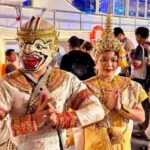
There’s also a Mon dance performance at the Jungle Rafts. It’s short, cultural, and a nice switch from the heavy WWII focus. It reminds you that this area isn’t only a memorial zone—it’s living community land.
Day 2 Mon Village and Jungle Walk: Meeting a Local Community
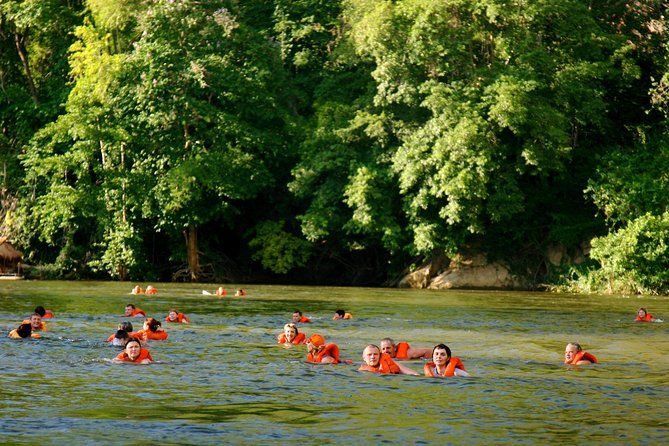
After breakfast, you head to a nearby rural Mon village. You’ll take a short hike into the jungle around the village. The time here is about 2 hours, and the point isn’t fitness bragging. It’s seeing how people live in the region and getting a sense of local culture beyond the war sites.
This village stop is a strong counterbalance to Hellfire Pass. You’re not just collecting tragedy. You’re witnessing continuing traditions and daily life. It also helps you remember that the railways and camps were built on top of real communities and real landscapes where people live now.
Bring a hat and sunscreen. The tour guidance specifically calls out sun protection, even on cloudy days, because the sun can still be strong. Comfortable shoes help too, especially with uneven paths and the usual humid conditions.
Death Railway Train Ride: The Track Still Runs Today
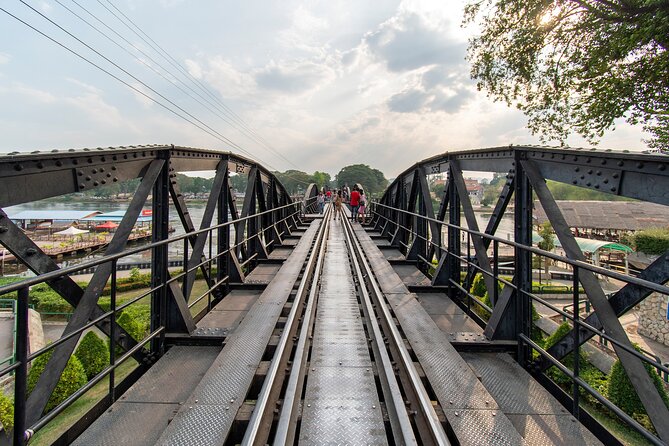
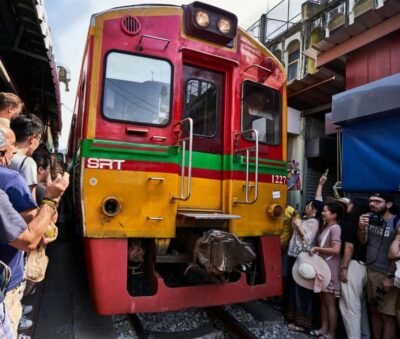
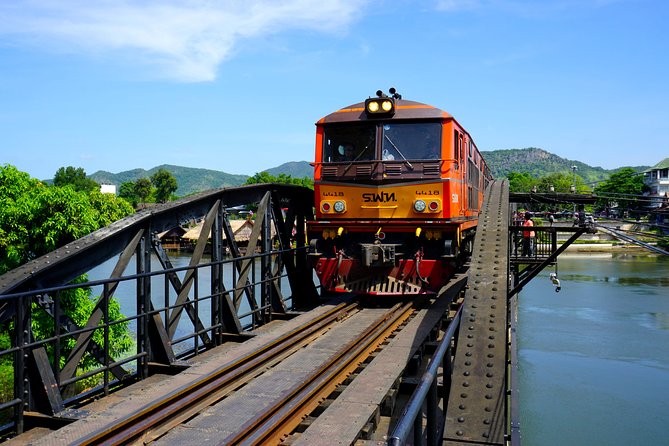
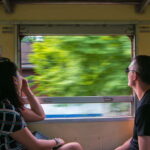
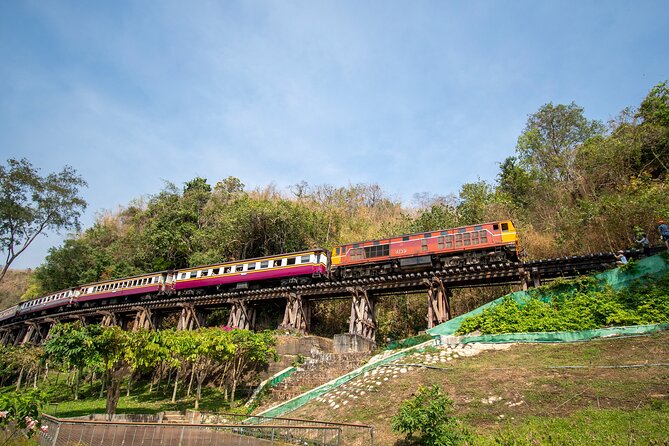
Returning to the Jungle Rafts, you check out and head downstream by boat. Then you board a local train for a ride over the Death Railway—over the actual tracks built by POWs.
This is one of the most valuable parts of the itinerary. Seeing a memorial and reading about rail construction is one thing. Feeling the train move across the same corridor where history happened is another. It connects your museum understanding to a physical route that still matters for daily travel.
The program lists about 1.5 hours for this segment. It’s long enough to notice the rhythm of the ride and take in the countryside from a moving seat, but short enough that you’re not trapped for a whole day on transport.
When you travel back toward Bangkok after this, you’ll likely feel the emotional arc of the trip more clearly. Day 1 sets context and location. Day 2 delivers a direct connection through the train and the community village visit.
Price and Value: Is $209 a Good Deal for This Combo?
At $209 per person, the value depends on your priorities. Here’s what you’re paying for, based on what’s included:
- A professional English-speaking guide across both days
- Transfers by car/mini-van/coach and long-tail boat rides
- Museum and memorial admissions as listed
- Jungle raft accommodation for one night
- Meals included in the program (breakfast and lunch, plus snacks/drinks/refreshments)
- The train ticket for the Death Railway ride
- Traditional Mon dance performance and the Mon village visit
If you tried to assemble this yourself, you’d spend money on multiple separate tickets, transport between sites, and likely lose time dealing with timing mismatches. The real value is not just convenience—it’s the guided sequencing. You see each landmark in a logical order: context first, then memorial, then the living railway experience.
The one cost that can catch people is optional extras during the day. For example, water might not be fully covered for every lunch situation, and it can be hot. If you’re the type who hates unexpected add-ons, plan to carry some cash or be ready to buy small items on the route.
What to Pack and What to Expect on the Rafts
This trip asks for practical packing. The guidance calls out sunglasses, a hat/cap, and high SPF sunscreen. It also flags water damage risk for electronics, so protect your gear.
On the accommodation side, expect basic conditions. Reviews and program notes point toward minimal modern conveniences—often no electricity in the raft overnight setting, and limited comfort options like fans instead of AC. That means:
- Charge devices before the overnight if you can
- Bring a power bank if you rely on your phone
- Bring a small towel and breathable clothes
- Don’t count on hot showers
Heat and humidity are part of the reality. You’ll do better if you treat this as a soft-adventure stay rather than a hotel weekend.
Who Should Book This Tour (and Who Might Rethink It)
I’d steer you toward this tour if you:
- Want a two-day hit of major Kanchanaburi WWII sites without planning logistics
- Like guided history that explains what you’re seeing in plain language
- Enjoy the “sleep somewhere unusual” element—especially river settings
- Are okay with simple accommodation and heat as part of the experience
I’d rethink it if you:
- Need full-day comfort and modern amenities
- Have limited mobility or health issues that make uneven roads a problem
- Hate early mornings and long vehicle transfers
- Expect the raft stay to feel like a standard hotel
There’s also an emotional factor. Hellfire Pass is hard to process. If you’re okay with reflective, memorial-focused travel, you’ll likely find the experience meaningful. If you need light and funny only, this won’t match that mood.
Should You Book the River Kwai Jungle Rafts 2-Day Escape?
Book it if you want the rare combo of WWII context plus a real river overnight plus the Death Railway train ride—all guided and timed for you. The price feels reasonable when you count the included guide work, admissions, transport, raft accommodation, and the train ticket.
Before you pay, just be honest about comfort expectations. This is not a luxury stay. It’s more like nature-meets-history travel, with heat and minimal electricity in the raft area. If that sounds exciting, you’re in the right place.
Also know the booking rule: it’s non-refundable and cannot be changed for any reason. Make sure your dates in Bangkok are firm.
If you want, tell me your travel dates and where you’re staying in Bangkok, and I’ll help you sanity-check whether pickup is likely to be smooth and how to plan your day around that 6:00 am start.
FAQ
What time does the tour meet in Bangkok?
The meeting time is 6:00 am. You should be ready for an early start.
Is the tour guided in English?
Yes. The tour includes a professional English-speaking guide. If you book as a joint/seat-in-coach tour, it is also with an English-speaking guide.
What size group is this tour?
This tour has a maximum of 15 travelers.
What meals are included?
Breakfast and lunch are included, along with snacks, drinks, and/or refreshments during the tour. The program also states meals are included as indicated in the itinerary.
Do I sleep on a raft during the tour?
Yes. You’ll have overnight accommodation in sharing twin/double rooms during the tour on the Jungle Rafts.
Is there electricity on the Jungle Rafts?
The overnight setup on the rafts is off-grid in the sense that there is no electricity, so you should expect limited modern comforts.
What WWII-related stops are included?
You’ll visit the Thailand–Burma Railway Centre, the River Kwai Bridge, and the Hellfire Pass Interpretive Centre, plus you’ll ride the Death Railway by train.
Is the Death Railway train ride included?
Yes. The tour includes the train ticket for a ride over the Death Railway.
Do you provide pickup from anywhere in Bangkok?
Pickup and drop-off are only offered within downtown Bangkok at main hotels. Some areas and locations (including certain neighborhoods and airports) are excluded and may require supplementary charges.