REVIEW · 2-DAY EXPERIENCES
2-Day Angkor Wat Tour from Bangkok
Book on Viator →Operated by Angkor Partner Travel &Tours - APTT · Bookable on Viator
Angkor Wat in two days is a sprint, not a stroll. What makes this tour work is the private, guided setup: pickup in Thailand, a supported Poi Pet crossing, then temple time plus a Tonlé Sap floating village visit. You’re also getting the kind of early starts that make sunrise temples feel possible.
I especially like the way this trip handles the messy bits—pickup, transfers, and entrance tickets—so your brain can focus on the ruins. The Tonlé Sap floating village side trip also adds texture beyond just Angkor photo stops.
One thing to consider: it’s a long drive from Bangkok/Pattaya/Koh Chang to Siem Reap and back. If you hate early mornings (or long hours on the road), you’ll want to plan for that.
In This Review
- Key Points That Matter Most
- Why This Bangkok–Siem Reap Trip Works in 48 Hours
- Getting to Poi Pet: The Border Part You Don’t Want to DIY
- Day 1 in Siem Reap: Tonlé Sap and Chong Kneas by Boat
- Day 2: Angkor Wat Sunrise and the Big Icon Temples
- Ta Prohm: The Tree Temple Stop That People Love for a Reason
- Price and Value: What $390 Buys You (and What It Doesn’t)
- Tips That Make the Whole Tour Feel Easier
- Who This Is Best For (and Who Should Rethink It)
- Should You Book This 2-Day Angkor Wat Tour from Bangkok?
- FAQ
- Is my Cambodia visa included in the tour price?
- What time do you get picked up in Bangkok or Pattaya?
- Does the tour include sunrise at Angkor Wat?
- Where do you go on Day 1 besides Siem Reap?
- Is hotel and breakfast included?
- Are temple entrance fees included?
- Is the tour private?
Key Points That Matter Most
- Poi Pet border help: you’re met and escorted through the process instead of figuring it out alone
- Sunrise timing at Angkor Wat: an early start helps you see the big moments with cooler light
- Tonlé Sap by private boat: Chong Kneas floating village gives you a different side of Cambodia
- Hotel + breakfast included: one night in Siem Reap means you’re not racing through on fumes
- Temples tickets are included: you don’t end up doing last-minute cost math at the gate
- A real guide narrative: people praise guides like Bunrong, Vithyea, Yuth, and Dunrong for history + pacing
Why This Bangkok–Siem Reap Trip Works in 48 Hours
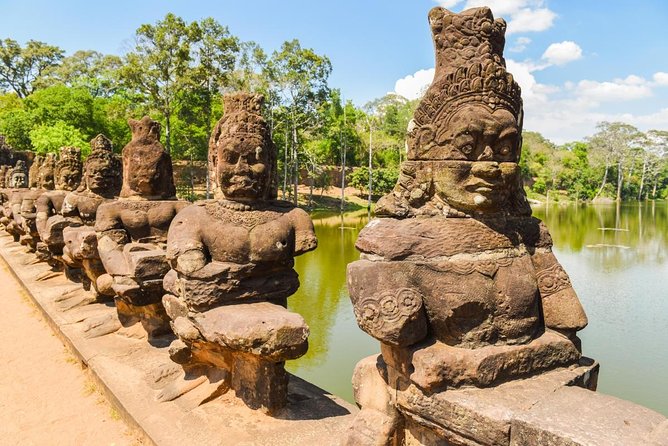
This is not a casual weekend. It’s a well-structured Thailand-to-Cambodia relay where you sleep once in Siem Reap and still hit major temple highlights. The payoff is simple: you get the icons—Angkor Wat, Bayon, Ta Prohm—plus a cultural contrast at Tonlé Sap, all without juggling flights or independent border logistics.
I like that the experience is designed around reducing uncertainty. You start early in Thailand, you’re guided through entry into Cambodia, and you’re back in Thailand at the end. That means the adventure is more about what you see than what you forgot.
The “private tour” element is also a practical win. Your schedule is still temple-planned, but you’re not trapped in a huge mass group shuffle. Reviews consistently mention smooth transport and guides who handle timing and questions well.
You can also read our reviews of more tours and experiences in Bangkok

Getting to Poi Pet: The Border Part You Don’t Want to DIY
You’ll be picked up around 6:30am from your accommodation in Bangkok, Pattaya, or Koh Chang. From there it’s a drive toward the Poi Pet border crossing (about a few hours in, depending on conditions). The key point: you meet your guide at the border, so the handoffs feel managed rather than chaotic.
Important reality check: the tour includes the border process support, but it does not include your Cambodia visa cost. The base information says visa is $30 USD (and it also notes ASEAN passport holders get a free Cambodia visa for 30 days). You can apply for an e-visa online and print it, or do visa on arrival at Poi Pet if you bring what’s required (including a photo per the tour notes).
From practical advice shared in feedback, I’d plan for border friction even when help is provided. Have your documents ready, bring cash, and keep your passport details organized. One helpful tip: carrying extra USD is useful because Cambodia uses both Riel and USD pricing in many places, and exchanging money can feel like a bad deal.
Also worth knowing: temple entry requires respectful attire. Short dress isn’t allowed at the sites, so plan to bring something that covers properly.
Day 1 in Siem Reap: Tonlé Sap and Chong Kneas by Boat
Once you arrive in Siem Reap, you check into your standard/comfortable hotel (the included listing references a 4-star hotel with breakfast). Then you get a break to freshen up before the afternoon lake portion.
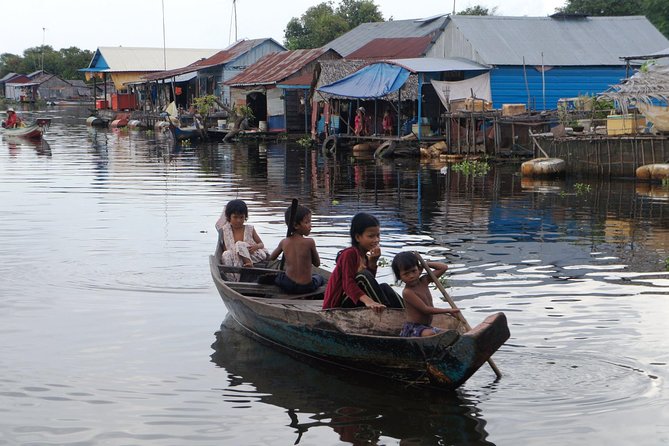
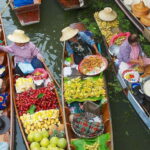
The Tonlé Sap visit is focused on one thing: seeing life tied to the water. You’ll go out on a private boat to a floating village—specifically Chong Kneas Floating Village based on the stop details. This isn’t a quick look-and-run. The point is to slow down enough to understand how communities adapt as the lake changes.
Here’s why I think this stop is so valuable. Angkor can dominate your memory with stone and scale. Tonlé Sap gives you a different rhythm—real people, different living patterns, and a sense of Cambodia that isn’t only about monuments.
Timing matters too. The tour sets this lake trip for the afternoon (around 3:30pm), which often feels like a better match for energy levels after the border drive. In many Siem Reap trips, the late-day light is also friendlier for photos and makes the boat ride feel less exhausting.
Then you’re back at the hotel for evening freedom. You’ve got time to wander areas around Pub Street, eat at restaurants, or browse a night market at your own pace. With only two days, that “free night” is a smart use of time—you can recharge without missing your one scheduled big evening.
Day 2: Angkor Wat Sunrise and the Big Icon Temples
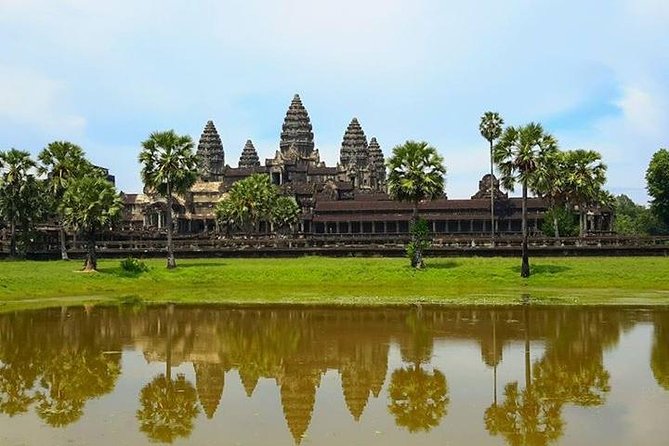
Day two starts early for a reason: sunrise over Angkor Wat is one of the highlights built into this tour. That early timing is about more than romance. It helps with heat, and it often makes the first look at Angkor’s towers and bas-reliefs feel more dramatic.
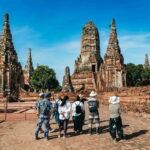
You’ll spend about two hours at Angkor Wat with the guide leading the narrative. The guide work matters here. You’ll get context for what you’re seeing—Hindu temple roots, later historical layers, and the way UNESCO describes the site’s importance. If you like temple visits with explanations rather than silent staring, this is a good fit.
After Angkor Wat, the tour moves to Bayon Temple, part of the Angkor Thom complex. Expect about two hours there, and yes, the main draw is the 49 towers covered in the famous smiling faces of Buddha. This is one of those places where photos don’t really capture what your brain picks up in person: the symmetry, the repeating faces, the way the structure feels alive even when you’re surrounded by other visitors.
If you care about photography, sunrise is your best friend on this kind of schedule. Plan for the fact that you’ll be moving between major sites with limited time to linger whenever the light changes. A good guide helps you hit the best angles without burning time.
Ta Prohm: The Tree Temple Stop That People Love for a Reason
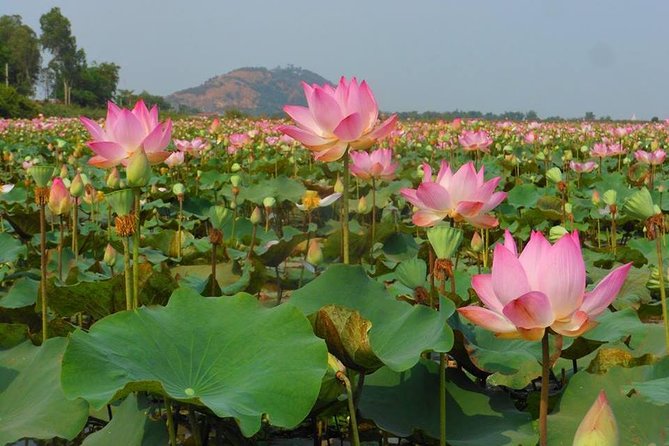
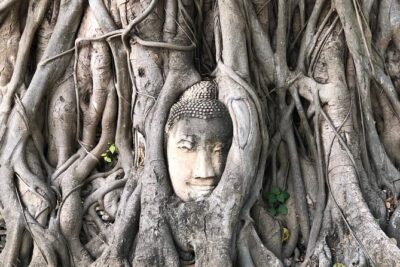
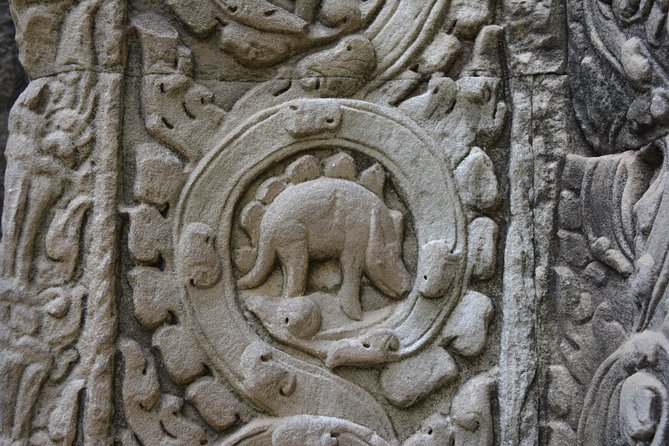
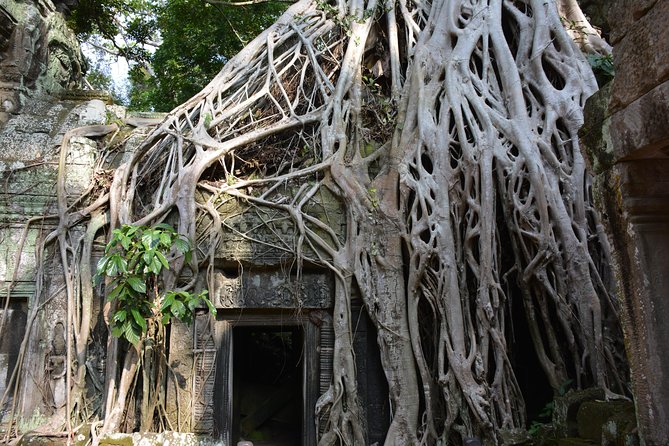
Next comes Ta Prohm, often called the tree temple because roots and massive trunks weave into the stone. The tour notes reference it’s the one people connect with the movie Tom Raider, which gives you a quick cultural shortcut for what the site vibe feels like.
You’ll spend time there (the stop info lists it as Ta Prohm Temple with temple ticket included and then the transfer back). What you can expect is a different kind of visual intensity than Angkor Wat. Angkor Wat feels controlled and grand. Ta Prohm feels like nature reclaimed the architecture, with a slightly wilder feel to the walking paths and viewpoints.
This is a good place to slow down, even if your schedule is tight. The trees here create frame-like compositions naturally. If you’re trying to photograph people climbing and poses in the roots, remember: keep it respectful and don’t block walkways. The tour’s value isn’t in “fastest photos,” it’s in seeing the sites in a way that matches the stories your guide is telling.
Then it’s time for the long return transfer back to Thailand (the info says transfer back to Bangkok after the final stop). That drive is part of the deal. It’s also why the overnight hotel on Day 1 is so important; without it, you’d lose the last day to exhaustion.
Price and Value: What $390 Buys You (and What It Doesn’t)
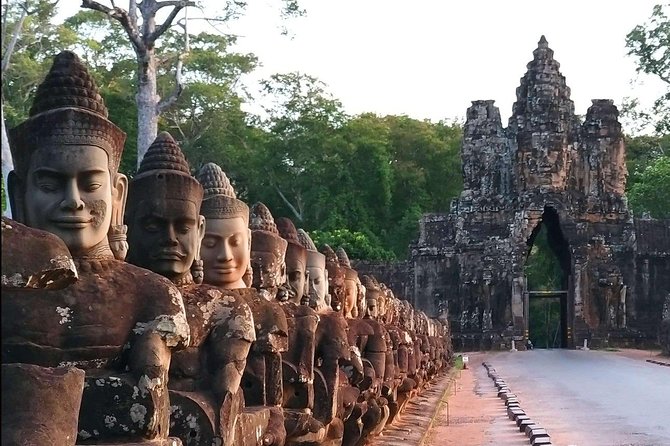
At $390 per person, this is not a budget-only idea. But for a two-day private-style route that includes an overnight hotel, airport-style pickups, a licensed guide, entrance tickets, and a Tonlé Sap boat ride, it can be good value compared with trying to assemble the whole thing yourself in a short window.
Here’s what’s included:
- Hotel pickup and drop-off
- Private air-conditioned vehicle
- 1 night accommodation in a hotel in Siem Reap plus breakfast
- Licensed tour guide
- Temples ticket
- Tonlé Sap boat ride + floating village visit (this is specifically called out in the tour highlights and expectations)
Here’s what’s not included:
- Cambodia visa (listed as $30 USD)
- Lunch and dinner
- Personal expenses
- Optional VIP skip for $10 USD
So the real decision is whether you want to pay to remove friction. If you’re the type who would rather solve logistics early (and doesn’t mind the border), you might do it cheaper. If your goal is to maximize meaningful temple time in only two days, this package is basically buying you time and sanity.
One more value angle: because this is private and capped at up to 15 people, the experience often feels more controlled than standard group tours. You’re still in a fixed schedule, but you’re not stuck waiting forever for a chain of slow walkers.
Tips That Make the Whole Tour Feel Easier
Based on the kind of issues people run into on borders and temple days, here are the practical moves I’d make before you go.
1) Get your visa plan nailed early
If you do the e-visa, print it. The tour notes say to print your e-visa two copies. That’s a very specific detail for a reason. It’s easier than scrambling at the border.
2) Dress like you’ll be told to change
Temple dress rules can be strict. The tour info notes short dress won’t allowed at temples, so bring something that covers enough to feel confident.
3) Carry some USD cash
You might find prices listed in both Riel and USD. In feedback, people recommended using USD to avoid poor exchange rates and warned that some Riel change can be hard to spend later. The small takeaway: don’t rely only on whatever currency you exchanged last.
4) Use WhatsApp if they suggest it
Communication can vary, so it helps to have direct contact if the operator provides it. People reported that confirming details over WhatsApp made meeting points smoother—especially for driver handoffs.
5) Remember the return handoff point
Border logistics include picture-based handoffs and drop-off points. People emphasized that you should remember where you were dropped on the way back, because that’s where the return transport is organized.
None of this means you’ll suffer. It means you’ll feel prepared, and that turns a long day into a manageable one.
Who This Is Best For (and Who Should Rethink It)
This tour fits best when:
- you have limited time and want Angkor highlights without complicated planning
- you value a guide story more than independent wandering
- you want the Tonlé Sap floating village included, not left out
It may be less ideal if:
- you hate long road travel from Thailand and back
- you prefer to craft your own border routine and daily pacing
- you want a deeper Angkor circuit that goes beyond the top icons
Also consider your pace preference. Two days means you’ll see a lot, but you won’t get unlimited “one more hour here” flexibility. The tour schedule is built to hit the major monuments efficiently.
If you’re a couple, the tour notes mention one king-size bed room for couples. If you’re traveling with friends or family, it mentions a room with two beds. That’s useful if you’re trying to keep everyone comfortable for a night in Siem Reap.
Should You Book This 2-Day Angkor Wat Tour from Bangkok?
I’d book if you want Angkor Wat and the major temple trio with a guide, a hotel night, and a cultural add-on at Tonlé Sap—without turning your vacation into a paperwork exercise. The included tickets, hotel, guide, and boat ride make it hard to replicate on your own in just two days.
I’d think twice if your priority is slow travel, deep temple exploration, or if you’re sensitive to early mornings and long drives. You can do it cheaper independently, but you’ll pay with stress and time.
If you do book, I’d go into it prepared for temple dress rules, a clear visa plan, and border handoffs. Also, if your booking process allows it, you can ask about guides people praised—names like Bunrong, Dunrong, Vithyea, and Yuth appear repeatedly in positive feedback for knowledge and good pacing.
FAQ
Is my Cambodia visa included in the tour price?
No. The tour notes say visa to Cambodia is not included, listed at $30 USD. It also mentions ASEAN passport holders receive a free visa for 30 days. The notes explain options like applying for an e-visa online or getting a visa on arrival at Poi Pet.
What time do you get picked up in Bangkok or Pattaya?
Pickup starts at 6:30am from your accommodation.
Does the tour include sunrise at Angkor Wat?
Yes. The highlights specify an early start to see sunrise over Angkor Wat.
Where do you go on Day 1 besides Siem Reap?
You’ll visit Tonlé Sap Lake and take a boat trip to a floating village. Chong Kneas Floating Village is listed as the stop.
Is hotel and breakfast included?
Yes. The tour includes 1 night accommodation in Siem Reap and breakfast.
Are temple entrance fees included?
Yes. The tour states that temples ticket (temple entrance) is included, so you don’t need to worry about unexpected costs at the gates.
Is the tour private?
It’s described as a private tour, with only your group participating. The group size is listed as a minimum of 1 and a maximum of 15.