REVIEW · FLOATING & RAILWAY MARKET DAY TRIPS
Damnoen Saduak Famous Floating Market and Mea Klong Railway Tour
Book on Viator →Operated by Best Local Experiences · Bookable on Viator
A train slices through the market. The Mae Klong Railway Market is exactly that kind of Thailand moment: you watch stalls get cleared fast, then everything pops back into place right after the train passes. I love how the timing feels real, not staged—like you’re watching local work and routines in motion.
I also like that the day doesn’t stop at one famous site. You’ll ride a teakwood boat to get inside the Damnoen Saduak Floating Market, and you’ll also spend time at a coconut sugar farm to see how the sweet stuff is made. Elena and Tooky, two guides noted in feedback, come up a lot for a friendly, clear style that makes the stops easier to enjoy.
One thing to plan for: the trip is about 6 hours with long stretches of road travel, and it notes about 90 minutes at a time. If you get car sick easily, you’ll want to prepare (or choose a different format).
In This Review
- Key highlights to know before you go
- Why This Half-Day Combines Two Market Worlds
- Mae Klong Railway Market: The Train Market You Can’t Unsee
- Samut Songkhram Transfer Time and the Coconut Sugar Farm Stop
- Damnoen Saduak Floating Market: Boats, Teakwood, and Teal-Not-for-the-Photo Water
- Price and Logistics: What $61.33 Gets You (and What It Doesn’t)
- Group Size, Timing, and Why the Pace Feels Real
- Who Should Book This Tour (and Who Might Reconsider)
- Practical Tips for Your Market Day
- Should You Book This Mae Klong + Damnoen Saduak Tour?
Key highlights to know before you go
- Mae Klong’s train-through spectacle: stalls move away from the track in seconds and reset just as quickly.
- Damnoen Saduak by boat: you don’t just stand and look—you move through the market area by water.
- Coconut sugar farm learning: a short stop to understand how coconut sugar is made, plus coconut milk shows up as a pleasant bonus in guides’ experiences.
- A full half-day with two major icons: you cover almost 96 km from Bangkok and hit both markets in one go.
- Smallish group for a big day: capped at 60 travelers, with air-conditioned transport and a local guide.
Why This Half-Day Combines Two Market Worlds
This tour is built for people who want the iconic highlights without turning the day into a multi-day production. You start in Bangkok, then head out toward Samut Songkhram to see the railway market, and later swing over to Damnoen Saduak for the floating market. It’s one long loop, around 96 km each way, but the stops are short enough that the day stays focused.
What makes this combination work is that the markets are totally different in how they operate. Mae Klong is all about timing and precision around the railway. Damnoen Saduak is about moving through waterways and buying from boats. Doing both on the same day helps you connect the dots: Thailand has these living markets that adapt to their environment, not just tourist showpieces.
You’ll also have a guide to translate what you’re seeing. In feedback, guides like Elena and Tooky are singled out for being both friendly and informative, which matters a lot when you’re watching rapid, hands-on moments like the train passing through the stalls.
You can also read our reviews of more shopping tours in Bangkok

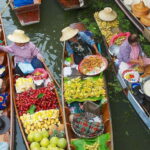
Mae Klong Railway Market: The Train Market You Can’t Unsee
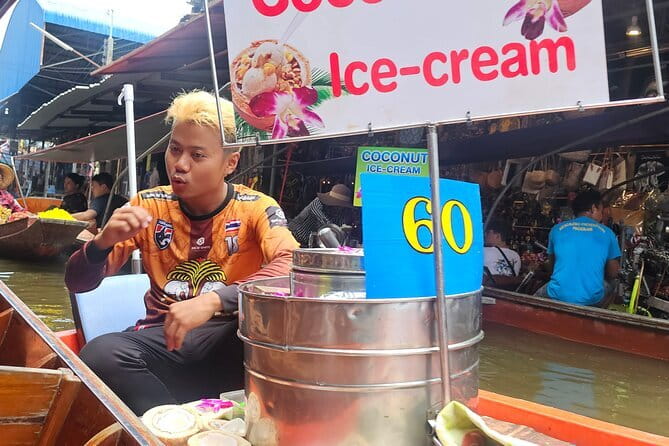
This is the headline stop for a reason: Mae Klong Railway Market is a fresh market built right next to the tracks, and the system depends on one thing—when the train arrives.
Expect a 100-metre market stretch set alongside the railway near Mae Klong Railway Station. You’ll see seafood, fruits, vegetables, fresh and dried food, meats, and other everyday goods. It’s not a museum display. It’s a working market.
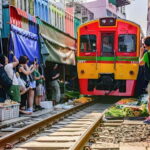
Then comes the moment. When the train is due, the sellers move their items away from the track fast—this is the part people call unbelievable. The rhythm is the real show: you watch things get cleared quickly, you feel the tension of a live schedule, and then, after the train passes, you see the market return to normal extremely fast.
A couple practical thoughts so you enjoy it instead of feeling rushed:
- Go in ready to stand and watch. You’ll want a position where you can see both the track area and the vendors resetting.
- Wear shoes you’re comfortable with. This is a close-up, active scene, not a quiet viewing deck.
- Bring patience with you. Even with a guided schedule, the train timing is the star, and the market responds to it.
Also, the guide’s role here is huge. When Elena or Tooky-type energy shows up—friendly and clear—you get context while you watch. That turns a cool video moment into something you understand.
Samut Songkhram Transfer Time and the Coconut Sugar Farm Stop
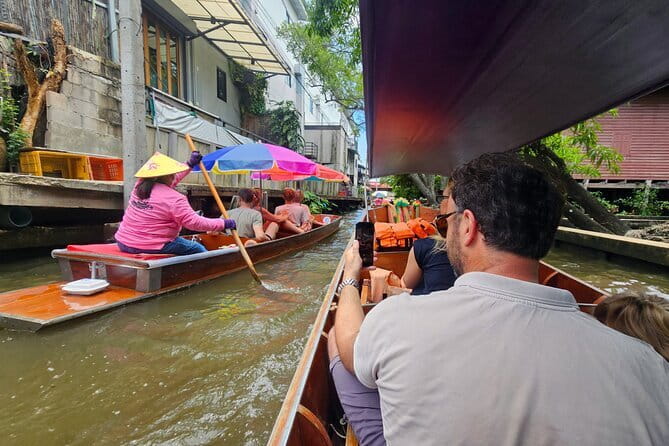
After you leave Bangkok, you’ll spend time traveling to Samut Songkhram Province, the area where Mae Klong is located. The timing on the day plan gives you about 1 hour 30 minutes for that first travel stretch, with a free-admission stop along the way.
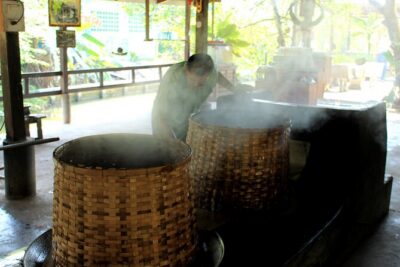
Then you’ll hit a coconut sugar farm for about 30 minutes. This is a smaller, calmer stop compared to the railway and floating markets. The value here is that it shows another side of local life: how coconut sugar is made and how people work with local materials as part of everyday routines.
In feedback, one sweet extra that people appreciated was fresh coconut milk. That’s the kind of bonus that makes a short farm stop feel worth your time—especially when most market days are only about shopping and photos.
If you’re the type who likes a little learning mixed into the sightseeing, this stop balances the intensity of Mae Klong and Damnoen Saduak. If you’re only into big spectacle moments, you might find this portion more about observation than action—but it still adds texture to the day.
Damnoen Saduak Floating Market: Boats, Teakwood, and Teal-Not-for-the-Photo Water

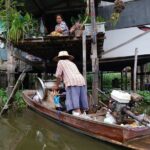
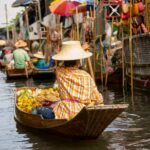
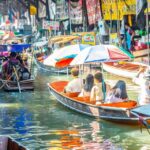
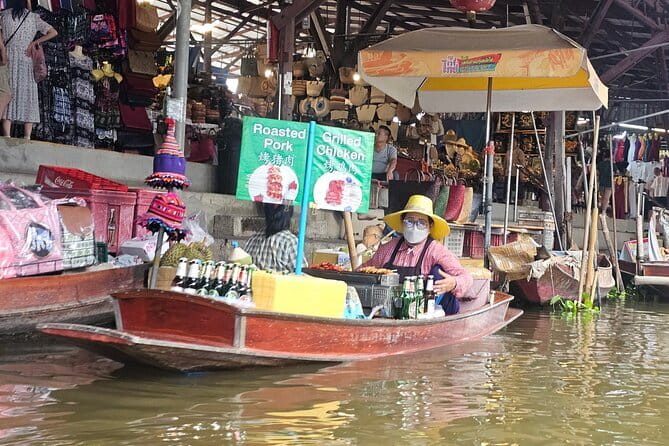
Damnoen Saduak is often called the Venice of Southeast Asia, and you’ll see why as soon as you’re on the water. The market has that boat-linked feel—sellers operate from the canal side, and the whole place reads like a network of trading spots rather than a single street.
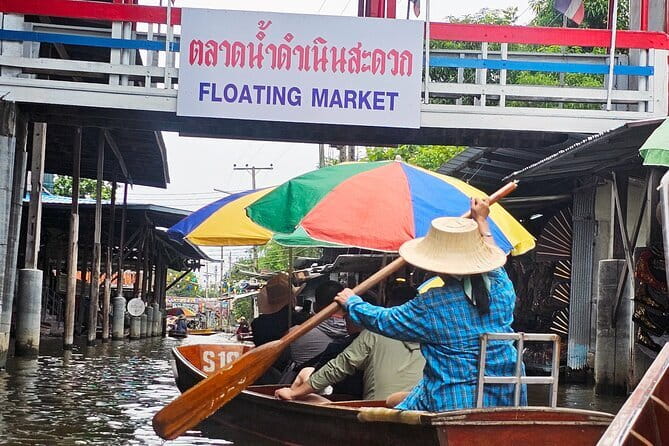
Your time here includes a teakwood boat ride into the market area, plus time at the local market for lunch. The plan gives you about 1 hour 30 minutes total for this phase, including the ride and your meal time.
What I like about doing Damnoen Saduak this way is that you don’t just look at boats from the edge. You get moved through the market zone, so you can actually see how people sell and how the canal spaces shape what you notice.
A few practical pointers so you enjoy it:
- You’ll likely want to keep an eye on your belongings. Boats are close and moving, even if the ride is part of the tour.
- Plan your lunch expectations. Lunch isn’t included, so you’ll need to budget for food at the local market.
- Bring a bit of curiosity. This isn’t a single stall you browse for an hour—it’s a moving environment with lots of small moments.
If Mae Klong is about instant reactions to the train, Damnoen Saduak is about slow browsing, water-level interaction, and local routines. The contrast is what makes the whole day click.
Price and Logistics: What $61.33 Gets You (and What It Doesn’t)
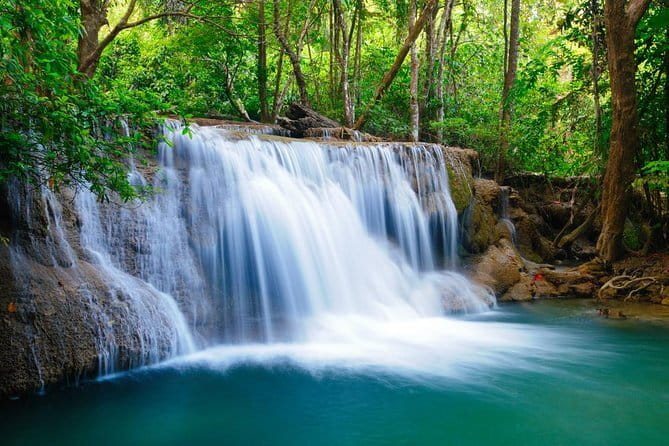
At $61.33 per person for a roughly 6-hour day, the value comes from having several things bundled together:
Included:
- Roundtrip air-conditioned transportation from Bangkok
- A local guide
- A bottle of water
- The boat trip at the floating market
Not included:
- Lunch
- Personal expenses
- Tips (optional)
- Hotel pickup unless you selected that option
So where does the value really land? You’re paying for the transportation plus guidance for two far-apart, high-activity sites. Without a guide and organized transport, the day can turn into a lot of waiting and last-minute scrambling—especially with schedule-sensitive moments like the railway.
A couple logistics notes that matter for your comfort:
- The meeting point is Pak Khlong Talat (Flower Market), near Phra Nakhon area.
- The tour ends back at the same meeting point.
- The group is capped at 60 travelers, which is big, but still gives you a guided structure instead of total chaos.
- You’ll have confirmation at booking time, and the tour uses a mobile ticket.
One more thing: the road time is broken into chunks of about 90 minutes at a time, and the guidance says it’s not recommended for people who get car sick. If that’s you, take it seriously.
You can also read our reviews of more tours and experiences in Bangkok

Group Size, Timing, and Why the Pace Feels Real
This is not a slow, long-linger tour. It’s a “see it, understand it, move on” kind of day. That can be great when you’re on limited time in Bangkok, but it does mean you won’t get hours to wander every side street of a market.
The day’s structure is designed to keep you from feeling stranded. For example, there’s a long Bangkok-to-area transfer first, then a focused railway market block, then a short coconut sugar stop, then your floating market time, and finally the ride back.
There’s also a school stop listed in the itinerary on the way back to Bangkok: Rajini School. The details in the provided info don’t explain what you’ll do there, so treat it as a chance to see local community life as part of the route rather than a major attraction you’ll spend lots of time analyzing.
In feedback, the guides are praised for keeping things smooth and controlled even when the scene is hectic. That’s important because Mae Klong in particular can feel fast. When you have clear direction, you know where to stand and when to move, and you don’t lose the best parts.
Who Should Book This Tour (and Who Might Reconsider)
This tour is a strong match if you want:
- Two of Thailand’s most distinctive market styles in one day
- A guide to help you make sense of what you’re seeing
- A boat ride included, without needing to negotiate transport on your own
- A day that’s long enough to feel complete, but short enough to keep energy for Bangkok afterward
You might reconsider if:
- You’re sensitive to motion sickness or you dislike long road stretches. The plan specifically notes about 90 minutes at a time and says it’s not recommended for car sickness.
- You want lots of free time to shop. Market time is limited, and lunch isn’t included, so you’ll be buying inside a schedule.
Practical Tips for Your Market Day
These are the small things that make a big difference on a day like this:
- Wear shoes you can stand in. Market floors and boat boarding aren’t made for fragile footwear.
- Bring a small amount of cash for lunch and personal expenses. Lunch is not included, even though you’ll have time to eat at the local market.
- Keep your phone accessible for the train moment, but don’t stand so close that it blocks others. You want a safe viewing angle.
- Plan for the day to be active. Even if the transport is comfortable and air-conditioned, the markets themselves are hands-on and movement-heavy.
- Expect the guide to set the pace. When Elena or Tooky-style guidance shows up, it helps you understand the rhythm of the market, not just watch it.
Should You Book This Mae Klong + Damnoen Saduak Tour?
If you’re short on time and want the two market icons—railway spectacle and floating market atmosphere—this is an efficient and good-value way to do it. I especially like that you get a local guide, air-conditioned transport, and the boat ride bundled into the price, so you’re not piecing the day together yourself.
Book it if you’re excited by fast, real-world scenes and you can handle a full day schedule. Skip or reconsider if motion sickness is an issue for you, since the drive includes long stretches.
If you do book, treat the day like a “watch and learn” mission. The magic isn’t only in buying souvenirs—it’s in seeing how local vendors adapt their work to trains, canals, and daily life.