REVIEW · EVENING EXPERIENCES
Chinatown Street Food Night Tour by Tuk Tuk in Bangkok
Book on Viator →Operated by Oh-Hoo · Bookable on Viator
Bangkok at night tastes better. This Chinatown Street Food Night Tour pairs a tuk-tuk ride with stop-and-savor street food, then layers in temple sights and night markets so the whole evening feels like one flowing story. You get an English-speaking guide, plus hotel pickup options, so you can spend less time figuring out logistics and more time eating, looking, and snapping photos.
I especially liked how the night food stops aren’t random. You’re guided to the kinds of stalls and dishes that make sense for first-timers—plus you get time to ask questions, like how to order and what to expect from each bite. I also liked the mix of food with cultural landmarks, including the illuminated Giant Swing and Pak Khlong Talat, Bangkok’s well-known 24-hour flower market.
One consideration: it’s a night tour with a fair amount of walking between sights. If you’re sensitive to crowds, noise, or you want a very slow pace, this may feel a bit full—especially around Yaowarat Road when the street scene is at full volume.
In This Review
- Key things I’d bank on before you go
- Riding Bangkok’s tuk-tuk to Yaowarat Road at 5:00 pm
- Yaowarat Road street food: what you’re really paying for
- Asking your guide: Vivi and Dada-style local food wisdom
- Giant Swing (Sao Chingcha) when the lights come on
- Pak Khlong Talat: a 24-hour flower market with real sensory power
- Wat Ratchanatdaram and the Grand Palace exterior views
- Pace, group size, and how to prepare for a 4-hour night
- Price and value: is $72.92 a fair deal?
- Who should book this Chinatown night tour?
- Should you book the Tuk-Tuk Chinatown Street Food Night Tour?
- FAQ
- FAQ
- What time does the tour start?
- How long is the Chinatown street food night tour?
- How much does it cost?
- Where does the tour start and end?
- Is hotel pickup available?
- What’s included in the tour price?
- Are dietary needs handled?
- Are kids charged the same as adults?
- What if I need to cancel?
Key things I’d bank on before you go
- Tuk-tuk transportation that keeps the night moving and makes short distances feel like part of the fun
- Street food tastings plus time to get local recommendations from your guide
- Night photography moments at major sights like the Giant Swing and temple exteriors
- Pak Khlong Talat at night for colorful flower-market atmosphere (and strong sensory impact)
- Up to 20 people max, which usually keeps the experience from turning into a chaotic herd
- Dietary requests handled, so you don’t have to sit out just because you eat differently
Riding Bangkok’s tuk-tuk to Yaowarat Road at 5:00 pm
This tour starts at 5:00 pm from Tha Maharaj (Phra Borom Maha Ratchawang) and ends back at the same meeting point. If you’re coming from Sukhumvit Road, Silom, or Pratunam, hotel pickup is offered (with a request at least 24 hours in advance). That matters because Chinatown at night can be a bit tricky to navigate on your own, and you’re trying to eat, not hunt for your next landmark.
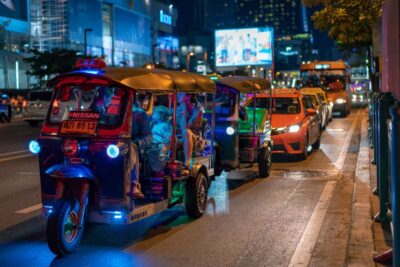
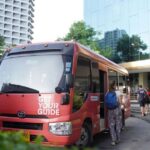
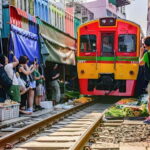
The tuk-tuk transfer is a big part of the appeal. Street traffic in Bangkok can be unpredictable, and tuk-tuks thread through it in a way that feels fun and local rather than stressful. You’ll feel the shift as you move from the calmer start near the pickup area into the Yaowarat zone where everything speeds up—sounds, smells, and the lights on every corner.
If you’re the type who likes your first evening in a city to have momentum, this delivers. You’re not stuck doing one long meal and then calling it a day. You’re moving from food to culture to night scenery while the light changes and the city turns on its evening personality.
You can also read our reviews of more food & drink experiences in Bangkok
Yaowarat Road street food: what you’re really paying for
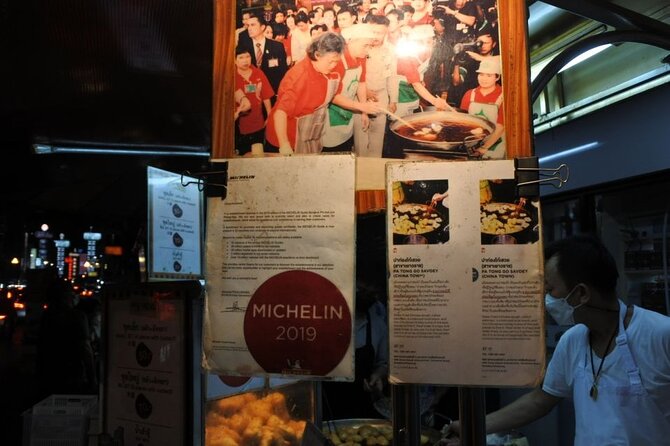
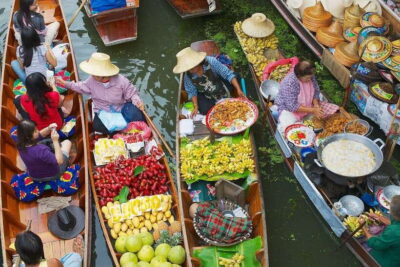
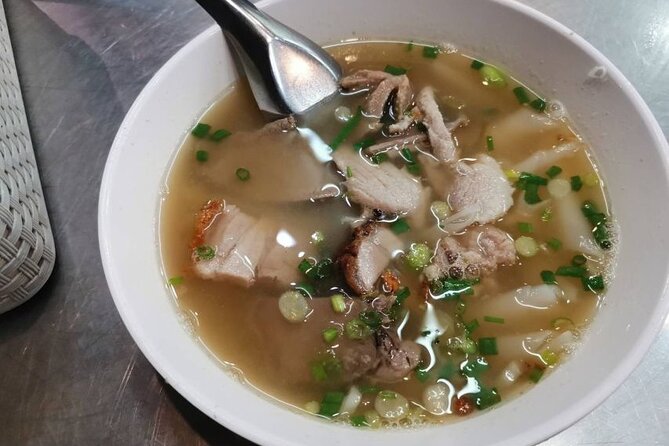
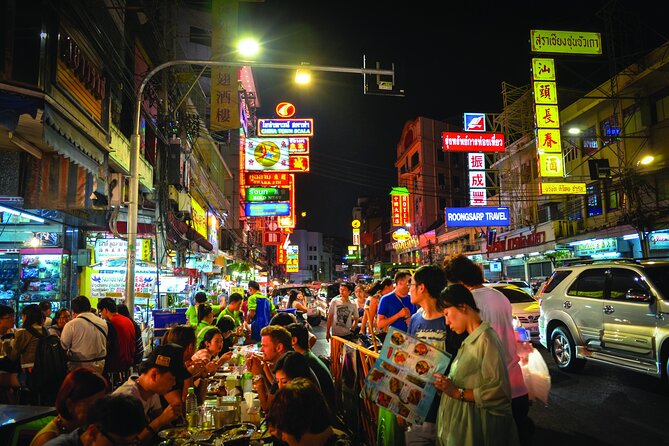
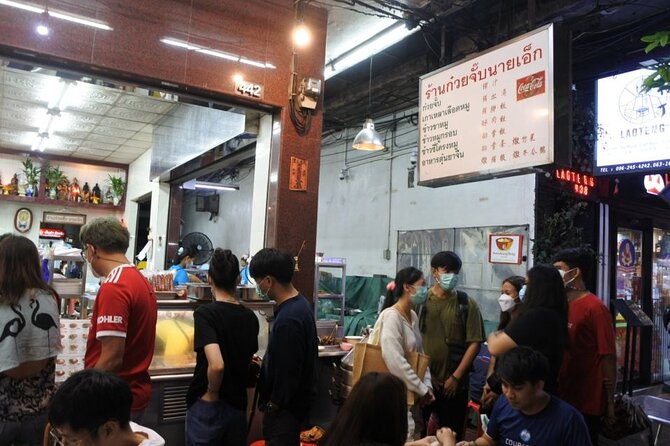
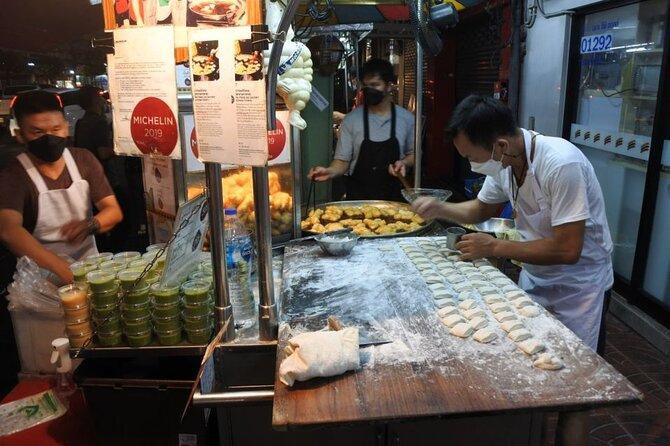
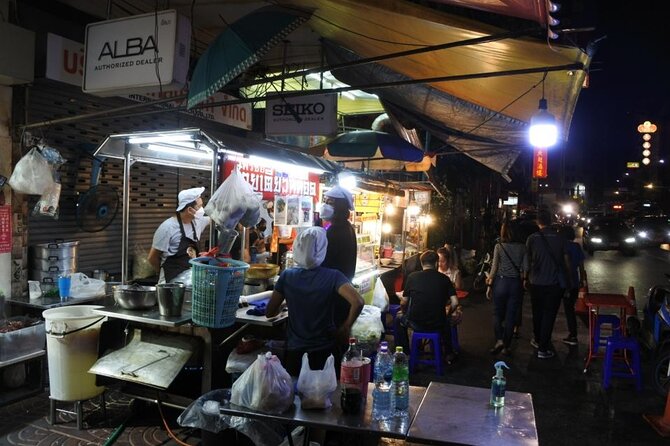
The heart of the night is Chinatown’s Yaowarat Road. Your guide brings you into the thick of it—stalls close together, grills going, and vendors calling out what they’ve got ready right now. The tour is built around sample food tasting, not a full formal dinner, so you’ll get that “try a few things and learn the patterns” approach that’s ideal for first-timers.
What I like about this setup is that it lowers decision fatigue. If you’ve ever stared at a menu in a street market thinking, I have no idea what’s safest or best, this is where a guide earns their keep. With an English-speaking guide, you can ask what you’re looking at and what the dish is supposed to taste like. You can also ask for pacing—how to space bites so you don’t feel overloaded after just one stop.
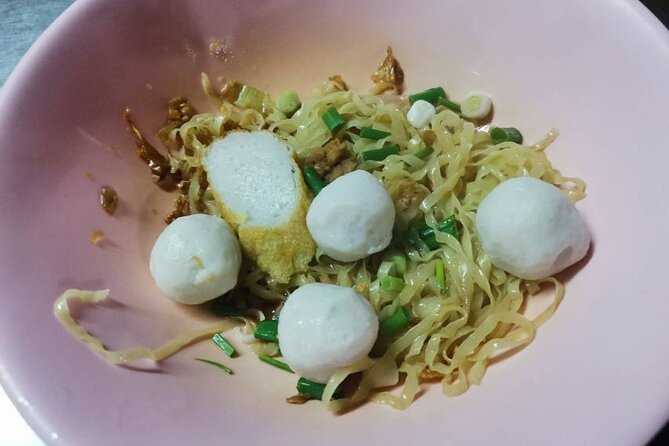
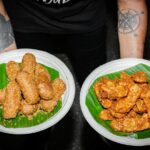
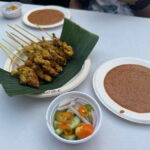
You’ll likely see classic Bangkok street staples. The tour description points to options like satay-style skewers and fresh noodles, and that’s consistent with what you’ll find in the Yaowarat lane world. Even if your exact dishes vary by timing and availability, the goal stays the same: a guided taste of Chinatown’s food culture at night.
Also, the tour states they cater to dietary requirements, food allergies, and intolerances. That doesn’t mean every stall is automatically compatible with every allergy, but it does mean you’re not assumed to be the default eater. For many people, that’s the difference between enjoying a street-food tour and skipping it entirely.
Asking your guide: Vivi and Dada-style local food wisdom
Two guide names came up in the experience feedback: Vivi and Dada. Both are described as strong at making the tour fun and informative, especially when it comes to explaining local food culture while walking at night.
Here’s what that means for you in practice. You’re not just being transported from one stop to another. You’re getting help decoding what you’re seeing:
- how to choose among stalls
- what a dish likely tastes like
- and how the food fits into local routines
That guidance matters because street food in Bangkok isn’t only about flavor—it’s also about timing, heat level, texture, and how the dish is meant to be eaten. A good guide helps you avoid common first-timer mistakes, like picking a dish that doesn’t match what you like, or ordering too much because everything looks great.
If you want the night to feel like a conversation, not a checklist, lean into the questions. Your guide is there for that.
Giant Swing (Sao Chingcha) when the lights come on
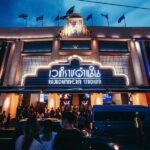
After Chinatown, you switch gears to a major landmark: The Giant Swing (Sao Chingcha). The big reason this stop works at night is simple. In daylight, the structure is impressive. At night, it becomes a photogenic reference point—lit up against darker sky, easy to frame, and impossible to ignore.
This matters because the tour isn’t only about food. It’s about context. A landmark like the Giant Swing connects the “night out” feel of street markets with Bangkok’s religious and cultural backbone. You get to notice how the city isn’t divided into tourist zones and local zones. They overlap.
One practical note: religious monuments often mean you’ll want to act respectful—keep your voice calm, follow what your guide says about movement and where to stand, and dress in a way that fits a temple area. The tour description doesn’t spell out dress rules, so just treat it like any Thai religious stop: cover shoulders and avoid overly casual beachwear energy.
Pak Khlong Talat: a 24-hour flower market with real sensory power
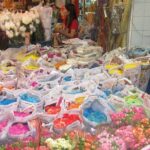
Next is Pak Khlong Talat, described as Thailand’s largest 24-hour flower market. Flowers by day are one thing. Flowers at night turn into something you feel more than you simply see—color blocks, fragrance in the air, and vendors working while most of the city sleeps.
This stop is a great contrast to street food. Food is fast and hot, with loud stalls and constant movement. Flowers are still busy, but in a different way—more focused, more visual, and often more photogenic. You’ll get the feeling of Bangkok working through the night, not just partying through it.
A possible drawback here: if you’re not into markets, or if you have a strong dislike of strong smells, this stop might be more “scenery and photos” than “I want to hang out.” Still, it’s short enough that you can enjoy it without needing to love the concept.
Also, expect that your time here is part sightseeing, part atmosphere. It’s not presented as an hours-long shopping excursion, so don’t plan on buying a bouquet big enough to travel home. Use it to absorb the vibe and take photos.
You can also read our reviews of more tours and experiences in Bangkok
Wat Ratchanatdaram and the Grand Palace exterior views
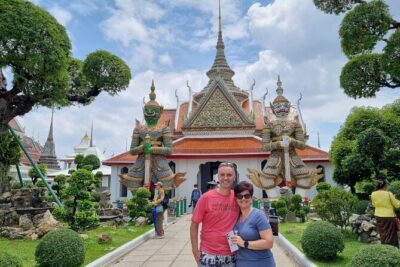
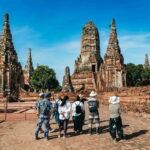
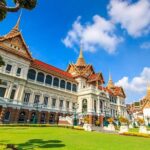
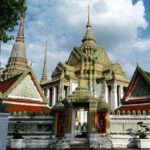
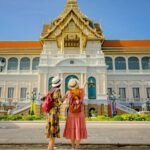
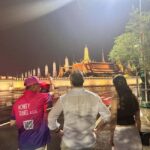
The tour ends with more temple atmosphere and a major Bangkok photo moment. You visit Wat Ratchanatdaram at night, described as glowing beautifully. Then you also get a view of the Grand Palace illuminated exterior, which is a smart add-on if you want that famous silhouette without committing to a longer daytime palace visit.
This is a good pairing because it balances two types of “sight value”:
- the religious calm and architecture at the temple stop
- the iconic city image with the Grand Palace exterior
If you love night photography, this is where you’ll likely get the easiest win—bright outlines, high contrast, and fewer midday crowds. If you’re not into photos, you can still benefit just by noticing scale and atmosphere. Bangkok’s major sites feel different after dark. The city’s lights make the shapes stand out.
One reminder: temple areas can have rules about how to behave and where to move. Follow your guide’s instructions and keep your group flow tidy so nobody gets stuck waiting in the wrong spot.
Pace, group size, and how to prepare for a 4-hour night
The tour runs about 4 hours. That’s long enough to get a real Chinatown experience, but not so long that you feel trapped in the dark forever. The itinerary is noted as subject to change, with timing affected by transit and travel durations between stops. That’s normal in Bangkok; traffic and crowd levels shift, especially around Yaowarat Road.
Group size is capped at 20 travelers. That’s helpful because it usually keeps movement manageable at street stalls. The tour also requires a minimum of 2 participants, so it’s designed to operate as long as there’s enough demand. In real terms: you’ll likely feel like a group, not a single-file line.
What you should do to enjoy the pace:
- Wear comfy shoes. The tour involves walking through Chinatown lanes and between sights.
- Bring a light layer if you run cold. It’s Thailand, but nights can still feel cool when you’re standing still for photos.
- If you’re sensitive to strong flavors, pace your sampling. Street food is meant to be eaten in small bites over time, not one giant plate all at once.
The tour includes bottle of drinking water, which is worth noting. Hydration matters on a hot night walk, and it also keeps you from cutting your tour short because you feel drained.
Price and value: is $72.92 a fair deal?
At $72.92 per person for roughly 4 hours, you’re paying for a bundle: tuk-tuk movement, guided food sampling, English-speaking interpretation, and built-in stops that you’d otherwise need to piece together yourself.
Here’s the value logic I see:
- You save planning time. Your evening includes specific cultural stops—Giant Swing, Pak Khlong Talat, Wat Ratchanatdaram, and a Grand Palace exterior view—without you having to map them.
- You reduce food guesswork. Street food is exciting, but it can be intimidating. Tastings plus a guide help you pick dishes and avoid false confidence.
- You get convenience logistics. Pickup is available from major areas, and the tour includes a return to the meeting point.
What’s not included: tip and personal expenses. That’s standard, but it still affects your total cost. If you’re happy with the guide, plan to budget for tipping.
Travel insurance is included, which is a small comfort upgrade—especially since you’ll be riding in a tuk-tuk and walking at night.
If you compare this to doing Chinatown street food on your own, the main difference is time. Doing it solo can be cheaper, but you’ll spend more time figuring out where to go and what to order. This tour costs more, but it buys you a guided night with multiple iconic stops.
Who should book this Chinatown night tour?
This is a strong fit if:
- you want street food plus culture in one evening
- you’re new to Bangkok and want a plan you can follow
- you like night views and don’t want to spend a whole day sightseeing
- you care about having English-speaking help for ordering and context
It’s less ideal if:
- you need a totally low-walking, low-noise night
- you hate markets entirely (Pak Khlong Talat is part of the deal)
- you’re looking for a full sit-down meal rather than tastings
Also, it’s designed to accommodate different dietary needs and intolerances, which is a meaningful plus if your food restrictions make street tours risky.
Should you book the Tuk-Tuk Chinatown Street Food Night Tour?
I’d book it if you want your Bangkok night to feel like Bangkok, not like a checklist of separated attractions. The tuk-tuk rides keep energy high, the food tastings take the guesswork out of Yaowarat Road, and the night stops (Giant Swing, Pak Khlong Talat, Wat Ratchanatdaram, and Grand Palace exterior views) turn the evening into more than just dinner.
I would think twice only if you’re sensitive to crowds and prefer slow pacing. Otherwise, this is a practical way to see key parts of Bangkok after dark without turning your evening into an improvised scavenger hunt.
FAQ
FAQ
What time does the tour start?
The tour starts at 5:00 pm.
How long is the Chinatown street food night tour?
It runs for about 4 hours (approx.).
How much does it cost?
The price is $72.92 per person.
Where does the tour start and end?
It starts at Tha Maharaj (Phra Borom Maha Ratchawang, Phra Nakhon, Bangkok 10200) and ends back at the same meeting point.
Is hotel pickup available?
Yes. Pickup is offered from Sukhumvit Road, Silom, and Pratunam. You need to request hotel transfer services at least 24 hours in advance.
What’s included in the tour price?
Included are tuktuk transfer, sample food tasting, bottled drinking water, an English-speaking guide, and travel insurance.
Are dietary needs handled?
Yes. The tour says it caters to all dietary requirements, food allergies, and intolerances.
Are kids charged the same as adults?
Yes. Children and adults are charged the same rate.
What if I need to cancel?
Free cancellation is available up to 24 hours before the experience start time for a full refund.