REVIEW · FLOATING & RAILWAY MARKET DAY TRIPS
VIP Private Tour Damnoen Saduak+ Amphawa + Mae Klong Railway
Book on Viator →Operated by VACIO 姐妹花深度旅遊 · Bookable on Viator
Markets by water, then a train inches by. I love the Damnoen Saduak paddle-boat canal jam, and I love the almost-magic composure at Mae Klong as vendors fold stalls for the train.
It’s a long day (about 11–12 hours), and a chunk of it is outdoors in Thai heat, so plan to move slowly and rehydrate often.
The big relief is that this is private, guided by a Tourism Authority of Thailand–licensed pro, and set up with 100% No Shopping.
In This Review
- Key things to know before you go
- A day that connects three market moods
- The 9:00 AM start and how the day actually feels
- Vintage coconut sugar and the Thailand-kitchen payoff
- Damnoen Saduak Floating Market by traditional paddle boat
- The trade-off
- Mae Klong Railway Market: watching vendors respond to a train
- The trade-off
- Ratchaburi National Museum: palm sugar, explained
- Wat Bang Kung and the Muay Thai Park next door
- The trade-off
- Amphawa Floating Market: the highlight, especially after dark
- The trade-off
- Thai tea and the comfort breaks that matter
- Price and what you’re really paying for (and what you’re not)
- What costs extra in practice
- Guide quality: what a licensed, silver-badge setup changes
- Tips, photos, and what to bring for a day like this
- Should you book this VIP markets and railway day?
- FAQ
- What time does the tour start, and how long is it?
- Is this a private tour?
- What’s included in the tour besides transportation?
- Are lunch or dinner included?
- Will I be pressured to shop?
- Is the tour refundable if I cancel?
Key things to know before you go
- Damnoen Saduak by paddle boat: ride through a small-canal squeeze where the boats feel right on top of the market.
- Mae Klong railway proximity: watch vendors fold umbrellas and stalls as a train approaches—no chaos, just routine.
- Coconut sugar start: a vintage-style factory stop shows how palm/coconut sugar goes from raw to Thai kitchen staple.
- Amphawa at night + long-tail boat: river sights, plus the tour includes a firefly-style boat experience.
- True no-pressure shopping: the package is built so you can browse without feeling hunted for sales.
A day that connects three market moods
This tour links three different ways of doing markets in Thailand: water markets, a train market, and a nighttime riverside market. You’re not just looking at stalls—you’re seeing how trade moves with the setting, whether that’s on canal boats or along a working railway.
What makes it work well is the rhythm. You start with a traditional activity (paddle boating), switch to a performance-level spectacle (the train market), then end in a more relaxed mood at Amphawa.
You can also read our reviews of more private tours in Bangkok
The 9:00 AM start and how the day actually feels
You kick off at 9:00 am with pickup offered, and the total time is about 11 to 12 hours. That means you’ll spend a good part of the day riding between stops, then a good part on your feet or on boats.
A private, chauffeur-driven vehicle helps. You don’t have to herd yourself onto shuttles, and you can take breaks when you need them. I also like that the plan includes a guided flow, so you’re not trying to read signs, guess timings, or figure out where to stand for photos.
Vintage coconut sugar and the Thailand-kitchen payoff
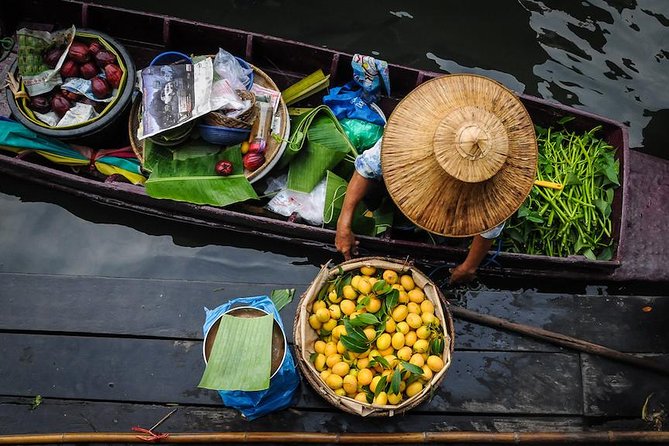
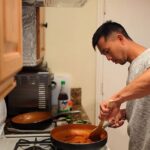
Before you hit the markets, you stop at a vintage-style coconut sugar factory (also described as showing palm sugar production). The point isn’t just sweetness. It’s the practical story of how raw material becomes something you actually see in everyday Thai food.
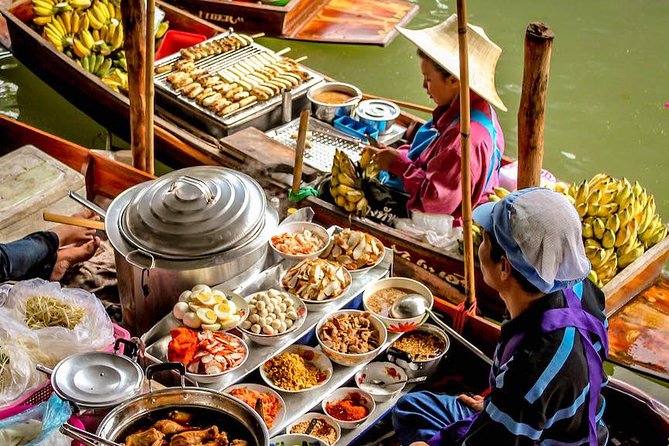
If you enjoy food details, this is a great warm-up. You’ll be more aware of what you’re tasting later, whether it’s drinks, snacks, or desserts you spot at the river markets.
Damnoen Saduak Floating Market by traditional paddle boat
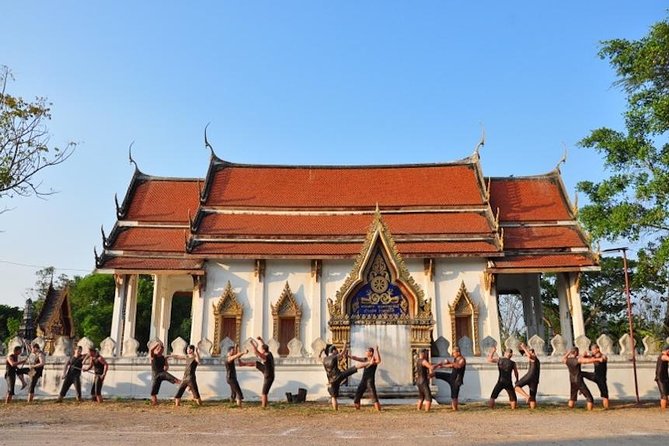
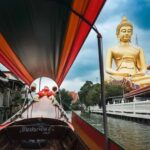
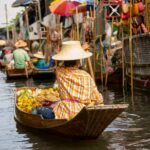
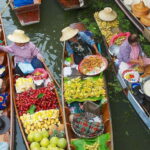
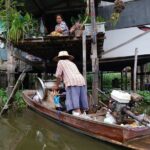
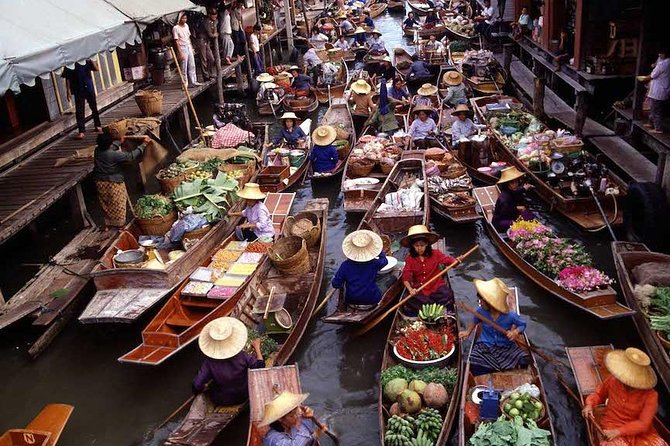
This is the water-market part you came for: a traditional paddle boat cruise around the 100-year-old Damnoen Saduak Floating Market. You get time on the water, plus the fun of seeing that canal “traffic” feeling—boats gliding through a tight channel.
One of my favorite touches here is the casual, interactive way it’s described: if you want a bag of mangosteen, you can wave to vendors. It’s not a formal transaction moment; it’s how these markets naturally work when you’re in the flow.
The trade-off
This market can feel tourist-heavy in the sense that it’s famous, so you’ll want your guide’s sense of priorities. It helps to focus on what’s happening around the boats and along the edges, not just the biggest signage.
You can also read our reviews of more tours and experiences in Bangkok



Mae Klong Railway Market: watching vendors respond to a train
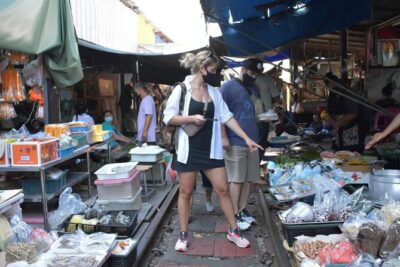
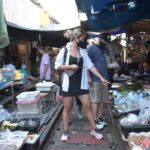
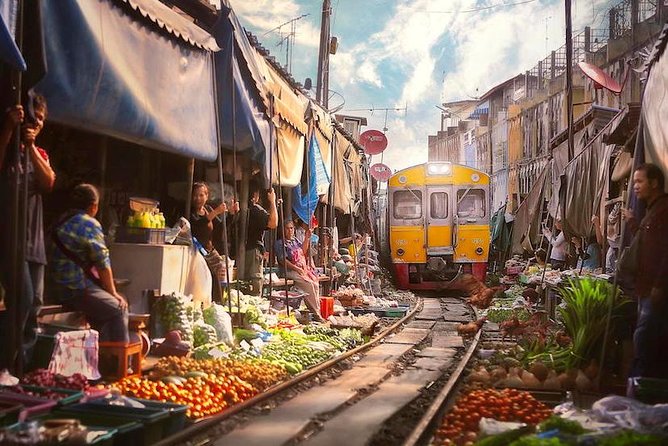
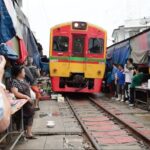
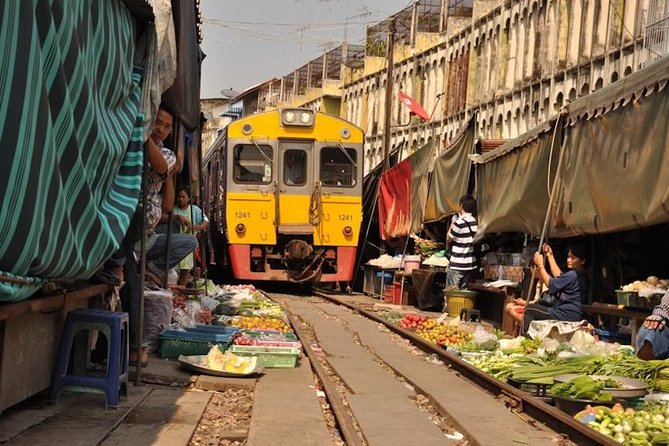
Next comes Mae Klong Railway Market (Hoop Rom Market)—often called the world’s most intense “train market” because of how close everything sits to the tracks. The description notes the stalls are built about 0.5 cm from the railway track, so the timing is the whole show.
What to expect: you’ll see vendors take their time folding stalls and sun umbrellas as the train approaches. The atmosphere is calm because the market works with the schedule, not against it.
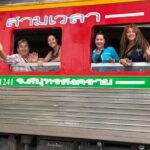
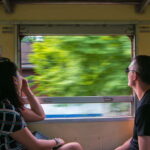
You also ride a train for a scenic segment, with an option to stick your head and hands out for a more dramatic view. If you do that, just follow your guide’s lead and use common sense with positioning and movement—this is still a real working line.
The trade-off
This stop is short (about 1.5 hours), so there’s less time for slow browsing than at a typical market day. If you’re the type who loves lingering, you’ll enjoy it most if you treat it like a watch-and-learn photo story rather than a shopping expedition.
Ratchaburi National Museum: palm sugar, explained
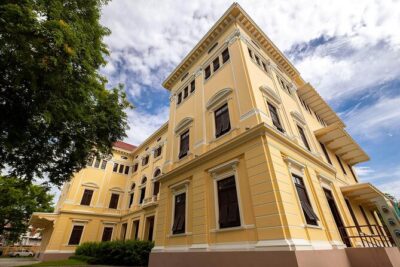
After the railway spectacle, the tour includes the Ratchaburi National Museum stop with a focus on a palm sugar farm-style experience. You’ll see how sugar is made from raw ingredients into something Thai households use.
I like this pause because it balances the kinetic market energy. You also get a clearer sense of the region’s food production, which makes the market stops feel less like randomness and more like a system.
Wat Bang Kung and the Muay Thai Park next door
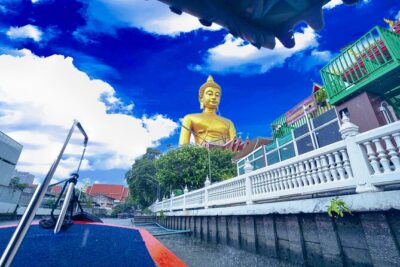
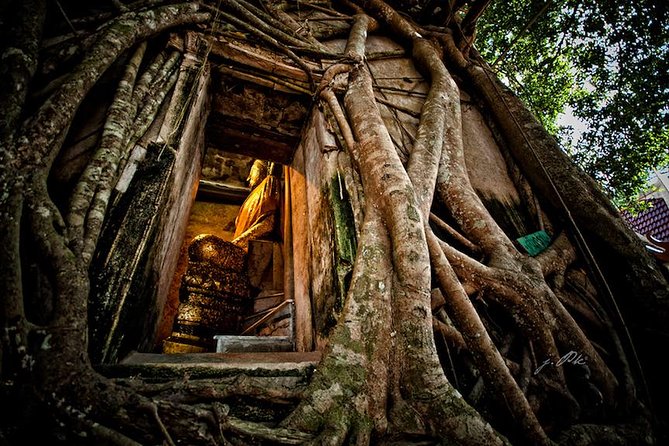
Then you get a short temple stop at Wat Bang Kung, where the guide shares stories about the site. Right next to it is the Muay Thai Park, also included with a short visit, with a clear theme: if you ever dream of stepping into the ring, this is the setting.
The time here is limited, so it’s best approached with a “light and learn” mindset. You’ll get enough to understand what you’re looking at, not enough to fully tour every nook like a standalone religious visit.
The trade-off
Two different nearby stops with short durations can feel like quick bites. That’s fine if you enjoy variety, but if you prefer long temple time for quiet, plan to return later on your own.
Amphawa Floating Market: the highlight, especially after dark
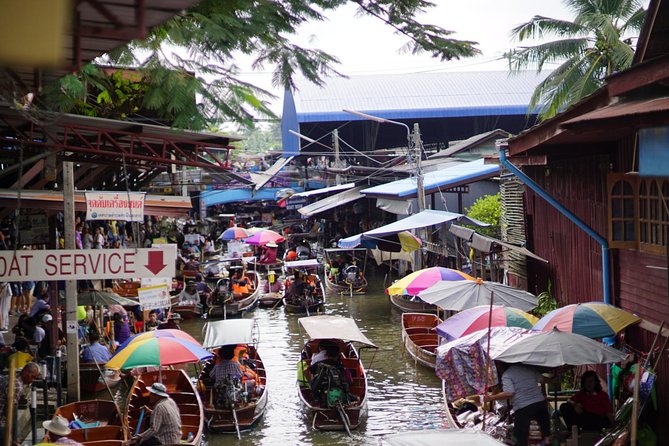
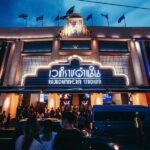
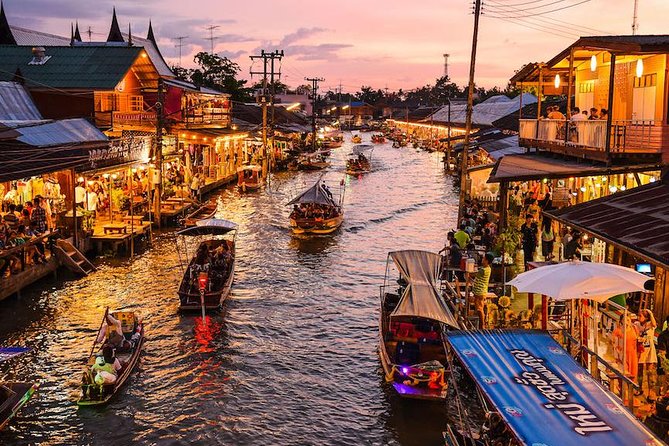
This is the payoff: Amphawa Floating Market, described as drawing crowds on weekends for its romantic river mood. You’ll see waterside homes lit up across the river, and you’ll finish with a long-tail boat glide on the Amphawa River.
The tour also includes a firefly-style boat experience. Even if you’ve seen photos before, the feeling of being out on the water at dusk is different from screens. The best part is that Amphawa lets you slow down after the intensity of Damnoen Saduak and the railway market.
The trade-off
Because Amphawa is the final big stop, it’s also the one where your energy matters most. If you go hard earlier in the day, you might rush this part. Pace yourself after the train market, and you’ll enjoy Amphawa much more.
Thai tea and the comfort breaks that matter
A key included pause is afternoon tea with Thai tea, which the description points out tastes different from the English version. This matters because it’s not just a random drink break—it’s a real cultural stop that fits the flow of the day.
Also, several guides and drivers associated with this itinerary are described as thoughtful about comfort. One theme that comes up is ice water on hot days and drivers cooling down cars early. That kind of small care makes an 11–12 hour day feel manageable.
Price and what you’re really paying for (and what you’re not)
The info I have shows a price of $0.00 per person, which looks like a placeholder, so double-check the current rate when you book. Either way, the value isn’t just the number—it’s the bundle.
Included items (the “you don’t have to figure this out” list):
- a top-tier Silver Badge–certified guide licensed by the Tourism Authority of Thailand
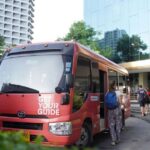
- a VIP luxury chauffeur-driven vehicle and licensed driver
- fuel, tolls, insurance fees, and vehicle/driver time
- all tickets and fees for the listed experiential activities
- 100% No Shopping
Not included:
- lunch and dinner
What costs extra in practice
You’ll almost certainly want to budget for at least one meal and snacks during the long day. Also factor tipping. For small groups (fewer than 6), the driver and guide tips are described as at least 300 Baht per day for the entire group. For groups of 6+, tips are 50–100 Baht per person per day for the driver and at least 50–100 Baht per person starting from that amount for the guide.
Guide quality: what a licensed, silver-badge setup changes
This is private, and it’s guided by someone with formal credentials: a Silver Badge-certified guide licensed by the Tourism Authority of Thailand. That licensing matters because it usually correlates with better explanations and smoother coordination.
From the guide names attached to this itinerary—like Shirley, Yang, Lin Zhen, Brother Peng, and Ah Fu—you’ll often see a style focused on Thai history and culture, plus practical help. I like the ones who guide photo positioning, explain what you’re seeing, and adjust the day if you want changes.
There’s also a clear benefit from the no shopping approach. One of the best moments in this kind of tour is when you realize the guide is helping you judge good prices and what’s worth buying, without turning it into pressure.
Tips, photos, and what to bring for a day like this
This route is action-heavy, with boats and a close-quarters train moment, plus a river market at night. For comfort, pack like you’re doing a full-day outdoor program.
Bring:
- light layers and a hat (it’s daytime heat early, then evening outdoors at Amphawa)
- sunscreen and a small towel
- cash for small purchases (even with no-pressure shopping, people sometimes want fruit or snacks)
- comfortable shoes for docks and market edges
Photo tip that comes straight from the structure: plan to take photos in short bursts. The train market and floating canals both move on a tight timeline, so you’ll get better results by shooting, then watching the real moment unfold.
Should you book this VIP markets and railway day?
Book it if you want a single day that covers three iconic market styles without the hassle of arranging transport, tickets, and timing. This is a strong pick for first-time Thailand visitors who like seeing how culture works in different settings—on canals, on a railway, and along a river at dusk.
Skip it (or consider a lighter alternative) if you hate long days. The 11–12 hour schedule is real, and you’ll be outdoors enough that fatigue and heat can catch up.
FAQ
What time does the tour start, and how long is it?
The tour starts at 9:00 am and runs about 11 to 12 hours.
Is this a private tour?
Yes. It’s a private tour/activity, meaning only your group participates.
What’s included in the tour besides transportation?
The package includes a licensed guide, a VIP chauffeur-driven vehicle, fuel and tolls, insurance, and tickets/fees for the featured experiences like the coconut sugar factory, Damnoen Saduak paddle boat, Mae Klong train market experience, Wat Bang Kung and Muay Thai Park, and Amphawa Floating Market with a long-tail boat and firefly-style ride.
Are lunch or dinner included?
No. Lunch and dinner are not included.
Will I be pressured to shop?
No. The package includes a 100% No Shopping policy.
Is the tour refundable if I cancel?
No. The experience is non-refundable and cannot be changed for any reason.
If you tell me your travel month and group size, I can suggest a practical meal plan and the best mindset for each market stop.