REVIEW · KANCHANABURI & RIVER KWAI DAY TRIPS
Mystical Waterfall and River Kwai Tour (Private & All-Inclusive)
Book on Viator →Operated by ForeverVacation Thailand · Bookable on Viator
Seven tiers of waterfalls and a war-memorial day.
This private tour strings together Erawan Falls with Kanchanaburi’s River Kwai sites in one long, satisfying day. I like that it’s all-inclusive (lunch, bottled water, and entrance fees) and that the pace is handled for you with a private air-conditioned vehicle.
What I like most is the mix: you get the real jungle feel at the falls, then you pivot to the very real human story behind the Death Railway. One thing to keep in mind is the effort and the timing—this is an 11 to 13 hour day, with a hike at the falls that suits people with moderate fitness.
In This Review
- Key Highlights You’ll Actually Feel on the Day
- A Long Day That Feels Worth It: Private Pickup and Comfort
- Erawan Falls: The Park Walk and Why the Seven Tiers Matter
- River Kwai and Long-Tail Boat Time: A Change of Pace
- Bridge Over the River Kwai: The Landmark Plus the Context
- JEATH War Museum: WWII Memory in Plain, Direct Focus
- Thailand-Burma Railway Centre and Hellfire Pass: When the Story Gets Real
- Extra Kanchanaburi Stops: National Parks, Caves, and Old Temples
- Lunch, Bottled Water, and Entrance Fees: Where the Value Hides
- Timing and Pace: How to Prepare for 11 to 13 Hours
- Who This Tour Fits Best (And Who Should Rethink It)
- Should You Book This Mystical Waterfall and River Kwai Tour?
- FAQ
- How long is the Mystical Waterfall and River Kwai Tour?
- How much does the tour cost?
- What’s included in the tour price?
- Is this a private tour?
- Do you pick up from Bangkok?
- Is the tour physically demanding?
- Are entrance fees included?
- Is there a boat ride on the River Kwai?
- Do I get a ticket on my phone?
- What happens if the weather is poor?
Key Highlights You’ll Actually Feel on the Day
- Seven-tier Erawan Falls: a proper hike through the park, not just a roadside stop
- Long-tail boat time on the River Kwai: calm water contrast after the falls
- JEATH War Museum: focused on the WWII story tied to the Death Railway
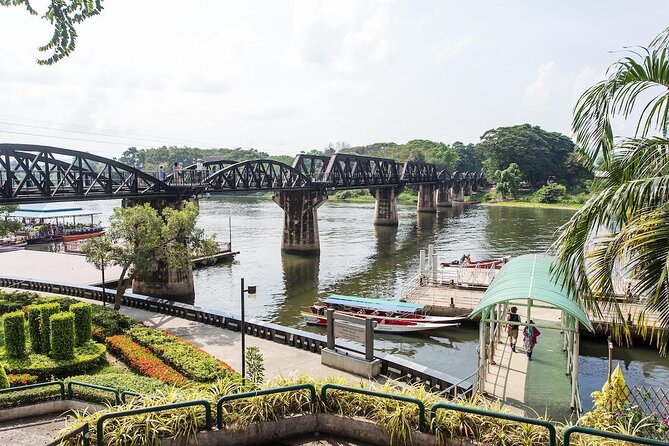
- Bridge over the River Kwai area: the famous landmark, tied to forced labor history
- Strong guide performance: one guide named Oil impressed people with clear explanations and real enthusiasm
- Price bundling: lunch, bottled water, and entrance fees are included, so you’re not nickel-and-dimed all day
A Long Day That Feels Worth It: Private Pickup and Comfort
This tour is built for people who want fewer logistics headaches. You get pickup offered in Bangkok, then you ride in a private air-conditioned vehicle for the bulk of the day. That matters because Kanchanaburi is a distance trip, and you’ll feel it if you’re trying to coordinate public transit, tickets, and seat availability on your own.
The format also helps you stay flexible. With a private group, the guide can adjust the flow around site crowds, timing, and what you care about most. And since it’s all-inclusive, you’re less likely to lose time hunting for lunch or paying small add-ons at each stop.
You can also read our reviews of more private tours in Bangkok

Erawan Falls: The Park Walk and Why the Seven Tiers Matter
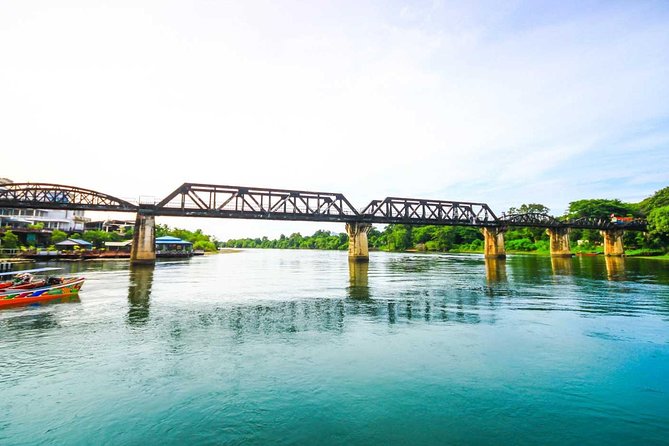
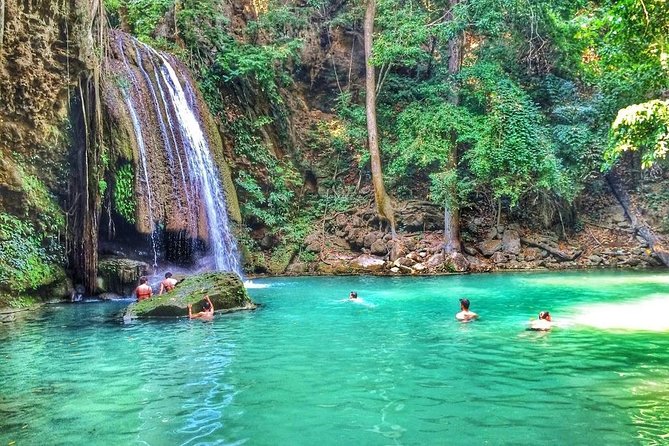
Erawan Falls is the headline attraction for a reason. The falls sit inside Erawan National Park, and they’re named for the erawan—the three-headed white elephant in Hindu mythology. The water drops in seven tiers, and the whole point of going is walking the path that takes you up close to the different levels.
Expect a hike, not a stroll. You’ll move along park paths and stairs that can feel steeper than you planned for after a long drive. If you’re comfortable with moderate physical activity, you’ll enjoy it; if you’re expecting flat and easy, adjust your expectations early.
One smart way to time your mindset: treat Erawan as two phases. First, go for the waterfall views. Then, stay long enough to enjoy the changing sound and mist as you move between tiers. On quieter timing (when crowds are lighter), it can feel almost personal for stretches—which makes the hike and photos much more relaxed.
River Kwai and Long-Tail Boat Time: A Change of Pace
After the falls, the River Kwai portion gives you a different kind of payoff. The Khwae Yai River—also called the Si Sawat—runs through western Thailand and becomes the setting for the day’s most iconic historical landmarks.
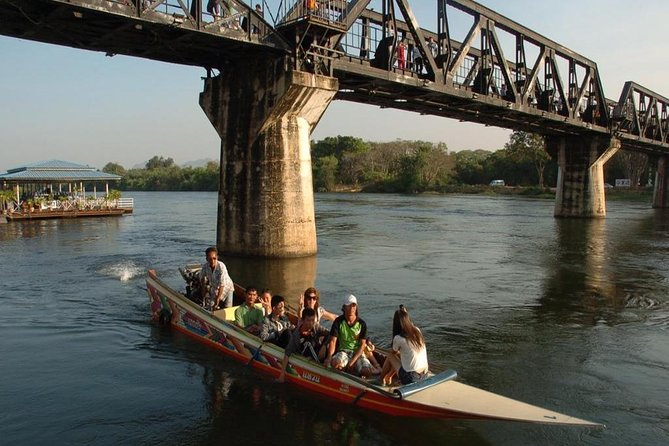
You also get a long-tail boat ride. That’s a key value-add because it’s not just driving by the river and calling it done. Boat time slows your pace and lets you see the river as the locals use it: a working waterway, not a theme-park backdrop. You’ll likely appreciate this even more if the morning hike leaves you a bit tired in the calves.
This part of the day tends to be smoother emotionally too. You’ve just done nature and walking, and now you get a gentler rhythm before the war-related museum stops.
Bridge Over the River Kwai: The Landmark Plus the Context
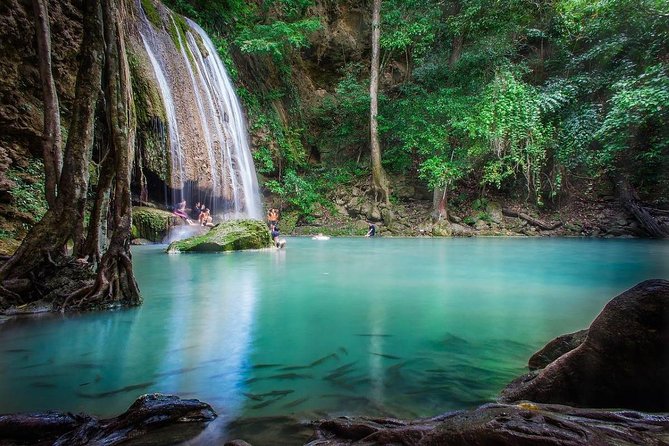
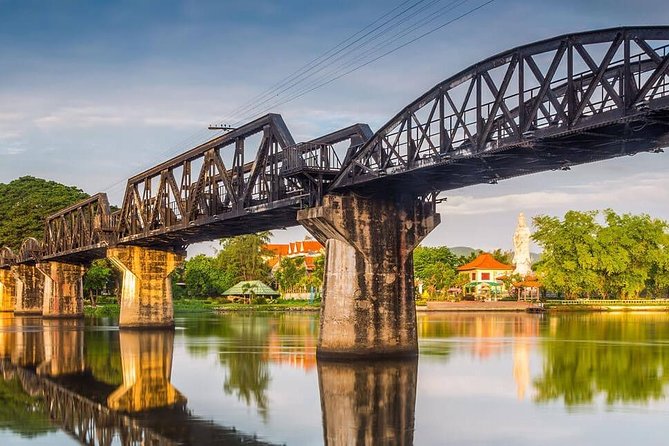
The Bridge over the River Kwai is the famous one tied to the Death Railway story. It’s called the Bridge on the River Kwai partly because it became well-known through the famous movie version of the tale, but the real significance comes from what happened during WWII.
Historically, the bridge is linked to the forced labor system used for the railway’s construction. Even if you’ve only heard the broad outlines before, standing here helps the story feel less abstract. It turns history into a physical location you can point to, and that’s where the guide really earns their keep.
Also, this stop tends to be shorter on the ground than museums, so you can treat it like the hinge of the day. After the bridge, you’ll start moving through sites that focus more directly on the people and conditions behind the railway.
JEATH War Museum: WWII Memory in Plain, Direct Focus
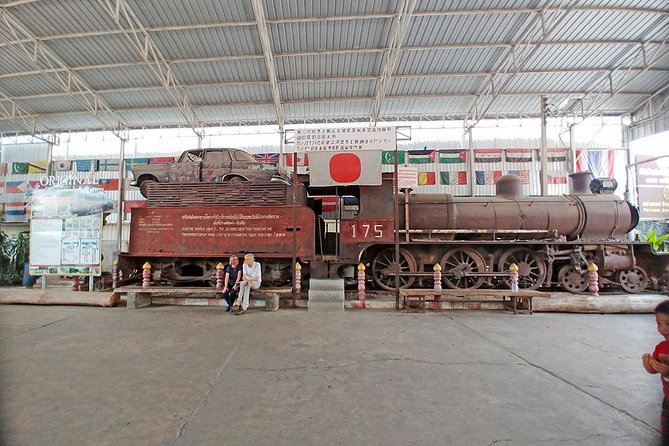
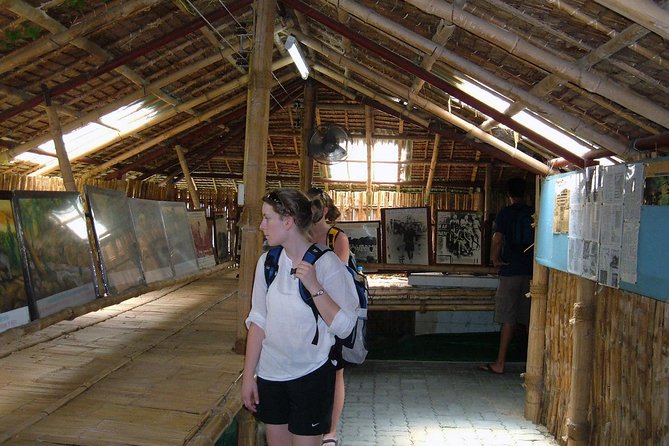
The JEATH War Museum is part of what makes this tour more than a scenic outing. JEATH is associated with the Thailand-Burma railway period, built from 1942 to 1943 by Allied POWs under Japanese direction, within the larger Thai-Burma rail network.
This museum stop is about attention—what you learn, how you absorb it, and how it changes the way you look at the railway sites. You’ll see a condensed but pointed interpretation of the forced labor and the prisoner-of-war experience.
The good news: the museum time is long enough for your brain to process, but not so long that it feels like a lecture marathon. The best approach is simple: take in the main themes first, then let your questions guide how you look around.
If you want a practical tip, it’s this: after the museum, you’ll have a more grounded feeling about the next sites, especially the memorial-style stops. The day becomes emotionally connected, not just a list of attractions.

Thailand-Burma Railway Centre and Hellfire Pass: When the Story Gets Real
Next up, you’ll likely spend time at the Thailand-Burma Railway Centre, a privately funded museum and research center run by Rod Beattie, an Australian who’s described as an expert in the railway’s history. The value here is that it’s not just objects on walls—it’s an organized explanation of what the railway meant and what conditions were like.
Then comes Hellfire Pass. This is a short stretch of rock—about 500 meters—that prisoners of war dug out by hand to carve a path for the Death Railway. The numbers given for that digging period are heavy: around 1,000 prisoners worked, and about 700 died during the 12-week digging period.
I won’t sugarcoat it: Hellfire Pass is the kind of stop where you understand the meaning of effort in a way you can’t unlearn. If you’re the type who gets quiet in memorial spaces, plan for that. Bring a respectful attitude and take your time walking the area. Even if you’re not a history buff, the physical reality of what was done hits hard.
And this is where a strong guide can change the experience. In the feedback I saw, one guide named Oil was singled out for friendly presence and focused explanations at the sites, including the bridge area. That kind of guiding helps you connect facts to what you’re seeing, instead of leaving you with dates and names that blur together.
Extra Kanchanaburi Stops: National Parks, Caves, and Old Temples
Depending on how the day flows, the tour can also add other Kanchanaburi highlights around the same region of history and nature. You might pass through or stop near Khuean Srinagarindra National Park, with the scenic focus around the Srinagarind Reservoir. You may also include sights tied to nearby older culture, such as Mueang Sing, which protects the remains of Khmer temples dating to the 13th and 14th centuries.
There can also be stops that lean more nature-forward, including a cave and waterfall segment, plus the Sai Yok area’s scenery. One item listed is the Srinagarind Dam, which is part of river regulation and hydroelectric power generation—so it fits the theme of how this region is shaped by water and infrastructure.
Here’s the balance point: these extra stops are useful if you want variety beyond the headline hits. They can also feel a bit like “more windows, fewer minutes,” because the day is already long. If you’re someone who loves one thing deeply—say, waterfalls or history—ask the guide to help you prioritize time where you care most.
Lunch, Bottled Water, and Entrance Fees: Where the Value Hides
The price is $198 per person, and what makes it feel fair is what’s bundled. You get lunch, bottled water, and all entrance fees. That last part matters more than it sounds. In Southeast Asia, it’s common for tours to advertise a low base cost and then add fees once you’re in motion. Here, the structure is designed so you can plan your day without surprises.
You’re also paying for the private transport piece: a vehicle that keeps you comfortable through a long travel schedule. If you were doing this independently, you’d still need to handle a similar transport plan plus multiple admissions, and the time overhead would likely eat away at your day.
So the value calculation isn’t just money. It’s mental energy. You show up, get guided between stops, and spend your time where it counts—at the falls, on the river, and in the museums.
Timing and Pace: How to Prepare for 11 to 13 Hours
This is not a half-day outing. The duration is listed as about 11 to 13 hours, which means your comfort setup matters.
Wear shoes that can handle uneven paths and some stairs. At Erawan Falls, the hike is the real physical commitment. Bring a light layer because park mornings can feel cooler near the water, and then later it can warm up as you’re driving again.
Also, manage your expectations about downtime. This tour is built around moving between key sites: waterfall first, then River Kwai, then war museums and railway landmarks, with the day continuing through additional stops. That’s the tradeoff for the all-in-one format.
A good rule: eat breakfast earlier than you think you need to. Lunch is included, but you’ll still want steady energy before you hit the hike.
Who This Tour Fits Best (And Who Should Rethink It)
This tour is a strong fit if you want a full-day combo of nature and WWII-era history without doing homework or planning. You’ll likely enjoy it if you like having a guide explain what you’re seeing and keep the schedule moving.
It also works well for small groups who want privacy. Since it’s private and only your group participates, you avoid the hassle of being squeezed into a larger crowd’s rhythm.
It may not be the best match if you dislike long days in the car or if you want minimal walking. The physical effort is described as moderate fitness, and the waterfall portion is where you feel that most. If your idea of relaxation is sitting more than walking, you might prefer a shorter, less hiking-focused outing.
Should You Book This Mystical Waterfall and River Kwai Tour?
Book it if you want one guided day that hits Erawan Falls, a real River Kwai experience with boat time, and the major Death Railway story points without forcing you to juggle tickets and transport. The private vehicle, lunch, bottled water, and entrance fees included are practical touches that make the whole day run cleaner.
Skip it or choose a lighter option if you’re sensitive to long travel and you don’t enjoy hikes. This is a full commitment day, and the strongest parts—especially Hellfire Pass and the museum stops—can be emotionally heavy.
If you’re excited by the idea of seeing the region’s natural beauty and then understanding the wartime reality tied to the railway, this tour is a solid choice. Just bring comfortable shoes and a patient mindset, and you’ll get a day that feels connected instead of random.
FAQ
How long is the Mystical Waterfall and River Kwai Tour?
The tour runs about 11 to 13 hours.
How much does the tour cost?
It costs $198.00 per person.
What’s included in the tour price?
Lunch, bottled water, and all entrance fees are included, along with travel in a private air-conditioned vehicle and the guided sightseeing stops listed.
Is this a private tour?
Yes. It’s a private tour, and only your group participates.
Do you pick up from Bangkok?
Pickup is offered.
Is the tour physically demanding?
It’s best for travelers with a moderate physical fitness level due to the hiking involved at Erawan Falls.
Are entrance fees included?
Yes. The tour includes all entrance fees, including admission tickets at stops such as Erawan Falls and the JEATH War Museum.
Is there a boat ride on the River Kwai?
Yes. The tour includes a long-tail boat ride on the River Kwai.
Do I get a ticket on my phone?
Yes. It includes a mobile ticket.
What happens if the weather is poor?
This experience requires good weather. If it’s canceled due to poor weather, you’ll be offered a different date or a full refund. You can also cancel for a full refund up to 24 hours in advance.