Bangkok can feel chaotic, then oddly ordered. This walking tour strings together historic Siam sights, Chinese and Hindu landmarks, and market life into one sensible route. I like that it’s built for real time on foot, with a Vox City app for when you want to wander at your own pace. One thing to weigh: it’s not a single “see everything” loop, and entry fees plus food are on you.
The best part for me is how personal it feels once you’re with a guide. In the reviews, guide Andy gets called out as friendly and sharply informative, which matters a lot when you’re trying to read temples, bridges, and neighborhood history quickly. A second consideration: it’s still a walking tour, so you’ll want comfy shoes, and a couple of stops (like the adult entertainment area) aren’t for everyone.
In This Review
- Key things to know before you go
- A Bangkok walking day that actually makes sense
- Price and what $24 per person really covers
- Your 1–2 hour walk, plus a 3-day buffer to stay sane
- Old Bangkok temples, forts, bridges, and the “quiet power” of details
- Wat Pho and temple anchors you can build your whole day around
- Markets and neighborhoods: Little India, Chinatown, flowers, and snack time
- Museums and the “why” behind the streets
- Chinese and Hindu landmarks: learning Bangkok’s cross-cultural map
- Adult nightlife edge, malls, and bridges: how to choose your comfort level
- My take: who this tour is for (and who should skip it)
- Should you book this Bangkok Historic Siam and Cultural Gems walking tour?
- FAQ
- How much does the Bangkok Historic Siam and Cultural Gems walking tour cost?
- How long is the experience?
- Is the ticket valid for more than one day?
- What’s included with the ticket?
- What is not included?
- Do I need the app to participate?
- What languages is the audio available in?
- What’s the maximum group size?
- Are service animals allowed?
- What’s the cancellation policy?
Key things to know before you go
- Flexible 3-day validity lets you spread your touring if your schedule gets messy
- Vox City app with 7 self-guided walks means you can keep exploring after the guided portion
- Audio in 5 languages helps when you don’t catch every spoken detail
- Temple + market balance keeps the day from turning into only sightseeing-photo stops
- Max group size 99 keeps it social, not tiny
A Bangkok walking day that actually makes sense
Bangkok’s history isn’t stuck in museums. It’s on street corners, on bridge rails, in shrine gates, and in how neighborhoods trade and snack. This experience leans hard into that idea by moving you through “Old Bangkok” temple scenes, then across into Chinese and Indian community areas, and finally toward modern Bangkok shopping and public-life spots.
The route is packed with the stuff you’d normally separate into multiple days: major temples like Wat Pho, iconic religious landmarks, and high-energy markets such as Pak Khlong Talat and Sampheng. The good news? You get the structure of a guided walk plus the freedom of app-based routes when you want to pause or take a different angle.
If you like your Bangkok days with a plan—but not a rigid itinerary—this is a good fit.
You can also read our reviews of more walking tours in Bangkok

Price and what $24 per person really covers
At $24, this is the kind of tour that feels like a “spend less, see more” strategy—especially because what you’re buying isn’t only the live walk. Your ticket includes the Historic Siam walking tour and the Bangkok Cultural Gems walking tour, plus the Vox City app with 7 self-guided walking tours.
So you’re not just paying for one hour of someone holding a flag and saying “over there.” You’re paying for:
- guided context at key stops, and
- self-guided follow-through when you want extra time in the same neighborhoods.
The cost also becomes easier to justify because transportation isn’t included, and entry to attractions isn’t included. That’s normal for walking tours, but it means you should expect a few extra baht/bucks along the way for temple complexes or museums you choose to go inside.
If you’re the type who likes to build a day around what matters most to you, this pricing structure can feel like a bargain.
Your 1–2 hour walk, plus a 3-day buffer to stay sane
The guided portion is listed at 1 to 2 hours (approx.), and your ticket is described as flexible across 2 days, with validity for 3 days from first use if you can’t do everything right away. In real Bangkok terms, that matters because the city’s pace can throw you off: heat, crowds, sudden rain, or simply getting distracted by food.
I like that the app is included too. The Vox City app gives you curated self-guided walks through major quarters, which means you can keep momentum even if you decide the walking tour portion should be shorter on a given day.
Group size is capped at 99, so it’s not a private stroll. Still, the time window and app support give you flexibility, and that’s a big part of the value.
Old Bangkok temples, forts, bridges, and the “quiet power” of details
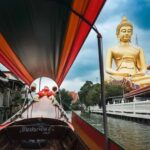
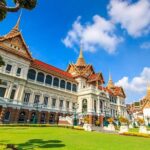
This experience starts by leaning into Old Bangkok religious landmarks and the textures of traditional neighborhoods. You’ll see a temple complex described with an ornate marble exterior and a gold Buddha, set among traditional-Thai buildings. That kind of exterior detail is more than pretty. It’s a quick lesson in why Siamese temples can feel like a whole visual language.
From there, you’ll cross through the canal-and-bridge Bangkok story. The Pi Kun Bridge is a pedestrian overpass across Khlong Khu Mueang Doem, known as Khlong Lot (the tube canal). Bridges like this matter because they show you how movement once relied on waterways. You’ll start noticing that Bangkok history often comes with a navigation system: canals, walls, moats, and crossing points.
Then comes Fort Mahakan, built in the 18th century, described as one of the oldest structures in Bangkok. Forts can feel dry on a map. On foot, they’re a “you are here” marker for why Bangkok grew the way it did—defense, control, and protection tied to political change.
A highlight for atmosphere is Rommaninat Park. It’s framed as a place to relax amid flowers and trees, but it also ties directly to a darker chapter: it used to be used for punishment, and the old Bangkok prison is now a museum that retraces Thailand’s prison system history. Even if you only skim the museum angle, you’ll leave with a more complete sense of how cities manage order.
You’ll also pass through a well-preserved street in an old neighborhood with shops selling Buddha statues and memorabilia. That’s not just shopping. It’s a living reminder that religion and commerce have always overlapped in Bangkok.
Wat Pho and temple anchors you can build your whole day around
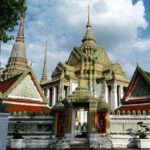
If you care about Bangkok temples, Wat Pho is a must, and this tour positions it clearly in the middle of the program. The complex is described as one of the largest and most important temples in Thailand, with more than 1,000 Buddha images and statues, including the famous Reclining Buddha (Phra Buddha Saiya).
Even if you’re not a “temple person,” Wat Pho is hard to miss because it’s too significant to reduce to Instagram angles. This is the spot where you’ll understand why Bangkok’s spiritual architecture feels both formal and crowded—like a city inside a city.
Another temple item on the route is Wat Ratchanatdaram, listed as UNESCO World Heritage. It’s described as featuring 37 bronze golden spires, plus nearby pavilions like the Royal Reception Pavilion. If you’ve ever wondered what UNESCO actually means in Bangkok terms, this is one of those answers.
You’ll also hear about Wat Sa Ket on a 75-meter (246 ft) artificial hill. The big promise here is effort-to-view: the route calls out that the climb is worth it, and that inside you’ll find vibrant colored walls, detailed paintings, and miniature sculptures. I’d treat Wat Sa Ket like your “endurance payoff” stop.
One caution: temple interiors can vary in hours and rules. The tour covers seeing and context, but entry is not included, so plan to make quick decisions on what you’ll go inside.
You can also read our reviews of more historical tours in Bangkok
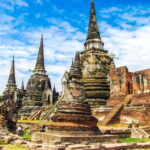


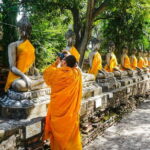

Markets and neighborhoods: Little India, Chinatown, flowers, and snack time
This is where the walking tour becomes less “monument tour” and more “real Bangkok.” The route includes Phahurat Market, also known as Bangkok’s Little India, framed as the focal point of Indian life in the area. You’ll get the sense that Bangkok is layered—ethnic communities with their own rhythms, streets, and religious markers.
Then there’s Sampheng, described as a historic neighborhood and market in Chinatown. Chinatown in Bangkok is not just one thing. It’s shops, food, streets, and a sense of long-standing community energy.
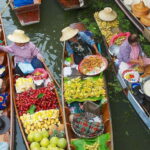
For a sensory reset, the route points you to Pak Khlong Talat, a flower market known for flowers sold from all over Thailand. It’s described as open 24/7, which is a great detail if you want to catch it early or late without losing the rest of your day. Even if you don’t buy anything, walking through the flower churn gives you a snapshot of everyday Bangkok supply chains.
The route also includes Talat Phlu, centered around a railway station ringed with food stalls and shophouses. This kind of stop is a reminder that Bangkok’s city life isn’t only temples and boats. It’s kitchens and quick lunches, too.
And yes, there’s specific food guidance in the program: Kuai Chap Uan Photchana, described as Michelin-rated. It’s known for kuai chap soup plus taco-style dishes, and it lists vegetarian options for dietary needs. If you want one “food you can plan around,” this is the one named for you—so take the cue and build your timing around it.
Museums and the “why” behind the streets
Bangkok can feel like a collection of impressive objects unless someone ties them together. Here, the tie-in comes through museum stops and political history context.
The Museum of Siam is described as Thailand’s first national discovery museum, established in the mid-2000s. It’s the kind of museum you can use to understand what you’re walking past—especially helpful if you’re the kind of person who likes to know how the present formed.
You’ll also find the King Prajadhipok Museum in an early 1900s neoclassical mansion, dedicated to the life of King Prajadipok (Rama VII). The tour description specifically mentions his role in overseeing Thailand’s transition from outright monarchy to constitutional monarchy in 1932. That’s big-picture history, but presented through a focused person-and-era approach.
Another unique museum stop is the Berlin Pharmaceutical Museum, which ties Western-style medicine introduced to Bangkok in the 1700s to the legacy of Dr Chai Chaiyanuwat. The museum is located in the exact building where he practiced. That “place-specific” detail matters because it turns history from theory into something you can point at.
If you’re worried about getting museum fatigue, keep this strategy: use the museums for one or two key takeaways, then go back outside. The walk segments are where it all clicks.
Chinese and Hindu landmarks: learning Bangkok’s cross-cultural map
Bangkok’s religious geography is a mix, not a single lane. This tour reflects that.
You’ll visit Wat Mangkon Kamalawat, described as the largest and most important Chinese temple in Bangkok, established in 1871 and originally named Wat Leng Noei Yi. That makes it more than a “pretty temple stop.” It’s a marker of community permanence and scale.
There’s also the Erawan Hindu shrine in the center of Bangkok. The tour notes it was built in 1956 to ward off bad luck from a nearby hotel under construction. Shrines with that origin story are fascinating because they show religion as practical problem-solving, not just ceremony.
Another cross-cultural architecture note appears on the route with a monastery described as integrating Thai and European culture and being considered a masterpiece of art in Buddhist monasteries. The phrasing is broad, but the key takeaway is clear: Bangkok’s Buddhist art can reflect outside influences without losing its local identity.
If you enjoy “how cultures borrow from each other,” these stops will reward your attention.
Adult nightlife edge, malls, and bridges: how to choose your comfort level
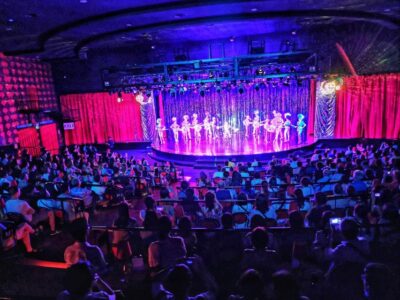
The route includes an entertainment complex and red-light district in Khlong Toei District, described as occupying a three-story commercial building and calling itself the world’s largest adult playground. That’s a factual part of the city you’ll see from the walking route.
I’m glad the tour doesn’t pretend the area doesn’t exist. But I also think it’s worth you mentally flagging it in advance. If you’d rather skip that vibe, you can plan to use your app time around other stops instead, since the ticket includes self-guided touring.
The program also lists shopping and city-center options like Siam Square, described as a mix of massive malls and lanes with street vendors. And it includes Krungthong Plaza nearby to other big commercial areas. These aren’t “cultural history” in the same way as temples, but they help you see modern Bangkok’s rhythm: consumption, crowds, and street-side commerce happening right next to old structures.
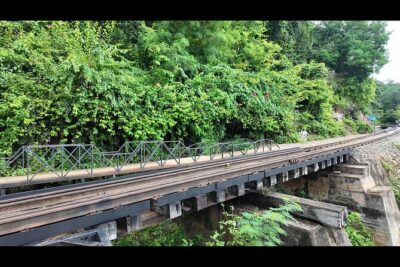
Finally, there’s a wooden bridge described as the longest wooden bridge in Thailand and second longest in the world (the description has a small typo, but the key claim is that it’s extremely long and wood-built). If you’re into engineering and unusual construction, this is a fun palate cleanser between more sacred stops.
My take: who this tour is for (and who should skip it)
This walking tour is a good match if you:
- want a temple + neighborhood + market mix in a short time window,
- like learning context, not just taking pictures,
- want both guided walking and app-based follow-up.
It’s also a great budget-friendly option at $24, mainly because the included app expands your touring time beyond the guided portion.
You might skip it if:
- you dislike walking for 1–2 hours and don’t enjoy heat or street-level crowds,
- you want a strict “only famous monuments” tour with no adult-area content,
- you plan to pay for a lot of interior admissions, since entry isn’t included.
Should you book this Bangkok Historic Siam and Cultural Gems walking tour?
Yes, if you want a smart way to cover a lot of Bangkok without turning your day into random wandering. The combination of live guide context and the Vox City app is the real win, especially with the 3-day ticket option when Bangkok timing goes sideways.
I’d book it if you’re the kind of traveler who likes to understand why things are where they are—bridges with canal history, forts tied to early defense, temples tied to Chinese and Hindu communities, and markets tied to everyday life. At $24, you’re paying for structure, not for luxury. And in Bangkok, structure is what helps you see the city clearly.
FAQ
How much does the Bangkok Historic Siam and Cultural Gems walking tour cost?
The price is $24.00 per person.
How long is the experience?
It’s listed as 1 to 2 hours (approx.).
Is the ticket valid for more than one day?
Yes. It’s described as a flexible 2 day ticket, and it’s valid for 3 days from the first use if you can’t do everything on the same day.
What’s included with the ticket?
You get the Historic Siam walking tour and the Bangkok Cultural Gems walking tour, a Vox City app with 7 self-guided walking tours, and audio commentary in 5 languages. You also receive a mobile ticket.
What is not included?
Transportation, entry to attractions, and food and drinks are not included.
Do I need the app to participate?
The app is included in your ticket, and it’s used for the self-guided walking tours.
What languages is the audio available in?
Audio commentary is available in 5 languages.
What’s the maximum group size?
The experience has a maximum of 99 travelers.
Are service animals allowed?
Yes, service animals are allowed.
What’s the cancellation policy?
You can cancel for free and receive a full refund if you cancel up to 24 hours in advance. If you cancel less than 24 hours before the start time, the amount paid is not refunded.