REVIEW · FOOD
Bangkok: Cook authentic Thai food with Smart Cook
Book on GetYourGuide →Operated by Smart Cook Bangkok · Bookable on GetYourGuide
Spring rolls and curry paste in a teak house. In Bangkok’s old city, Smart Cook’s class takes you into a 100+ year teak-wood home for hands-on instruction led by Snow White. I especially like two things here: you get to pick your own menu mix, and you get practical coaching on herbs, spices, and fresh ingredients as you cook. One thing to consider: alcohol isn’t included and it isn’t allowed during the class, so this is strictly a cooking-focused session.
You’ll meet just off the Giant Swings area, walk about 100 meters toward Trok Turk Din alley, and then spend 210 minutes cooking and eating in a local, family-style setting. The group stays small (up to 7), the instructor works in English, and you leave with a PDF recipe book online—plus a return trip to your hotel at the end.
In This Review
- Key Points You’ll Care About
- Bangkok Old City Setting: A Teak-Wood Home Near the Giant Swings
- Who You Cook With: Snow White Leads a Small English Class
- Picking Your Menu and Learning Thai Herbs, Spices, and Fresh Ingredients
- From Spring Rolls to Stir-Fries: Deep-Fry Skills and Wok Timing
- Soups and Curry Paste: Making Green Curry the Thai Way
- Cooking Your Curry and Finishing with Mango Sticky Rice
- The Meal Moment: Traditional Family-Style Eating in a Local Home
- Recipes You Can Use: The Online PDF Recipe Book After Class
- Price and Value in Plain Terms at $41 for 210 Minutes
- Should You Book Bangkok Smart Cook?
- FAQ
- How long is the Bangkok Smart Cook class?
- How much does it cost?
- What dishes will I cook, and can I choose?
- What language is the instructor, and how big is the group?
- Where do I meet for the class?
- Is alcohol served or allowed during the class?
- Is it suitable for children, and can I cancel for a refund?
Key Points You’ll Care About
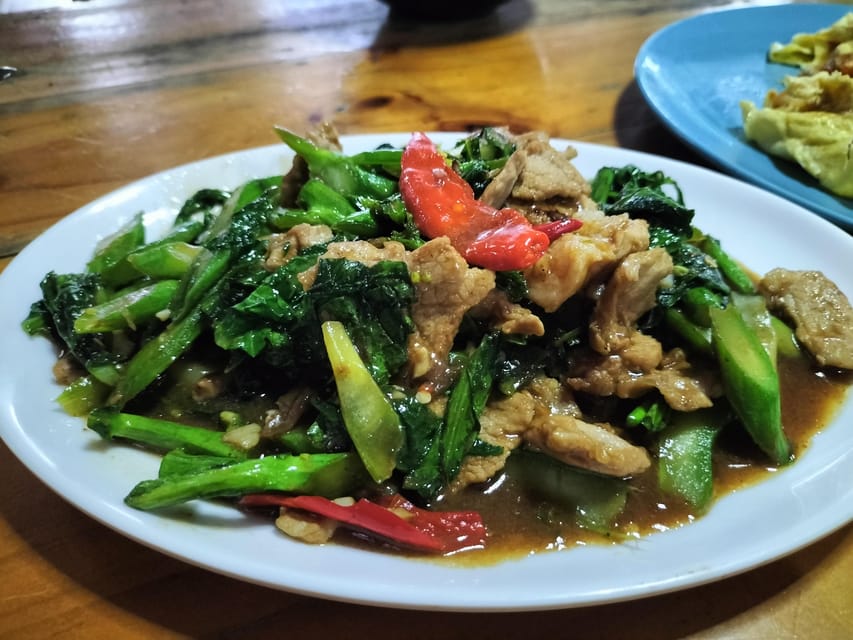
- A real old Bangkok setting: You cook in a traditional teak-wood home in the heart of the old city.
- Pick what you cook: Choose from stir-fries, soups, curry paste/curry, and a sweet finish.
- Hands-on, not watch-only: You prep and cook as you go, with step-by-step guidance.
- Green curry paste practice: You learn how the flavors get built, not just how to eat them.
- Indoor-outdoor kitchen feel: The kitchen setup blends indoor and outdoor cooking space.
- Leave with the recipe PDF: You’ll get an online recipe book to recreate your dishes at home.
Bangkok Old City Setting: A Teak-Wood Home Near the Giant Swings
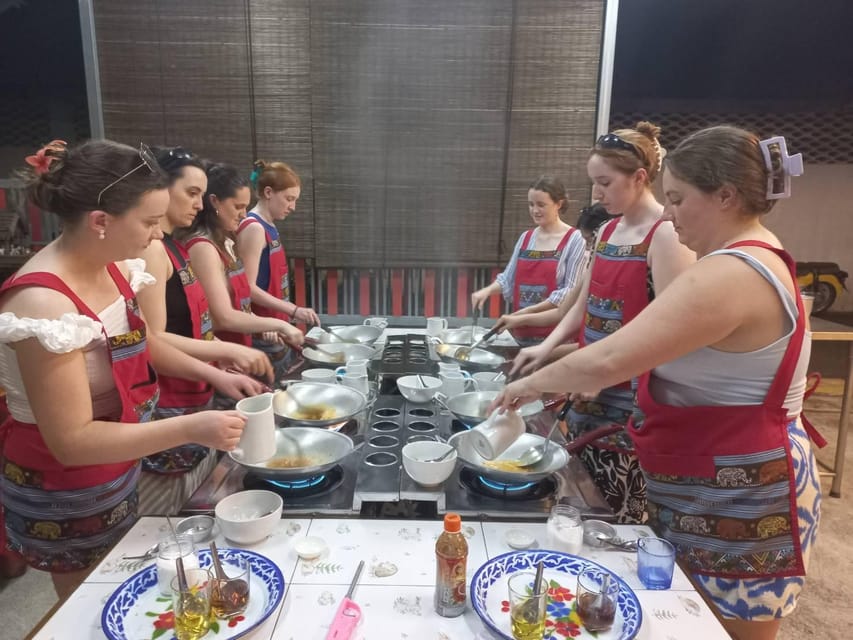
This class starts with a location that feels more like someone’s neighborhood home than a tourist activity. You’re in the old city area, near the Giant Swings, and the meeting point is easy to find: walk from the Giant Swings to Trok Turk Din alley, about 100 meters. That short walk matters. It helps you arrive without stress and quickly switch into local-life mode.
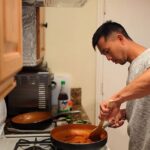
Then you step into a traditional teak-wood home that’s more than 100 years old. You can feel the change in pace right away: Bangkok outside the door moves fast, but inside the teaching space, everything is about calm technique—knife work when needed, careful measuring of paste and aromatics, and frequent tasting as dishes come together.
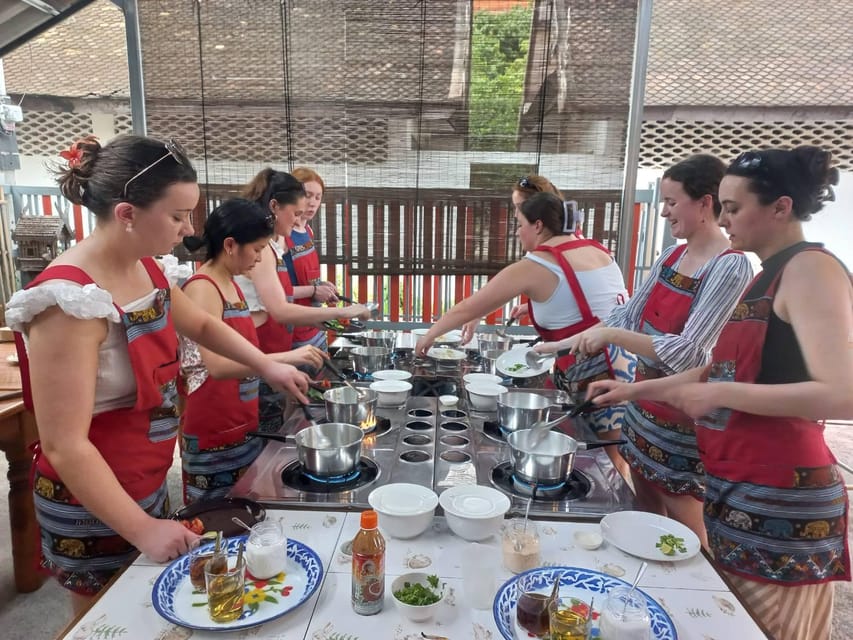
One more detail I like: the kitchen experience is described as both indoor and outdoor, so you don’t get stuck in a single bland room. It helps the cooking feel practical, like how Thai food is made day to day.
You can also read our reviews of more food & drink experiences in Bangkok
Who You Cook With: Snow White Leads a Small English Class
The biggest quality jump in this tour is the teaching style. It’s set up for a small group limited to 7, which means you’re not lost in a crowd. You can ask questions, get correction, and actually handle the cooking.
Your instructor is English-speaking, and the name that comes up again and again is Snow White. In the feedback, she’s praised for being patient and for guiding people clearly enough that even first-timers can feel proud of what they produce. That kind of hosting matters more than people think. Thai cooking can sound complicated—herbs, spices, fresh aromatics, and spice pastes—but the class structure breaks it down into steps you can follow.
Also, the class is built around a local Thai chef who has long-term experience teaching. That usually shows up in two places: timing (everyone finishes roughly together) and consistency (the flavors make sense as you cook).
Picking Your Menu and Learning Thai Herbs, Spices, and Fresh Ingredients
Before the first pan heats up, the class focuses on understanding ingredients. You’re not just given recipes. You’re taught what the core Thai flavors are and how they work together. Expect a guided look at Thai herbs, spices, and important ingredients—plus discussion of vegetables and how to use them in a healthier Thai meal.
This part is valuable because it changes how you cook afterward. If you only learn what to cook, you’ll struggle when you can’t find a specific product at home. If you learn what each ingredient does, you can adapt. The class emphasizes fresh ingredients and shows you how to combine them into dishes that taste like Thai food, not like a Western version.
Then comes the fun part: you choose your favorite menu options from the selection dishes. That flexibility is great for mixed groups—maybe you want something mild and comforting, while someone else wants the curry-paste project. The class is designed so everyone ends up cooking a full plate of food, not just sampling.
From Spring Rolls to Stir-Fries: Deep-Fry Skills and Wok Timing
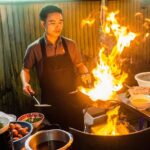
The cooking process in this class moves through several stations. One shared dish is deep-fried spring rolls. Everyone makes them, which is a smart choice: you get a classic Thai street-food skill in a controlled setting. You’ll learn the feel of frying and how to handle the spring roll cooking step-by-step, so you can repeat it at home.
After that, you branch into stir-fry options. You can choose among:
- Fried rice with chicken
- Pad Thai
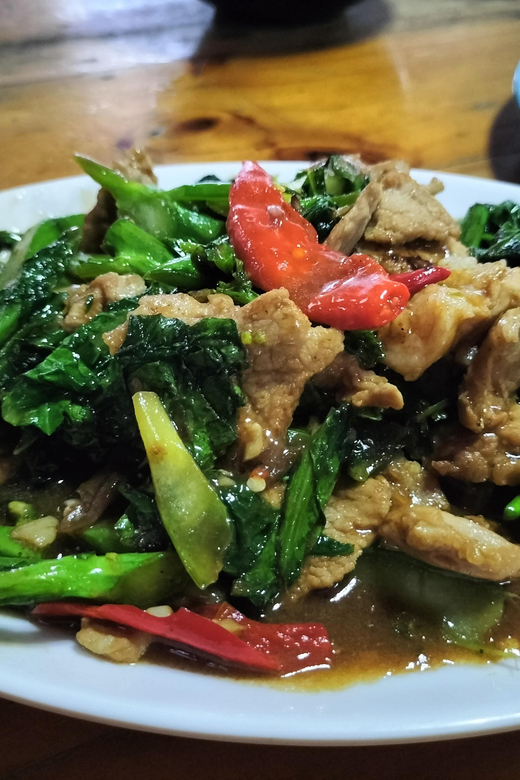
- Fried chicken with holy basil
This is where the class becomes really practical. Stir-fries are fast, and the flavor comes from balance—hot pan, timing, and using the right aromatic at the right moment. Holy basil in particular gives you a sharper, herbal punch, and the class format helps you see how that flavor shows up in the finished dish.
If you like hands-on cooking, this section is where you’ll feel most active. You’re not waiting for someone else to do the work. You’re cooking, adjusting, tasting, and moving on when it’s time to build the next component.
Soups and Curry Paste: Making Green Curry the Thai Way
Next, the class turns into the kind of Thai flavor-building you can’t fake with store-bought sauces. You’ll have soup options to choose from, including:
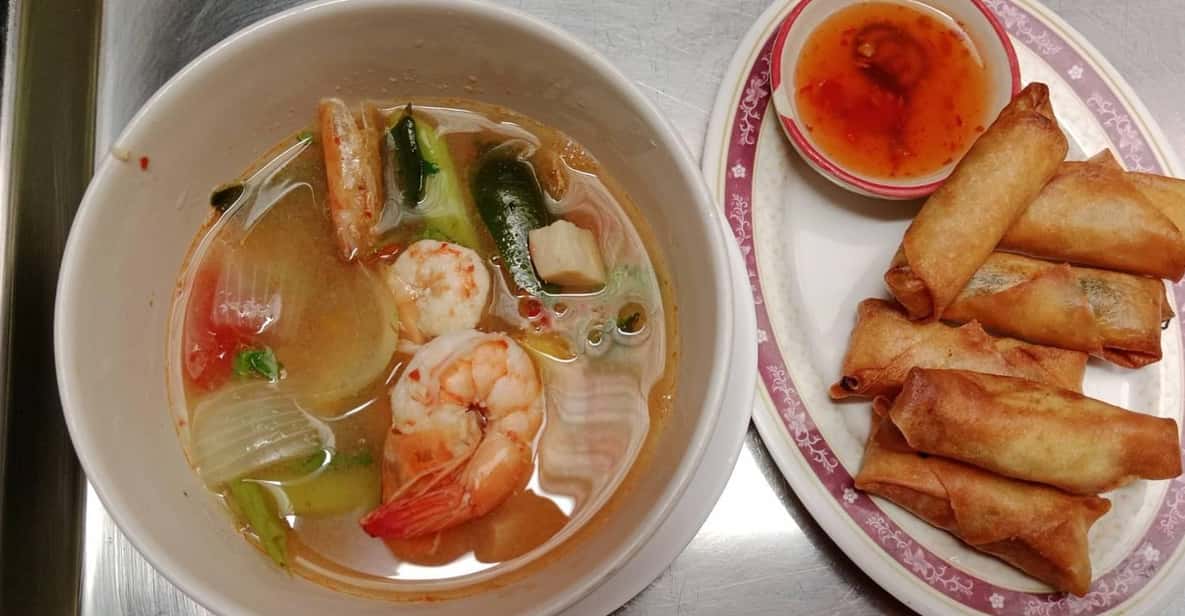
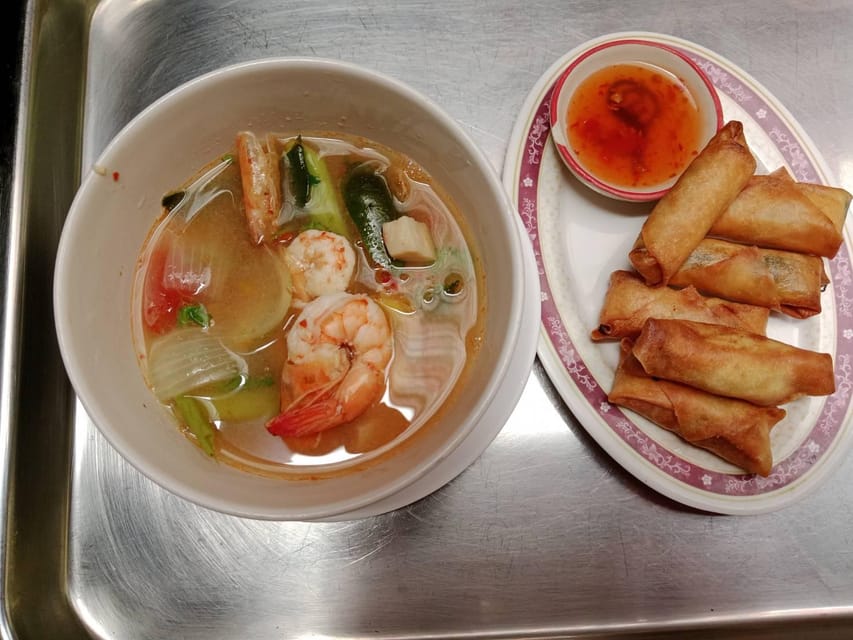
- Hot & sour prawns soup
- Chicken in coconut milk soup
- Local hot and sour chicken soup
Hot and sour soups are all about balance: sourness, heat, saltiness, and aroma. Even if you’ve eaten them before, making them helps you understand why they taste the way they do. That knowledge carries over when you cook other Thai dishes, because the same flavor logic shows up again and again.
Then you move to one of the standout skills: making green curry paste (also described with options like Pha Naeng or Kao-soi curry paste). Curry paste is the heart of Thai curry flavor, and the class treats it as a proper learning task, not an afterthought. You’ll be shown the method and taught how to assemble the paste so it tastes right when cooked.
Why this is worth your time: when you learn curry paste, you’re learning the flavor system. At home, that can mean better results even if you simplify the process later. You’ll also see how different curry directions connect—green curry, and curry-style dishes related to Pha Naeng and Kao-soi—with the paste as the starting point.
You can also read our reviews of more tours and experiences in Bangkok


Cooking Your Curry and Finishing with Mango Sticky Rice
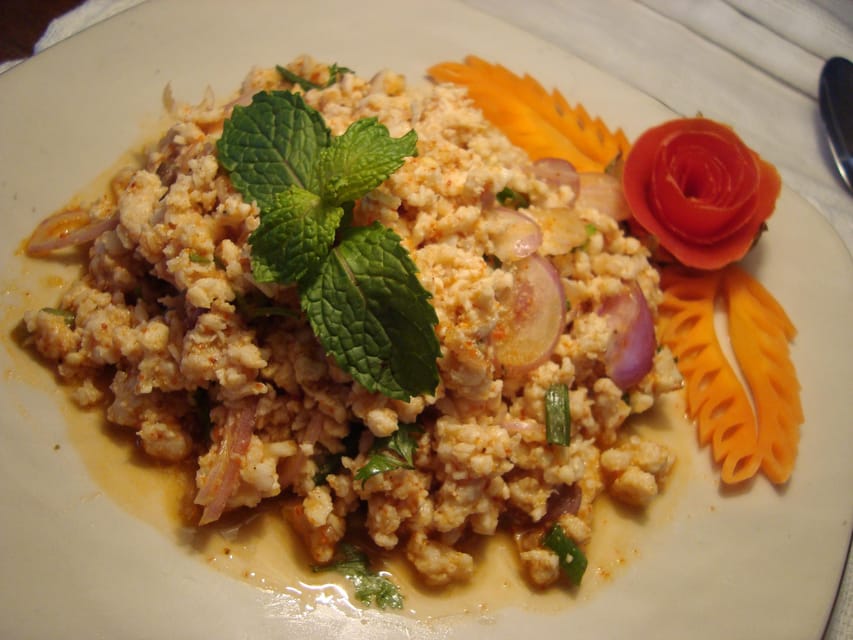
Once the curry paste is made, you cook the next phase: green curry, Pha Naeng, or Kao-soi curry, with chicken as your choice. This is where the class ties the lesson together. You made the paste, and now you watch it transform—thickening, cooking off raw sharpness, and turning into a sauce you can spoon onto rice or pair with the rest of your meal.
If you’re the type who wants to go beyond one dish, this is a great payoff step. It gives you both the foundation (paste) and the finished comfort (curry that tastes like Thai comfort food).
Then you close on something sweet: sticky rice with mango. It’s listed as part of the class for everyone, and it’s a fitting ending. Thai desserts aren’t all sugar and chaos. Sticky rice desserts show how texture matters—chewy rice, sweet fruit, and the right balance so it doesn’t taste one-note.
By the time you sit down to eat in the traditional family style, you’ve built a full Thai meal with your own hands. That’s the biggest reason this tour works as a “real cooking experience” instead of a quick demonstration.
The Meal Moment: Traditional Family-Style Eating in a Local Home
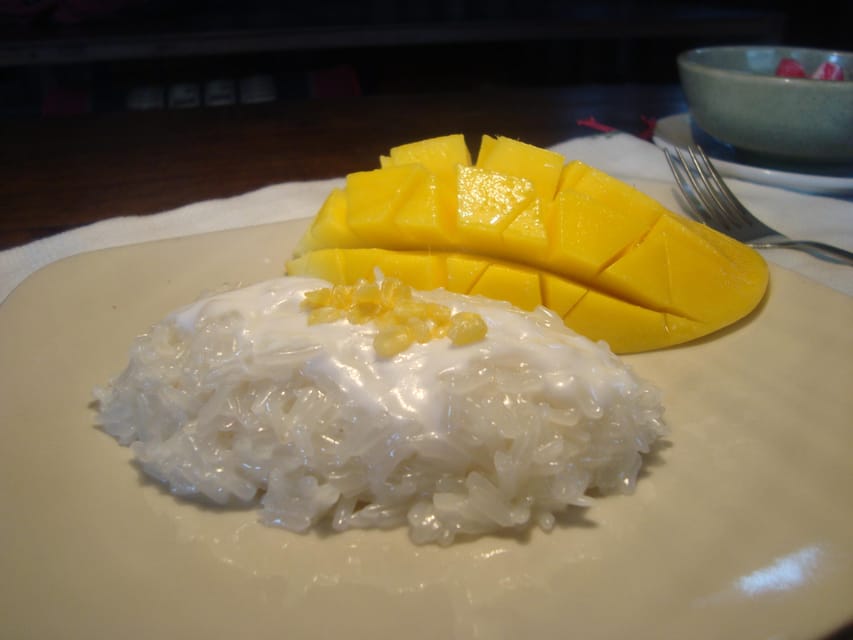
This class is designed so you cook, then eat as a group in a traditional Thai family-style setup. That part is more than decoration. It makes the flavors make sense. When you taste together right after cooking, you can link what you did at the stove to what you’re enjoying on the table.
It also helps social learning. Even with a small group, you’ll see how other menu choices come together. If someone picks Pad Thai, you’ll compare textures and sauce balance to your curry or soup. That kind of comparison is a quiet education.
And if you’re worried about the meal being only a small tasting portion, the class format suggests it’s a full cooking session with enough food that you feel you truly ate what you made.
Recipes You Can Use: The Online PDF Recipe Book After Class
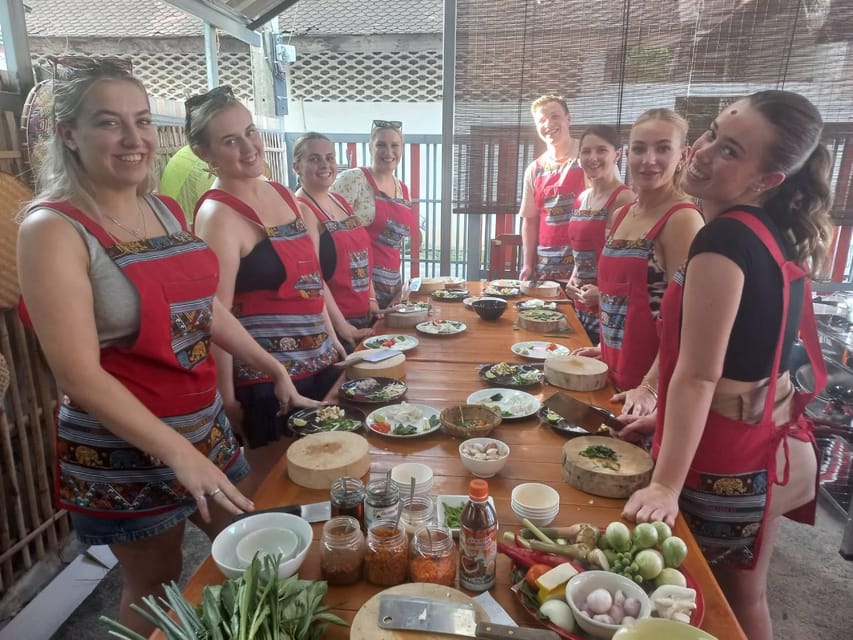
One of the most practical takeaways is the PDF version recipe book online. Thai cooking often feels intimidating because of ingredient names and step sequences. A recipe you can refer to later is what turns a fun day into real at-home progress.
The class also includes time for wrap-up and answering questions, so you can clarify anything you’re unsure about—like how paste flavors should taste while cooking, or what makes the sweet finish work.
This is especially helpful if you’re cooking for friends. Even basic Thai dishes look impressive, but they taste truly impressive when the seasoning logic holds. This class is aimed at giving you that logic, not just copying one meal once.
Price and Value in Plain Terms at $41 for 210 Minutes
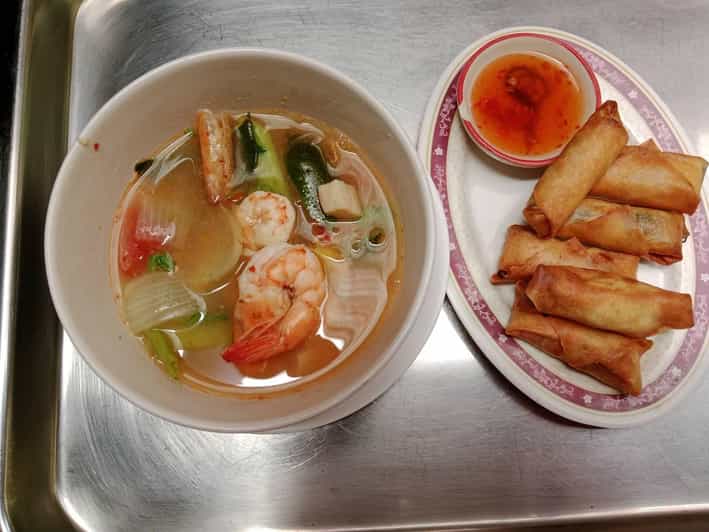
At $41 per person for 210 minutes, this tour isn’t the cheapest thing on Bangkok’s activity list. But it also isn’t a short demo where you watch someone else work.
Here’s what you’re paying for:
- A hands-on cooking format (including curry paste work)
- Multiple dish categories with menu choice (spring rolls, stir-fries, soups, curry, mango sticky rice)
- Teaching by a dedicated English-speaking instructor (Snow White is specifically highlighted)
- A 100+ year teak-wood home setting in the old city
- A PDF recipe book you can keep using
- A hotel return at the end
So the value is in the skill transfer. If you only want one Thai dish, you can find cheaper. But if you want the building blocks—herb/spice knowledge, curry paste technique, and practice cooking multiple dishes—$41 for a long, structured class starts looking fair.
Also, the group size helps value: with up to 7 participants, you’re more likely to get personal attention instead of standing around.
Should You Book Bangkok Smart Cook?
You should book this class if you want more than a meal. This is for you if you like hands-on instruction, want to understand Thai herbs and spices instead of relying on shortcuts, and enjoy the idea of leaving with repeatable recipes.
It’s also a strong choice if you’re traveling with a small group or partner and want an activity that feels local. The setting—an old teak-wood home in the heart of Bangkok’s old city—makes the day feel grounded rather than staged.
One note to keep you realistic: because alcohol isn’t included and isn’t allowed, it’s not a social party event. It’s a cooking session with food at the center. If that sounds like your kind of Bangkok evening, this is an easy yes.
FAQ
How long is the Bangkok Smart Cook class?
The class is 210 minutes.
How much does it cost?
The price is listed as $41 per person.
What dishes will I cook, and can I choose?
You can choose from a selection that includes deep-fried spring rolls, stir-fry options (fried rice with chicken, Pad Thai, or fried chicken with holy basil), soup options (hot & sour prawns soup, chicken in coconut milk soup, or local hot & sour chicken soup), green curry paste (Pha Naeng or Kao-soi curry paste is also listed), and green curry/Pha Naeng/Kao-soi with chicken, plus sweet sticky rice with mango.
What language is the instructor, and how big is the group?
The instructor speaks English, and the group is small with a limit of 7 participants.
Where do I meet for the class?
Meet from the Giant Swings and walk to Trok Turk Din alley about 100 meters.
Is alcohol served or allowed during the class?
Beer and alcohol are not included, and alcohol is listed as not allowed.
Is it suitable for children, and can I cancel for a refund?
It is not suitable for children under 7. There is free cancellation up to 24 hours in advance for a full refund.
If you tell me your dates and what dishes you’re most excited about (curry, Pad Thai, or soups), I can help you think through a smart menu mix to maximize variety.