REVIEW · FOOD
Bangkok: Chinatown Food Tour with Michelin Food Stalls
Book on GetYourGuide →Operated by DiscoverEase Tours · Bookable on GetYourGuide
One night, one neighborhood, and a lot of food. I like how this Bangkok Chinatown walk is anchored by Thai-Chinese street flavors, guided by people like Peak and K who keep the group moving in the mess. You get history right where you’re eating, not in a lecture hall.
What I love most is the sheer variety. You’ll sample 10+ dishes across different styles, from crispy snacks and barbecued meats to dumplings, noodles, and seafood-leaning plates, plus Chinese desserts at the end.
One thing to consider: it’s not set up for vegans or vegetarians, and it involves a moderate walking route on uneven pavement in the evening crowds.
In This Review
- Key Points You’ll Actually Care About
- Yaowarat By Night: Why This 3-Hour Food Plan Works
- Meeting at Wat Mangkon Kamalawat: Start Point and First Impressions
- The Real Star: 10+ Thai-Chinese Tastings in Practical Order
- The Michelin-Recognised Stall Stop: Street Food Meets a Higher Standard
- Chinese Desserts and a Classic Tea Stall Finish
- Guides, Group Size, and the Pacing That Prevents Food Regret
- Price, Value, and What You’re Really Paying For
- Who This Tour Is Best For (and Who Should Skip It)
- Quick Practical Tips So You Enjoy Every Stop
- Should You Book This Bangkok Chinatown Food Tour?
- FAQ
- Where is the tour starting point?
- Where does the tour end?
- How long is the Bangkok Chinatown food tour?
- How many food tastings should I expect?
- Is this a small group tour?
- Can the tour accommodate dietary restrictions?
- What should I bring for the tour?
- What are the payment and cancellation options?
Key Points You’ll Actually Care About
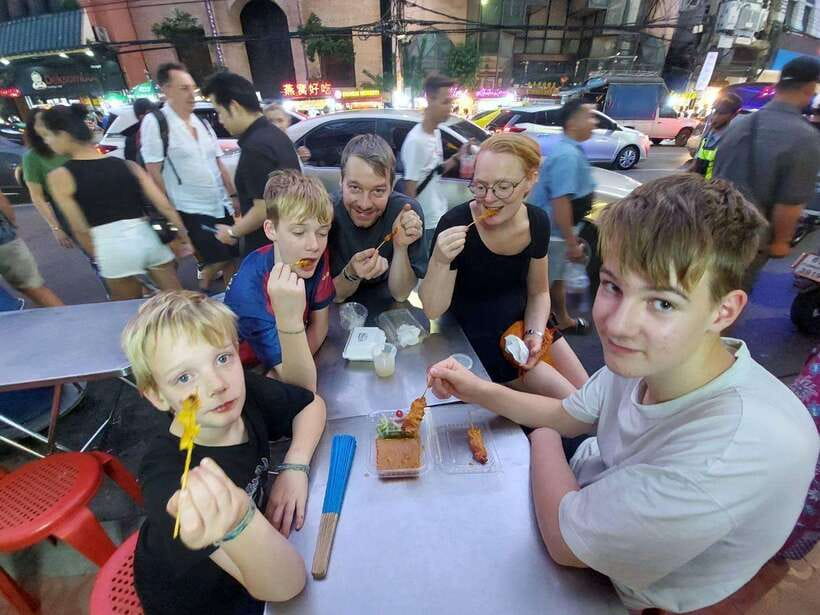
- Small group size (max 8) keeps the pace friendly and helps you get attention at each stall
- 10+ tastings in 3 hours means you eat a lot without spending hours choosing
- Michelin-recognised stop adds a “yes, we’re doing this” moment to a street-food crawl
- Yaowarat history in context ties Chinese immigrant influence to the dishes you’re tasting
- Dessert plus tea at the end gives you a proper finish, not just a final greasy bite
- English-speaking guides (names you may hear like Sunday, Na, Eve, Peak, K) are praised for keeping people together
Yaowarat By Night: Why This 3-Hour Food Plan Works
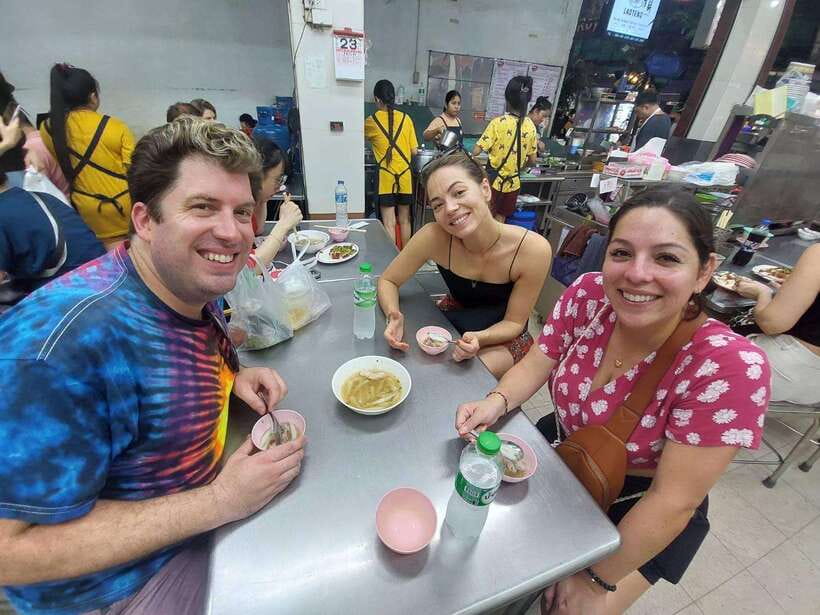
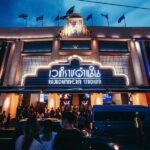
Chinatown in Bangkok has a special rhythm after dark. You get neon glow, loud kitchens, and a constant parade of people grabbing a bite and moving on. This tour uses that energy instead of fighting it.
The format also makes sense for first-timers. With a set route and a guide, you don’t waste time staring at menus you can’t read or guessing what’s safest to try. I also like the small-group approach because it’s easier to ask questions and follow along when the sidewalks get tight.
Price-wise, $36 for 3 hours isn’t just “cheap street food.” It’s a bundle: multiple tastings, bottled water, and an English-speaking guide who explains what you’re eating and why it matters in Thai-Chinese food culture.
You can also read our reviews of more food & drink experiences in Bangkok
Meeting at Wat Mangkon Kamalawat: Start Point and First Impressions
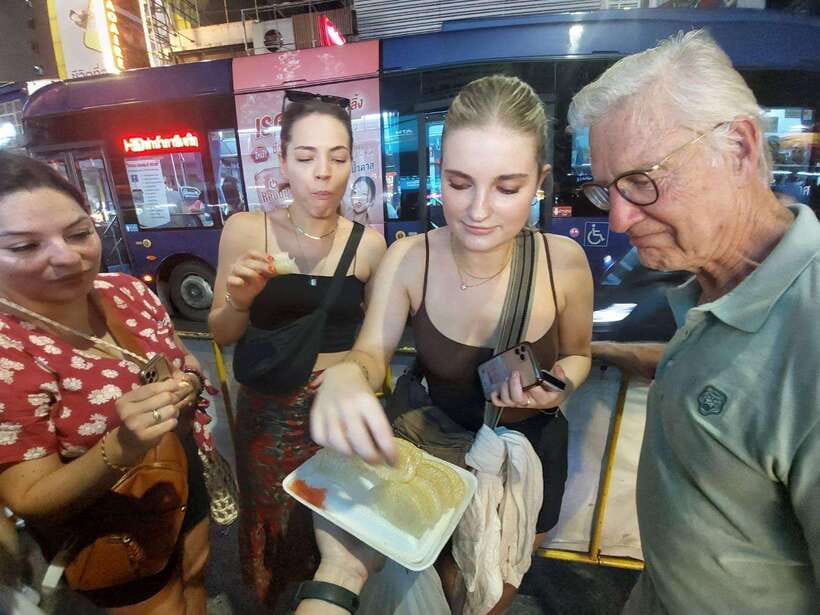
You begin at Wat Mangkon Kamalawat (Wat Leng Noei Yi). That matters because it’s a natural launchpad for Yaowarat’s evening flow, and it helps you get your bearings fast before you’re surrounded by side streets and steam.
From the first minutes, you’re not just wandering. You’re walking with a plan, and that’s a big deal in a place where street food is everywhere and choices are overwhelming. If you like the comfort of structure but still want the street-life feel, this start point does the job.
Wear shoes you can handle. The route is described as moderate walking, and Chinatown sidewalks don’t exactly behave like smooth shopping malls. Bring a camera if you care about photos of neon signs, sizzling woks, and the storefront chaos.
The Real Star: 10+ Thai-Chinese Tastings in Practical Order
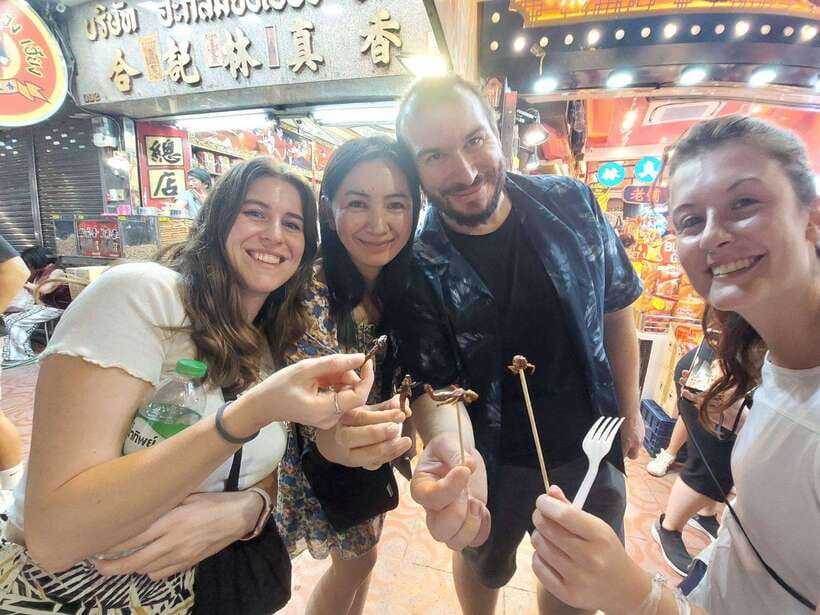
The heart of the experience is the food. You’ll taste over 10 different dishes across multiple stalls and vendors, with Thai-Chinese influences showing up in the flavors and the cooking styles.
Here’s the kind of mix you can expect:
- crispy spring rolls and other fried bite-size snacks
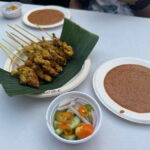
- barbecued meats and savory grilled offerings
- freshly steamed dumplings
- stir-fried plates and noodle soups
- spicy seafood options, depending on the stall
What makes this more than a random food sampling is the pacing and the explanation. A good guide helps you connect the dots: the textures you’re noticing, the sauces you’re tasting, and how Chinese immigrant cooking traditions shaped Bangkok street food. You’ll also hear why some dishes became staples in this neighborhood and why certain stalls keep showing up as local favorites.
A small but important practical benefit: you don’t have to worry as much about “Will I pick the wrong thing?” The guide’s job is to steer you toward places that work for a group and a night schedule. If you’ve ever tried to DIY Chinatown and ended up eating only fried items, this route keeps you balanced.
The Michelin-Recognised Stall Stop: Street Food Meets a Higher Standard
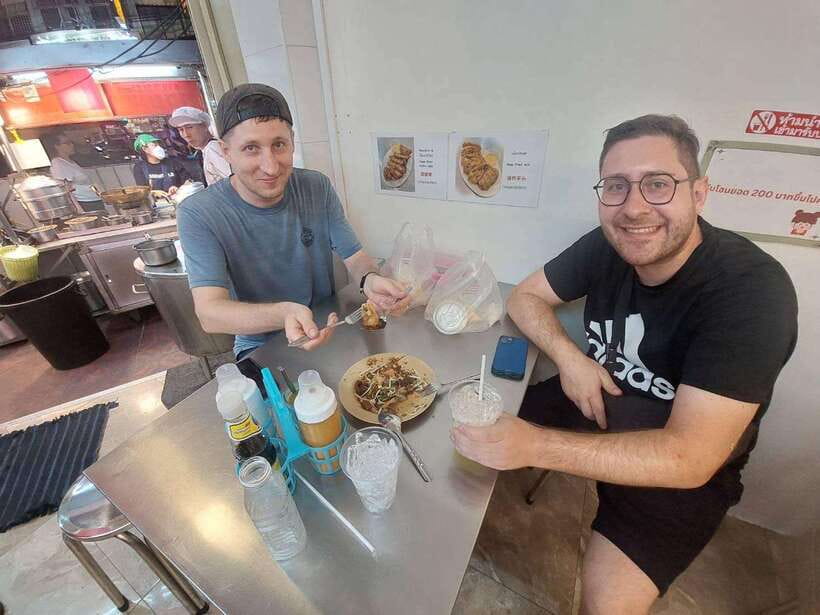
Mid-tour, you’ll visit a Michelin-recognised food stall. This is the moment where the tour adds a different kind of confidence: you’re still in the street-food world, but with recognition that signals consistency and high standards.
In practice, this stop usually works well for people who want two things at once: authenticity and reassurance. You’re not trading street chaos for a formal restaurant. You’re still eating at a vendor, just one that’s earned attention.
The tour framing also suggests you’ll be tasting a special dish tied to the stall’s reputation. That’s your “anchor” bite, a contrast to the surrounding variety. I like this kind of structure because it gives your night a clear peak, instead of every stop blending together into one long blur.
Chinese Desserts and a Classic Tea Stall Finish
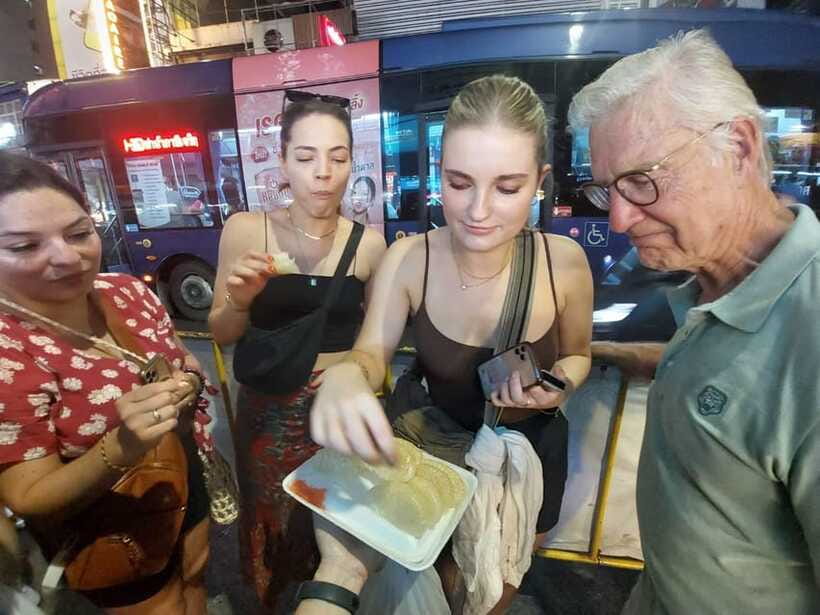
When dinner turns into sweets, the tour follows through. You’ll end with traditional Chinese desserts and snacks such as freshly made buns or local-style pancakes. Then you pair it with a drink from a classic Chinatown tea stall.
This is more than a nice ending. In Thai-Chinese eating, the dessert and tea phase helps you reset your palate. It also keeps the night from turning into a nonstop sugar-free grind of savory bites.
If you think you can skip the tea because you’re already full, don’t. That warm or refreshing drink is often what helps everything digest and lets you keep enjoying the neighborhood after you leave.
You can also read our reviews of more tours and experiences in Bangkok
Guides, Group Size, and the Pacing That Prevents Food Regret
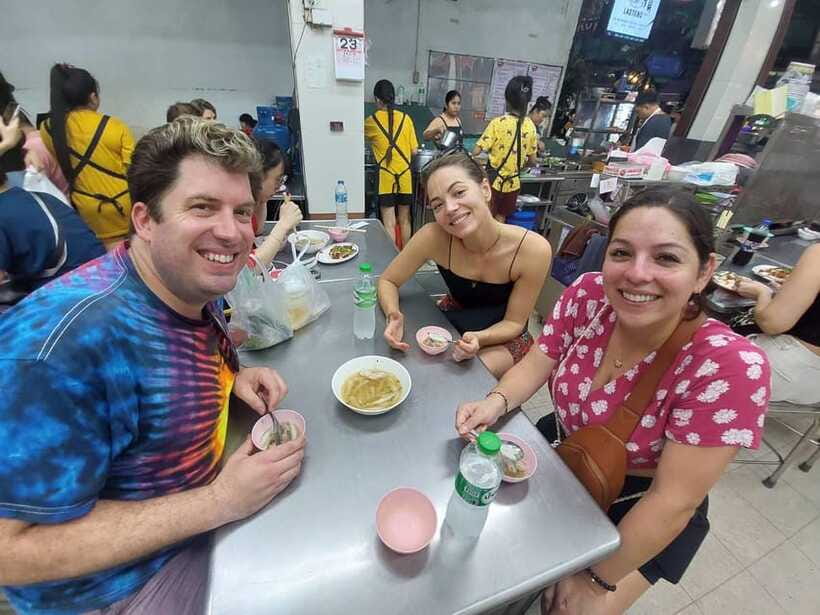
The tour runs in a small group, max 8 people, and that’s a huge quality lever. In Chinatown crowds, big tours get stretched out fast. Small groups stay together, and that keeps the experience calm enough to enjoy while still feeling lively.
In the feedback, guides like Sunday, Na, Eve, Peak, and K show up for a reason: they’re described as funny, attentive, and good at keeping people coordinated during busy moments. You also hear that the tour doesn’t feel rushed. Even if it runs a bit past the 3-hour mark at times, the pacing is generally set up so you can eat properly rather than half-bite your way through the night.
This also matters for appetite. One pattern from the experience is simple: come hungry. You’ll end the tour full, not just “slightly satisfied.” If you’re the type who grazes, plan to eat in a way that matches the tour’s intent.
Price, Value, and What You’re Really Paying For
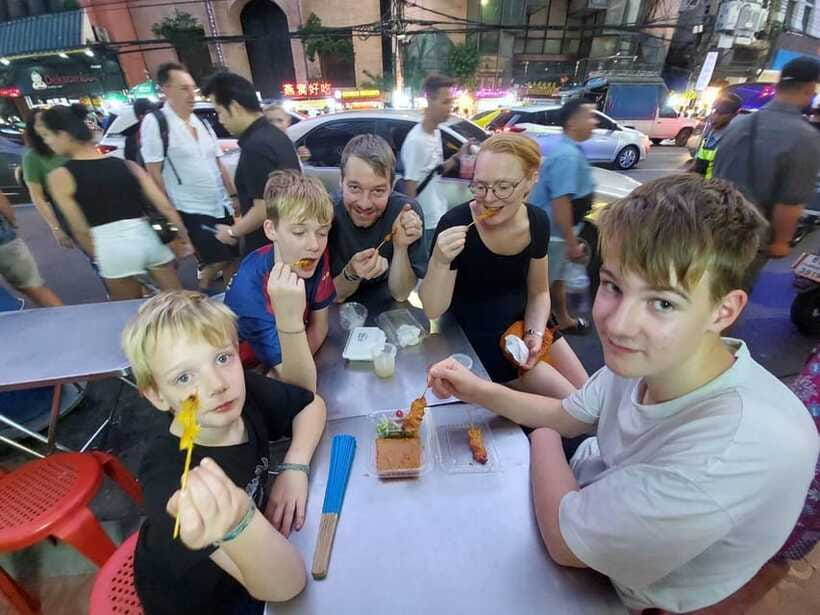
Let’s translate $36 into actual value.
You’re getting:
- 10+ food tastings (not just a couple of samples)
- English-speaking guide time and planning
- small group handling (max 8)
- bottled water
For street food, that’s the trade-off you’re making. You pay to avoid the uncertainty, the choosing stress, and the logistics of finding the best stalls in a crowded maze. The value is greatest if you want more variety than you could realistically sample on your own.
If you already love DIY street eating and know exactly where you want to go, you might skip a tour. But if you want the “eat like a local, with a guide who gets it” experience, this price is hard to beat for what you’re served.
Who This Tour Is Best For (and Who Should Skip It)
This is a strong match if you:
- are visiting Bangkok for the first time and want a confident Chinatown intro
- love Thai-Chinese street food and want variety without decision fatigue
- enjoy learning while you eat, especially how immigrant influence shaped dishes
It’s less of a fit if you:
- are vegan or vegetarian (the tour notes it’s not suitable)
- use a wheelchair (not suitable)
- want a kid-friendly outing (not suitable for children under 10)
Dietary restrictions can be accommodated with advance notice. That’s helpful for issues like gluten needs, but it doesn’t change the overall fact that the tour isn’t built for fully vegan/vegetarian menus.
Quick Practical Tips So You Enjoy Every Stop
- Bring comfortable walking shoes. You’re on foot in a dense evening neighborhood.
- If you have dietary needs, message ahead. The tour says restrictions can be accommodated with advance notice.
- Eat lightly earlier in the day. This tour is designed to leave you stuffed, in a good way.
- Bring your camera, because Chinatown at night is made for photos: signs, steam, and sizzling pans.
Also note what’s not allowed: pets are not permitted.
Should You Book This Bangkok Chinatown Food Tour?
Book it if you want a 3-hour, guided way to eat your way through Yaowarat without guessing. The combination of 10+ tastings, an English-speaking guide, a Michelin-recognised stop, and a dessert-and-tea finish is a clean formula for a strong first Chinatown night.
Skip it if you need fully vegan or vegetarian options, if wheelchair access is required, or if you prefer a quiet, low-crowd experience. Chinatown is a loud, crowded place by nature, and this tour leans into that energy.
If you’re in the middle—curious, hungry, and ready to walk—this is one of the best ways to turn an intimidating street-food neighborhood into a fun, organized feast.
FAQ
Where is the tour starting point?
The tour starts at Wat Mangkon Kamalawat (Wat Leng Noei Yi).
Where does the tour end?
The tour finishes at The Chinatown Gate.
How long is the Bangkok Chinatown food tour?
It lasts 3 hours.
How many food tastings should I expect?
You’ll get 10+ food tastings during the tour.
Is this a small group tour?
Yes. It’s a small group tour with a maximum of 8 people, and it includes an English-speaking guide.
Can the tour accommodate dietary restrictions?
Dietary restrictions can be accommodated with advance notice, but the tour is not suitable for vegans or vegetarians.
What should I bring for the tour?
Wear comfortable shoes and bring a camera.
What are the payment and cancellation options?
You can cancel up to 24 hours in advance for a full refund. You can also reserve now and pay later, so you can book without paying immediately.