REVIEW · COOKING CLASSES
Backstreet Bangkok Exploring the Cradle of Thai Cooking
Book on Viator →Operated by Culinary Backstreets Walks · Bookable on Viator
Thai cooking starts in alleyways.
This Backstreet Bangkok walk strings together Bangkok’s older neighborhoods with a full food-first route: Wat Ratchaburana, Rattanakosin Island, Yaowarat area, Phahurat Market, and Sampeng Market, plus plenty of market stalls and local stops along the way. I especially love how it connects what you eat to where Thai cooking grew—so you’re not just sampling, you’re understanding. One thing that helps: the tour keeps the group small (up to 7), so the guide can steer you toward the right counter, the right dish, and the right pace.
I also like the value for the money because you’re not asked to hunt down dinner after the walking: the tour includes dinner, snacks, bottled water, and even alcoholic beverages. The main drawback to consider is practical: there’s no private transportation included, so you’ll want to be comfortable using public transit and navigating on foot for about 5 hours.
In This Review
- Key highlights worth planning around
- Backstreet Bangkok’s 5-hour Thai cooking route (Wang Burapha to Chinatown)
- Wat Ratchaburana: a 15th-century start before you eat
- Rattanakosin Island: landmarks like the Grand Palace area
- Yaowarat area: street food energy next to the history
- Phahurat Market (Little India): textiles, jewelry, and food stops
- Sampeng Market: Chinatown alleys for shopping and flavor
- What’s included in the $125 price: dinner, snacks, drinks, and water
- The meeting point at Sam Yot MRT and how the day flows
- Small group size (up to 7): better for food stops and questions
- Who should book this Backstreet Bangkok tour?
- Should you book Backstreet Bangkok: Exploring the Cradle of Thai Cooking?
- FAQ
- How much does Backstreet Bangkok: Exploring the Cradle of Thai Cooking cost?
- How long is the tour and when does it start?
- Where do we meet, and where does the tour end?
- What’s included in the tour price?
- Are admission fees required for the stops?
- Is private transportation provided?
- How many people are in the group?
- Is the ticket sent on my phone?
- What’s the cancellation policy for a full refund?
- Is this tour okay for most people?
Key highlights worth planning around
- A licensed guide who ties food to Thai cooking roots across older Bangkok neighborhoods
- Wat Ratchaburana and Rattanakosin Island for a temple-and-royal-era frame before the tastings
- Yaowarat area street-food momentum to get your appetite going early
- Phahurat Market (Little India) for textiles, jewelry, and food stops in the same loop
- Sampeng Market Chinatown alleys with narrow lanes and a long shopping tradition
- Small group size (max 7) that makes the route easier to follow and the tastings more personal
Backstreet Bangkok’s 5-hour Thai cooking route (Wang Burapha to Chinatown)
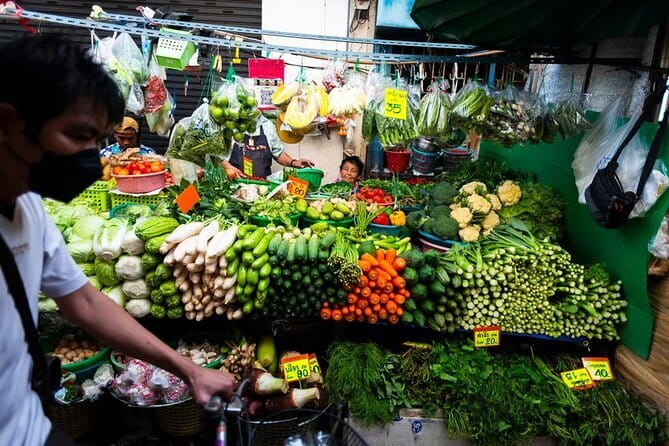
Backstreet Bangkok is for people who want Bangkok food beyond the usual highlights. You start in the Wang Burapha vicinity and work through a sequence of areas that explain how Thai cooking absorbed influences over time—then you taste those connections as you walk.
At $125 per person for about 5 hours, it’s not a “cheap bite here and there” kind of tour. The pricing makes more sense because it includes a real meal (dinner), snacks, bottled water, and alcoholic beverages, all with a licensed guide guiding you from place to place.
The other reason I like this format: it’s built for orientation. Even if you’re arriving and trying to get your bearings fast, you’re covering key neighborhoods in one morning, not just one street.
You can also read our reviews of more cooking classes in Bangkok
Wat Ratchaburana: a 15th-century start before you eat
The tour kicks off at Wat Ratchaburana Ratchaworawihan, an ancient temple built in the 15th century. Admission is free, and the stop is scheduled for about 1 hour, which gives you enough time to see the architecture and settle into the area’s historical tone.
This temple start matters because it sets context. Thai food isn’t floating in space—it’s tied to the city’s long social and cultural patterns. When you visit a major temple early, you’re more likely to notice how the neighborhood’s daily life overlaps with tradition.
Practical note: you’ll be in a walking route day, so comfortable shoes are a must. Also, expect a mix of sights and street activity—less of a quiet museum mood, more of a lived-in city mood.
Rattanakosin Island: landmarks like the Grand Palace area
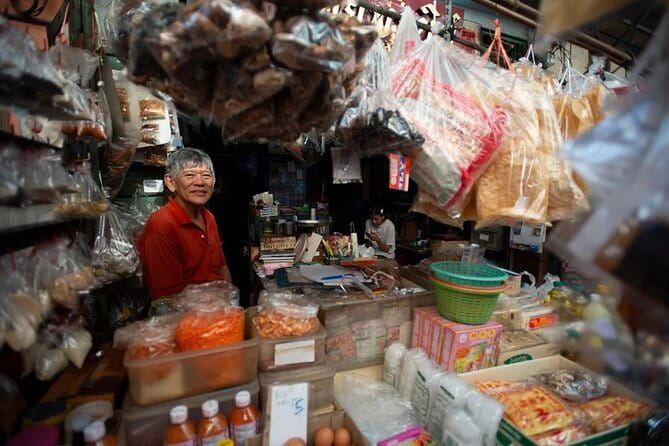
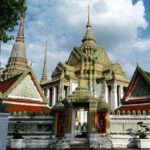
From there, you shift to Rattanakosin Island, the historical core where major landmarks cluster. The tour references famous spots in the area, including the Grand Palace, Wat Phra Kaew (Temple of the Emerald Buddha), and Wat Pho.
Admission for this stop is listed as free, and it’s scheduled for about 1 hour. Even if you don’t spend a long time inside each landmark, the big value is perspective: you’re linking where power and tradition gathered with the food culture that developed alongside it.
I like this combo because it avoids the all-temple, no-tasting trap. You’re setting the cultural stage, then you’re heading back toward markets and food counters soon after.
Yaowarat area: street food energy next to the history
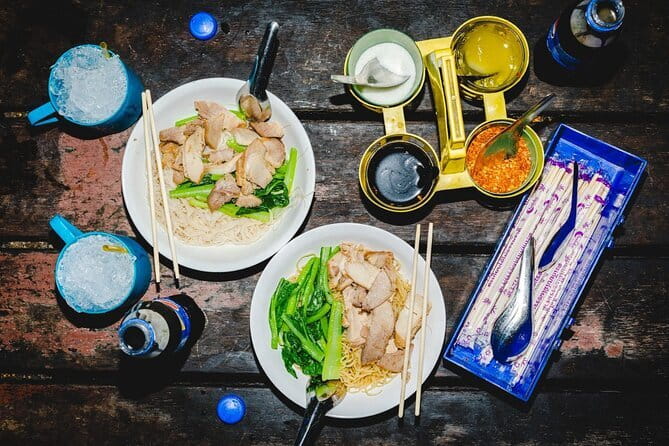
The route then takes you near Yaowarat, one of Bangkok’s best-known street-food zones. In this part of the walk, you’re not going for one restaurant with a menu—you’re moving through a neighborhood where markets and food stalls are woven into daily life.
The itinerary flags Yaowarat as busy and packed with street food and cultural attractions. That’s exactly what you want on a culinary walk: you get variety, you get momentum, and the guide can steer you toward what fits the route rather than what looks best from across the street.
A small-group tour helps here. When there are only up to 7 people, it’s easier to keep the group together in narrow areas and to ask for what you’re curious about without losing everyone.
Phahurat Market (Little India): textiles, jewelry, and food stops
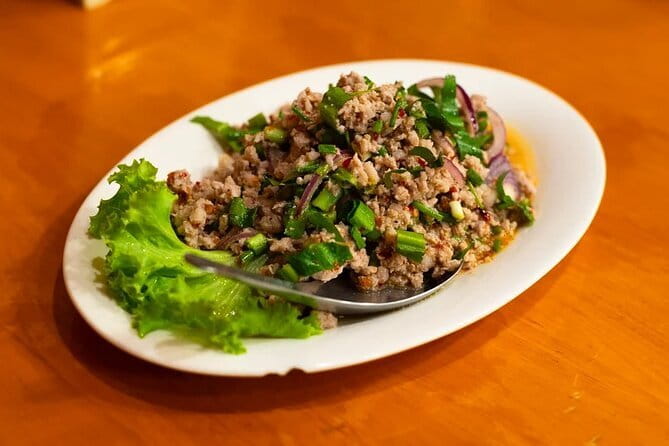
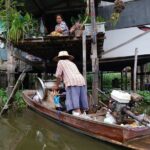
Phahurat Market earns its nickname as Little India, and the stop is about 1 hour with free admission. This is where the tour adds a second influence layer to the story of Thai cooking—trade routes, neighboring cultures, and shared tastes that show up in ingredients and style.
What I like about including Phahurat in a Thai cooking theme is that it’s not just a food stop. You also get a look at what people buy—textiles and jewelry are explicitly part of the visit—so you see culture as something physical, not just something you taste.
Expect a market environment where you’ll move between stalls and food points with guidance. If you’re the type who likes to ask questions (about ingredients, how dishes are made, what to try next), this stop is built for that.
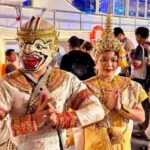
Sampeng Market: Chinatown alleys for shopping and flavor
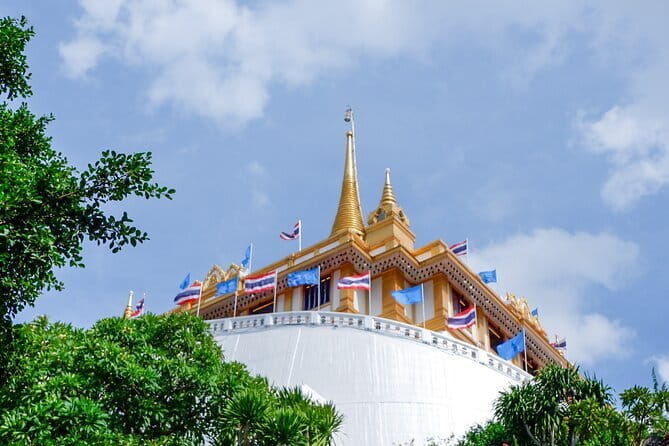
Next up is Sampeng Market, scheduled for about 30 minutes. It’s described as a narrow alleyway within Chinatown, with an eclectic mix of goods ranging from textiles to electronics, and it’s noted for deep historical significance.
This stop is shorter, but it plays an important role. After Phahurat’s Indian cultural layer, Sampeng adds the Chinatown angle—another big piece of Bangkok’s food mosaic. You get a sense of how different neighborhoods keep their identities while still sharing the same city.
Because the tour is compact, use this time to focus. Don’t try to shop like you’re at a mall. Watch what’s around you, taste when offered, and let the guide manage the sequence so you don’t miss the food points that are the whole reason you booked.
What’s included in the $125 price: dinner, snacks, drinks, and water
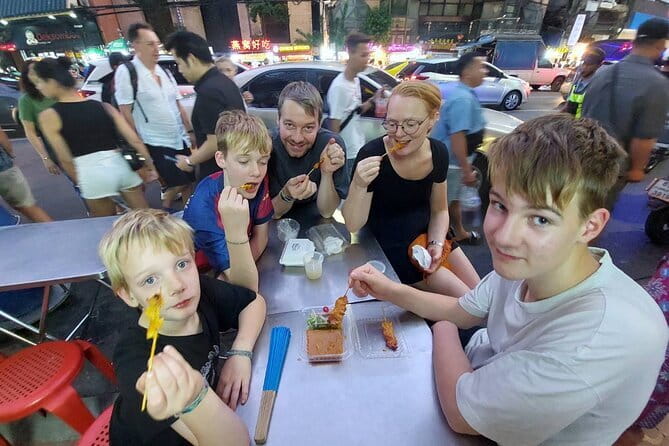
The tour includes a licensed guide, bottled water, snacks, dinner, and alcoholic beverages. That package is a big part of the value math.
In practice, it means you’re paying for guidance and sampling—not just walking. Market and food portions can add up fast if you’re self-guided, and you’d likely need multiple stops (and coordination) to build a meal plus extras.
Also, drinks are included. That’s great if you want the full social-food experience, and it’s a reason to pace yourself. One of the tour reviews you provided praised the guide for encouraging eating in a smart way, and that’s the best way to approach a tasting-heavy route: enjoy what’s offered, but don’t rush past the chance to taste thoughtfully.
One more detail: private transportation isn’t included. You’ll meet at Sam Yot MRT station and use public transit to get there. If you prefer taxis or private cars, plan for that yourself before booking.
The meeting point at Sam Yot MRT and how the day flows
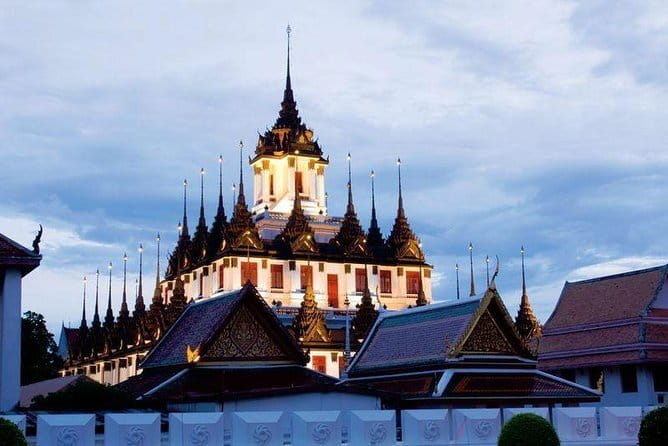
You start at Sam Yot MRT station, Exit 3 (the address listed is near Thanon Unakan in the Wang Burapha Phirom area). The tour begins at 9:00 am and ends back at the meeting point.
That start time is useful. You’ll get through the early-market rhythm while the city is active but before the day’s heat and crowds become a bigger problem. The order of stops also makes sense: temple and historical frame early, then market and food areas as your appetite builds.
The tour uses a mobile ticket, and you should receive confirmation at booking. If you like having everything ready on your phone, that’s a nice friction reducer.
Small group size (up to 7): better for food stops and questions
This experience caps at 7 people, which is a sweet spot for a food walk. In larger groups, tasting tours can become a shuffle—you end up waiting while others catch up, and it’s hard to ask for recommendations. Here, the small size supports a tighter rhythm.
You’ll also likely get more interaction with the guide. In the reviews you shared, multiple guides were praised by name, including Anna, Lek, and mention of Annie joining. That points to the kind of staffing you’re choosing: people who actively guide you through what to eat and how to think about it.
Another thing worth noting from your info: this tour can sometimes run as a private tour depending on who books. You shouldn’t count on that, but the small cap makes the “more personal” feel more likely than with big-group tours.
Who should book this Backstreet Bangkok tour?
Book it if you want Bangkok food with context. This isn’t only for people chasing famous dishes—it’s for anyone who likes connecting food to neighborhood history and cultural mixing.
It also fits good for:
- First-time visitors who want a focused, organized route through older areas
- Food lovers who are open to tasting across markets rather than sticking to one restaurant
- People who like guided logistics in busy city areas, especially with a small group
It might be less ideal if you hate walking. This is a walk-based itinerary across multiple neighborhoods and market settings, so comfortable footwear and a steady pace help.
Should you book Backstreet Bangkok: Exploring the Cradle of Thai Cooking?
If you like your food tours with a story, I’d say yes—this one has strong value because it includes dinner, snacks, bottled water, and alcoholic beverages, and it mixes historical stops with multiple food-focused neighborhoods.
The decision comes down to your style. If you want to “taste your way” through Bangkok’s food influences while someone handles the route and timing, Backstreet Bangkok is a smart use of a morning. If you’d rather be completely independent or you don’t want to plan around walking and meeting points, you may find a self-guided approach easier.
FAQ
How much does Backstreet Bangkok: Exploring the Cradle of Thai Cooking cost?
The price is $125.00 per person.
How long is the tour and when does it start?
The duration is about 5 hours, and the start time is 9:00 am.
Where do we meet, and where does the tour end?
You meet at Sam Yot MRT station Exit 3. The activity ends back at the meeting point.
What’s included in the tour price?
A licensed guide, bottled water, snacks, dinner, and alcoholic beverages are included.
Are admission fees required for the stops?
Admission is listed as free for the temple and market stops included in the itinerary.
Is private transportation provided?
No. Private transportation is not included.
How many people are in the group?
The tour has a maximum of 7 travelers.
Is the ticket sent on my phone?
Yes, the tour offers a mobile ticket.
What’s the cancellation policy for a full refund?
You can cancel for a full refund up to 24 hours in advance of the experience’s start time.
Is this tour okay for most people?
The listing says most travelers can participate.
![Erawan Waterfall and Kanchanaburi Private Tour [Optional Luxury] - Erawan Waterfall: the main event (and where time can feel tight)](https://i.thebangkoktraveler.com/wp-content/uploads/erawan-waterfall-and-kanchanaburi-private-tour-optional-luxury-400x267.jpg)