REVIEW · FOOD
Authentic Street Food Tour in Chinatown I Bangkok
Book on GetYourGuide →Operated by PaChanTiew company limited · Bookable on GetYourGuide
Night markets in Bangkok start with a simple walk. This Chinatown tour is built around Thai-Chinese food in Yaowarat-area backstreets, then it slows down for meaning at an old Chinese shrine. I like the way you get a focused mix of classics like dumplings plus grilled pork and Pad Thai, and I also like that the guide connects the dishes to the culture around them. The one real caution: language quality can vary, and if your guide’s English is limited, you may miss some of the stories, as one guide name Ken was noted with communication problems.
You meet at Wat Mangkon MRT and spend about 75 minutes working your way through hidden stalls and restaurants. You’ll return to the street after dinner-style bites, then do a short cultural walk to the Guan Yin Shrine, before wrapping up back near the meeting point around 21:30. It’s a good format if you want “eat first, learn in between,” without committing to a half-day outing.
If it rains hard, expect the vibe to change. One past booking ended early because the weather didn’t make continuing the walk worthwhile, so plan to bring a light rain layer and accept that night streets can get slippery fast.
In This Review
- Key Highlights You’ll Actually Care About
- Meeting at Wat Mangkon MRT: the easiest way to start
- Yaowarat Chinatown backstreets: what the 75-minute food walk feels like
- What’s on the menu: grilled pork, dumplings, Pad Thai, and cold Chinese desserts
- Learning while you eat: how the guide’s role can make or break the night
- The walking break at 20:30: street life plus shrine time
- Guan Yin Shrine: why it’s more than a quick photo stop
- Weather and night comfort: how to avoid a short tour day
- Value check: is $46 per person worth a 2-hour Chinatown sampler?
- Who should book this tour in Bangkok Chinatown
- Should you book this Chinatown street food tour?
- FAQ
- Where do I meet for the Chinatown street food tour?
- What time does the tour start and end?
- How long is the tour?
- What food is included in the tastings?
- Do I get to visit a shrine during the tour?
- Is the tour guided?
- What’s included in the price?
- What is not included?
- Is the tour wheelchair accessible?
- What is the cancellation and booking rule?
Key Highlights You’ll Actually Care About
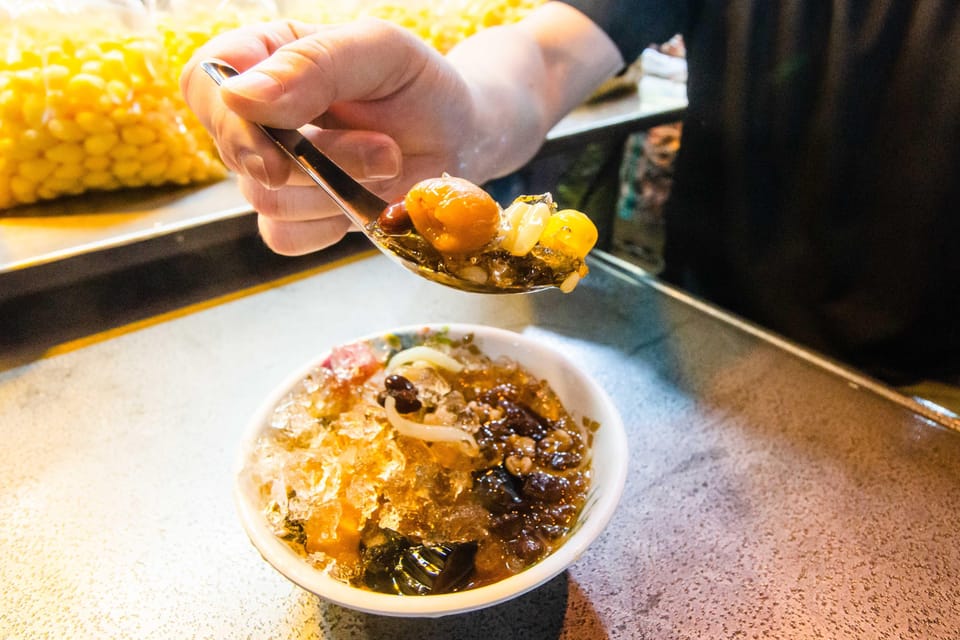
- Thai-Chinese street-food focus in Yaowarat with tasting stops in backstreets, not a single “market stall”
- A set flow of bites that includes grilled pork, dumplings, Pad Thai, and Chinese cold desserts
- Stories tied to each dish so you’re not just eating, you’re understanding what you’re eating
- Guan Yin Shrine visit as the cultural reset after the food crawl
- A compact 2-hour plan that fits an evening out without draining your whole night
Meeting at Wat Mangkon MRT: the easiest way to start
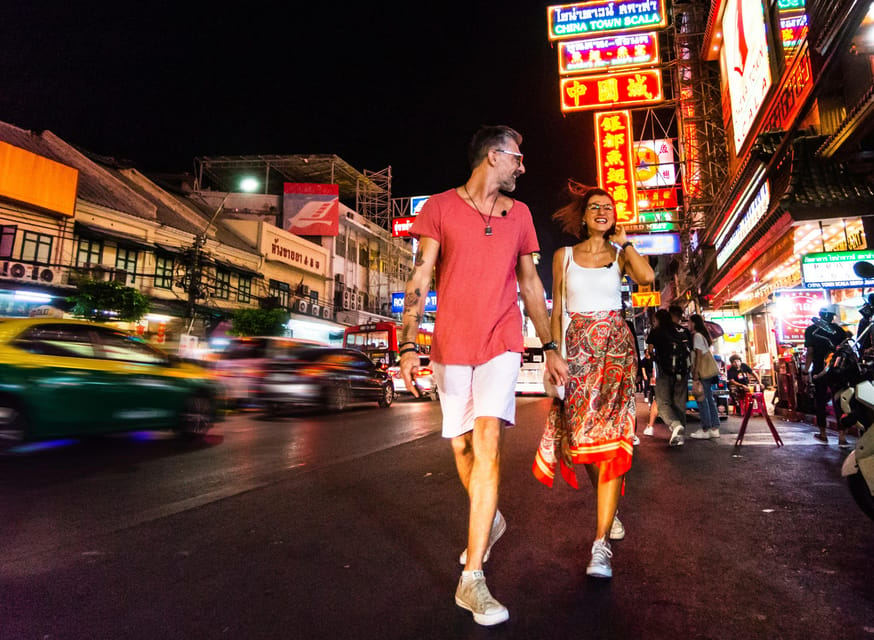
The tour begins at Wat Mangkon MRT Station Exit 1. That matters because Chinatown evenings move fast, and starting on the rail makes it simple to reach Yaowarat without wrestling with taxi traffic.
You meet at 19:00, then the group heads out about 15 minutes later. In practice, that short gap is usually when you’re gathering your group and getting the rules of the walk—where to stand, how tasting order works, and how you’ll handle crowds.
You can also read our reviews of more food & drink experiences in Bangkok
Yaowarat Chinatown backstreets: what the 75-minute food walk feels like
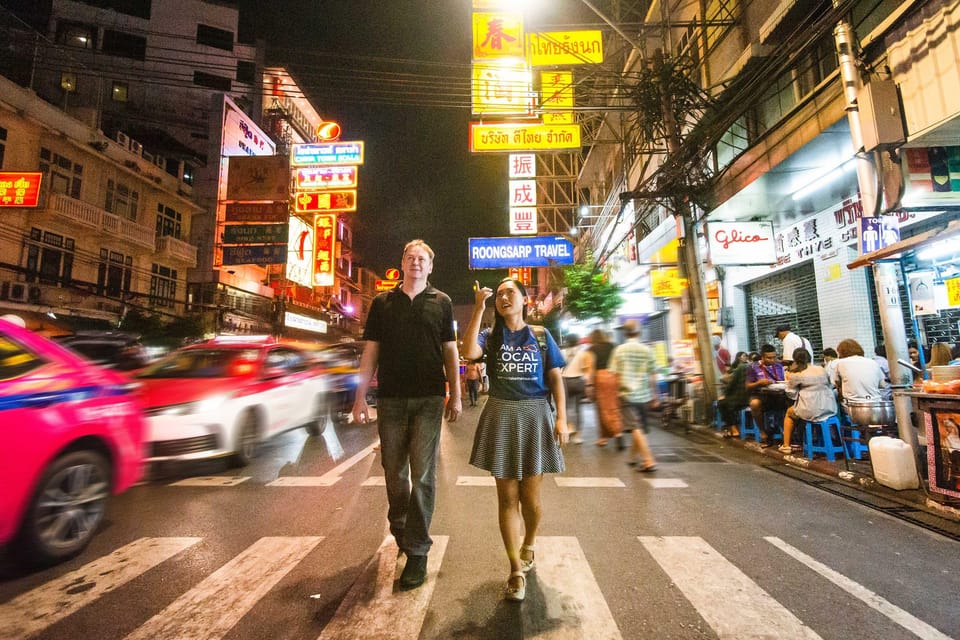
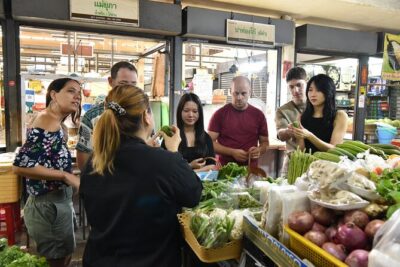
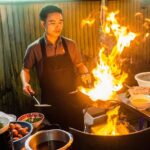
Most of the eating happens in the first big block: around 75 minutes in Chinatown’s hidden backstreets. This is where the tour earns its “authentic street food” label. Instead of one big food court, you’re moving between stalls and small restaurants that locals actually rely on.
You’ll taste a Thai-Chinese fusion mix, tied closely to the Yaowarat area. That fusion is visible in the food style—seasoning, noodle and dumpling culture, and the way sweet Chinese desserts sit alongside Thai favorites. If you like the idea of tasting several things rather than doing one long meal, this setup is strong.
One practical note: Chinatown streets can be crowded even on normal nights. A private group helps a bit because you’re not constantly getting separated from a large mass of people, but you should still expect slow moments when everyone pauses to order or step aside.
What’s on the menu: grilled pork, dumplings, Pad Thai, and cold Chinese desserts
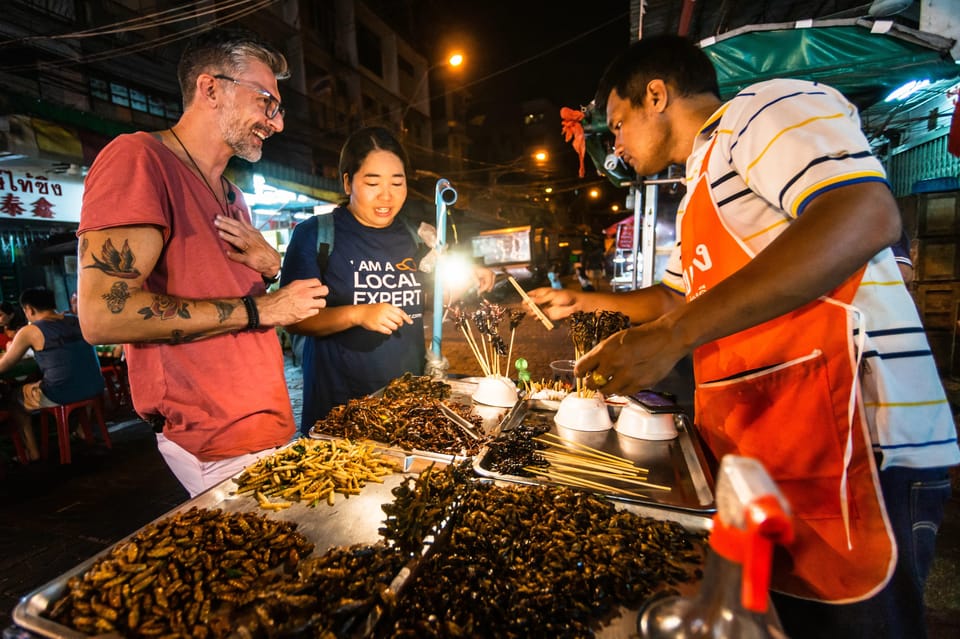
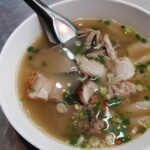
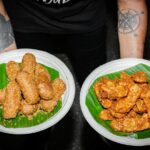
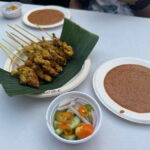
The tour gives you a memorable sampler rather than just a “snack.” Expect tastings that include grilled pork, dumpling, Pad Thai, and Chinese cold desserts.
Here’s why that specific mix works:
- Grilled pork gives you a savory, smoke-and-sweet balance that’s easy to understand quickly.
- Dumplings are the clearest Thai-Chinese bridge food. They show up everywhere in the area, and the wrappers, fillings, and sauces are a fast way to see how Chinese food traditions landed in Bangkok.
- Pad Thai anchors the Thai side of the story. It also helps you compare flavors you might recognize from restaurants versus what you get when it’s street-prepped.
- Cold Chinese desserts round out the night. Many people focus only on savory bites; these sweets remind you that Chinatown isn’t just about noodles and meat.
You’ll also be told stories and origins of the dishes. That’s the difference between a food run and a “food plus context” experience—especially in Chinatown, where the older patterns of Chinese immigration and community life shaped what you see today.
Learning while you eat: how the guide’s role can make or break the night
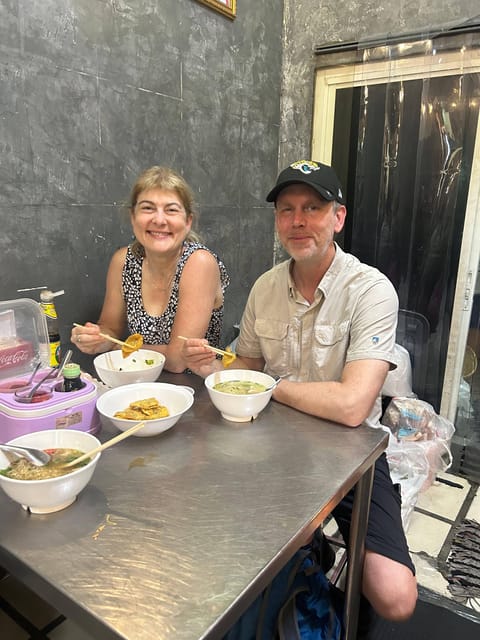
The tour includes an English tour guide, and the activity is listed with languages English and Thai. That matters because this is not only about tasting; it’s also about learning the cultural significance behind food and old shrines.
This is where the feedback you should take seriously comes in. One GetYourGuide booking explicitly said the guide, Ken, could barely speak English and understood almost nothing of what the group asked. If you’re the type who likes to ask follow-up questions, that’s exactly the scenario where you’ll feel the loss.
My practical advice: before you go, decide how you’ll use the guide. If you want deeper explanations and you care about nuance, message the operator ahead of time and confirm English comfort. If your main goal is the food itself, you can still have a great night even if the stories are shorter than you hoped.
The walking break at 20:30: street life plus shrine time
After the eating block, you shift gears around 20:30. You’ll walk along the roads in Chinatown to observe local life, then you’ll visit the old Chinese shrine.
This section is worth it because it prevents the tour from feeling like a simple “eat and leave.” The shrine visit brings your senses down a notch after the street heat, smoke, and sweetness. It also gives you a place to connect the food story to actual community spaces—shrines aren’t decoration in Chinatown; they’re part of daily identity.
The tour wraps at 21:30, when you’ll walk back to your meeting point. That timing is built for an evening that still lets you continue on your own afterward, instead of locking you into a long itinerary.
You can also read our reviews of more tours and experiences in Bangkok
Guan Yin Shrine: why it’s more than a quick photo stop
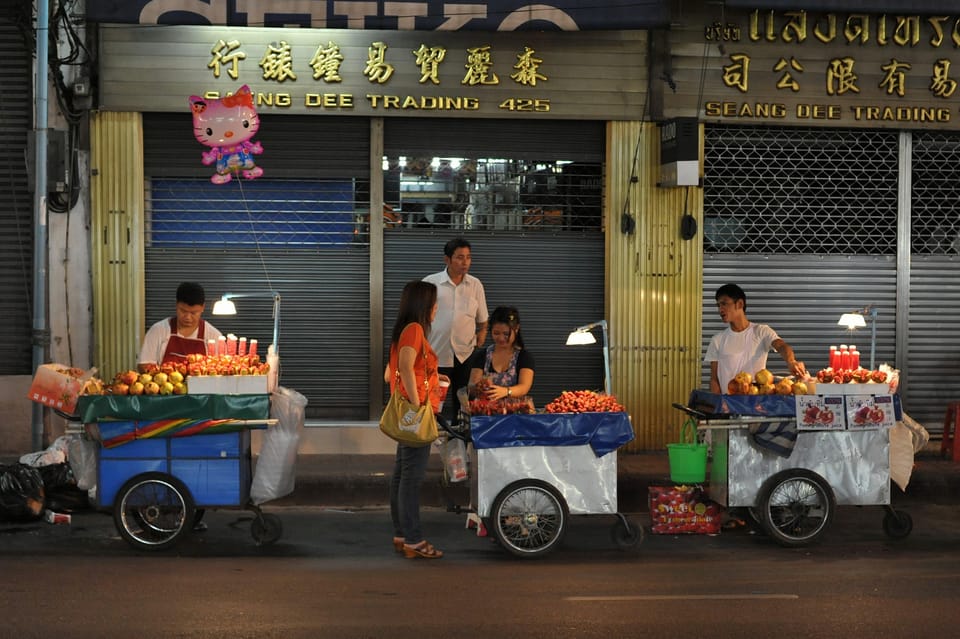
You’ll spend about 30 minutes at the Guan Yin Shrine. Even in that short window, the goal is not only sight-seeing. The tour includes insight into cultural significance—particularly around the older Chinese shrines that shaped community life in Chinatown.
What I like about this placement is the pacing. You eat first, when you’re most engaged, then you learn after. Your brain tends to remember cultural context better when it’s anchored to what you just tasted.
Keep your expectations realistic: 30 minutes is enough to understand the basics and look around, but it’s not a full museum visit. If you’re the type who wants deep historical reading, you can treat this as the “starter” and add follow-up on your own afterward.
Weather and night comfort: how to avoid a short tour day
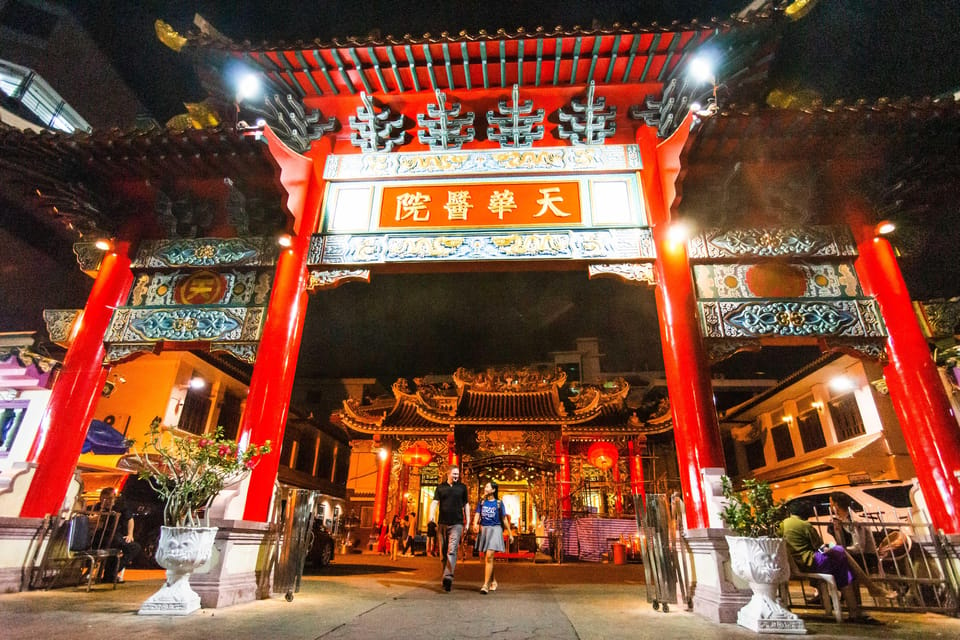
Street food tours depend on walking, and walking depends on weather. One past booking ended early around 1.5 hours because heavy rain made continuing feel not worth it.
So here’s what you can control:
- Bring a light rain layer you can wear over your clothes.
- Wear shoes that handle wet pavement.
- Consider a small towel or tissues for hands and faces.
If it rains lightly, the tour will likely continue as planned. If it turns into a downpour, the guide may have to adjust the route, shorten stops, or change pacing. Plan to be flexible. In Chinatown, the street itself is part of the experience, and the street sometimes decides the schedule.
Value check: is $46 per person worth a 2-hour Chinatown sampler?
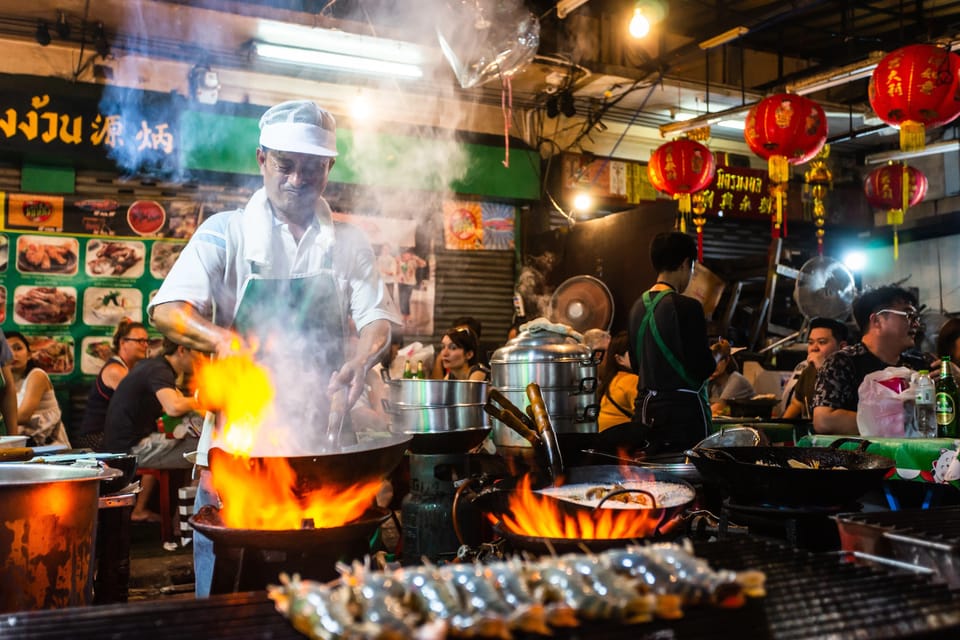
At $46 per person for 2 hours, the value depends on what you’d otherwise do on your own. If you’re planning a DIY night in Chinatown, you’ll spend money on food anyway, plus time trying to figure out where to go and what’s reliable.
This tour includes food and drinks, an English tour guide, travel insurance, and an admission/activity fee. Those included pieces matter. They reduce the risk of arriving hungry, guessing, ordering wrong things, or paying separate entrance fees without planning.
You are not paying for a full-day itinerary. You’re paying for:
- A timed route that keeps you moving
- A guided tasting sequence
- Cultural context tied to what you eat
- The practical convenience of meeting at a major transit stop
For many visitors, that’s a smart trade. For travelers who already know Chinatown extremely well and only want one or two specific stalls, it may feel less efficient. But for most first-timers or people short on time, it’s a solid value package.
Who should book this tour in Bangkok Chinatown
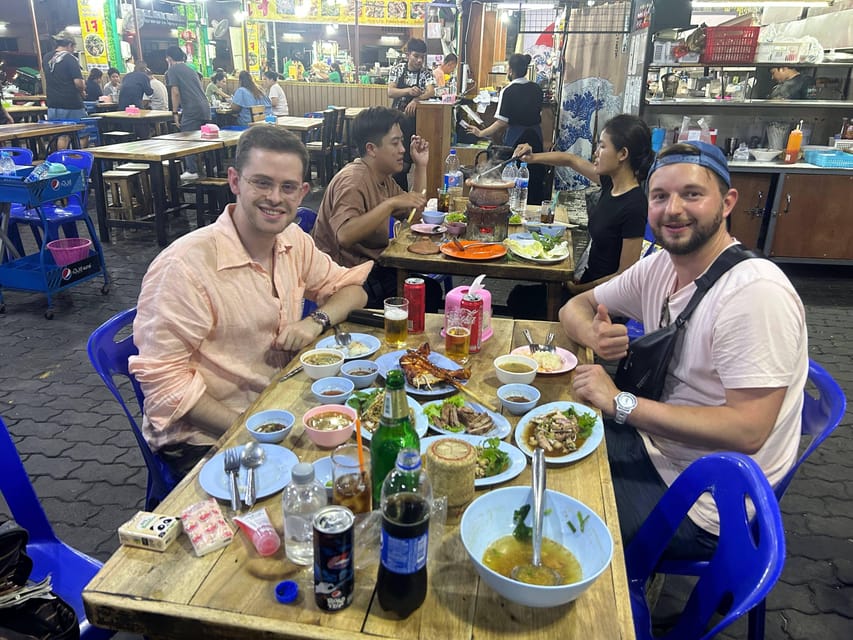
This fits best if you want a compact evening with high payoff. You’ll especially like it if:
- You’re curious about Thai-Chinese food and want more than just one dish
- You want a short walk with both tasting and cultural context
- You prefer a guided route with a plan, not a “wander and hope” approach
It may be less ideal if you strongly depend on a highly fluent English guide for explanations and Q&A. In that case, I’d consider messaging PaChanTiew company limited ahead to confirm the guide’s English comfort, or plan to focus on the food experience itself rather than the storytelling.
Also, because it’s a private group and listed as wheelchair accessible, it tends to work well for travelers who want a bit more control of the group dynamic than a large shared tour.
Should you book this Chinatown street food tour?
I’d book it if your priority is a well-timed evening focused on classic Chinatown flavors: grilled pork, dumplings, Pad Thai, and Chinese cold desserts, followed by a Guan Yin Shrine visit that gives the food some grounding. The $46 price makes sense because you’re getting guided tasting plus inclusions like drinks, admissions, and insurance, all in a short window that won’t steal your whole day.
I would think twice if you know you’ll be frustrated by limited English or if you’re visiting during a period when heavy rain is likely. Bring rain-ready gear and keep your expectations flexible. And if stories and Q&A are central to what you want, it’s worth confirming that the guide’s English is strong before you go.
If you want a memorable Chinatown night without planning every stop yourself, this is a good bet. Just remember: in Chinatown, the street sets the tempo.
FAQ
Where do I meet for the Chinatown street food tour?
You meet at Wat Mangkon MRT Station, Exit 1.
What time does the tour start and end?
You meet at 19:00, and the tour ends at about 21:30.
How long is the tour?
The tour lasts about 2 hours.
What food is included in the tastings?
The tour includes food and drinks, with tastings such as grilled pork, dumplings, Pad Thai, and Chinese cold desserts.
Do I get to visit a shrine during the tour?
Yes. You visit the Guan Yin Shrine for about 30 minutes.
Is the tour guided?
Yes. It includes an English tour guide (English and Thai are listed).
What’s included in the price?
Food and drinks, an English tour guide, travel insurance, and the admission/activity fee are included.
What is not included?
Hotel pick-up is not included.
Is the tour wheelchair accessible?
Yes, it is listed as wheelchair accessible.
What is the cancellation and booking rule?
You can cancel up to 24 hours in advance for a full refund. Booking less than 18 hours might not be guaranteed, and you may be asked for an email address to send details and an insurance form.