REVIEW · HISTORICAL TOURS
River Kwai Day Tour from Bangkok: History, Scenic Views & Culture
Book on Viator →Operated by Sightseeingbangkok.com · Bookable on Viator
A day trip can still feel like a movie. This one focuses on WWII sites along the River Kwai corridor, including the bridge walk and the Death Railway train segment, all in a small group of up to 15. I like that the pacing leaves room for questions and photos without turning it into a cattle line.
The biggest thing to watch is simple: this tour can include optional, paid upgrades on the day (like better train seating and boat options). I’d plan for that possibility so you do not get blindsided partway through the schedule.
In This Review
- Key highlights from this River Kwai day tour
- Why the River Kwai route still hits hard
- Pickup, long road time, and how to stay comfortable
- Kanchanaburi War Cemetery: the memorial that sets the tone
- JEATH Museum: good context, but plan your expectations
- Bridge on the River Kwai: walking the famous crossing
- Death Railway Museum and the research center: history you can see
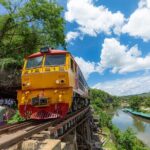
- The train ride along the Death Railway: the moment you remember
- Wang Po station lunch and the Tham Kra Sae area
- Price and value: what $97.35 actually buys you
- Guides and the difference good explanations make
- Who should book this River Kwai day trip
- Should you book this tour?
- FAQ
- How long is the River Kwai day tour from Bangkok?
- What’s included in the tour price?
- Is pickup and drop-off in Bangkok included?
- How big is the group?
- What stops does the tour include?
- Is lunch provided, and where do we eat?
- What are the child rules for this tour?
- Is the tour guided in English?
- Is free cancellation available?
Key highlights from this River Kwai day tour
- Small-group size (max 15) keeps the guide’s explanations easier to follow, especially on stops with lots of history to process
- Kanchanaburi War Cemetery is where the memorial tone lands first, before you head into museums and the bridge
- JEATH Museum gives context in one concentrated stop, then you move on quickly
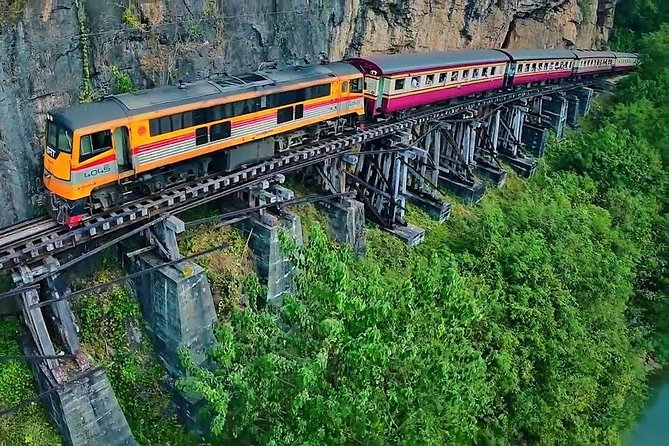
- Death Railway train ride is the standout travel moment, with countryside views and passing viaducts
- Wang Po station lunch is timed after the train segment, so you eat before the return to Bangkok
Why the River Kwai route still hits hard
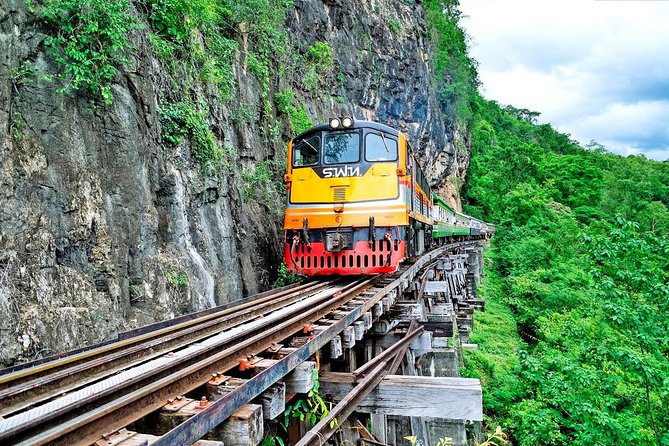
This is not a casual sightseeing loop. It’s a focused day built around the human cost of World War II in this region—prisoners of war forced to build the railway and a massive death toll that still shapes how these places are remembered. That’s why I appreciate the structure: memorial first, then museum context, then the bridge and the track itself.
The route also has a practical advantage. You’re not doing “just photos and out.” You spend real time at key points like the war cemetery and the bridge over the river, and then you see the rail line as a moving experience rather than a static exhibit.
You can also read our reviews of more historical tours in Bangkok

Pickup, long road time, and how to stay comfortable
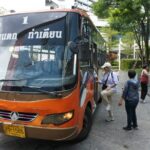
You’ll start in Bangkok with round-trip transfer by air-conditioned vehicle, and the tour runs about 13 hours. That’s a lot of time in transit, so you’ll want to treat it like a full-day commitment, not a quick tour.
Group size matters here. With a maximum of 15 travelers, you’re less likely to feel rushed by constant stop-and-go. Also, your English-speaking guide can manage the flow better. In one of the experiences I read closely, someone noted audio clarity was harder from the back of the car—so if you can, pick seats nearer the front at pickup. Bring a layer too; vehicles can swing chilly after Bangkok heat.
Kanchanaburi War Cemetery: the memorial that sets the tone
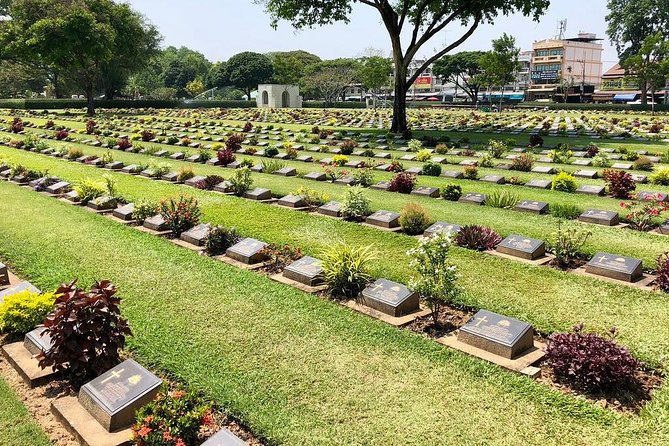
The day begins with a visit to Kanchanaburi War Cemetery, with about an hour on site. This is the kind of place where you do not just look around—you take in the scale and the names and let the story settle. If you care about WWII history, this stop is the foundation that makes the later bridge and rail segments feel more than just scenery.
One reason this cemetery visit works so well in a day tour: it’s focused. You get a clear start point, and then you move forward to the museum and bridge with context in your head rather than scattered facts. The fact that admission is free for this stop means you can spend your time paying attention, not budgeting for ticket lines.
Practical tip: wear shoes that handle walking on uneven ground, because you’ll likely move between plots and memorial points. If you’re the type who likes quiet reflection, this first stop gives you that space.
JEATH Museum: good context, but plan your expectations
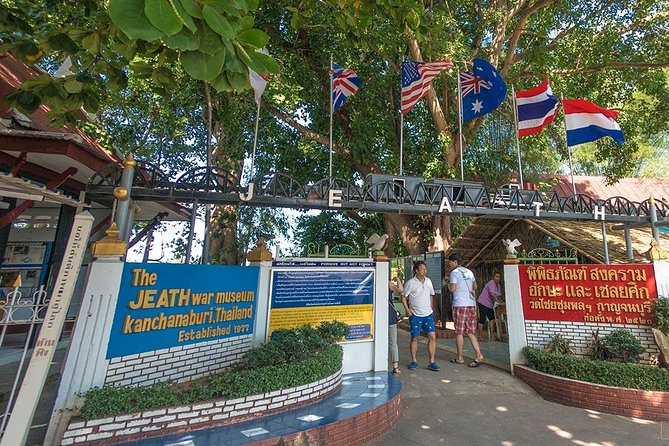
After the cemetery, the itinerary moves to the JEATH War Museum (about an hour). JEATH is a compact stop that covers a lot of WWII elements connected to the Thai–Burma railway line and the POW experience.
Here’s what to know going in. A review I read flagged that the museum can feel tired and could use refresh work. That does not mean it’s useless—just that it may not look like a brand-new museum. You’ll likely get the best value if you approach it as a guided story: listening for how the pieces connect, rather than expecting a polished, modern exhibit experience.
The upside is time efficiency. In a one-day format, you need history context without losing your whole day inside. JEATH does that. If your main goal is the cemetery plus bridge plus train, this museum slot functions like the connective tissue.
Bridge on the River Kwai: walking the famous crossing
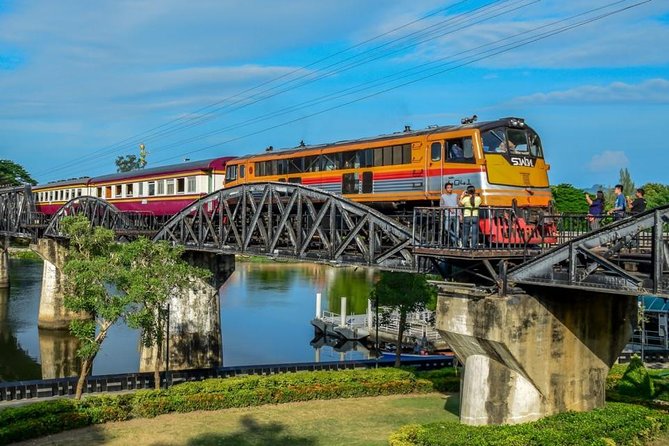
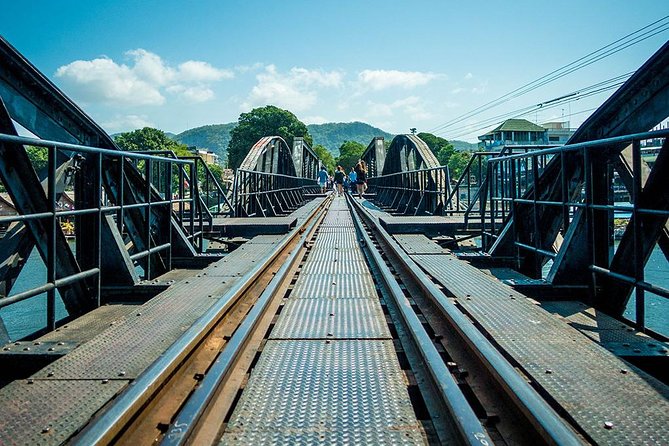
Next comes the walk along the Bridge on the River Kwai area, about an hour. This is the part most people recognize from movies and photos, but the experience can feel different once you’ve already visited the cemetery. The bridge isn’t just a landmark—it becomes part of the system that transported forced labor and, tragically, death.
Photo-wise, you’ll have solid chances at classic angles, but I’d also pay attention to how the bridge sits in the river setting. The scenery is part of the “you are here” effect. When you combine the view with the guide’s explanations, the bridge stops feeling like a set piece and turns into an evidence marker of how war reshaped local lives.
One extra note based on the experiences I read: some departures include an optional speed boat approach connected to reaching the bridge. It may save time, but it also can involve extra cash. If you want to minimize surprises, ask your guide before leaving the restaurant/area about whether the boat is included for your group or if you can do the standard route.


Death Railway Museum and the research center: history you can see
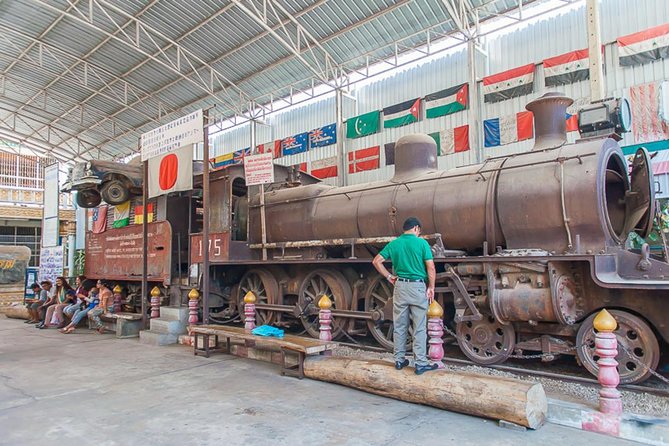
The day then moves to the Death Railway Museum and Research Centre. You’ll spend about an hour here, and it’s paired with the most moving part of the experience: a train journey along the Death Railway.
This section matters because it turns the story into motion. The museum sets your baseline, and then the train makes it real in a way static panels cannot. You’re traveling through the same corridor type of landscape—plus the rail infrastructure—where POW labor was forced into an enormous industrial project.
If you’re the kind of person who likes details, this is where you can connect facts to what you physically see. I like that this tour includes that pairing. It keeps you from treating history like a checklist.
The train ride along the Death Railway: the moment you remember
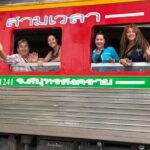
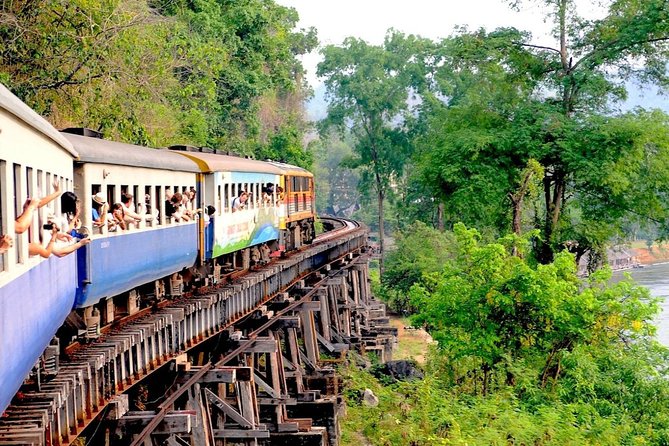
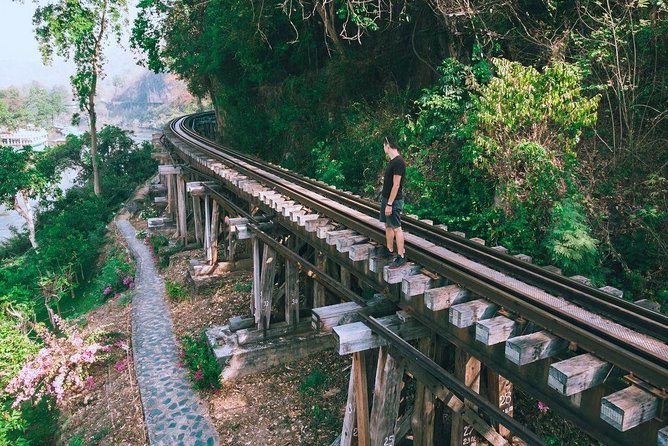
For many people, the train ride becomes the highlight. The route includes sightseeing countryside and passes by wooden viaducts built by POWs, including sections described as on sheer cliff sides overlooking the River Kwai area. Even when you’re not a rail fanatic, it’s a rare chance to experience a historic line as a moving viewpoint.
What makes it especially valuable in a day tour is pacing. You’re not just sitting on a bus and hearing about the railway. You’re actually on the track, watching the river corridor and viaduct scenes slide by.
A real-world caution: you might encounter optional seating upgrades for better views. Some accounts mention being asked for extra payment for upper-class or first-class seats to get a good view, with amounts like 300 THB and 500 THB showing up in different stories. That does not automatically mean it’s mandatory—but it can happen as an on-the-day offer. If a great view matters to you, confirm in advance what your ticket includes and whether the upgrade is worth it.
Also, I’m glad this tour keeps the group small; fewer people usually means less “jostling for the window.” If you care about seating, ask your guide how they handle seat assignment.
Wang Po station lunch and the Tham Kra Sae area
After the rail segment, you head toward Wang Po railway station for lunch. The tour includes a buffet lunch here, and this station is close to the Burmese border, which helps explain why this area fits the broader WWII storyline.
I like that lunch comes at a logical moment. You’ve done the heavy history stops and the train ride. Eating on a set schedule means you’re not hunting down food while everyone’s tired and hungry.
You’ll also see the Tham Kra Sae Bridge area as part of the transition to the station/lunch part of the day. The data describes it as a stop, so treat it as a brief meaningful viewpoint rather than a long detour.
Then it’s back to Bangkok transfer, and you’ll feel the day’s length in your legs. Plan for a relaxed evening when you get home.
Price and value: what $97.35 actually buys you
At about $97.35 per person for a 13-hour small-group tour, the value comes from what you’re not arranging yourself. You’re getting round-trip transfers, an English-speaking guide, air-conditioned transport, lunch, and key historical entry points tied to the WWII corridor.
The small-group size (up to 15) also matters for value. This kind of day relies on explanation and respect for the sites. When a tour is overcrowded, the experience turns into a rushed scan. Here, the format is built to keep attention on the memorials and the bridge and train segment.
That said, the biggest value question is not the base price—it’s whether you want optional add-ons. Boat options and upgraded train seating show up in accounts as extra costs. If you’re on a tight budget, decide ahead of time what you consider worth it (boat time-saving versus train view quality). If you hate cash surprises, message the operator or ask your guide right when you meet them what is included and what is optional.
As for timing: this tour is commonly booked around 43 days in advance. If you’re traveling in peak season or on a busy day, booking earlier helps you lock in a seat.
Guides and the difference good explanations make
The quality of the day often comes down to the guide. Names that appear in the experiences I read include Rach and Nina—both described as friendly, enthusiastic, and strongly focused on clarity and respectful storytelling.
That matters for the sensitive theme. WWII POW history can turn stiff if your guide reads facts like a script. The better guides do two things at once: they keep the facts straight and they help you feel the emotional weight without turning it into drama. When the guide explains what you’re seeing—then points out what to notice on the bridge and during the train ride—the day becomes memorable in a good way.
One practical note: if you’re hard of hearing or just want crisp audio, sit toward the front on the vehicle. One review mentioned it was difficult to hear the guide from the back of the car, so seat choice is a small but real factor.
Who should book this River Kwai day trip
This tour fits best if you want a single-day plan that covers the core River Kwai and Death Railway storyline with a guide. You’ll likely enjoy it most if you:
- care about WWII history and memorial sites
- want the bridge walk plus the train ride (not just one or the other)
- prefer a small group over larger bus tours
- do not mind a long day from Bangkok
If your priority is lounging, slow travel, and lots of free time, this may feel packed. But if you like structured, meaningful visits—this works.
Should you book this tour?
I’d book it if you want a well-paced day connecting memorials, museum context, the bridge, and the Death Railway train ride—in a small group with comfortable transport and lunch handled. It’s a heavy topic, but the itinerary structure keeps you oriented.
I would hesitate only if you strongly dislike the idea of potential optional cash add-ons for boats or better train seats. The base tour price looks solid, but the on-the-day offers can change how much you actually spend. The fix is easy: ask upfront what’s included in your ticket for the bridge approach and your train seating.
If you want, tell me your travel dates and whether you’re more focused on history depth or scenic comfort—I can help you decide what to prioritize and what questions to ask before you go.
FAQ
How long is the River Kwai day tour from Bangkok?
The tour runs for about 13 hours.
What’s included in the tour price?
It includes round-trip transfer, an English-speaking guide, lunch, air-conditioned vehicle, and admission tickets listed for the stops (cemetery, museum, bridge, and Death Railway-related sites).
Is pickup and drop-off in Bangkok included?
Yes. Pickup and drop-off at your hotel in Bangkok is offered.
How big is the group?
The tour has a maximum of 15 travelers.
What stops does the tour include?
It visits the Kanchanaburi War Cemetery, the JEATH War Museum, the Bridge on the River Kwai, the Death Railway Museum and Research Centre, and includes a train ride along the Death Railway. Lunch is provided at the Wang Po area.
Is lunch provided, and where do we eat?
Yes. Lunch is provided as a buffet at Wang Po railway station area.
What are the child rules for this tour?
Children over 120 cm are charged as adults. The data also notes a height limit below 110 cm for child pricing, but it asks you to use the adult rate if you’re over 110 cm.
Is the tour guided in English?
Yes, the guide is English speaking.
Is free cancellation available?
Free cancellation is available up to 24 hours before the experience start time for a full refund.