REVIEW · HISTORICAL TOURS
Historic River Kwai Bridge: Train Journey & Tour
Book on Viator →Operated by Parallel Tour · Bookable on Viator
That train over the River Kwai still sends chills. This long day trip turns WWII sites into a real timeline you can walk, then watch from the window on the Death Railway train ride. I especially like the Allied War Cemeteries stop for its quiet, well-kept respect, and the Death Railway train portion for how the scenery and the crossing make the story feel immediate. One thing to plan for: the JEATH War Museum entrance costs extra (THB50 per person).
You’ll start early with pickup in Bangkok and share the ride with a small group (max 30). The day is paced with history in the morning and a more relaxed reset at Saiyok Noi waterfall in the afternoon, before returning to Bangkok by early evening.
Key highlights to know before you go
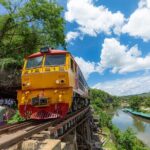
- Death Railway train ride with a scenic route and a wooden viaduct crossing
- Kanchanaburi War Cemetery visit honoring 6,982 Allied POWs
- JEATH War Museum on former POW camp grounds (entrance fee not included)
- Saiyok Noi waterfall break with short free time to wander
- Thai lunch + English guide included, plus travel insurance
- Long-but-manageable schedule (about 10–12 hours, starting around 6:30 AM)
In This Review
- A 6:30 AM start that pays off with a full historical day
- Kanchanaburi War Cemetery: where the numbers hit hardest
- JEATH War Museum on former POW grounds (and why the entrance fee matters)
- River Kwai Bridge and the Death Railway train ride: scenery with a story attached
- Krasae Cave area timing: lunch first, then Saiyok Noi waterfall
- Price and logistics: what you’re paying for (and the extras you should budget)
- Getting the best guide experience (especially with English expectations)
- Who this day trip suits best (and who might not love it)
- Should you book Historic River Kwai Bridge: Train Journey & Tour?
- FAQ
- What time does the tour start in Bangkok?
- How long is the tour?
- What’s included in the price?
- Is the JEATH War Museum entrance fee included?
- Are pickups included everywhere in Bangkok?
- Is there a train ride on the Death Railway?
- Can I get a full refund if my plans change?
A 6:30 AM start that pays off with a full historical day
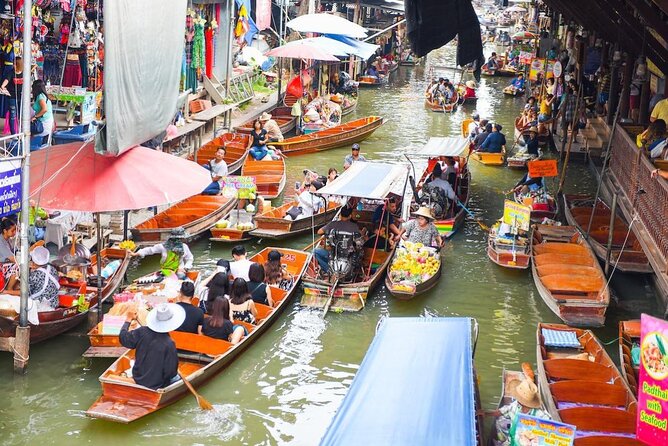
This is the kind of trip that begins before you’re fully awake, with pickup in the Bangkok area around 6:15–6:30 AM, and a stated start time of 6:30 AM. Expect a full day—roughly 10 to 12 hours—with transportation, guided stops, and then time to breathe at the waterfall later.
The upside of the early start is simple: you get to Kanchanaburi while the day still feels fresh, and you’re not rushing through the most solemn places. The downside is also simple: you’ll want to be ready for an early wake-up and a long day sitting on transport. If you’re the kind of person who hates being “on schedule” all day, you’ll feel it here.
Kanchanaburi War Cemetery: where the numbers hit hardest
Your morning includes the Kanchanaburi War Cemetery with free admission. You’re scheduled for about 30 minutes, which is short, but enough time to slow down and take in the overall layout without feeling like a security checkpoint.
The cemetery is maintained with care and focuses on the POWs who lost their lives building the Death Railway. The tour information highlights 6,982 Allied POWs, and that figure matters because it turns a headline into human scale. Even if you’ve seen photos before, being there in person tends to land differently.
Practical note: since the cemetery is part of a respectful memorial, keep your expectations for behavior and tone appropriate. This stop isn’t there for casual picture-taking energy—it’s there for quiet reflection.
You can also read our reviews of more historical tours in Bangkok

JEATH War Museum on former POW grounds (and why the entrance fee matters)

Next up is the JEATH War Museum, located on the grounds of a former WWII prisoner-of-war camp. You’ll have about 2 hours here, and it’s one of the stops where paying attention to what’s included can save you stress.
Here’s the key point: JEATH Museum entrance is not included. The cost listed is THB50 per person. If you want to avoid surprises, keep a little cash handy (or make sure you’ll have access to it on the day).
What you’ll see is described as poignant exhibits—paintings, photographs, and tools—with the POW camp setting as the backdrop. This museum stop gives context that can make the later train ride more than just a famous rail journey. The train becomes a moving chapter, not a story you only hear about.
If you prefer museums that feel straightforward and factual (rather than heavy theatrical interpretation), this one likely fits your style. If you’re hoping for an ultra-detailed, guided interpretation at every single artifact, you may want to ask your English guide specific questions during the visit so you get the most out of your time.
River Kwai Bridge and the Death Railway train ride: scenery with a story attached
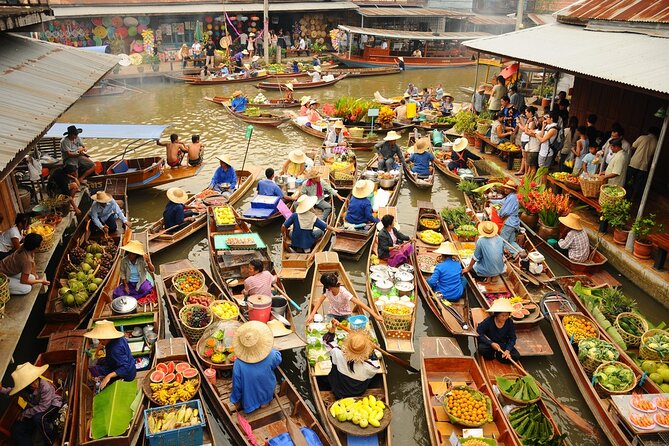
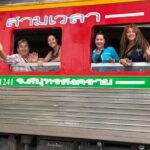
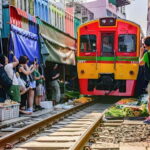
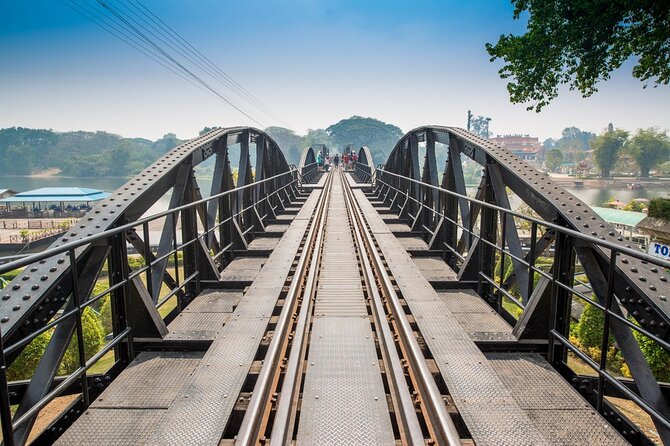
The heart of the day is the scenic train ride associated with the Death Railway, including the River Kwai Bridge segment. This part is listed as 1 hour, with admission included.
What makes this ride special isn’t only the landmark name. The tour description specifically notes the wooden viaduct built by Allied POWs, and that’s where the experience tends to feel unusually layered. You’re watching engineering, travel through countryside, and also traveling through history that was shaped under extreme conditions.
A useful way to think about it: during the museum and cemetery stops, history is stationary. During the train ride, it moves around you—so your brain has to stitch it together. For many people, that’s when the day clicks emotionally.
Practical expectations: it’s still a train ride, so you’ll want to be comfortable sitting for stretches of time, and you’ll likely enjoy the experience most if you’re willing to look out and take in the scenery instead of only trying to “tick off” sites.
Krasae Cave area timing: lunch first, then Saiyok Noi waterfall
After the train portion, the schedule shifts into a more relaxed mode. Around 1:00 PM, you’re scheduled for Thai lunch at a restaurant included in the tour. Having lunch handled for you is a real value point on a long day, because Kanchanaburi-area meals can turn into a time sink if you have to sort out food on your own.
Then you head toward the Saiyok Noi waterfall around 2:00 PM, with 30–45 minutes of free time to explore at your own pace. The tour info also references Krasae Cave as part of this block, so expect that this stretch is where the tour blends scenic stops with a bit of downtime.
The waterfall time is short by design. You’re not getting a full hike day, and you’re not meant to. Instead, it’s a pause that balances the WWII-focused morning and early afternoon. Even if you’re not a waterfall fanatic, it’s often the moment when you get to reset your energy before returning to Bangkok.
Price and logistics: what you’re paying for (and the extras you should budget)
At $94.89 per person, you’re buying a day that includes several expensive-in-time pieces: roundtrip transportation in the free pickup zone only, an English guide, travel insurance, and Thai lunch, plus the key train experience. That’s why the price can make sense for a first-time visitor who doesn’t want to plan transport between Bangkok and Kanchanaburi.
But there are two categories of extras you should understand up front:
- Pickup surcharge for certain Bangkok areas
The tour notes that if your pickup is in Rachadapisak, Suttisarn, Intamara Rama 4, or Sathon, there’s an extra THB100 per person. If you’re staying near those areas, factor this into your budget.
- JEATH War Museum entrance fee
The museum entrance is THB50 per person, not included.
Also: the tour offers a mobile ticket, and confirmation is received at booking. The day uses share transfer, meaning your ride may include multiple hotel pickups inside the free zone.
Finally, the tour requires good weather. If conditions aren’t right, it may be canceled and you’ll be offered a different date or a full refund—so don’t plan this as a “must happen no matter what” day if your schedule is tight.

Getting the best guide experience (especially with English expectations)
One of the strongest signals from real-world feedback is that the trip can be meaningfully better when the guide is doing active work at the stops—explaining what you’re seeing and helping you connect the cemetery, museum, and train ride into one coherent story.
The tour includes an English guide, and the type of commentary matters. If you’re the kind of traveler who asks a lot of questions, take advantage of the guide’s presence during timed visits (especially the museum and cemetery blocks). With limited time, you’ll get more from your money if you show up with a few specific topics in mind, like how the railway system fits into the WWII POW labor context.
Also, watch your day for a subtle issue: when a group is moved from site to site quickly, some visitors end up feeling like they got mostly “drop-off.” If you want more guidance than that, you can help by staying close during transitions and asking where to focus your attention on-site.
The good news: this trip is built so the sights themselves do the heavy emotional lifting. The guide just helps you read the signs faster.
Who this day trip suits best (and who might not love it)
This tour works best if you want a structured, one-day format that covers the major WWII landmarks in Kanchanaburi without dealing with transport planning.
You’ll likely enjoy it if you:
- like history that you can see in-person, in a real geographic sequence
- enjoy train rides and don’t mind sitting for a set duration
- want a guided day with English guidance, plus lunch handled
- want a short nature break afterward at Saiyok Noi waterfall
You might think twice if you:
- need a very flexible schedule and dislike early starts
- strongly prefer fully guided interpretation at every moment (some segments have set time windows)
- don’t want any extra on-site fees at all (JEATH Museum entrance is listed as extra)
Should you book Historic River Kwai Bridge: Train Journey & Tour?
I’d book this if you’re making your first trip to the Kanchanaburi area and you want an organized “hits list” that connects the memorial sites to the train experience. The combination of Allied War Cemetery, JEATH War Museum, and the Death Railway train ride is the main draw, and the included lunch helps keep the day smooth.
Before you commit, do two quick checks:
- Confirm your Bangkok pickup point is inside the free zone (or budget the THB100 surcharge for listed areas).
- Plan for the THB50 JEATH Museum entrance so you don’t lose time on the day.
If those are fine with you, this is the kind of trip that can give you lasting perspective—because it doesn’t treat history as a poster. It shows it to you, then moves you through it by rail.
FAQ
What time does the tour start in Bangkok?
The start time is 6:30 AM, with pickup around 6:15–6:30 AM from your location in the free pickup zone.
How long is the tour?
The total duration is listed as approximately 10 to 12 hours.
What’s included in the price?
Included items are roundtrip transfer in the free pickup zone only, travel insurance, Thai style lunch, and an English guide on tour. The mobile ticket is also offered.
Is the JEATH War Museum entrance fee included?
No. The JEATH War Museum entrance fee is THB50 per person.
Are pickups included everywhere in Bangkok?
Not everywhere. Pickup is included only in the free pickup zone. If you’re in Rachadapisak, Suttisarn, Intamara Rama 4, or Sathon, there’s an additional THB100 per person.
Is there a train ride on the Death Railway?
Yes. The tour includes a scenic train ride as part of the Death Railway / River Khwae Bridge experience, and that part is listed as included.
Can I get a full refund if my plans change?
Yes. You can cancel for a full refund if you cancel at least 24 hours before the experience start time.