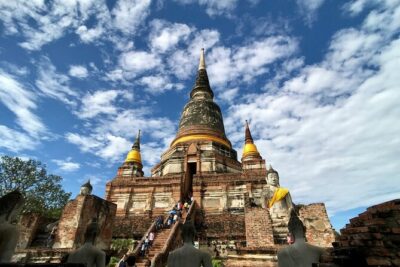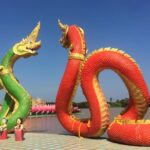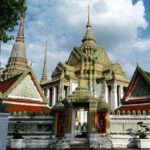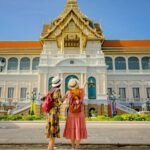
One place, five regions, and one big elephant. That’s the payoff here: Muang Boran recreates Thailand across regional zones, then you finish at the Erawan Museum inside a colossal three-headed elephant.
I love how the Ancient City is organized by theme, so you can see Lanna, Khmer, royal Central Thailand, and southern influences without guessing what you’re looking at. I also like that you can choose the focus you want, from Ancient City only to the full Ancient City + Erawan combo, with Thai buffet options if you pick the right ticket. The main thing to watch is distance: these sites are not near each other, and you’ll be on foot unless you pay for on-site transport.
In This Review
- Key highlights worth planning for
- Muang Boran timing: how to use a 4–6 hour window
- Ancient City’s five-region setup: what you’ll actually see
- Northern Thailand: Lanna temples and ceremonial halls
- Northeastern Thailand: Khmer sanctuaries in stone
- Central Thailand: royal palaces and markets
- Southern influences: carved details and cultural blends
- The Suvarnabhumi Zone: mythology meets the landscape
- Getting oriented fast: your best move once you enter
- Erawan Museum: the three-headed elephant as your entry point
- Price and ticket options: when $14.46 actually feels like a deal
- Walking reality: this isn’t a “sit and ride” day
- Practical rules that affect your comfort (and your photos)
- Who this fits best (and who should rethink)
- Booking decision: should you choose this combo?
- FAQ
- What does the ticket include?
- Are meals included in every ticket option?
- Do I have to walk the whole time?
- Can I rent a golf cart or bicycle?
- Is the Ancient City close to the Erawan Museum?
- What are the opening hours for Ancient City and Erawan Museum?
- Are there rules about drones or costumes?
Key highlights worth planning for
- Muang Boran’s five regional zones make it easier to follow Thailand’s cultural geography at your own pace
- Specific landmarks are built into the layout, including Wat Maha That’s grand hall and Khmer-style sanctuaries
- The Erawan Museum is built around the three-headed elephant, with murals and sacred themes inside
- Mobile ticket convenience, plus the option to add a Thai buffet meal
- Walking is the default, so plan time (and consider golf cart or bicycle rentals)
Muang Boran timing: how to use a 4–6 hour window
This experience in Bangkok is sold as a “ticket” format with a mobile option, and the typical time you’ll need is about 4 to 6 hours depending on which parts you choose. You’re not just buying entry—you’re buying time in a sprawling outdoor-and-museum setting. The smart move is to start early enough that you’re not racing at the end.
Ancient City (Muang Boran) runs daily from 9:00 AM to 7:00 PM, with last entry at 6:00 PM. Erawan Museum runs daily from 9:00 AM to 6:00 PM, with the inside area closing at 5:30 PM and last entry at 5:00 PM. If you’re doing both, you’ll want a buffer for getting between them, since the two museums are not close.
One more practical note: outside Thai costumes are not permitted. If you were hoping to bring a costume for photos, skip that plan. Also, drone photography is prohibited in Muang Boran, so keep your camera ready but your drone away.
You can also read our reviews of more tours and experiences in Bangkok


Ancient City’s five-region setup: what you’ll actually see
Muang Boran is designed like a cultural map. Instead of one long “random temple walk,” you get five regions with distinct architectural styles and famous site recreations. That makes a huge difference for first-timers. You can look at a pavilion, step into a different zone, and quickly feel how the look changes by region.
Here’s what you can expect, zone by zone:
Northern Thailand: Lanna temples and ceremonial halls
In the Northern Region, you’ll see Lanna-style highlights, including the Ho Kham Pavilion and the Grand Hall of Wat Maha That. These are the kinds of structures where it helps to slow down. Look at how the roofs and details differ from the Central and Khmer sections. Even if you’re not a temple expert, the style shift is the point.
If you only have time for a couple spots in the whole day, I’d prioritize the Northern zone early. The place is big, and early energy matters.
Northeastern Thailand: Khmer sanctuaries in stone
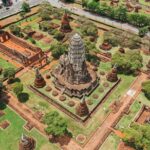
The Northeastern Region leans Khmer, with stops like Prasat Phra Wihan, Phimai Sanctuary, and Prasat Sikhoraphum. This is where the carvings and sanctuary layouts help you connect the dots between different eras and regions. If you’re the type who likes comparing architecture, this area gives you a lot to notice without you needing a guide.
Central Thailand: royal palaces and markets
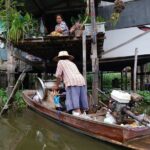
In Central Thailand, you’ll find recreations tied to royal themes, including the Dusit Maha Prasat Palace and Sanphet Prasat Palace. You also get the Floating Market area. That mix matters. It’s not only stone and ceremony; you get a more everyday “life and trade” vibe too.
If your group includes kids or people who get bored by long temple walks, the market-style scenes can help reset attention and keep momentum.
You can also read our reviews of more city tours in Bangkok

Southern influences: carved details and cultural blends
The Southern Region blends influences through places like City Sala and Pallava carvings. This zone is a good reminder that Thailand’s cultural story isn’t single-style. If you like photo opportunities, this is where the decorative stonework and contrast can deliver.
The Suvarnabhumi Zone: mythology meets the landscape
The Suvarnabhumi Zone is where you’ll see Sumeru Mountain and the Pavilion of the Enlightened. This is more myth-and-symbol than “just buildings,” and it’s a nice contrast if you’ve spent most of the day reading stone and ornament.
The payoff here is atmosphere. You’re not looking at one object; you’re walking through a whole belief-world.
Getting oriented fast: your best move once you enter
Muang Boran is huge, and you’ll cover more ground than you might expect. The biggest mistake is starting without a plan and then feeling pressure halfway through. Instead, I recommend this simple approach:
- Pick the two regions you care about most and treat the others as flexible
- Leave room for slower photo stops (especially around the more detailed recreations)
- If you’re doing Erawan too, think of Ancient City as a “greatest hits” day, not a finishing-everything day
Also, you’re near public transportation. One practical tip from real-world experience: getting to the Ancient City area from the Chang Awaran BTS skytrain involves about a 15-minute walk. That doesn’t solve everything (you still have the big internal walking once you’re inside), but it helps you feel less trapped by taxi logistics.
Erawan Museum: the three-headed elephant as your entry point
After you transition to the Erawan Museum, the mood shifts. Here, you’re not moving through regional zones. You’re stepping into a museum built around one of Thailand’s most recognizable mythic images: the three-headed elephant.
Inside, you can expect intricate murals, spiritual relics, and celestial designs. The themes blend Buddhist, Hindu, and Thai folklore, which is exactly why this stop feels different from the Ancient City. One place is recreations of historical settings. The other is a concentration of spiritual art and symbolism.
If you’re someone who likes to understand the “why” behind images, you’ll probably appreciate this museum more than you expect. It’s not just decoration. The design language is meant to communicate sacred ideas.
Price and ticket options: when $14.46 actually feels like a deal
The base price is listed at $14.46 per person, and the real value depends on which ticket option you choose. What makes this complicated is that you’re buying into a few different packages:
- Ancient City only
- Ancient City + Thai buffet
- Erawan Museum only
- Ancient City + Erawan combo
- Combo ticket + Thai buffet
So how do you judge value? Look at the meal piece and your time. If you pick a version that includes a Thai buffet lunch/dinner, you’re effectively covering one meal inside your ticket. That can be a big win in Bangkok, where “convenient meal near attractions” can add up quickly.
If you don’t want the buffet, you might feel the base price is fair but not magical. Still, the Ancient City is a major site with multiple themed zones, and the Erawan Museum is a unique, purpose-built experience. In other words: the value isn’t only price. It’s what you get access to.
Walking reality: this isn’t a “sit and ride” day
One of the most important bits of the fine print is also the most decisive: these options are for walking only. You can rent a golf cart, bicycle, or reserve a private tram, but they’re extra.
Here’s what to know:
- Golf cart (4-seat): 350 THB for the first hour, 200 THB for the second hour
- Golf cart (6-seat): 500 THB for the first hour, 300 THB for the second hour
- Bicycle rental: 150 THB per bicycle
- Private tram (30 PAX): 1,500 THB per hour, and reservation must be made at least 3 days in advance
If your feet are reliable and you’re doing a “see the highlights” pace, you can make it work. If you’re traveling with kids, older adults, or anyone who hates long walks, you’ll want to factor in the rental costs so you don’t burn your energy on friction.
Also, don’t underestimate the between-sites travel time. Since the two locations are not near each other, you need enough scheduling slack so the day doesn’t turn into a stress race.
Practical rules that affect your comfort (and your photos)
A few rules can shape your experience more than you think:
- No outside Thai costumes are allowed. If you planned costume photos, adjust expectations.
- Drone photography is prohibited in Muang Boran. Regular cameras are fine; just keep drones out.
- Plan your timing based on last entry:
- Ancient City: last entry at 6:00 PM
- Erawan Museum: last entry at 5:00 PM, and the inside closes at 5:30 PM
These cutoffs matter if you’re combining both sites. A late arrival can mean you miss parts of the Erawan Museum’s interior.
Who this fits best (and who should rethink)
I think this works best for three kinds of travelers:
- History and culture lovers who like seeing regional styles in one day
- Families who want a mix of scenery, architecture, and a museum inside an elephant
- Photo-minded visitors who enjoy architectural contrast and mythic visuals
It might be less ideal if you dislike walking or you strongly prefer close-by “one stop after another” logistics. If you want an easy, low-effort day, the distance between Ancient City and Erawan Museum is the thing you’ll feel first.
Also, if you were hoping for total flexibility and no extra transport spending, remember you’ll likely need to pay for carts/bikes or plan your schedule carefully.
Booking decision: should you choose this combo?
If you want a single Bangkok day that covers Thailand’s regional identity and then shifts into myth and spiritual art, this combo makes sense. The strongest reasons to book are the structured look of Muang Boran’s five zones and the memorable Erawan Museum concept built around the three-headed elephant.
I’d book it if:
- you’re okay walking and can handle a 4–6 hour commitment
- you’re choosing a ticket option that includes the Thai buffet if a meal matters to your budget
- you can manage the fact that the two stops are separated and need travel time
I’d think twice if:
- you want everything within a short stroll of each other
- you’d be unhappy paying extra for carts just to keep the day comfortable
If you plan your timing around the last entry cutoffs and treat Ancient City as a “highlights walk,” you’ll come away feeling like you spent your time efficiently.
FAQ
What does the ticket include?
Admission is included. If you choose the options with a meal, a Thai buffet lunch/dinner is included as part of the Ancient City + Food or Combo Ticket + Food options.
Are meals included in every ticket option?
No. Only the ticket options that mention Thai buffet include a meal. Other options are admission only.
Do I have to walk the whole time?
Yes, the listed options are for walking only. Golf carts, bicycles, and a private tram are available on-site for an extra fee.
Can I rent a golf cart or bicycle?
Yes. A 4-seat golf cart costs 350 THB for the first hour and 200 THB for the second hour. A 6-seat golf cart costs 500 THB for the first hour and 300 THB for the second hour. Bicycle rental costs 150 THB per bicycle.
Is the Ancient City close to the Erawan Museum?
No. The two locations are not located near each other, so you’ll need enough time for transportation between them.
What are the opening hours for Ancient City and Erawan Museum?
Ancient City operates daily from 9:00 AM to 7:00 PM, with the last entry at 6:00 PM. Erawan Museum operates daily from 9:00 AM to 6:00 PM, and the inside area closes at 5:30 PM with last entry at 5:00 PM.
Are there rules about drones or costumes?
Outside Thai costumes are not permitted. Drone photography is prohibited in Muang Boran the Ancient City.