REVIEW · FLOATING & RAILWAY MARKET DAY TRIPS
Floating Markets and Bridge on River Kwai Tour from Bangkok
Book on Viator →Operated by Tour East Thailand · Bookable on Viator
Two canals, one bridge, a long day. I like how this tour pairs the Damnoen Saduak floating market by longtail boat with a moving visit to Bridge Over the River Kwai, where the WWII story is spelled out with museum photos and a war cemetery. It’s a practical way to see two huge highlights of western Thailand without wrestling with separate transport plans.
I also appreciate the small-group setup and the guided pacing, especially on a day that starts early and runs close to 10 hours. One thing to plan for: the floating market area can be very crowded, and boat traffic can slow down how much canal time you really get.
In This Review
- Quick hits for this Bangkok-to-Kanchanaburi day
- From Bangkok out to the countryside: what the drive does for the day
- Coconut sugar farm stop: the quick sweet break that’s actually useful
- Damnoen Saduak floating market by longtail boat: what you’re signing up for
- The crowd reality
- Should you do the smaller canoe ride?
- Money and shopping: how to avoid the floating market overspend
- The long drive to Kanchanaburi: shifting from shopping energy to WWII gravity
- Lunch at a local restaurant: one meal, two outcomes
- JEATH War Museum: how to get more out of the bridge visit
- Kanchanaburi War Cemetery: the quieter part of the day
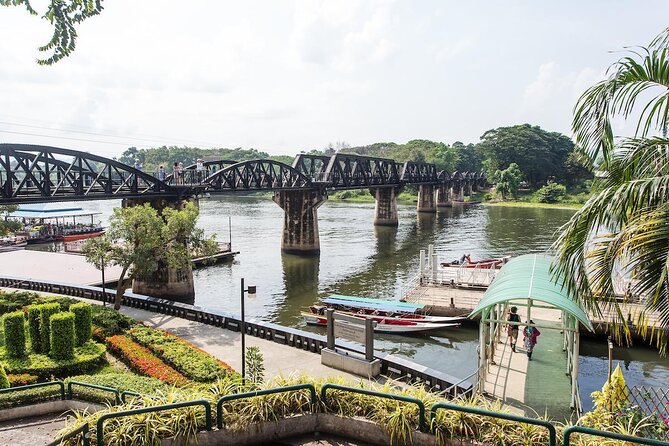
- Bridge Over the River Kwai: built in 1943, seen in modern form today
- What you’ll notice on-site
- Timing, transport, and group size: what makes the day feel smooth or slow
- Early start and travel time
- Small group helps—most of the time
- Guides you might meet
- Price and value: is $85.17 a good deal?
- Who this tour fits best (and who should skip it)
- Should you book the Floating Markets and Bridge on the River Kwai tour?
- FAQ
- FAQ
- What’s the total length of the Floating Markets and River Kwai day trip?
- Does the price include hotel pickup and drop-off?
- How long do you spend at the Damnoen Saduak floating market?
- Is the longtail boat ride to the floating market included?
- Can I take an extra smaller boat ride inside the market?
- What WWII-related stops do you visit in Kanchanaburi?
- Is lunch included?
- Is a train ride across the bridge included?
- What if the tour doesn’t meet minimum travelers?
- Can I cancel for a full refund?
Quick hits for this Bangkok-to-Kanchanaburi day
- Small group vibe (max 6 people listed, though you may still see a few more depending on the departure)
- Longtail boat through Damnoen Saduak canals with shopping from canoe sellers
- Coconut sugar farm stop with a process look and included tasting
- WWII focus at JEATH War Museum before you reach the bridge
- Kanchanaburi War Cemetery for a quieter, sobering moment
- Optional add-ons like the smaller canoe ride inside the market (paid directly)
From Bangkok out to the countryside: what the drive does for the day
This is one of those tours where the journey matters, because you’re not just crossing distance—you’re switching gears. You get hotel pickup, then a long drive out of Bangkok through salt fields and rice paddies. It’s a real change of scene, and it helps you arrive at Damnoen Saduak ready for a totally different rhythm.
Expect a mix of bus rides and coach time. The comfort is solid thanks to air-conditioning, but it’s still a full day. If you’re the type who hates early starts, this is the part to mentally prep for.
You can also read our reviews of more tours and experiences in Bangkok.
Coconut sugar farm stop: the quick sweet break that’s actually useful
Before you hit the main market, the tour stops at a coconut sugar farm. You’ll see how coconut sugar is made and get to taste natural candies. It’s short—about 40 minutes—and it’s timed as a break so you don’t arrive at the market already fried from travel.
This is also a nice palate reset. The market experience is all sight, sound, and snacks, so those little tastes beforehand help you understand what you’re going to see later—Thai food culture in small, manageable doses.
Damnoen Saduak floating market by longtail boat: what you’re signing up for
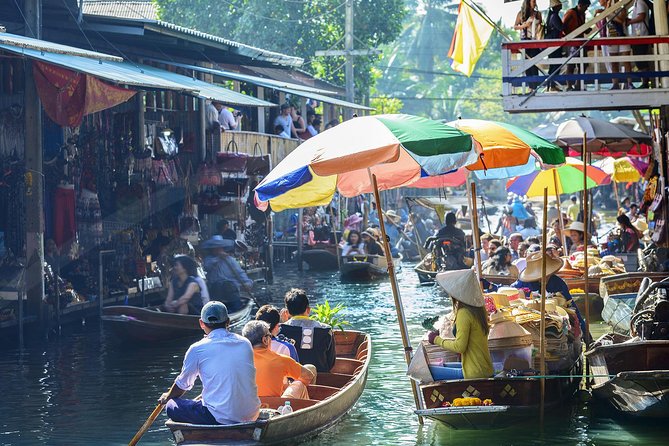
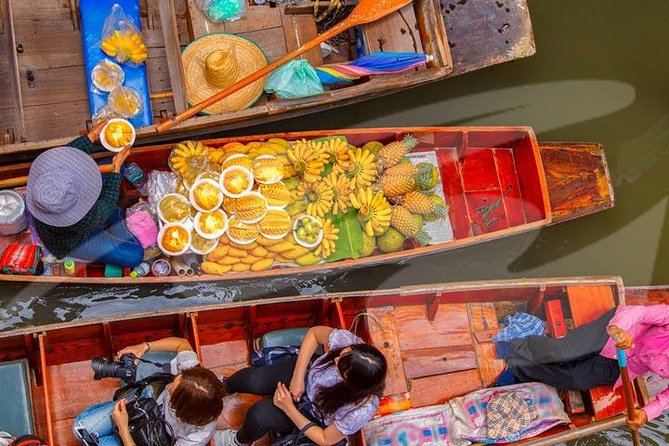
Damnoen Saduak is one of Thailand’s most famous floating market stops, and the first thing you feel is the contrast. From the land it looks touristy and busy; from the water, you feel the flow of canal life a lot more.
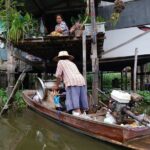
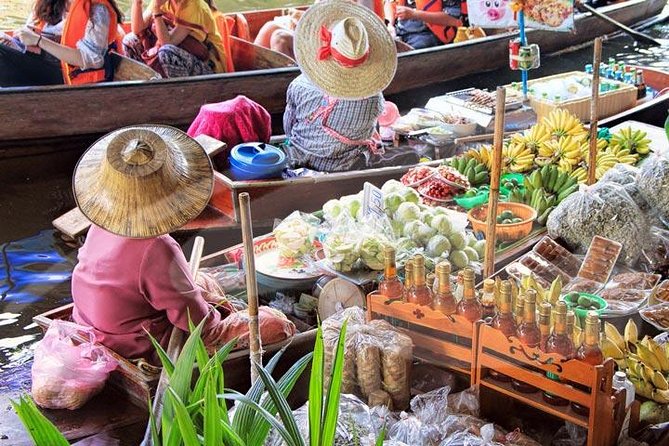
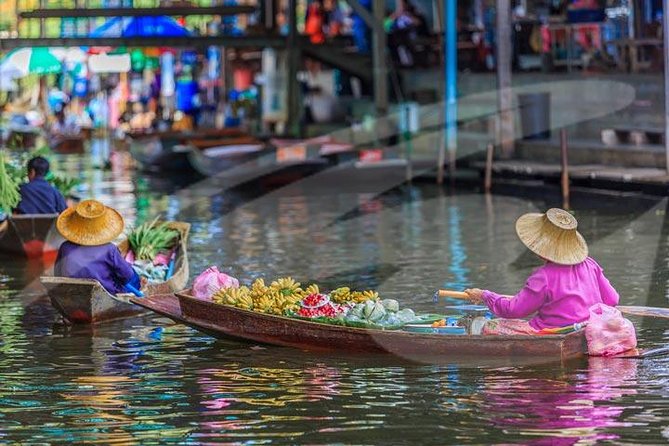
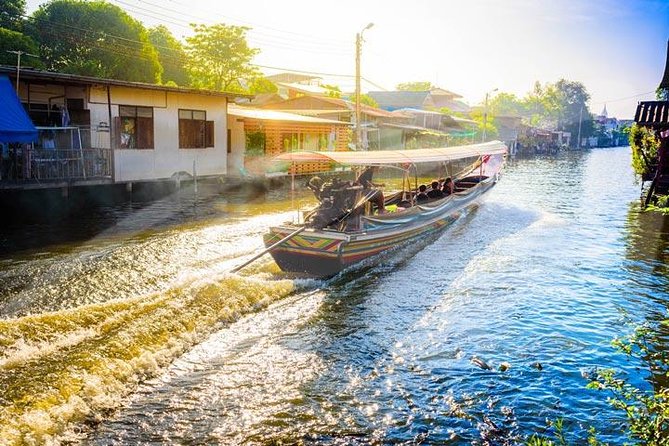
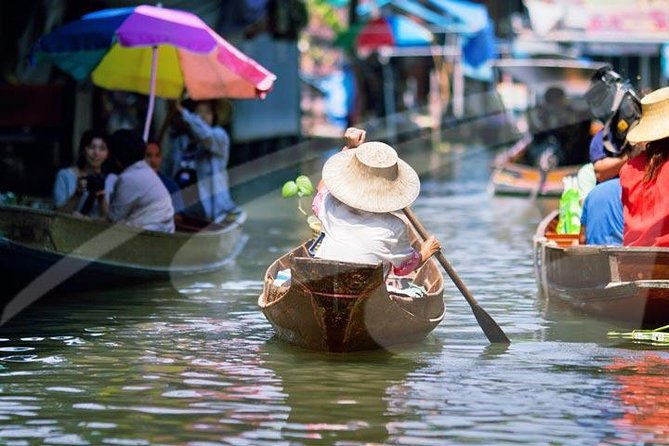
You’ll take a longtail boat (or longtail speed-boat style ride) through the canal network with canoes stacked with fruit, vegetables, sweets, and meats. The big win here is perspective. You’re not just looking at stalls—you’re moving past them, and that makes the place feel more like a working marketplace instead of a static craft fair.
The crowd reality
Here’s the consideration: the market can be packed. One reason is simple physics—boats are trying to operate in tight waterways while lots of other boats are doing the same thing. On busier days, you can end up with moments where boats seem stuck or move slowly, and that cuts into how much canal time you get.
If you hate crowds, this is the place to set expectations. Go anyway, but treat it like a lively spectacle, not a quiet local lane.
Should you do the smaller canoe ride?
You have an optional add-on: a smaller local boat ride through the markets, paid directly. This is the kind of extra that can be worth it because the small craft can help you get a closer look than the main route.
A practical tip: if you do the extra ride, go in with a strategy—decide what you want to see (food vendors, fruit stalls, how boats pass each other) so it doesn’t just turn into more shopping time. Also, plan for fumes and exhaust in crowded areas; one traveler advice was to bring face masks, which makes sense in heavy boat traffic.
Money and shopping: how to avoid the floating market overspend
This market is also famous for prices that can feel… tourist-shaped. It’s easy to walk away thinking you paid too much, especially if you’re comparing to other markets later in Thailand. My rule: shop with a compare-in-your-head mindset.
You don’t have to skip shopping. Just don’t treat this as the one place where you automatically get the best deal. If you want souvenirs, buy small things and leave room for better value later.
The long drive to Kanchanaburi: shifting from shopping energy to WWII gravity
After the market, the tour heads west to Kanchanaburi, home to the River Kwai area. It’s a longer stretch of time on the road, and this is when you’ll appreciate the air-conditioned coach. You’re covering big distance from Bangkok, so if you’re expecting instant, effortless travel, you’ll feel the day’s length.
The good news: once you arrive, the rest of the day is structured around WWII remembrance and historical context, not just photo stops. The pacing matters because it prevents the bridge visit from becoming a rushed roadside moment.
Lunch at a local restaurant: one meal, two outcomes
Lunch is included, served at a local restaurant. This part is usually appreciated because you’re finally off the boat and not standing in canal heat for a while.
Still, food quality can vary. Some people reported a tougher lunch or meal prep that didn’t hit the mark. My advice: treat lunch as part of the overall value, not as the main event. If you’re picky about meat textures, consider bringing a small snack you trust, just in case.
JEATH War Museum: how to get more out of the bridge visit
Before you reach the bridge, you stop at the JEATH War Museum. This is where you’re given historical framing through pictures and paintings related to the bridge’s construction and the wartime period.
What helps here is pacing. By the time you stand near the bridge, you’re not only seeing concrete and rails—you’re carrying the context of why this bridge mattered. The tour gives you the background before the big photo moment, which makes a difference.
And yes, the topic is heavy. If you prefer lighter sightseeing, plan to keep your head ready for WWII details rather than expecting a casual, fun museum stop.
Kanchanaburi War Cemetery: the quieter part of the day
Next comes the Kanchanaburi War Cemetery, a final resting place for many WWII prisoners of war. It’s one of those stops where you don’t need a script—you feel the seriousness.
This is also a good place to slow down. You’ve been moving from canals to vehicles to museums, and the cemetery gives you a break from constant motion. Bring a moment of respect, take a few photos if you want, then let your brain settle.
Bridge Over the River Kwai: built in 1943, seen in modern form today
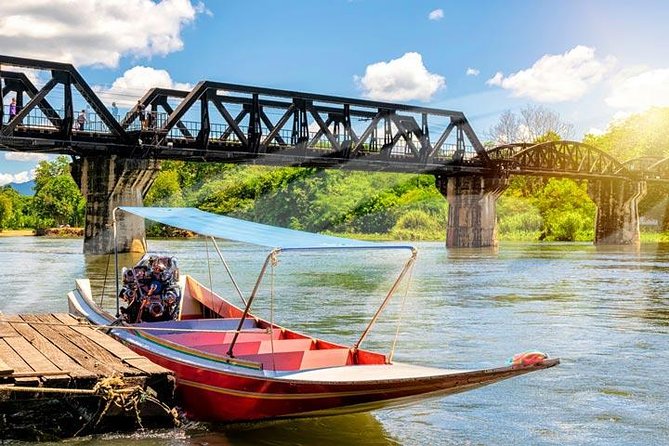
Now you get the big one: the River Kwai bridge area. Here’s the historical core you should know going in. The bridge was built in 1943 as part of a wartime project intended to connect Thai and Burmese railway lines and support Japanese occupation efforts. During the broader project, more than 100,000 laborers and around 12,000 prisoners of war died.
That’s the gravity behind what you’re seeing.
What you’ll notice on-site
The bridge you visit today isn’t the exact same structure from WWII in the way people sometimes imagine. Some tours get criticism when expectations are set too literally, especially if you’re expecting the original WWII bridge look-and-feel. What you’ll find instead is a modern bridge experience—still tied to the history, but built for current railway use.
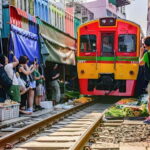
Also, the timing can be set so you see train activity at the bridge area if you choose a train option. The transport and views make that moment more than just standing and reading plaques.
Timing, transport, and group size: what makes the day feel smooth or slow
This is a long day, and timing is the difference between fun and frustration.
Early start and travel time
You’ll start with hotel pickup and a drive out of Bangkok that takes time. It’s normal for the schedule to feel packed, with long coach segments between stops. If you’re sensitive to fatigue, bring water and something light to chew so you don’t feel stranded when you’re stuck in traffic.
One complaint that matters for comfort: some people felt there wasn’t much in the way of water or cold cloth help during the heat. Even if the tour provides key items, don’t assume you’ll be handed everything you need. Pack your own small comfort kit.
Small group helps—most of the time
The tour is capped at a maximum of 6 travelers listed, which usually makes it feel more personal than big bus group tours. In at least one departure experience, the group was still small—around 9 people—so it wasn’t cramped.
Either way, the practical benefit is easier guidance and less chaos during boarding and transitions.
Guides you might meet
The experience leans on the guide to connect dots: how the market works, what the bridge meant, and what to focus on. Some tour guides have stood out by name in real departures, like Nikko, Miss Yelli, and Suki. If you get a guide like that, you’ll likely get more context than just stop-and-go explanations.
Price and value: is $85.17 a good deal?
At about $85.17 per person, this tour can be good value if you want both regions in one day and you prefer guided logistics. Here’s what you’re typically paying for:
- Hotel pickup and drop-off from selected hotels
- Air-conditioned transportation
- A local guide
- Boat trip to Damnoen Saduak
- Lunch
- Museum admissions for the JEATH museum
- War cemetery and bridge stop admissions (as listed)
- A train ride option if you select it
Then there are possible extras, like the smaller canoe ride inside the floating market, which is paid directly. If you do that extra, your total cost rises, but you may feel you got a closer, more satisfying canal look.
My value test is simple: if you’re thinking about independently arranging transport from Bangkok to Kanchanaburi and then finding a way back, this kind of guided day tour often makes sense. You trade freedom for fewer planning headaches—and you keep your day structured.
Who this tour fits best (and who should skip it)
This works best if you want a single-day sampler: floating market energy plus WWII memorial depth. It’s also a solid match for people who like history but don’t want to spend multiple days piecing together transport.
It may be less ideal if:
- You want lots of quiet time in the floating market. The area is crowded.
- You’re very sensitive to exhaust from boats. The canal traffic can get smoky.
- You expect the bridge to look exactly like a WWII snapshot. You’ll be seeing a modern railway bridge tied to the story.
- You get strongly turned off by surprise side stops that don’t match your priorities. Some departures include extra themed farm or animal-related stops, so it’s smart to confirm what’s on your exact day schedule.
Should you book the Floating Markets and Bridge on the River Kwai tour?
I’d book it if you want an efficient, guided way to see Damnoen Saduak and the River Kwai bridge in one day, with museum and cemetery context that makes the bridge more than just a photo. The small-group feel and included boat and admissions help justify the price.
I’d hesitate if you’re the type who wants maximum time at the market, hates crowds, or only cares about the bridge as a visual landmark rather than as a WWII memorial site. In that case, you might prefer a slower trip with more control over timing.
FAQ
FAQ
What’s the total length of the Floating Markets and River Kwai day trip?
It runs about 10 hours.
Does the price include hotel pickup and drop-off?
Yes, pickup and drop-off are included for selected hotels.
How long do you spend at the Damnoen Saduak floating market?
The market stop is about 1 hour 30 minutes, and it includes the market entry/admission.
Is the longtail boat ride to the floating market included?
Yes, the boat trip to the floating markets is included.
Can I take an extra smaller boat ride inside the market?
Yes. A closer look by local boat is optional and paid directly.
What WWII-related stops do you visit in Kanchanaburi?
You visit the JEATH War Museum, the Kanchanaburi War Cemetery, and the River Kwai bridge area.
Is lunch included?
Yes, lunch is included at a local restaurant.
Is a train ride across the bridge included?
A train ride is included if you select the train ride option.
What if the tour doesn’t meet minimum travelers?
If the minimum number isn’t met, the tour may be canceled and you’ll be offered an alternative or a full refund.
Can I cancel for a full refund?
Yes. You can cancel up to 24 hours in advance for a full refund.