REVIEW · FLOATING & RAILWAY MARKET DAY TRIPS
Bangkok: Floating Market and Train Tour with Guide in Spanish and English
Book on Viator →Operated by Monkey Travel Asia Co., Ltd · Bookable on Viator
That train-track market is unreal.
This Bangkok day trip strings together two of Thailand’s most photographed markets—Mae Klong Railway Market and Damnoen Saduak Floating Market—plus a traditional paddleboat canal ride. I like that the day is guided end-to-end, with cultural context that helps you understand what you’re seeing instead of just snapping photos.
What I really like is the pacing and comfort for the price: an air-conditioned vehicle, an official guide in Spanish and English, and free admissions at both markets make the day feel good value for the long drive. The main consideration? Expect crowds and “market time” that can feel short once you subtract the travel time from Bangkok.
In This Review
- Key things to know before you go
- Price and logistics: what you’re really paying for
- Day-trip route: from Bangkok to Mae Klong, then onward to Damnoen Saduak
- Stop 1: the road time to Mae Klong Railway Market
- Stop 2: Mae Klong Railway Market (Hoop Rom Market) and the stop-start train drama
- Stop 3: the quick transfer toward Damnoen Saduak
- Stop 4: Damnoen Saduak Floating Market and the canal boat ride
- Comfort, smells, and crowding: be ready for reality on the water
- Photo notes that actually help
- Stop 5: back to Bangkok, and how the return feels
- Guide quality: where the tour really comes alive
- Transportation and comfort: van time, comfort breaks, and your body limits
- Who should book this tour (and who might want to skip it)
- My value check: is it worth $25.75?
- Should you book this Bangkok Floating Market and Train Tour?
- FAQ
- How long is the tour?
- What’s included in the ticket price?
- Are admissions included?
- Is pickup from my hotel included?
- What boat experience should I expect?
- Can I cancel for free?
Key things to know before you go
- Two markets in one day: Maeklong first, then the canal floating market
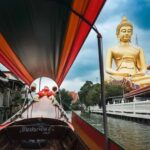
- Boat ride included: a long-stern boat through the klongs (canals)
- Photo moment on the tracks: stalls pull back fast when the train arrives
- Guide language options: Spanish and English commentary
- Long day, not a slow stroll: you’re out for about 7–8 hours total
- Meeting point discipline matters: you must arrive early or the tour won’t wait
Price and logistics: what you’re really paying for
At about $25.75 per person, this tour can be a smart value if you’re okay with a classic day-trip format: leave Bangkok, hit two distant “headline” sights, then return. That price isn’t just for sightseeing—it includes the big practical pieces that usually cost extra on your own: a driver in an air-conditioned vehicle, an official guide, a paddleboat/canal boat experience, and mandatory travel insurance.
Here’s what you should mentally budget for beyond the tour price:
- Lunch isn’t included, so you’ll want to eat before you go or plan to buy something on the day.
- Some people end up paying extra for boat/bench arrangements due to size (more on that below).
- If you hate long drives, this might test your patience. Bangkok traffic can stretch the day.
If you prefer fewer hassles, the tour also offers an upgrade for more space and comfort with a private vehicle. And there’s hotel pickup possible, but it’s not universal round-trip—so read that carefully before you assume you’ll be dropped back at your hotel.
You can also read our reviews of more guided tours in Bangkok

Day-trip route: from Bangkok to Mae Klong, then onward to Damnoen Saduak
The itinerary is basically one long loop: Bangkok → Mae Klong Railway Market → Damnoen Saduak Floating Market → back to Bangkok. The first travel leg is about 1.5 hours by road to the Mae Klong area.
Why that matters: these markets aren’t close to central Bangkok, so the “value” of the tour is that you’re paying for transportation and a guide rather than spending hours figuring out transit on your own. If you try to DIY both, you’ll feel the logistics drag hard.
Once you arrive, you’ll switch from road travel to timed market experiences. The stops are short enough that you won’t feel lost, but long enough to see the main spectacle:
- Mae Klong gives you the train-track market moment.
- Damnoen Saduak gives you the canal-and-boat perspective that you can’t get standing on a street.
Stop 1: the road time to Mae Klong Railway Market
This is where your expectations should be set. You’re leaving Bangkok by car and spending about an hour and a half getting to the little town area of Mae Klong.
A few practical notes I think help:
- Bangkok traffic can be unpredictable, so aim to be early at the meeting point. The tour specifically tells you not to arrive late—if you do, you risk missing departure.
- Pack light and bring something for comfort. It’s a long day, even if you get a comfort break along the way.
If you’re the type who hates sitting in a van without a plan, use that road time well: think about photos you want later (train arrival vs. canal boat scenes), and decide what you’ll do first when you arrive. That makes the short market windows feel less rushed.
Stop 2: Mae Klong Railway Market (Hoop Rom Market) and the stop-start train drama
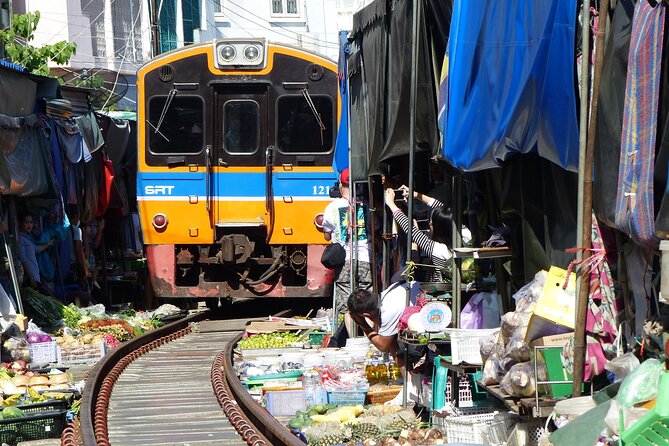
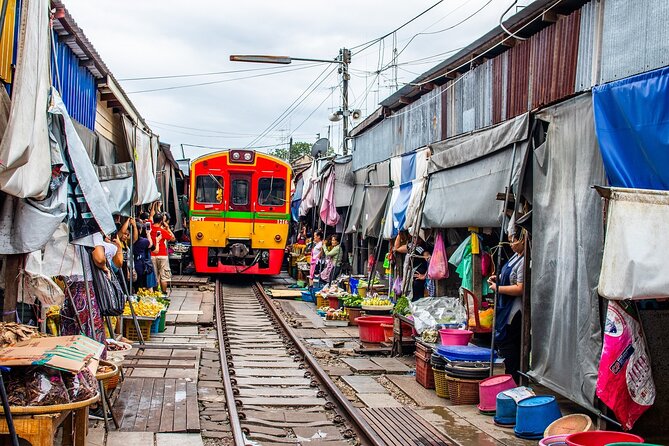
Mae Klong is famous for one reason: the market is built right alongside the railway track. When a train comes through, vendors pull back their stalls fast, and then everything goes back into place afterward. It’s practical theater.
What you’ll enjoy most:
- The timing. You’re watching a real system that changes instantly when the train arrives.
- The sights at close range—products on shelves, baskets, and street-level textures you don’t get in a normal market.
What can be a drawback:
- It can feel crowded and a bit chaotic, especially when the train approaches and everyone shifts their position.
- Your view can be blocked depending on where you stand. If photos matter, don’t just wander in circles—choose a spot and commit for the moment.
This is the part of the day where a good guide helps a lot. Some groups have been led by guides like Jenny, Jeed, Sam, Tammy, Juana, or Uncle A, and the common thread is that they add context fast—so the spectacle clicks into place instead of feeling random.
Stop 3: the quick transfer toward Damnoen Saduak
After Mae Klong, you continue by road toward the Damnoen Saduak area. The time block here is relatively short—about 30 minutes before you’re in the Damnoen Saduak zone.
This leg is quick compared with the full Bangkok-to-market distance, which helps. Still, keep your schedule mindset: you’ll want to move efficiently when you arrive, because the floating market portion isn’t endless.
You can also read our reviews of more shopping tours in Bangkok
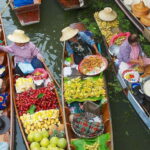
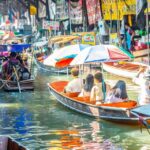
Stop 4: Damnoen Saduak Floating Market and the canal boat ride
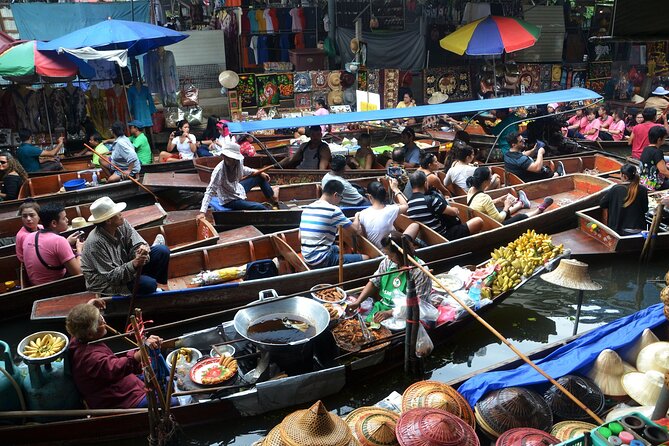
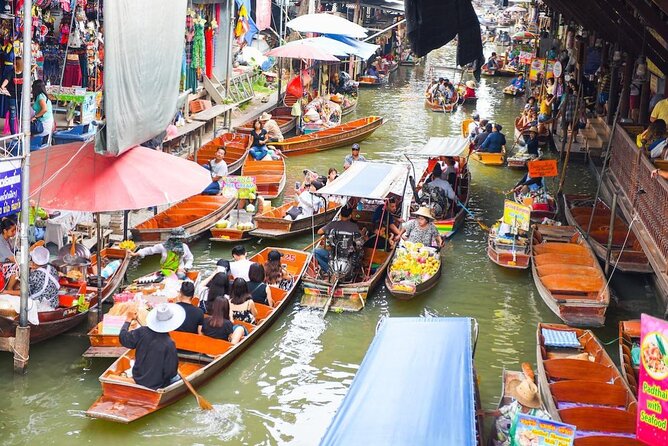
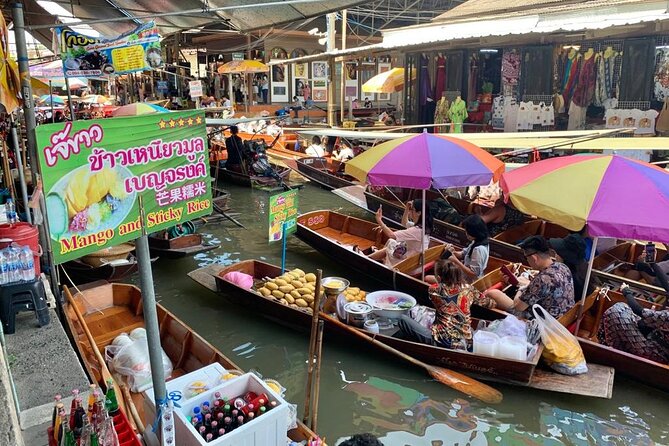
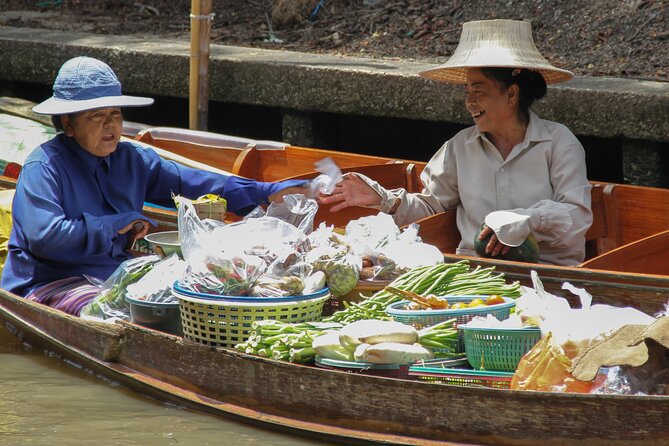
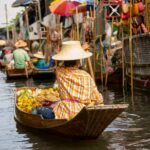
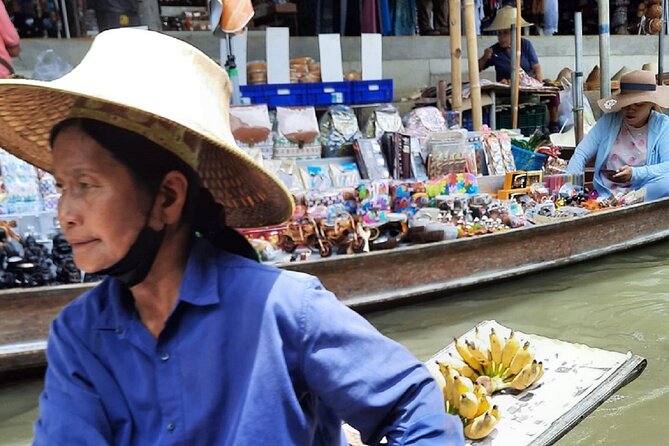
Damnoen Saduak is the classic “floating market” idea: boats move through canal waterways, and buying and selling happens from boat to boat. For this tour, you go by long stern boat along the canals (klongs).
Here’s what the boat perspective changes:
- Instead of standing in a crowd, you’re inside the canal scene.
- You can see how everyday trade works on water—spices, fruits, and goods moving between boats.
One thing to know up front: Damnoen Saduak can feel like a mix of local commerce and tourist performance. Some people love it as a window into daily life; others find it more tourist-focused than they expected. Either way, it’s still worth seeing because the setting is genuinely different from Bangkok street markets.
Comfort, smells, and crowding: be ready for reality on the water
A few recurring “reality checks” show up with this kind of canal tour:
- The floating market area can get very crowded, and it’s often noisy.
- Water and river conditions can be less-than-glamorous, including reports of dirty water and strong smells.
- During busy times, the waterways can look jammed with boats.
You can reduce how much this bothers you by going with the right mindset: this isn’t a spa boat ride. It’s a working-style canal scene where hygiene and comfort are not the main feature.
Photo notes that actually help
Want photos that don’t look like generic tourist shots? Try this:
- Photograph from the boat while goods move past you, not only from dockside areas.
- Focus on hands and containers (baskets, crates, bags). Those details tell the story better than wide angles.
- If you’re aiming for train-market-style action, keep an eye on timing when boats cluster and people trade. It’s motion-based.
Stop 5: back to Bangkok, and how the return feels
After Damnoen Saduak, you head back to Bangkok. The return drive is around 2 hours, and the tour ends at the starting point in Bangkok.
This matters for planning dinner or an evening plan:
- Don’t schedule a flight the same day.
- Build in wiggle room. Even when everything runs well, you’re dealing with road time plus Bangkok traffic.
Also, double-check your pickup/drop details. Some people think hotel pickup means round-trip service. In this kind of tour, pickup may be morning-only, and return can be at the starting point instead of your hotel.
Guide quality: where the tour really comes alive
The “secret sauce” here is the guide. A guide turns both markets from photos into understanding—history, culture, and what’s going on behind the scenes.
The strongest comments I saw centered on guides bringing:
- Thai history context tied directly to what you’re watching
- Humor that keeps the long drive from feeling endless
- Practical help like how to move through crowded areas and where to stand for key moments
Names that came up in past groups include Jenny, Jeed, Sam, Tammy, Juana, and Uncle A—and the pattern is the same: they help you translate the scene faster, especially for first-time visitors to Bangkok.
If you care about commentary, pick a time and guide setup where you’ll be present and able to hear clearly. Canal boats and crowds can muffle sound.
Transportation and comfort: van time, comfort breaks, and your body limits
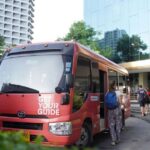
This tour runs in an air-conditioned vehicle, which is a real plus in Thailand’s heat. It also includes mandatory travel insurance and has a cap of up to 44 travelers, which usually keeps things from becoming a total herd.
A comfort reality:
- It’s a long day. You’ll likely appreciate any comfort breaks the team schedules.
- If you’re sensitive to motion or sitting time, plan your day around a relaxed evening afterward.
Important body-size note: the rowing boat used in the experience isn’t suitable for people over 100 kg or taller than 185 cm. If an additional boat is required because size prevents sharing a bench, there’s an extra fee of 250 baht.
If that applies to you, don’t assume it’ll be handled automatically. Ask before you go so you know what to expect.
Who should book this tour (and who might want to skip it)
This tour fits best if:
- It’s your first visit to Bangkok and you want two iconic “far out of town” sights handled for you.
- You like guided context, not just wandering.
- You’re okay with crowds and the fact that the canal environment won’t feel like a museum exhibit.
You might want to skip or choose a different option if:
- You’re the type who hates long drives. The day is built on travel time.
- You want long free time for shopping or wandering without set structure.
- You strongly prefer clean, quiet waterways. Reports from other days suggest crowding and strong odors can be part of the experience at peak times.
My value check: is it worth $25.75?
For the price, the tour has a strong “done-for-you” element:
- Guide + air-conditioned transport
- Two major sights in one day
- Boat ride through the canals
- Free admissions at both markets (so you’re not paying extra entry fees on top)
What can reduce value is when expectations don’t match the format. If you thought you’d have hours of floating-market shopping time, you may feel shorted because the day also includes travel. If you thought it would be calm and low-traffic, the canal and track areas can be crowded fast.
But if your goal is to see the spectacles—train-track vendors pulling back and the canal trading scene—the cost feels fair.
Should you book this Bangkok Floating Market and Train Tour?
I’d book it if you’re excited by “you can’t fake this” scenes: the train drama at Mae Klong and the canal ride at Damnoen Saduak. The combination is efficient, and the guide makes a big difference—especially if you’re there for more than just pictures.
I’d think twice if your top priority is comfort, long unstructured time, or a cleaner, quieter experience. This is a high-energy day trip, and the water/crowd factors can make it less pleasant than the photos suggest.
FAQ
How long is the tour?
It runs about 7 to 8 hours.
What’s included in the ticket price?
The tour includes an air-conditioned vehicle, an official guide (Spanish and English), boat rides through the floating market canals, cultural explanations at stops, possible hotel pickup, and mandatory travel insurance. Lunch is not included.
Are admissions included?
Yes—admission tickets are listed as free for the stops.
Is pickup from my hotel included?
Hotel pickup is possible, but it’s not necessarily round-trip. You should confirm whether you’re getting one-way pickup only or another transfer option.
What boat experience should I expect?
You’ll ride a typical long stern boat to travel along the canals (klongs) of the floating market.
Can I cancel for free?
Yes. The tour offers free cancellation up to 24 hours in advance for a full refund.