REVIEW · FLOATING & RAILWAY MARKET DAY TRIPS
Bangkok: Maeklong Railway Market and Amphawa Floating Market
Book on GetYourGuide →Operated by One Asia Corporation · Bookable on GetYourGuide
A train runs through the market. That alone makes this day trip special: at Maeklong Railway Market, vendors pull back awnings and goods so trains can slice right past. I also love the pairing with Amphawa Floating Market, where the vibe shifts from rail chaos to canal cruising and waterfront snacks. The main drawback is simple: this is a long day, and the logistics mean you’ll spend plenty of hours on the road and in-between stops.
You start from central Bangkok (Siam area), and the trip is handled with an official guide and A/C transport. The guides you might get can include people like Toto, Champ, Nok, or Apple, and they tend to keep things friendly and practical. You’ll also be doing at least one boat ride, so comfortable clothes and a little patience go a long way.
In This Review
- Key highlights I’d bank on
- Maeklong Railway Market: when lunch breaks meet rail traffic
- What you’ll notice on the ground
- Amphawa Floating Market: canals, boats, and a quieter rhythm
- Don’t miss the food and the small stuff
- The in-between stops: salt farm café break and a temple in banyan roots
- Thai street food on a market day: eat smart, not just hungry
- A practical way to handle the food
- Time and logistics: a 10-hour day that can feel long
- What to bring so you’re not miserable
- Price and value: is $48 worth it?
- Who should book this tour, and who should skip it?
- Should you book Maeklong and Amphawa together?
- FAQ
- FAQ
- What is the duration of the Maeklong and Amphawa tour?
- Where do I meet the guide in Bangkok?
- Is hotel pickup available?
- What language is the live guide?
- Is the boat ride included?
- Are meals included?
- What should I bring?
- Can I cancel for a refund?
Key highlights I’d bank on
- Maeklong Railway Market’s stop-and-start theater, where stalls retract for the passing train
- Amphawa Floating Market by long-tail boat, mixing market browsing with canal views
- Local stops that feel Thai, including a salt farm café break (with a drink) and a temple wrapped into a banyan’s roots
- Possible firefly night boat in the klongs after Amphawa, when your schedule lines up
- Food and crafts time built into the day, so you’re not just watching from the sidelines
Maeklong Railway Market: when lunch breaks meet rail traffic
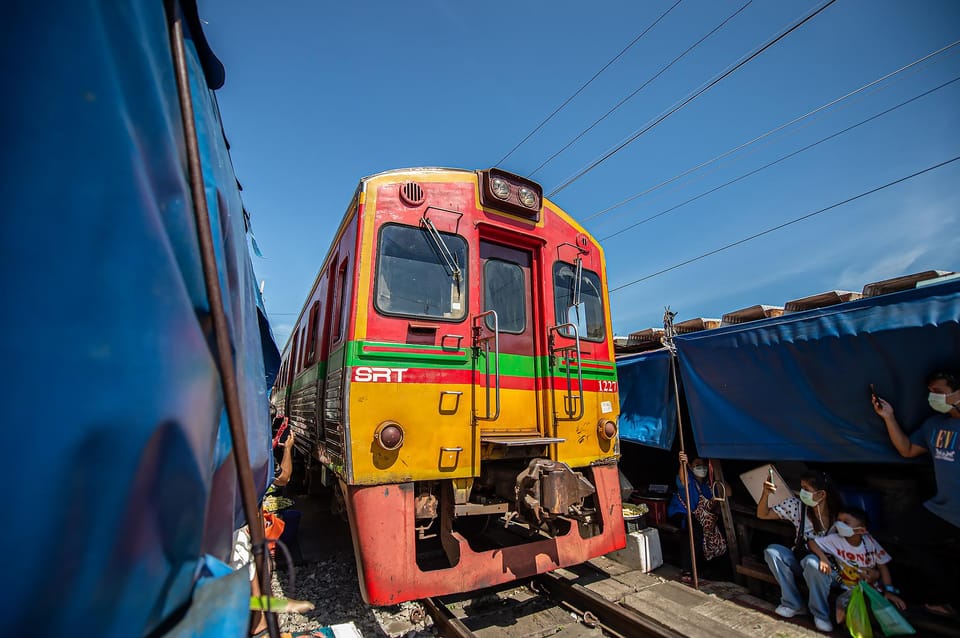
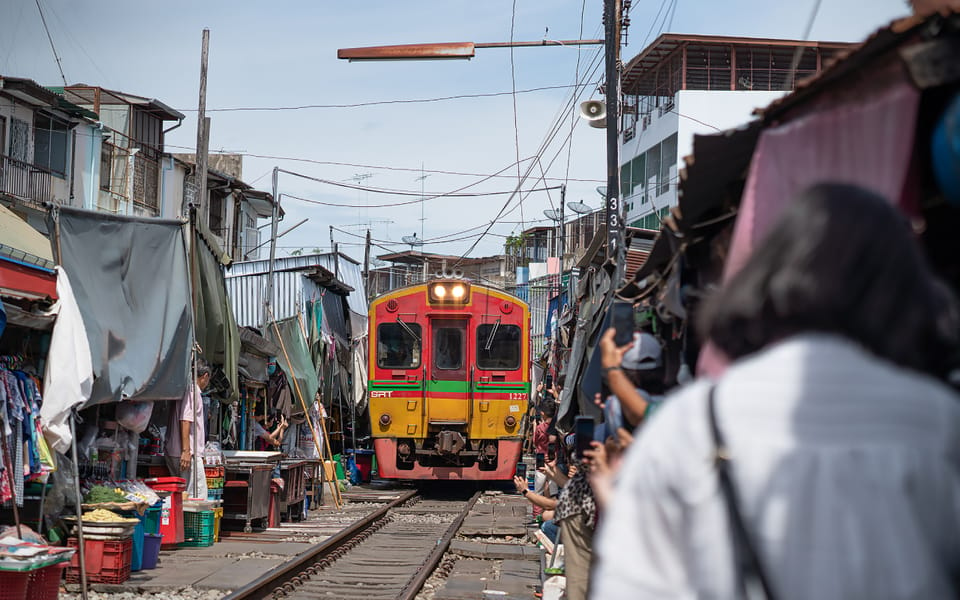
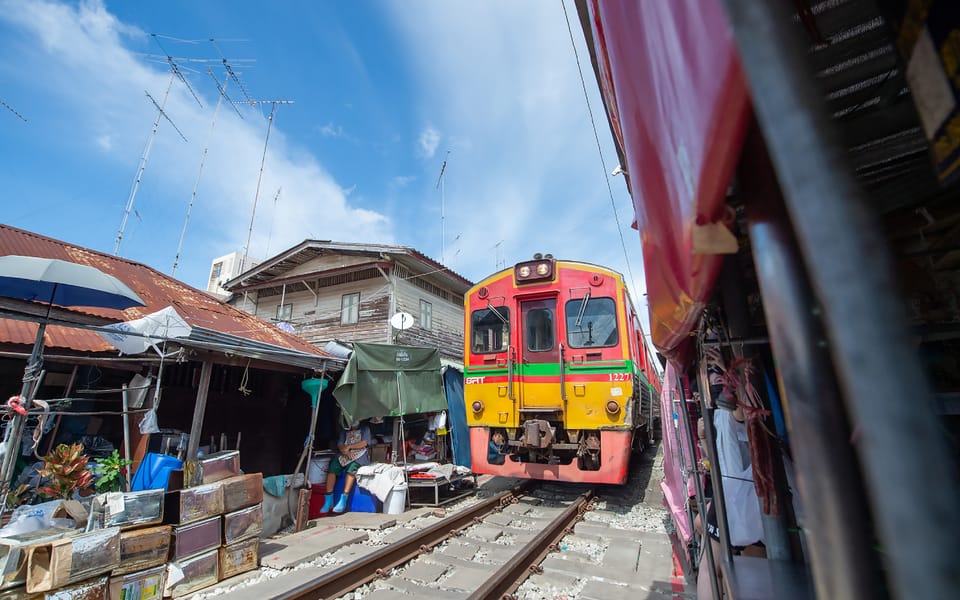
Maeklong Railway Market is not your typical market-with-photos setup. The reason people remember it is mechanical and immediate: the market sits alongside an active railway track. When a train approaches, vendors react fast. They retract their stall covers and move goods just enough for the train to pass, then everything resets again. It feels like watching a well-practiced routine, not a stunt.
What makes this worth your time is the energy of the work. You see people earning a living in real-time, using the space they have and adjusting when the train becomes the boss. You also get a great chance to browse produce, spices, and everyday goods at a close distance. It’s easy to take photos, but the smarter move is to slow down and watch how a market changes pace for infrastructure you can’t control.
You can also read our reviews of more shopping tours in Bangkok
What you’ll notice on the ground
- You’ll likely move along the track area in short sections, watching vendor timing as trains come and go.
- The atmosphere is practical: people are buying, selling, and packing, not just performing for visitors.
- Your guide helps you make sense of what you’re seeing, and you’ll get free time to browse once the group is positioned.
Amphawa Floating Market: canals, boats, and a quieter rhythm
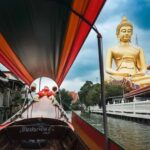
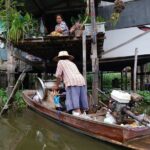
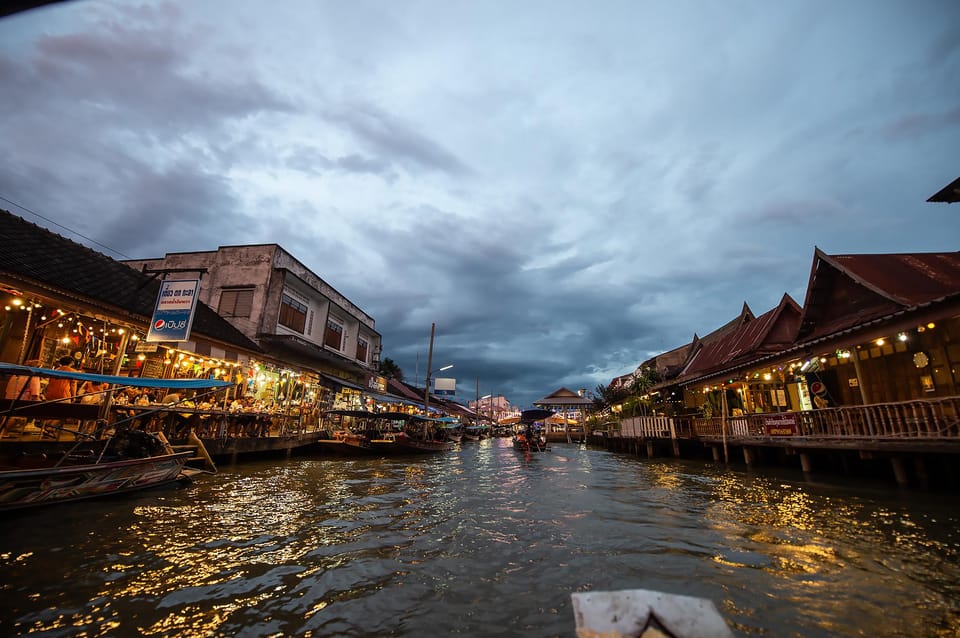
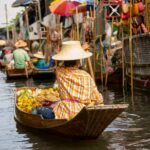
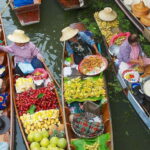
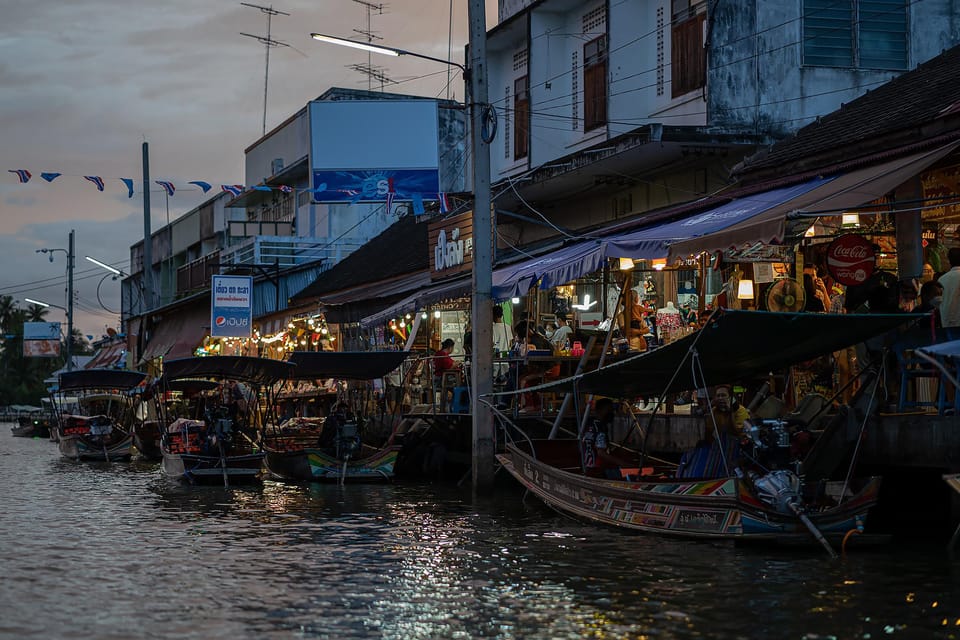
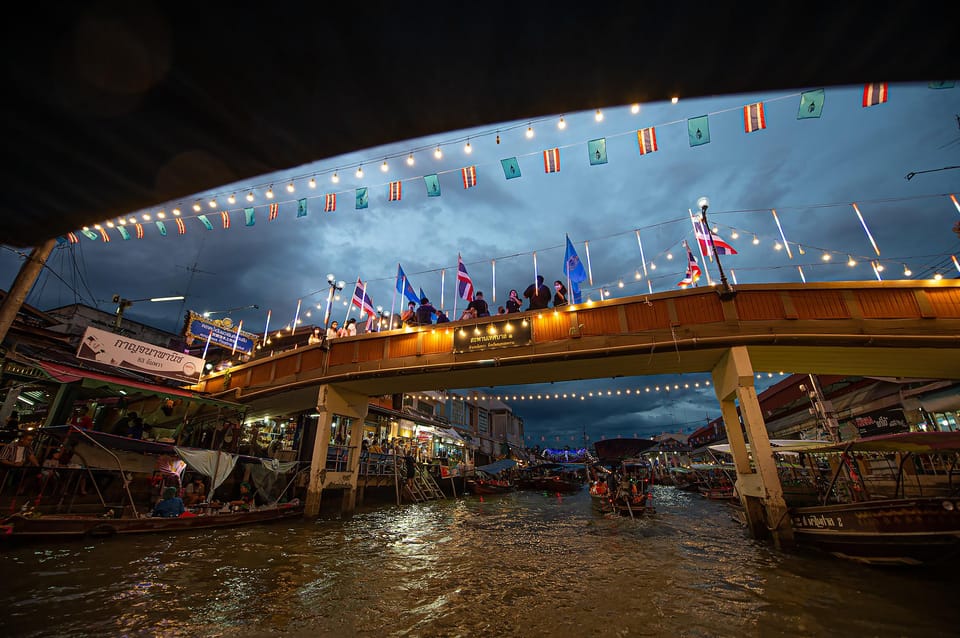
After Maeklong’s quick “train drill,” Amphawa flips the mood. This is Samut Songkhram’s canal world, and the market spreads across waterways instead of streets. You’ll spend part of your time at the floating market, and you also take a boat ride through the floating market and a local living village.
That boat segment matters because it changes your angle. From the water, you understand how daily life and commerce overlap. You see boats where goods get loaded, you catch sight of riverside routines, and you get a calmer view than you’d get standing on land. It’s also where you get a clearer sense of why people come to Amphawa for both food and atmosphere.
Don’t miss the food and the small stuff
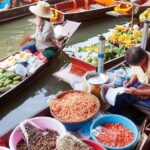
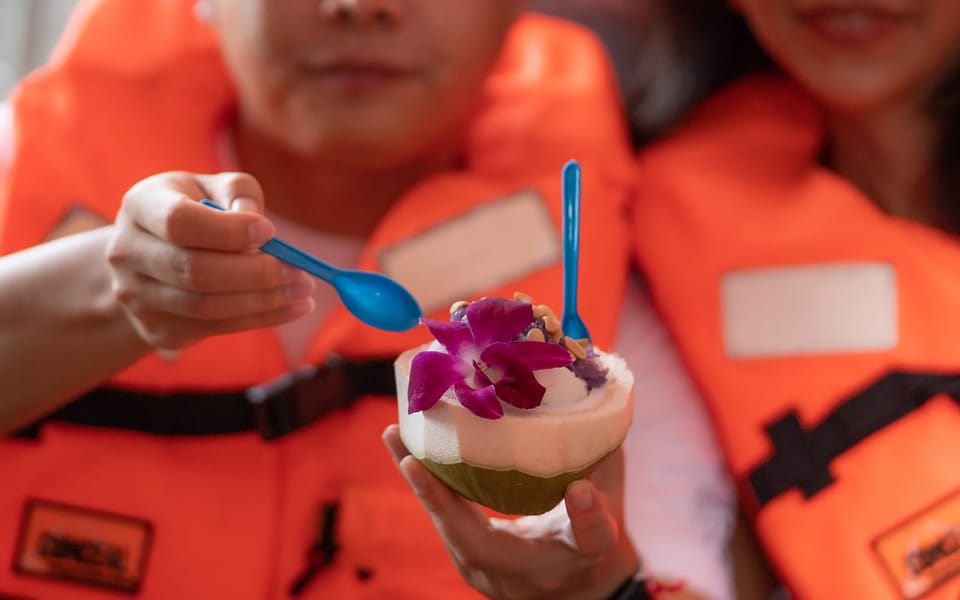
This is the part of the day where you can snack like a local. The tour experience is built around tasting Thai flavors, including street food style bites and seafood options. You’ll also see vendors selling small crafts and souvenirs along the market edges and boat stops.
If you want a simple strategy, do this:
- Try one hot item (like a Thai curry or grilled bite)
- Then try one sweet or drinkable finish (often coconut-based desserts are common in Thai markets)
- Keep cash handy for small purchases, since meals and many drinks are not included
The in-between stops: salt farm café break and a temple in banyan roots
One reason this itinerary feels more “real” than a two-market checklist is that it includes stop-offs that connect the dots. In practice, the day can include a Maeklong salt farm café stop, where the guide may arrange soft drinks for the group. It’s a short break, but it helps break up the driving and gives you another local flavor beyond the main markets.
There’s also a temple visit described as being within the roots of a banyan tree. That kind of stop is the difference between seeing Thailand and seeing only tourist icons. You’re not just buying things; you’re also seeing how sacred space and daily life share the same natural features.
Even if you’re not the type to read every sign, these stops give you context. And context makes the markets make more sense.
You can also read our reviews of more tours and experiences in Bangkok


Thai street food on a market day: eat smart, not just hungry
Markets are where Thailand shows off. That said, you still want a plan, especially on a 10-hour schedule when you’ll get hungry in waves.
From what’s included, meals and beverages are not covered, but you do get water and refreshments, plus time to eat at your own pace. So you’re balancing included drinks with your own spending for lunch/snacks.
A practical way to handle the food
- Start with small portions so you can change course if you get one you don’t love.
- If you’re sensitive to spice or strong flavors, ask your guide for mild options before you order.
- Keep it flexible: if the guide moves you quickly between stalls, prioritize items that are easy to eat while walking.
Also, remember the markets aren’t a single restaurant. You’re usually sampling from multiple stalls. That’s fun, but it’s also why pacing matters.
Time and logistics: a 10-hour day that can feel long
This is a serious half-day-plus. The duration is listed at 10 hours, and in real timing it can stretch into the evening. For example, one schedule started around 11am and returned to Bangkok around 9:30pm. Translation: you’re committing to a full day, not a quick hit.
There are a couple ways this plays out:
- You’ll spend a lot of the day in transit between Bangkok and Samut Songkhram.
- You’ll have free time at market stops, but you still need to stick to the group’s rhythm.
- If you’re fast-paced and like to move on your own clock, you might feel some parts run long.
That said, private or small-group options help. In one case, the driver waited at each stop and moved the group along by private van. That reduces hassle and makes it easier to stay comfortable.
What to bring so you’re not miserable
The tour asks for comfortable clothes and cash. That’s simple advice, but it makes a big difference. You’ll likely be walking, standing near busy areas, and spending time at the water where you might want to move with ease.
Price and value: is $48 worth it?
At $48 per person, this is priced like a day trip that’s trying to be accessible, not a luxury private tour. The value depends on what you care about.
Here’s what you’re getting for the money:
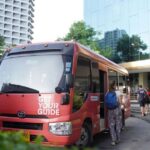
- Roundtrip air-conditioned vehicle from central Bangkok area
- An official licensed guide (Chinese/English)
- Water and refreshments
- A boat ride through the floating market and a local living village
- Travel insurance provided by the operator
On top of the listed inclusions, the overall day can add extra local moments, like the salt farm café drink and the banyan-root temple stop. Reviews also describe an ending that can include a long-tail boat for fireflies at night in the klongs, which is the kind of payoff that can swing the value from good to excellent.
If you’re the type who hates spending all day organizing yourself, $48 starts to look like a bargain. If you already know you want two markets only and you like self-guided travel, then you might compare costs versus transportation and a boat rental. But with the guide + boat included, this is already doing a lot for you.
Who should book this tour, and who should skip it?
This tour is a strong fit if you want:
- A must-see market spectacle like Maeklong Railway Market
- A canal experience with a boat ride, not just standing on a dock
- Thai food sampling time without building a route yourself
- A day that mixes market life with a temple and local countryside flavor
It’s less ideal if you:
- Dislike long days and lots of driving
- Prefer deep lectures at each stop (guides may offer a general introduction rather than a long, detailed breakdown at every site)
- Get restless with slower pacing and extended waiting
For people who like “see it, taste it, move on,” this itinerary usually works well. For people who want everything hyper-customized, you may feel the group structure.
Should you book Maeklong and Amphawa together?
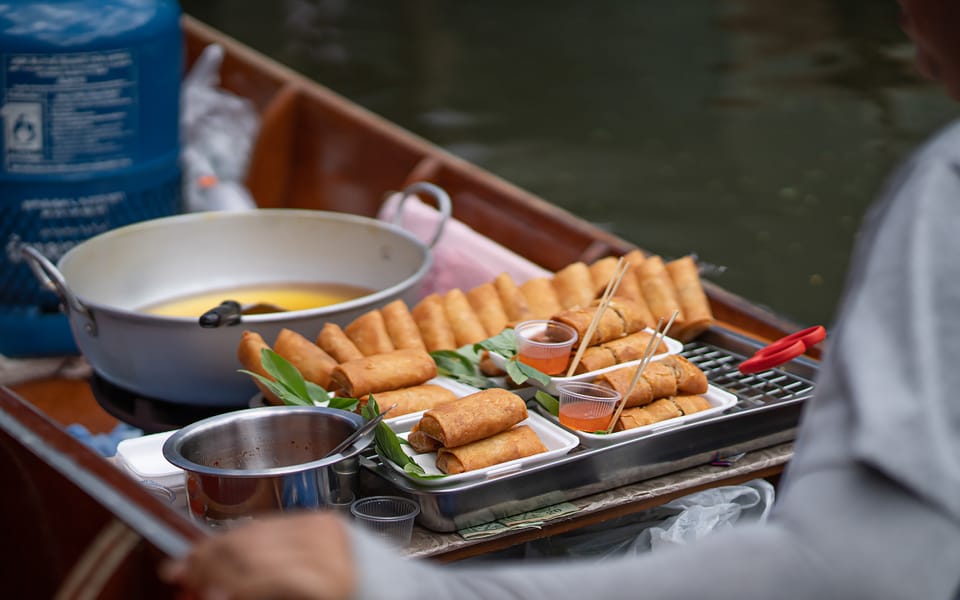
I’d recommend booking this if you want a one-day package that actually connects the dots: rail-market spectacle first, then canal-market life, with Thai food and crafts built into the rhythm. The included boat ride is a key reason. It turns Amphawa from a photo stop into a real perspective shift.
You might hesitate only if a 10-hour day feels like too much, or if you’re expecting a very detailed explanation at every single stop. This trip is designed for shared logistics and real-world experience, not museum-style teaching.
If you’re flexible, comfortable walking, and interested in both markets and how locals live around them, this is a great way to spend your time in central Thailand.
FAQ
FAQ
What is the duration of the Maeklong and Amphawa tour?
The tour runs for 10 hours.
Where do I meet the guide in Bangkok?
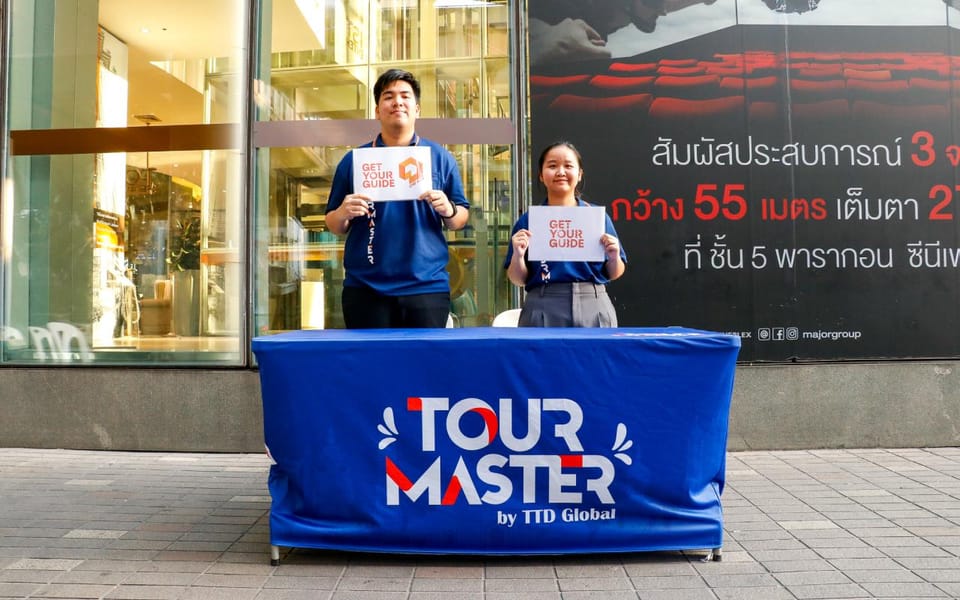
Meet at Siam Paragon gate no.1, Siam BTS Station Exit 5. Arrive 15 to 20 minutes early. The guide will wear a navy blue t-shirt and hold a GYG sign around the registration counter.
Is hotel pickup available?
Pickup is optional. If you choose it, wait in the hotel lobby 10 to 15 minutes before your scheduled pickup time.
What language is the live guide?
The guide speaks Chinese and English.
Is the boat ride included?
Yes. The tour includes a boat ride through the floating market and a local living village.
Are meals included?
No. Meals and beverages are not included, so you’ll need cash for your own food and drinks.
What should I bring?
Bring comfortable clothes and cash.
Can I cancel for a refund?
Yes. Free cancellation is available up to 24 hours in advance for a full refund.