REVIEW · PRIVATE & CUSTOM CITY TOURS
Floating and Railway Markets Private Tour
Book on Viator →Operated by Thailand Insight Travel · Bookable on Viator
Bangkok can feel loud, but today gets odd fast. You’ll pair a floating market boat ride with a real train moment at Mae Klong, plus stops for coconut sugar and sea salt—an easy way to see how Thai food and daily life connect to water and land.
I especially like the two-way ride setup: a motorboat for Damnoen Saduak and a local train experience at the railway market. I also like that the tour is private with hotel pickup and a licensed English-speaking guide, so the schedule stays smooth and you’re not stuck asking strangers what’s going on.
One consideration: parts of the day can move quickly, and the Damnoen Saduak stop can feel very full of boats and people. If you prefer quiet markets, plan to steer your expectations toward photos and motion, not lingering.
In This Review
- Key Highlights You’ll Actually Feel on This Tour
- Why This Floating-and-Rail Day Works So Well
- Getting from Bangkok to Mae Klong Without Losing the Morning
- Mae Klong Railway Market: The Stalls vs. the Train Moment
- What to watch for (and what to accept)
- The Salt Field Stop: Sea Salt, Not Rice
- Possible drawback
- Coconut Sugar Farm: From Nectar to Sugar Loaf
- A tip for this stop
- Damnoen Saduak Floating Market: Boats, Lines, and Real-Life Crowds
- How to enjoy it more
- Timing and Pace: A 7-Hour Loop That Still Feels Tight
- Guide and Comfort: Private Transport Helps More Than It Seems
- Price and Value: What $126.94 Really Buys You
- Who Should Book This Tour (and Who Might Pass)
- Tips to Make the Most of the Day
- Should You Book This Floating and Railway Markets Tour?
- FAQ
- Is hotel pickup and drop-off included?
- How long is the tour?
- Is this tour private?
- What rides are included?
- Are admissions included?
- Is lunch included?
- Is there travel accident insurance?
- Do I need to print tickets?
- How does cancellation work?
- What’s the travel time from Bangkok to the railway market?
Key Highlights You’ll Actually Feel on This Tour
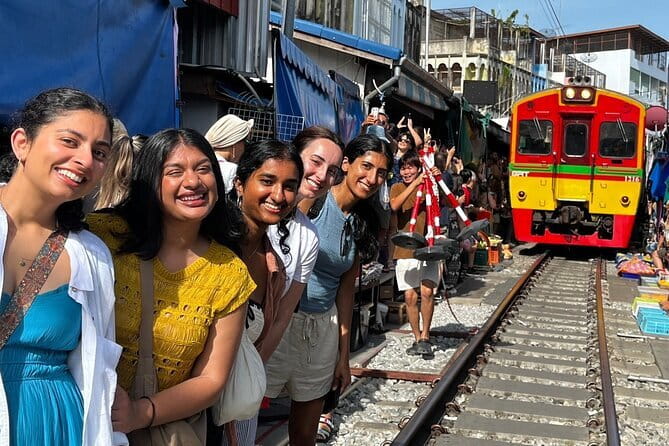
- Boat + rail combo in one day: You get the classic water market look and then the whistle-to-the-stalls moment at Mae Klong.
- Insurance included: Travel accident insurance up to 1,000,000 THB per person adds real peace of mind for a day with rides.
- Sea salt farm stop: You’ll see whitish salt flats made from sea salt production, not rice paddies.
- Coconut sugar process demo: Watch coconut nectar turn into palm sugar loaves via a step-by-step farm demonstration.
- Focused walking time at the railway market: You’ll get a guided look at what happens right before the train arrives.
- Hotel pickup/drop-off: The 7-hour plan is built around transport so you spend less time figuring out logistics.
Why This Floating-and-Rail Day Works So Well
This tour is built around one simple idea: markets are not just places to shop in Thailand. They’re also part of the local work cycle—fisheries, salt farming, and food production all show up in what you see.
The best part is that the day doesn’t treat everything the same. You start with ground-level Bangkok logistics, then shift to the Mae Klong railway market (where timing matters), then move to Damnoen Saduak (where water traffic and boat positioning matter). Between those, you get two food-production stops—coconut sugar and sea salt—so your photos come with context instead of just sights.
And because it’s private, the pacing tends to stay coherent. You’re still on a set timetable, but you’re not trying to herd yourself through tight lanes.
You can also read our reviews of more private tours in Bangkok
Getting from Bangkok to Mae Klong Without Losing the Morning
The day begins with hotel pickup and a private, air-conditioned vehicle. That matters more than it sounds. Around Bangkok, traffic can turn “quick” into “chaos,” and this tour is clearly planned to keep you moving without constant navigation.
You travel to Mae Klong area, with admission not charged for the start stop. The itinerary also includes a short salt-farming bonus segment later, so the overall structure is meant to break up the longer transit time with hands-on viewing.
One practical note: the roundtrip travel time between Bangkok and the railway market is about 3.2 hours. That’s a lot of “in transit,” so the good news is the tour fills the time with actual stops rather than leaving you to kill time on your own.
Mae Klong Railway Market: The Stalls vs. the Train Moment
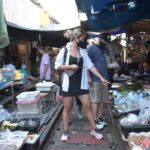
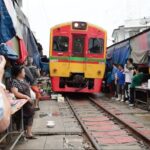
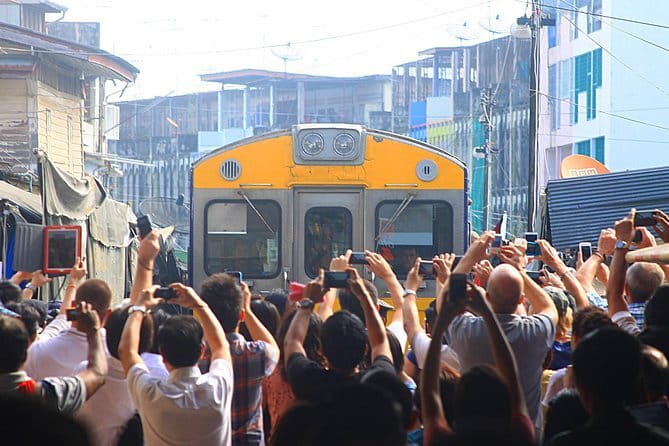
Mae Klong Railway Market, often called the Hoop Rom Market, is the headline attraction for a reason: the train is not a backdrop. It’s the event.
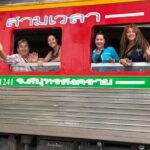
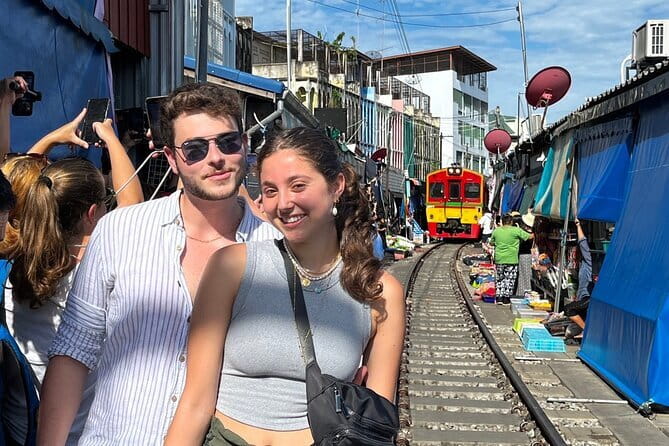
You’ll ride a local train toward the Mae Klong station. While you’re on it, you’ll be shown the key moments—the kind of what-you-thought-was-impossible becomes routine when locals know the schedule. Then you’ll do a guided walking segment at the market itself, where you can witness sellers re-rolling or retracting their setups as the train approaches.
This is where the guide really earns their fee. The “how” and “why” matter here. The market works because people coordinate quickly. A good guide helps you notice the small signals that make the scene click, so you’re not just watching chaos—you’re watching a system.
What to watch for (and what to accept)
- Look for the timing: the market changes right before your eyes when the train comes.
- Expect narrow movement: market lanes can be tight during the busiest moments.
- Don’t plan to stand still forever: this is a “watch and react” kind of stop.
The Salt Field Stop: Sea Salt, Not Rice
Between the Bangkok pickup and the railway market experience, the tour includes a sea salt stop in Samut Sakhon. Don’t picture green rice fields. This is a whitish salt field scene—more like a patchwork of drying spaces than a farm you’d recognize at first glance.
The idea of this stop is simple: you get to see how Thai locals produce sea salt using local wisdom. The tour frames the salt as useful beyond just cooking—also linked with skincare.
This segment may be short, but it gives you something many market trips skip: the raw material stage. It’s easy to think of salt as something that appears in a shaker. Here, you see it as a product with work behind it.



Possible drawback
If you’re expecting a long, hands-on farm experience, you might find the salt stop less exciting than the markets. The advantage is perspective: you’ll better understand why the next stops are tied to food and everyday use.
Coconut Sugar Farm: From Nectar to Sugar Loaf
After the salt stop and the railway market, the tour moves to a coconut sugar farm. This is one of those stops where the value is in the process.
You’ll observe how farmers produce coconut nectar and palm sugar loaf. The tour includes a demonstration that covers key steps such as cutting the coconut flower, pouring nectar into a bamboo container, and using preservation woods as part of the process.
Even if you’ve never seen coconut sugar made before, you’ll likely recognize the logic: capture the sap, preserve it, and then turn it into a form you can use and sell. It’s practical agriculture education, not a performance.
A tip for this stop
Bring a curious mindset. The farm portion is shorter than the markets, so your best payoff comes from asking the guide what changes from one step to the next and how that affects the final sugar.
Damnoen Saduak Floating Market: Boats, Lines, and Real-Life Crowds
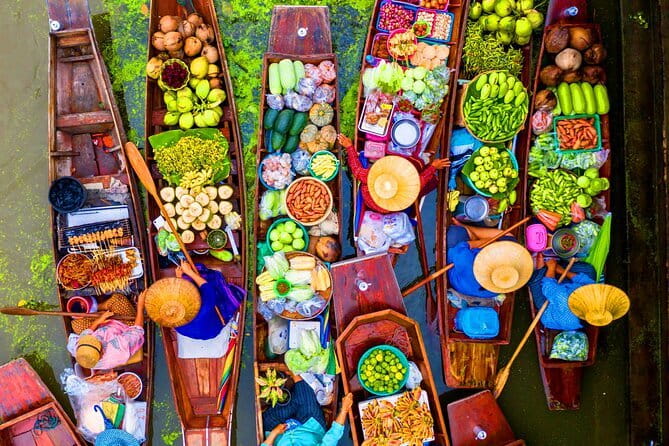
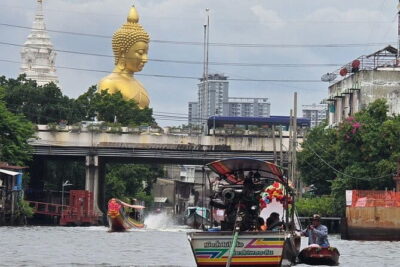
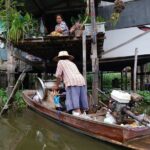
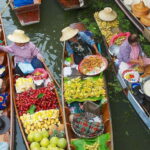
Then comes Damnoen Saduak, one of Thailand’s best-known floating markets. The core experience here is the motorboat ride through the market area and the chance to see sellers from the water level.
This stop is a photographer’s dream—boats, goods, and close-up Thai everyday life. But it’s also the segment most likely to test your patience if you don’t like crowds. The market can feel very packed with tourist boats, and it can be hard to move or get a clean view for long.
The upside is that the guide’s job is to keep you from wasting time. You don’t want to spend your boat ride searching for the best angles and then missing the best parts because you got turned around.
How to enjoy it more
- Focus on the rhythm of trading from boats instead of trying to “walk through” everything.
- Take your photos early, then shift to browsing and short looks from different points.
- If you’re sensitive about how animals are treated in tourist settings, keep your expectations cautious. One review raised concerns about the floating market in that area. If that’s important to you, decide before you go and ask your guide to point out what’s happening so you can judge for yourself.
Timing and Pace: A 7-Hour Loop That Still Feels Tight

The total time is about 7 hours. Add in a big travel chunk and you get a day that’s full, not slow.
Here’s what the schedule effectively means for your brain:
- You’ll spend time riding and viewing, not long eating and wandering.
- Your photos will be split between two “event moments” (Mae Klong’s train timing and Damnoen Saduak’s boat route) and two “process” stops (salt and coconut sugar).
Also, lunch isn’t included. That’s common, but it’s worth planning around. Bring a little snack or budget time before the tour begins, because markets are the kind of places where eating can turn into delays if you don’t have a plan.
Guide and Comfort: Private Transport Helps More Than It Seems
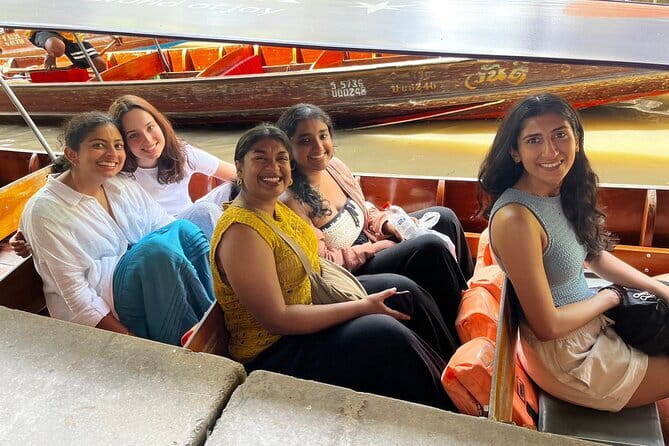
Included in the package is a licensed English-speaking guide and hotel pickup/drop-off in an air-conditioned vehicle. Those two elements do most of the heavy lifting for comfort and clarity.
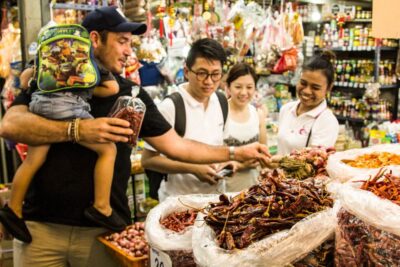
The private format also helps families and groups. One positive note highlighted that kids had a great time with the sights, and that the day stays fun when the guide explains what’s coming next.
Language can be tricky in Thailand sometimes, especially when accents vary. In this tour, the guide is English-speaking, and overall feedback on communication was positive. If English is essential for you, you’ll appreciate that the guide’s job is to walk you through what you’re seeing rather than leaving you to guess.
Price and Value: What $126.94 Really Buys You
At $126.94 per person, this tour isn’t the cheapest way to see markets, but it is trying to be an efficient day with paid components included.
Here’s what you typically get for the price:
- Private air-conditioned vehicle plus hotel pickup/drop-off
- Licensed English-speaking guide
- Motorboat ride in the floating market area
- Train ride toward the railway market station
- Travel accident insurance up to 1,000,000 THB per person
- Some admissions marked as included or free across key stops
That combination matters. If you tried to piece this day together yourself, you’d likely pay more once you factor in transport, guided timing, and the rides. The tour’s main value is not just the locations—it’s the coordination: getting you from Bangkok to the railway market, keeping you oriented during the train timing, and then covering Damnoen Saduak and the farm stops without turning the day into guesswork.
Who Should Book This Tour (and Who Might Pass)
This is a strong fit if you:
- Want a one-day combo of a floating market and Mae Klong railway market
- Enjoy photo opportunities tied to action (the train scene is special)
- Like learning how everyday products are made, not just buying things
- Are traveling with kids and want a day with clear “wow” moments
You might think twice if you:
- Hate crowds and want quiet markets
- Prefer long unhurried stops instead of a packed agenda
- Are strongly concerned about animal welfare in tourist-market settings (one review flagged this concern about the floating market)
Tips to Make the Most of the Day
A few practical moves can improve your experience fast:
- Dress for outdoor walking: the railway market part can mean standing near active areas.
- Bring something for heat and sun: you’ll spend time outdoors and on boats.
- Plan your snacks: lunch isn’t included, and stopping for food at the wrong moment can break your pace.
- When the train moment starts, watch the guide first. Your best photos come when you understand where movement happens and when.
Should You Book This Floating and Railway Markets Tour?
I’d book it if you want an efficient, guided day that mixes two iconic market experiences with food-production context. The price looks more reasonable when you see what’s included: private transport, guide, boat ride, train ride, and insurance.
I’d hesitate only if your priorities are quiet sightseeing or long relaxed browsing. Damnoen Saduak can be crowded, and the whole schedule is built to hit multiple highlights in a limited time.
If you want markets with story—how Thai food and daily work connect to water, salt, and sugar—this private tour is a smart choice.
FAQ
Is hotel pickup and drop-off included?
Yes. The tour includes hotel pickup and drop-off, plus travel in a private air-conditioned vehicle.
How long is the tour?
The duration is listed as about 7 hours.
Is this tour private?
Yes. It’s a private tour/activity, meaning only your group participates.
What rides are included?
You’ll do a motorboat ride in the floating market and a train ride to experience the Mae Klong railway market.
Are admissions included?
Admission is marked as free for some stops, and included for others. The railway market segment and the coconut sugar farm segment show admissions as included.
Is lunch included?
No. Lunch is not included.
Is there travel accident insurance?
Yes. Travel accident insurance is included up to 1,000,000 THB per person.
Do I need to print tickets?
No. The tour includes a mobile ticket.
How does cancellation work?
Free cancellation is available up to 24 hours in advance of the experience’s start time for a full refund.
What’s the travel time from Bangkok to the railway market?
The roundtrip travel time between Bangkok and the railway market area is approximately 3.2 hours.