One neighborhood, two cuisines, zero guesswork. This small-group Talad Noi walk links Bangkok’s Thai-Chinese side to a church built in 1787 and a shrine that’s been around for 200 years, with plenty of food stops along the way.
I especially like the focused sampling of Chinese-Thai street snacks, including turnip cake and chwee kueh, plus duck noodle soup and Phad Thai from Uncle Pom. I also like the small-group feel: you stay with your local English-speaking guide as you navigate narrow lanes and swap questions on culture and what you’re eating.
One thing to keep in mind: this leans more street-food first than temple-and-history all day, so if you want a long, heavy Chinatown deep dive, you might wish for more time in that old-world setting.
In This Review
- Key Highlights You’ll Remember
- Talad Noi in 2 km: a short walk with a lot packed in
- Holy Rosary Church (built 1787): your culture “reset” before the street food
- Turnip cake, chwee kueh, and more: how the food sampling is built
- Chow Sue Kong Shrine and Hong Sieng Kong: incense, carvings, and guided meaning
- Colorful lanes, street art, and a riverside café pause
- Hong Kong-style tastes meet Bangkok pace in Chinatown
- Why the guide matters so much on a food-and-culture route
- Price and value: why $41 can make sense for this kind of walk
- Timing, walking, and who should skip it
- Should you book this Talad Noi street-food and culture tour?
- FAQ
- Where is the meeting point?
- How long is the tour?
- How much walking is included?
- What are the main places you visit?
- Are food samples included?
- What drinks are included?
- Can you accommodate vegetarian diets?
- Is there an English-speaking guide?
- Is private group service available?
Key Highlights You’ll Remember
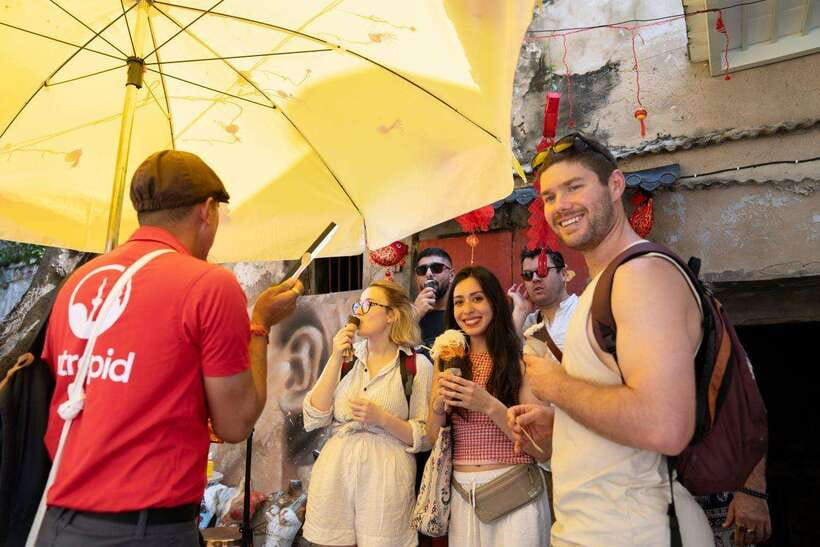
- Turnip cake + chwee kueh sampling that explains how Chinese-style dim sum meets Thai tastes
- Holy Rosary Church (1787) as your history anchor before the eating starts
- Chow Sue Kong Shrine (200-year-old) with detailed stops for architecture and meaning
- Chinatown walk-through that connects old signage and modern street life
- Drinks included like coffee/tea and boba tea during relaxed pauses
- Small group of up to 12 (or private) for better attention and easier food questions
Talad Noi in 2 km: a short walk with a lot packed in
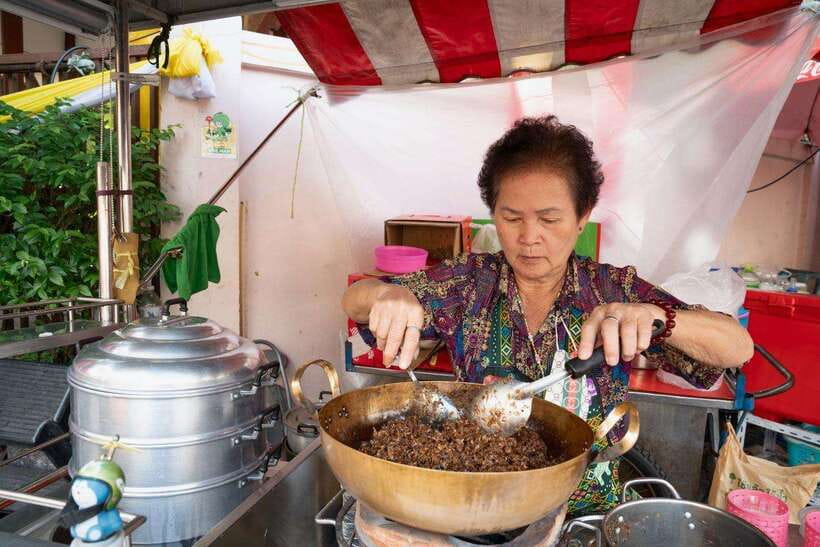
This is a 150 to 270 minute daytrip designed around a simple idea: in just about 2 km (1.2 miles), you can see how Talad Noi’s Thai and Chinese communities share space—and then taste that mix. The pace works because the tour is built for walking between specific landmarks, not for long transit.
You start at River City Gate 1 (in front of Starbucks on the first floor). The route ends around Si Phraya, so it feels like you’re moving through the neighborhood rather than doing a back-and-forth loop. The small group size matters here: with a limit of 12 people, it’s easier for the guide to manage the lane-hopping and keep you on time.
One more modern touch: this experience is described as carbon neutral and run by a B Corp-certified company committed to responsible tourism. That won’t change your food, but it’s a nice check in how the business frames its impact.
Who it suits best: I’d point you here if you want a guided way to eat in Talad Noi without guessing what’s best, and you don’t mind walking a solid but manageable stretch.
You can also read our reviews of more food & drink experiences in Bangkok
Holy Rosary Church (built 1787): your culture “reset” before the street food
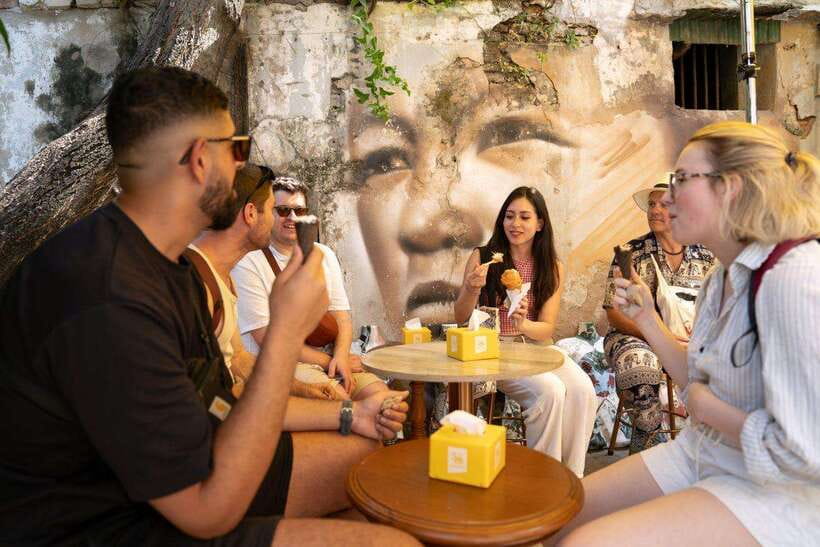
Most food tours jump straight to snacks. This one starts with Holy Rosary Church, built in 1787, which sets the tone right away. You get a guided visit here before the neighborhood turns into full street-food mode.
Why I like this order: the church gives you a frame for what you’re seeing in Talad Noi. When you later move through Chinese shrines and Chinatown lanes, you’re not just collecting photos—you’re connecting architecture, community, and Bangkok’s layered past.
You also get the guide’s narration during the visit, which is where small details start to matter. Even if religious sites aren’t your main focus, it’s an easy stop to orient your brain before the eating starts.
Practical note: you’ll be on your feet, and it’s a walking tour day, so wear shoes that work for 2 km total. Nothing is described as difficult, but it’s still a neighborhood crawl.
Turnip cake, chwee kueh, and more: how the food sampling is built
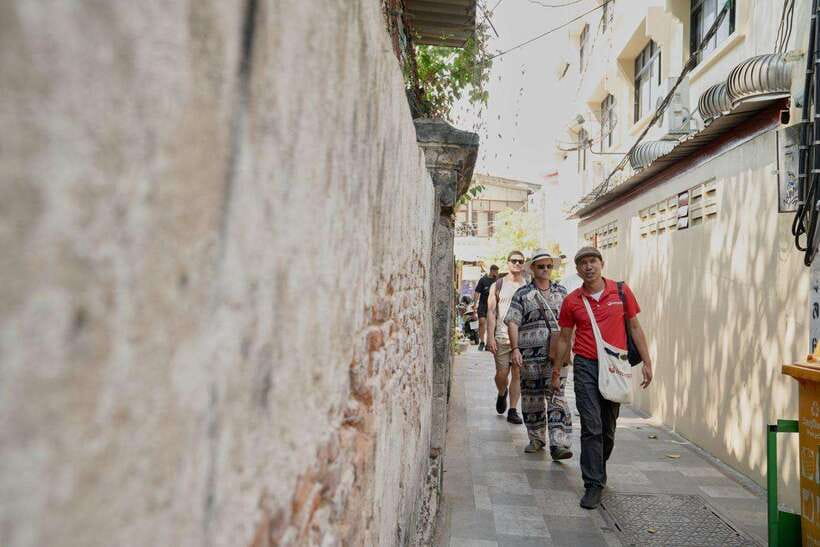
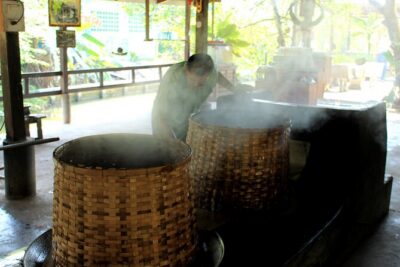
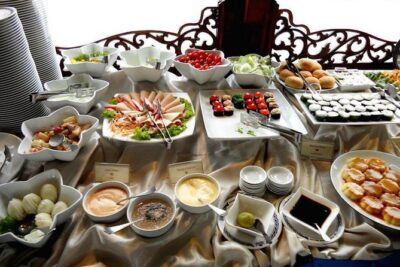
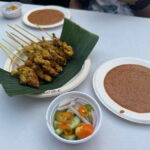
The food is the main event, and the included lineup is the kind that makes sense for a guided tasting route. Expect local Chinese and Thai samples such as turnip cake, chwee kueh, Chao Tha (duck noodles soup), and Phad Thai Uncle Pom. Drinks like coffee, tea, and boba tea are also included.
Here’s what makes this more than random street snacks: the tour includes dishes that represent the Thai-Chinese overlap you came for. Turnip cake and chwee kueh are classic examples of Chinese-influenced dumpling and rice-cake traditions that you can find in Chinatown-style food culture, often adapted to Thai tastes and local preferences.
How you can enjoy it more:
- Come ready for multiple bites. Even though exact quantities aren’t listed, the list of dishes plus drinks signals this is meant to be a true sampling day.
- If you’re the type who only wants one or two things, this might feel like “too much, too fast.” But if you like variety, it’s a smart way to avoid choosing wrong stalls.
One detail that matters for planning: “additional food and drink” isn’t included. That means you’re covered for the samples listed, but if you fall in love with something and want more, you’ll pay extra.
Dietary note: they can cater for vegetarians if you tell them at least 24 hours in advance. No other dietary requirements are listed as supported, so if your needs are more specific, check with the provider before you book.
Chow Sue Kong Shrine and Hong Sieng Kong: incense, carvings, and guided meaning
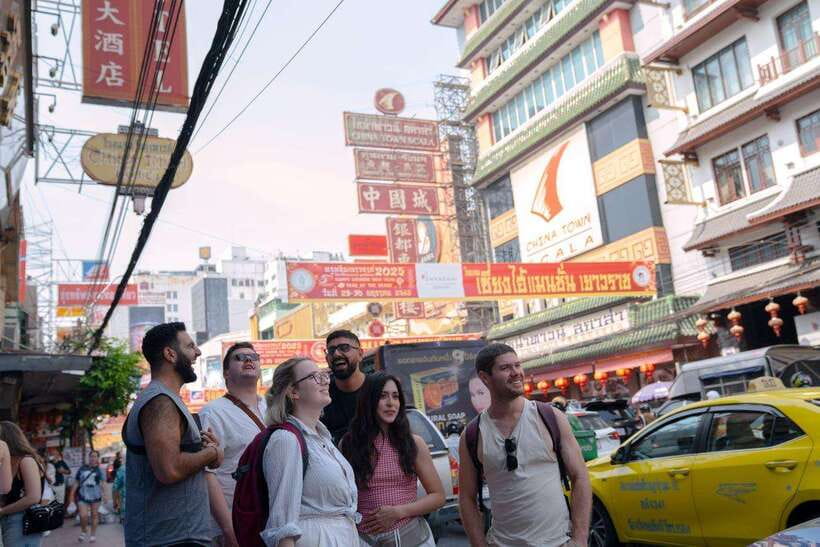
After the church, the route shifts toward Chinese temple culture with a stop at the Chow Sue Kong Shrine (順興宮清水祖師爺), described as about 200 years old. You’ll have a guided visit, and the focus here is on the shrine’s intricate architecture.
I like this pairing: you get both the religious “home base” feeling from the church and then the Chinese community shrine setting right after. It helps you understand Talad Noi as more than a food zone. It’s also a living neighborhood of worship, family ties, and everyday street rhythms.
You’ll also visit Hong Sieng Kong as part of the guided path. The tour description emphasizes learning and guided viewing, so you’re not just walking past. This is the part where the guide’s explanations can turn background architecture into something you actually notice: how spaces are arranged, what details are placed where, and how symbols fit community life.
How long does this take? The total tour time runs 150 to 270 minutes, so the shrine/temple segments aren’t meant to be a half-day temple marathon. That’s great if you want variety, but it’s also where the earlier drawback applies: if you want maximum time in one sacred area, the schedule may feel a little tight.
Colorful lanes, street art, and a riverside café pause
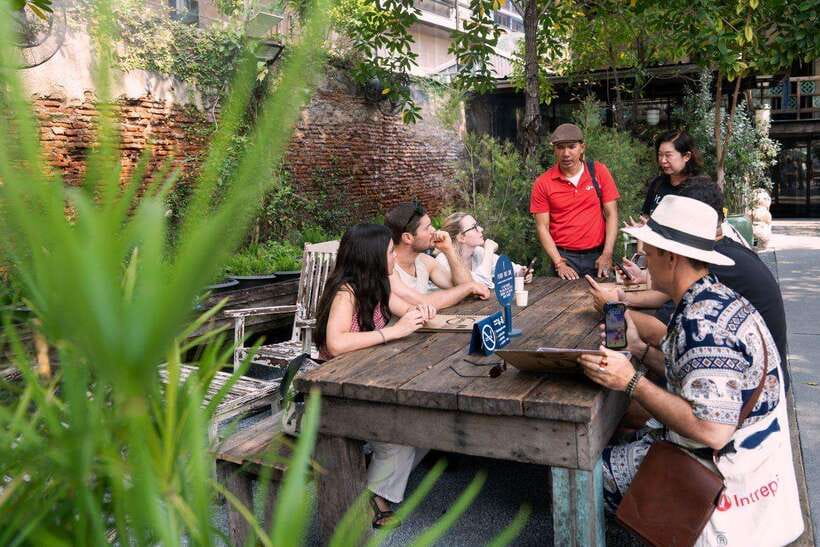
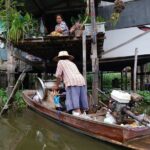
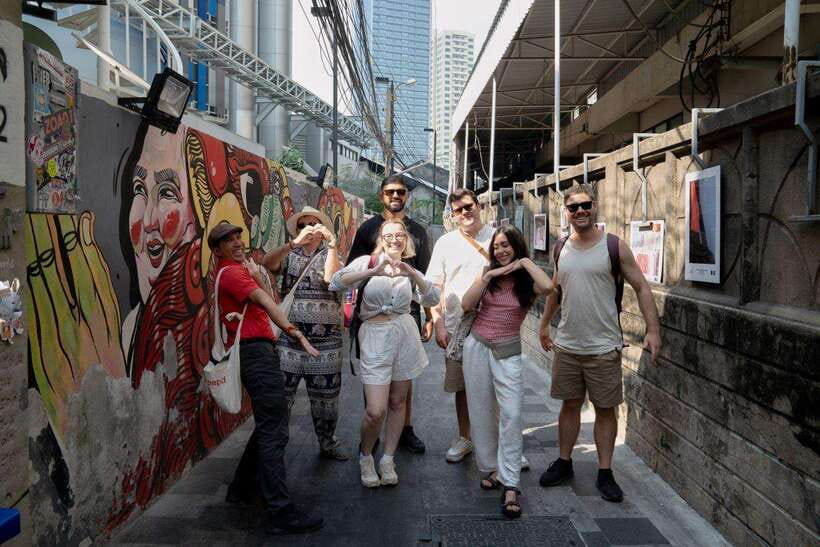
Talad Noi’s streets are where you’ll feel the neighborhood’s personality. Between major landmarks, you’ll see street art and make time for a relaxing riverside café stop.
This matters for two reasons. First, it gives your legs a break before the final walk into Chinatown. Second, it helps you slow down enough to actually look at the details beyond food: the signs, the textures, and the creative street touches that sit alongside religious and family-run spots.
Drinks are part of the included experience, and the list specifically calls out coffee/tea and boba tea. That café pause is also a good moment to check in with the guide—ask what you should try if you come back on your own later, or what dishes tend to sell out.
One more thing: because the tour covers narrow lanes, the guide’s navigation is part of the value. You’re not wandering randomly—you’re being steered through the right pocket of Talad Noi for what the tour is trying to show you.
You can also read our reviews of more tours and experiences in Bangkok
Hong Kong-style tastes meet Bangkok pace in Chinatown
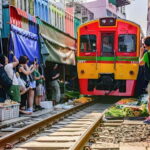
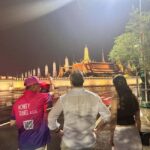
At some point, you cross into Bangkok’s Chinatown. The tour positions it as old-world charm meeting modern trends, and that’s exactly what you’ll notice: familiar food-energy streets alongside everyday Bangkok life.
This section is also a bridge from the focused sampling to the broader neighborhood atmosphere. You’ll keep moving with the guide, and the emphasis stays on seeing what’s meaningful in the area without trying to cover everything.
If you’re someone who likes to wander independently after a guided start, this tour can work like a warm-up. You finish at Si Phraya, and you’ll have a mental map of where the old lanes feel most interesting. Just remember that the tour itself is about 2 km on foot, so it’s designed to be efficient, not exhaustive.
Why the guide matters so much on a food-and-culture route
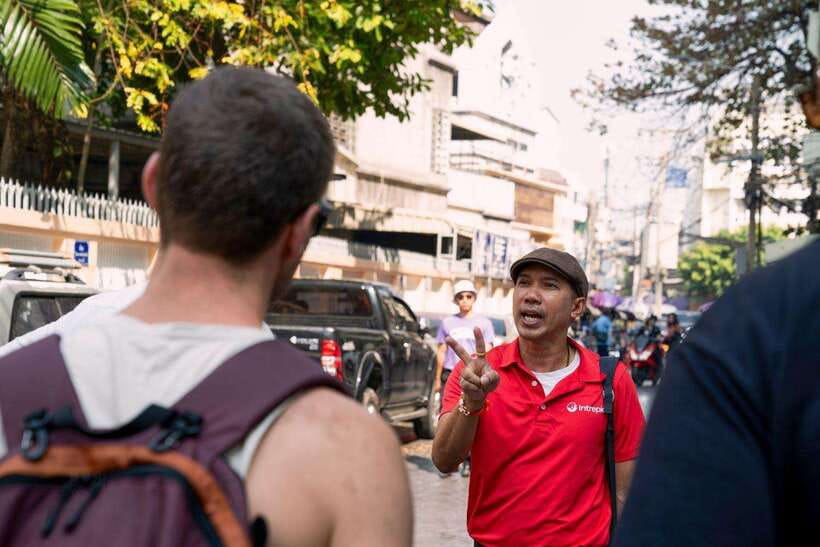
This is a small-group experience with a local English-speaking guide, and you’ll feel that immediately in how smoothly the route flows. When the group is capped at 12, the guide can tailor pacing and answer questions without rushing everyone through.
Some specific guide names have come up in past experiences—PK, Nana, and Bebe—and that’s a useful hint about service style. People tend to single out the guidance quality: friendly attitude, strong English, and enough time for questions.
What you’ll get from a good guide here isn’t just translation of dish names. It’s context. For example, it helps to know how turnip cake and chwee kueh fit into Thai-Chinese street food culture, or why the shrine’s architecture is something worth paying attention to. On a tour like this, context can make the difference between eating and learning.
Also, the dietary policy is clear: vegetarians can be accommodated if you request it at least 24 hours ahead. If you’ve dealt with tours that ignore dietary needs, this clarity is a plus.
Price and value: why $41 can make sense for this kind of walk
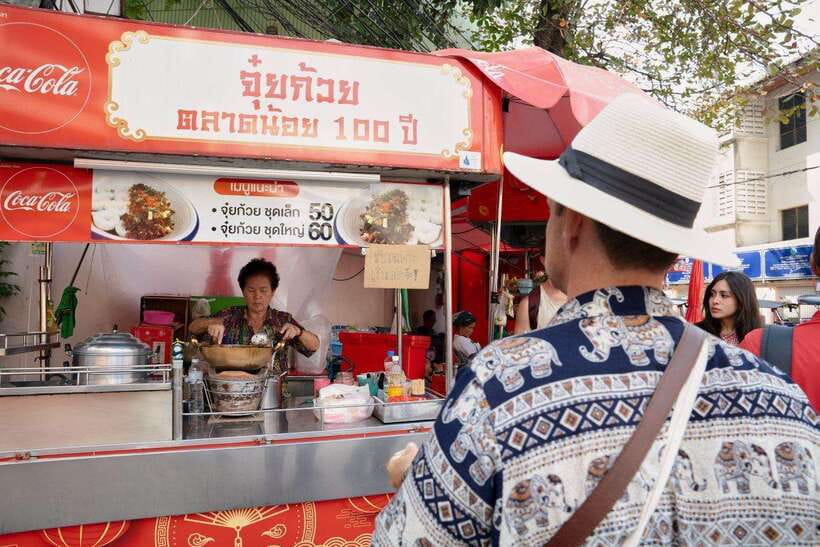
$41 per person looks simple on the surface, but the value comes from what’s bundled.
You’re paying for:
- A local English-speaking guide
- A guided walking route through Talad Noi
- Included food samples (turnip cake, chwee kueh, duck noodles soup, and more, plus drinks)
- Visits to Holy Rosary Church and the Chow Sue Kong Shrine
- A small-group size that keeps the experience manageable
If you tried to recreate this on your own, you’d likely spend time figuring out what to try, where to go next, and how to pair food stops with meaningful landmarks. By bundling food + guided site visits into a short walking route, the price is easier to justify.
Is it a bargain? It’s not “cheap eats” pricing. But for a 2 to 4.5 hour guided combo of culture and multiple included tastings, it’s positioned as a fair value—especially with group size capped at 12.
Timing, walking, and who should skip it
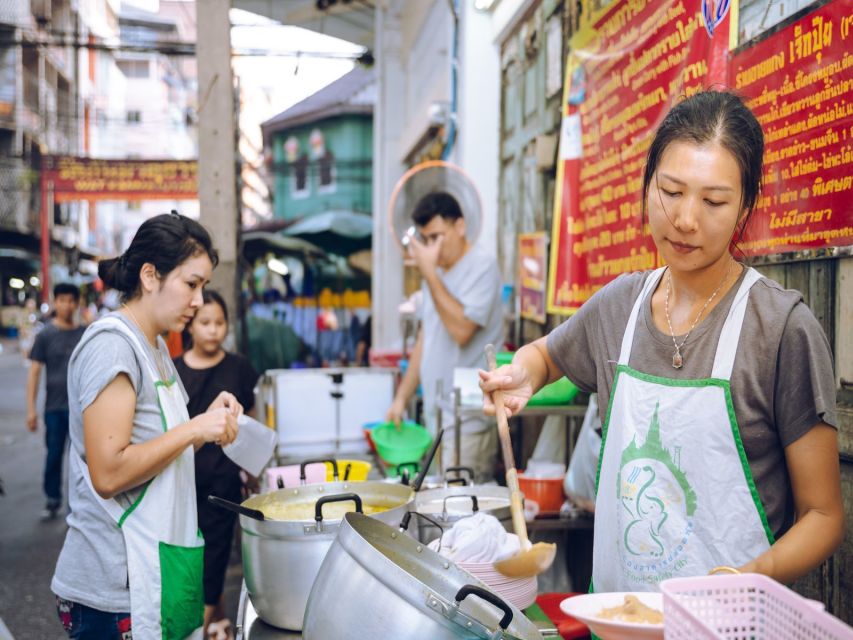
This tour runs 150 to 270 minutes, and the walking portion is about 2 km (1.2 miles). That’s not a long trek, but it is still a real neighborhood walk—so plan your day around it.
It’s also noted as not suitable for children under 8. If you’re traveling with young kids, you’ll want another option.
For everyone else, the best match is a traveler who wants:
- Guided explanations at the church and shrine
- Multiple street-food tastings (not just one snack)
- A route that ends cleanly instead of sprawling all day
If your priority is purely museum-style history or temple time with no food emphasis, this may not be the best fit. This is a “eat and learn as you go” experience.
Should you book this Talad Noi street-food and culture tour?
I’d recommend booking if you want a structured way to experience Talad Noi and Chinatown without spending hours deciding where to eat. The mix of Holy Rosary Church (1787), the Chow Sue Kong Shrine visit, and multiple Chinese-Thai food samples makes it feel like more than a simple snack run.
Skip it (or at least adjust expectations) if you’re looking for a long, deep Chinatown history day. This one is intentionally time-efficient, with a strong street-food focus and shorter landmark visits to keep the whole route moving.
If you’re flexible on where you eat and you like variety—turnip cake, chwee kueh, duck noodles, and Thai favorites like Phad Thai from Uncle Pom—this is the kind of Bangkok day that can turn a neighborhood you’ve heard of into one you actually understand.
FAQ
Where is the meeting point?
You’ll meet at River City Gate 1, in front of Starbuck on the first floor.
How long is the tour?
The duration is listed as 150 to 270 minutes.
How much walking is included?
The tour covers about 2 km (1.2 miles) of walking.
What are the main places you visit?
The tour includes Holy Rosary Church (built in 1787), the Chow Sue Kong Shrine, Hong Sieng Kong, and Chinatown, with the walk ending at Si Phraya.
Are food samples included?
Yes. Included samples can include turnip cake, chwee kueh, Chao Tha (duck noodles soup), and Phad Thai Uncle Pom, plus drinks.
What drinks are included?
The tour includes drinks such as coffee, tea, and boba tea.
Can you accommodate vegetarian diets?
Yes. Vegetarian dietary requirements can be accommodated if you provide details at least 24 hours prior. Other dietary requirements are not listed as supported.
Is there an English-speaking guide?
Yes, the tour includes a live local English-speaking guide.
Is private group service available?
Yes, a private group option is available.