REVIEW · AUDIO TOURS
Bangkok Self-Guided Audio Tour
Book on Viator →Operated by Uvamai Niche Tourism · Bookable on Viator
Bangkok can feel like a lot. This self-guided audio route helps you hit the big sights on your own schedule, with offline-ready audio and an interactive map that links every stop to its story.
What I like most is the flexibility: you choose when you start and finish, and you can set your own pace instead of marching with a group. The second big win is that the audio is packaged as one playlist plus a stop-by-stop map, so you can plan ahead or follow the suggested order.
The main drawback to keep in mind: some audio guides can feel general, and the presentation may not always be super polished, so it might not replace a good guidebook for deep details.
In This Review
- Key Things to Know Before You Press Play
- Why This Bangkok Audio Tour Works in Real Life
- Getting Your Audio Links: The Part You Want Done First
- How the 12 Stops Fit Together (and What to Watch For)
- Stop 1: Wat Traimit (Temple of the Golden Buddha)
- Stop 2: Chinatown in Bangkok
- Stop 3: Wat Phra Chetuphon (Reclining Buddha)
- Stop 4: Wat Arun (Temple of the Dawn)
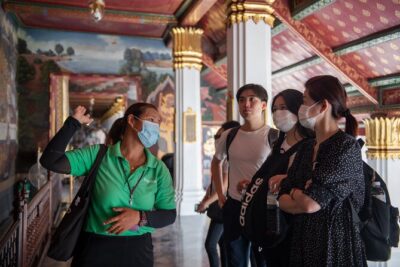
- Stops 5 and 6: The Grand Palace and Wat Phra Kaew
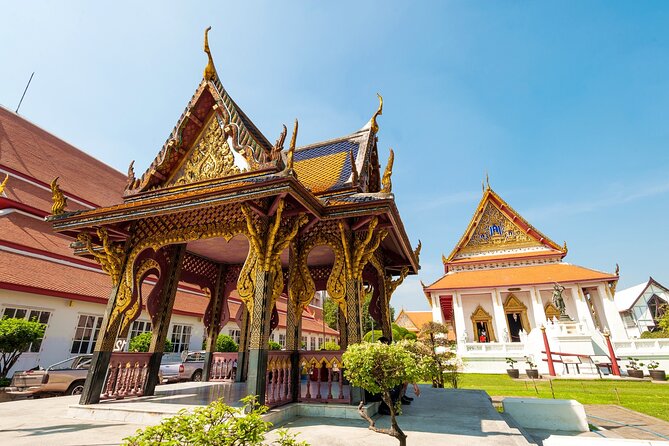
- Stop 7: Bangkok National Museum
- Stop 8: Wat Saket (Golden Mount)
- Stop 9: Wat Benchamabophit (Marble Temple)
- Stops 10 and 11: Bangkok Art & Culture Centre and Lumpini Park
- Stop 12: Museum of Contemporary Art (MOCA)
- Price and Value: Is $9 a Good Deal?
- Logistics You’ll Actually Care About
- Who This Tour Suits Best (and Who It Might Not)
- Should You Book This Bangkok Self-Guided Audio Tour?
- FAQ
- FAQ
- How much does the Bangkok Self-Guided Audio Tour cost?
- How long is the tour?
- Can I start and end the tour whenever I want?
- Is the audio available offline?
- Are temple and museum entry fees included?
- Do I need a special audio device or earphones?
- When do I get the access links?
Key Things to Know Before You Press Play
- Start whenever you want: No fixed departure time, and the tour ends wherever you choose
- Audio works offline: You can keep listening even without constant internet
- Map-to-audio links: Each attraction on the Google My Maps layer jumps you to that specific guide
- Built for 12 stops in ~3 hours: Expect about 10 minutes per location if you stick close to the flow
- Admission is mostly on you: Tickets are not included for most stops, so plan a small budget for entry fees
- Best for context, not depth: The audio is useful background, but it may not satisfy if you want very detailed storytelling
Why This Bangkok Audio Tour Works in Real Life
A self-guided tour only helps if the experience is easy to run while you’re walking. This one is built around two practical tools: a set of audio access links and a map where each pinned attraction is connected to its own guide.
In practice, you’re not stuck with one rigid script. You can move between stops, pause for photos, and spend extra time where you care. If a temple line is long, you’re not trapped. If you want to linger at a museum, you can. That freedom matters in Bangkok, where plans often change fast based on weather, crowds, or your own energy level.
The other thing I appreciate is that the tour is organized as 12 recognizable stops—big enough to feel like you’re covering the core sights, but structured enough that you won’t feel lost.
You can also read our reviews of more guided tours in Bangkok


Getting Your Audio Links: The Part You Want Done First
Before you go, you’ll receive an email on your chosen travel date with two links: one for the audio guides and one for the interactive map. The audio link is described as a secure SoundCloud web link, and the map link is a secure Google My Maps link.
Here’s the smart move: open both links before you head out for the day. That way, you can:
- Get your route set: either follow the suggested order or rearrange it
- Test the playback: make sure each stop’s audio loads correctly
- Plan for entry tickets: since most admissions are not included, knowing what’s next helps you budget
Because the tour is designed for offline listening, you’ll want to think about internet access ahead of time. The data says you can listen offline, but it does not explain exactly how the offline downloads work—so I’d treat it like this: if offline playback matters to you, do a quick check before you leave your hotel area.
Also note the tour includes a mobile ticket, but the audio device itself is not included. Bring earphones, and make sure your phone has enough battery.
How the 12 Stops Fit Together (and What to Watch For)
The tour is set up for about 10 minutes per stop, which adds up to roughly 3 hours total if you follow the pacing. That’s a great outline for your first visit, but you should treat it as a rhythm—not a law.
Below is what each stop gives you, based on the tour’s own focus points, plus practical tips for how to get more out of your time.
Stop 1: Wat Traimit (Temple of the Golden Buddha)
You start with the Temple of the Golden Buddha (Wat Traimit), where the big story is the world’s largest solid gold Buddha statue. The audio highlights the statue’s accidental discovery and why the temple matters in Thai Buddhism.
Practical take: since this is an early start, it’s a nice way to train your eyes for the day. Before you move on, look for what makes this Buddha special—shape, materials, and the setting. Even if you don’t spend a long time here, the audio context helps the next temples make more sense.
Tip: leave room to take a photo without blocking others. Early stops are often the calmest.
Stop 2: Chinatown in Bangkok
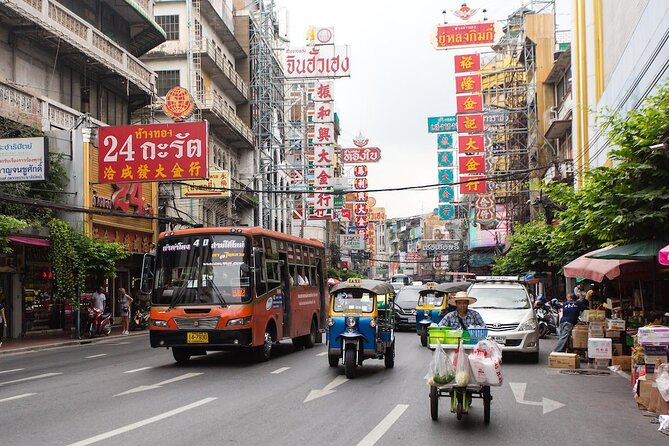
Next is Chinatown, focused on the Chinese community in Bangkok: cultural heritage, markets, and the street food scene.
Practical take: this stop works best if you treat it like a walking intermission. Use it to reset your senses. Let the audio give you the background, but then let the neighborhood do what neighborhoods do—show you the real Bangkok without needing a ticket.
If you’re aiming for a smooth route, plan that you may naturally slow down here. Market areas don’t behave like “10-minute” attractions.
You can also read our reviews of more tours and experiences in Bangkok


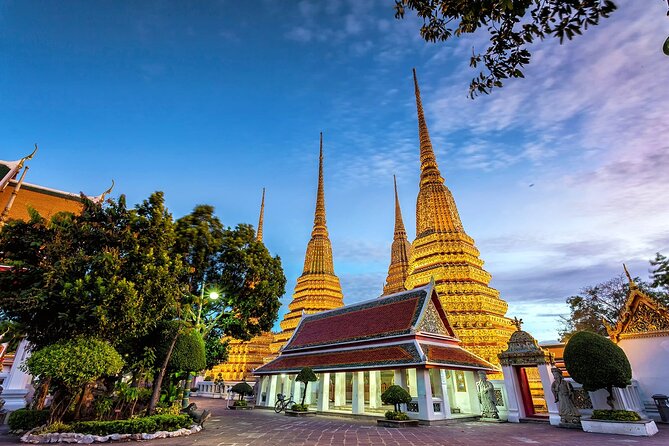
Stop 3: Wat Phra Chetuphon (Reclining Buddha)
Now you move to Wat Phra Chetuphon Wimon Mangkhalaram Rajwaramahawihan, described as Bangkok’s oldest and largest temple complex. This stop includes the Reclining Buddha, plus Thai medicine and massage context.
Good to know: the tour lists this stop as admission free. That’s a rare cost-saver in the itinerary, and it helps you keep the overall day within a budget.
Practical take: if you want to understand Thai religious life, this is a strong anchor. The Reclining Buddha image is easier to recognize than many symbols, so the audio can act like a guided “what you’re seeing” primer—even if the depth is basic.
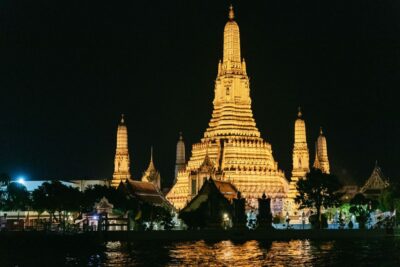
Stop 4: Wat Arun (Temple of the Dawn)
Temple of the Dawn (Wat Arun) gets the spotlight next. The audio focuses on the temple’s intricate porcelain decorations, plus symbolism in Thai Buddhism and how the temple evolved through different historical periods.
Practical take: Wat Arun is a visual stop. Don’t rush it just because the audio clock says 10 minutes. If the details are your thing—tiles, patterns, the overall silhouette—give it an extra minute or two.
Stops 5 and 6: The Grand Palace and Wat Phra Kaew
This is where the tour goes from “temple sites” to royal and sacred power.
- Stop 5: The Grand Palace
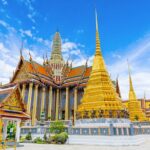
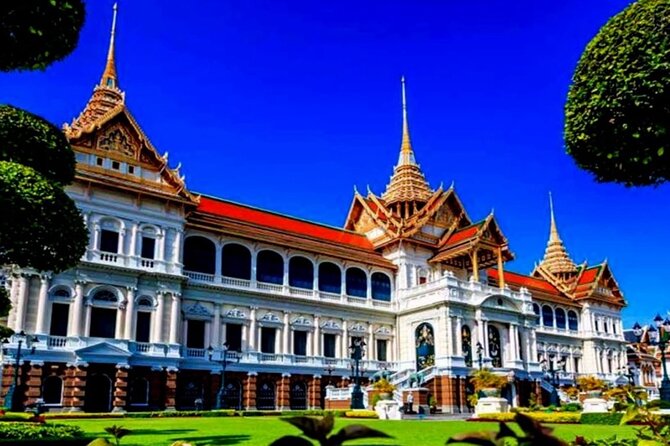
The audio frames it as the heart of Thai royalty, with a focus on its buildings and the palace’s role in Thai history and governance.
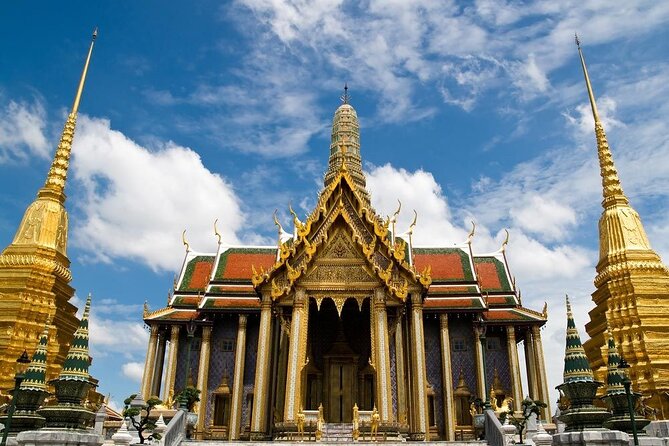
- Stop 6: Temple of the Emerald Buddha (Wat Phra Kaew)
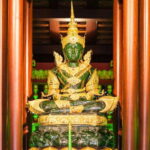
The audio centers on Thailand’s most sacred Buddhist temple within the Grand Palace complex and the legend of the Emerald Buddha.
Practical take: these two stops are connected in real life, and the tour reflects that by placing them back-to-back. If you enter and then immediately lose the thread, that’s not because you’re failing—it’s because palace complexes move on their own schedule. Use the audio and map to keep the mental map straight.
Also, the tour lists admission as not included for both of these stops, so be prepared to pay entry fees.
Stop 7: Bangkok National Museum
Next you step into Thailand’s story at the National Museum Bangkok. The audio’s focus is a timeline through prehistory to the Bangkok period, with artifacts that show Thailand’s cultural heritage.
Practical take: a museum stop is your chance to slow down. The audio here is likely more useful than in a street scene, because it gives you a narrative “through line” while you’re looking at objects.
If you’re short on time, prioritize the main galleries you can reach fastest. The audio can help you pick what to pay attention to, even if it doesn’t go deep.
Stop 8: Wat Saket (Golden Mount)
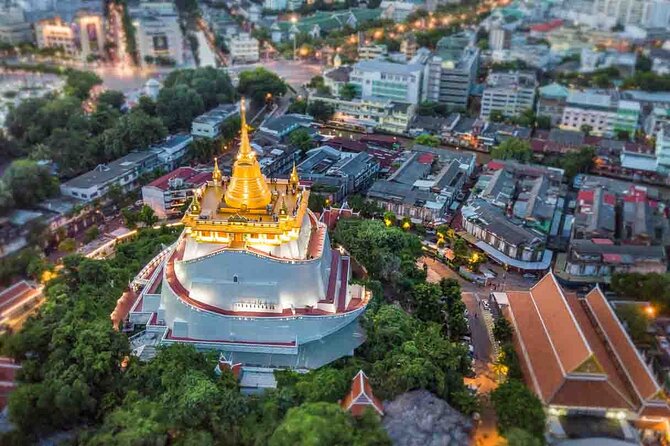
Now the itinerary turns upward to the Golden Mount (Wat Saket). The tour describes it as an artificial hill with panoramic views. It also covers construction during the Ayutthaya period and the temple’s significance in Thai Buddhist cosmology.
Practical take: if you want the view payoff, plan for the climb. The tour’s 10-minute pace is a suggestion; your real time depends on steps, crowds, and how often you stop for photos.
This is the kind of stop where a self-guided audio route is a plus. You don’t want someone telling you to move on when you’re about to hit the best part.
Stop 9: Wat Benchamabophit (Marble Temple)
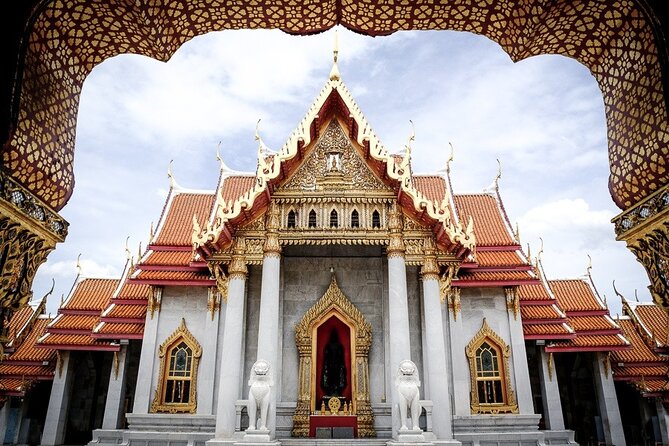
The Marble Temple is next, and the tour highlights the architecture: Italian marble and a mix of Thai and European styles.
Practical take: this is a great place to use the audio like a visual checklist. When you’re looking at a building, knowing what material and style features matter helps you notice more than you would otherwise.
Admission is not included for this stop, so keep that in mind.
Stops 10 and 11: Bangkok Art & Culture Centre and Lumpini Park
After temples and palaces, the itinerary pivots to modern culture and a break outside.
- Stop 10: Bangkok Art & Culture Centre
The audio focuses on contemporary Thai art and culture and how Thailand’s evolving art scene fits into the global contemporary art world. This stop is listed as free.
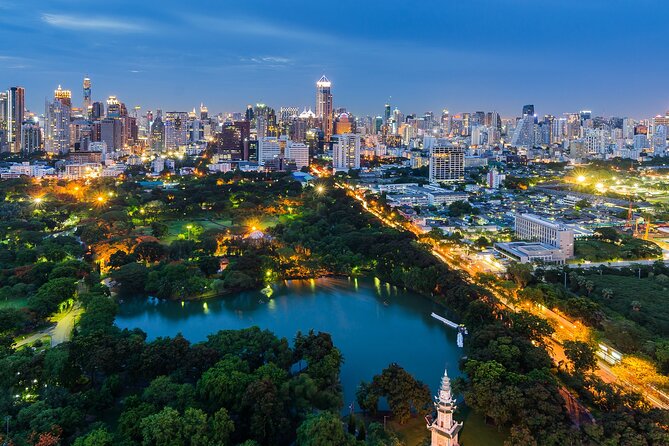
- Stop 11: Lumpini Park
The audio treats Lumpini Park as a green oasis with history as a royal gift and its role as a recreational space.
Practical take: this pairing is smart because it balances indoor and outdoor energy. If you’re doing this tour in one day, these two stops can keep you from overheating and burning out on sacred architecture.
Stop 12: Museum of Contemporary Art (MOCA)
The last stop is the Museum of Contemporary Art (MOCA). The tour describes it as Thailand’s largest private contemporary art museum and focuses on modern artistic movements and cultural significance.
Practical take: this ending works best if you still have curiosity left. Contemporary art can be hit-or-miss depending on your taste, so treat this as an optional “if I’m still into it” finale. Since admission is not included, you’ll want to decide before you get fully committed.
Price and Value: Is $9 a Good Deal?
At $9 per person, this tour is priced like a value add-on, not like a full-service guided day. That makes sense because what you’re buying is the structure, the audio content, and the map layer—not transportation or entry tickets.
So the real question isn’t Is it cheap? It’s: does it help you see more for less?
Here’s the balanced answer:
- If you want basic historical context while you walk, the audio-and-map format is useful, especially for keeping track of why each site matters.
- If you want deep, highly detailed explanations, the audio may feel too general. One of the most notable limitations from the experience feedback is that the guides can come off as superficial and not well translated, to the point where it can feel like you’re reading something you could find elsewhere.
Still, the “good to have references” idea is key. Even if the audio isn’t perfect, the combination of stop order, quick summaries, and map navigation can reduce the mental load. That’s real value.
Logistics You’ll Actually Care About
A few practical points based on the tour details:
- Duration: about 3 hours total
- Most travelers can participate: the tour is described as broadly doable
- Private tour/activity: only your group participates
- Access window: link validity is stated up to 6 days, so you can stretch it out if you want
- Near public transportation: useful if you plan to hop between stops by metro or bus
- No entry fees included: except Wat Phra Chetuphon (listed as free), you should expect to pay for admission where required
- You supply: earphones and internet/Wi-Fi if needed for your device use
Since it’s mobile and self-guided, your phone becomes the tour guide. Keep it charged, and consider downloading offline audio ahead of time if that option truly works the way you need.
Who This Tour Suits Best (and Who It Might Not)
This Bangkok Self-Guided Audio Tour is a good match if you:
- want the freedom to set your own pace
- like wandering temple complexes without a guide telling you where to stand
- need an organized route so you don’t waste time guessing between far-apart sights
- appreciate having an itinerary map that links each stop to its audio
It’s less ideal if you:
- want very detailed storytelling at every site
- get frustrated when audio feels general or awkwardly translated
- expect entry fees and transport to be handled for you
Should You Book This Bangkok Self-Guided Audio Tour?
If you’re doing Bangkok for the first time and want an efficient way to cover major landmarks, this can be a solid, low-cost structure. The best reason to book is the combination of flexibility + map navigation + audio access. For $9, you’re buying a route planner with history context, not a high-production guided lecture.
Just go in with realistic expectations about the audio depth. If you’re the type who needs specifics and nuanced explanations, you might prefer supplementing it with a guidebook or doing a separate human-led tour for the sites you care about most.
Also, because this experience is non-refundable, treat it like a plan you’ll stick with unless you’re sure your dates work.
FAQ
FAQ
How much does the Bangkok Self-Guided Audio Tour cost?
It costs $9.00 per person.
How long is the tour?
It’s listed as about 3 hours.
Can I start and end the tour whenever I want?
Yes. Since it’s self-guided, you can choose your starting and ending point at your convenience.
Is the audio available offline?
Yes, the tour is described as playable offline.
Are temple and museum entry fees included?
Most admission fees are not included. Wat Phra Chetuphon (the Reclining Buddha complex) is listed as free.
Do I need a special audio device or earphones?
Audio devices (earphones and internet/Wi‑Fi) are not included, so you’ll need your own phone and earphones.
When do I get the access links?
You receive confirmation at booking, and then an email with two access links (audio guide and map) is sent on your selected travel date before your starting time.