REVIEW · AUDIO TOURS
Bangkok’s Wireless Road: A Self-Guided Audio Tour
Book on Viator →Operated by VoiceMap Audio Tours · Bookable on Viator
Wireless Road turns into a storybook. This self-guided audio walk uses VoiceMap so the guide talks exactly where you are, starting at Phloen Chit BTS and looping through the area toward Lumpini. You get grand-city views, then slower green moments, all without waiting for a group.
I like the way Paul Jorgensen connects everyday things to Thai beliefs and Bangkok’s development. I also like the offline setup, with maps and audio ready in advance, so you can keep your phone in your pocket and focus on walking.
The main drawback is practical: you’ll need a smartphone (and earphones), and this is a focused neighborhood walk rather than a long list of major attractions.
In This Review
- Key things to know before you go
- Wireless Road in one loop: Phloen Chit to Lumpini, no detours
- Paul Jorgensen’s Bangkok context: why the stories matter on the street
- Embassy grounds, rain trees, and the story behind a mall
- The Green Mile between Lumpini and Benjakiti parks
- Hindu shrines and Bangkok symbolism: Trimurti, the flag, and the number nine
- Food, color, and the human side of modern Bangkok
- Price and value: is $7.99 a good deal?
- Timing, pacing, and what to bring
- Where this tour fits best in your Bangkok trip
- Should you book Bangkok’s Wireless Road audio walk?
- FAQ
- How much does the Wireless Road audio tour cost?
- How long is the walk?
- Where do I start and where do I finish?
- Do I need an internet connection?
- Who is the audio guide?
- What do I need to use the tour?
- Is this tour private?
- When can I take the tour?
- Are any attractions or tickets included?
- Is it refundable if plans change?
Key things to know before you go
- Offline-ready audio and maps in the VoiceMap app mean you can tour without relying on data.
- Automatic, time-and-place audio helps you stay oriented while you walk at your own pace.
- Phloen Chit to Lumphini and back gives you a clear route without complicated decisions.
- Embassy-to-mall history, rain trees, and park connections add meaning to what looks ordinary.
- Shrines and symbolism (including the Hindu god Trimurti) turn small details into big context.
Wireless Road in one loop: Phloen Chit to Lumpini, no detours
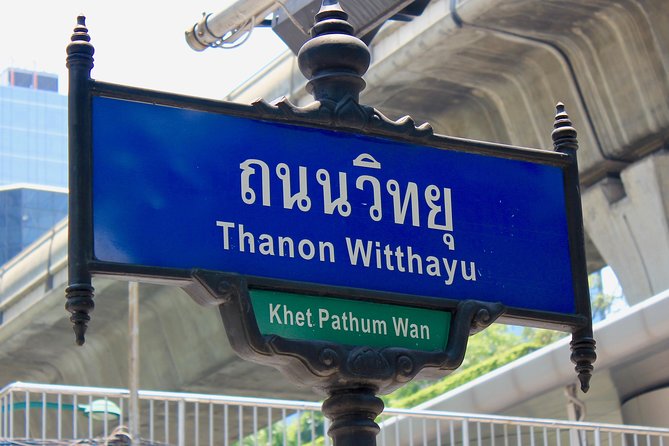
This tour is built around an easy walking rhythm. You start at Phloen Chit BTS, then move through the Wireless Road area, reaching the green side around Lumphini Park before returning back to the start. The duration lands around 50 minutes to 1 hour, which makes it a great fit for a first half-day in Bangkok or a quick day-to-night add-on.
What makes this loop work is that it’s not trying to cram in distant stops. You’re walking a neighborhood where the city’s big themes are visible if you know what to look for. Expect major buildings, embassy grounds, trees that feel almost planned, and those Bangkok street elements you normally pass without thinking.
You also control the pace. Since the audio plays automatically at the right time and place, you don’t have to tap every few minutes. Still, you can move slower when you want photos or when the sidewalks are busy.
You can also read our reviews of more guided tours in Bangkok



Paul Jorgensen’s Bangkok context: why the stories matter on the street
The audio is guided by local historian Paul Jorgensen, and the tone is practical: why a thing exists, what it signals, and how it connects to Bangkok’s growth. You’re not only learning names and dates. You’re learning how to read the city, even if you don’t speak Thai.
A few themes are built into the route. You’ll hear about how Bangkok developed, and you’ll get explanations for beliefs you might spot in tiny roadside reminders, like spirit houses. You’ll also hear about why Thai culture puts value on color and small symbolic numbers—details you’d likely miss if you were just sightseeing with a printed guide.
This is the real value of an audio tour like this: the city stays interesting even after you’ve seen the obvious. You start paying attention to things like the groups you see in traffic (including motorcycle taxi patterns), Hindu figures you notice in corners, and everyday spots such as convenience stores that reveal how modern life fits around older belief systems.
Embassy grounds, rain trees, and the story behind a mall
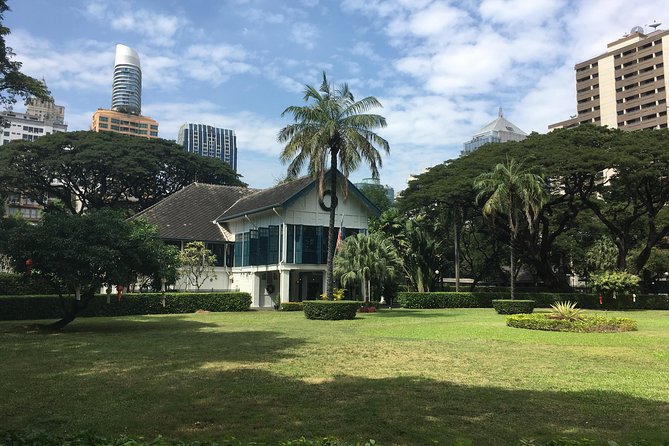
One of the most “wait, that’s what I’m seeing?” moments comes when the tour talks about a shopping mall that grew out of the British Embassy grounds. In Bangkok, large compounds and diplomatic spaces shaped land use for decades. When those sites change, the city’s map changes too, even if the sidewalks still feel familiar.
Standing in that area with the audio running, you get a mental before-and-after. You start to understand how power and planning left a footprint, and how that footprint can later become everyday commerce. It’s a useful lens because Wireless Road today is a mix of business, retail, and transit—not a single “type” of place.
Another stop spotlights entrepreneur Nai Lert, credited for the neighborhood’s celebrated rain trees. These trees aren’t just scenery. The audio frames them as part of how the neighborhood earned its greener feel, and why people notice and care about shade where Bangkok heat can hit hard. If you time your walk toward cooler hours, you’ll feel the benefit more than you expect.
One small caution: rain trees and park-adjacent areas can be cooler under canopy, but sidewalks can still be exposed. Wear shoes you don’t mind on long pavement, and bring water if you know you get thirsty easily.
The Green Mile between Lumpini and Benjakiti parks
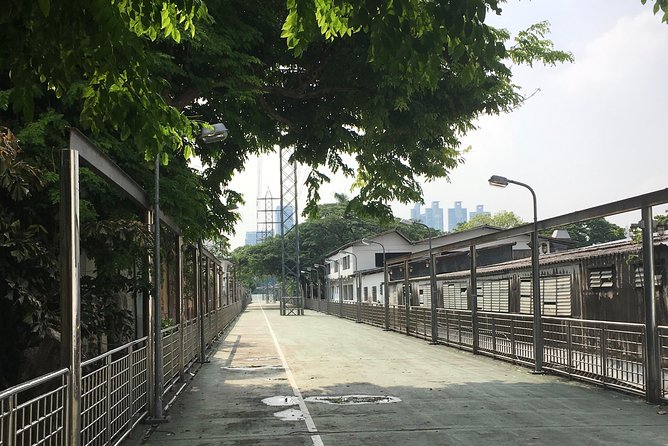
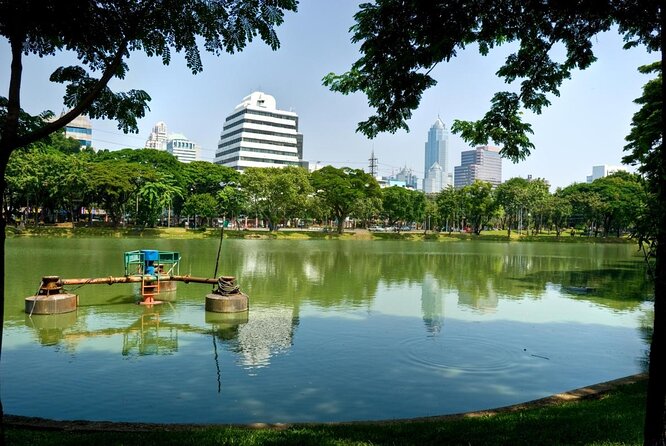
The tour calls out the Green Mile, a special pedestrian pathway linking Lumphini and Benjakiti parks. This is the part where your walk shifts from dense city energy to something that feels more intentional—like Bangkok decided to thread a green corridor through busy areas.
What I like about this section is that it teaches you to look for connections, not just destinations. Parks matter more when you see how people move between them. A path like this becomes a local lifestyle tool: a corridor for strolling, commuting on foot, and taking a break from traffic noise.
If you’re the kind of traveler who enjoys “in-between places,” this is where the audio really earns its keep. You’re not just moving from point A to point B. You’re learning that Bangkok has planned moments that encourage walking, and that those moments connect different parts of the city’s green system.
Hindu shrines and Bangkok symbolism: Trimurti, the flag, and the number nine
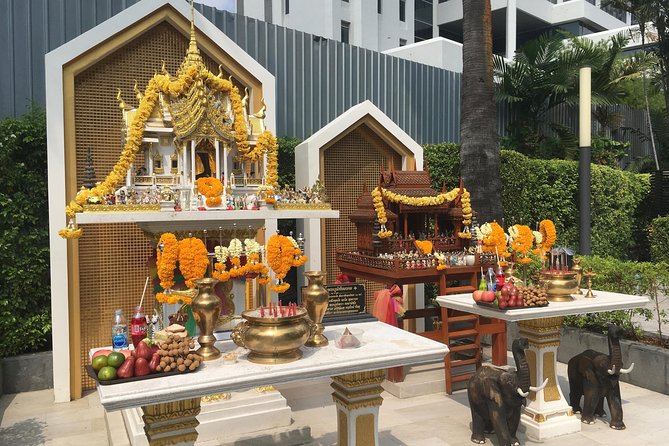
Wireless Road is full of visual cues, but many are subtle. The audio helps you notice them without turning your walk into a museum scavenger hunt.
One clear example is a shrine connected with the Hindu god Trimurti. Even if you don’t know the religious details, the audio gives you enough context to recognize what you’re looking at and why it shows up. In Bangkok, shrines and statues often sit in the spaces where people work, shop, and travel—so they’re not just religious landmarks. They’re part of daily rhythm.
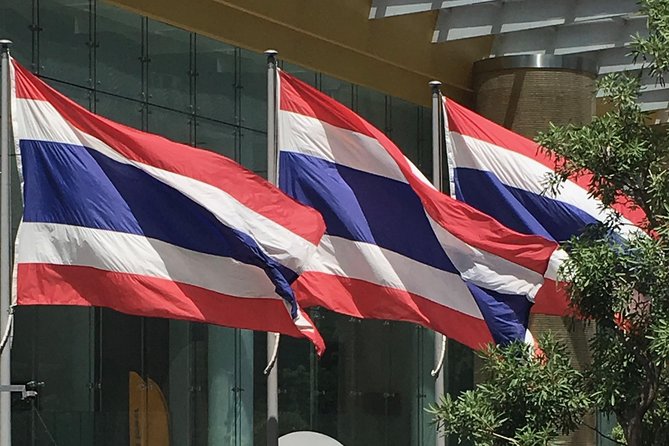
You’ll also hear about other symbols tied to Thai beliefs and identity, including the Thai flag and the number nine. These aren’t random trivia drops. The point is to show you that Thai culture uses visible signs to communicate meaning, good fortune, and community values.
Then there are the tiny city-theater moments: the audio mentions spirit houses, and it also references Hindu gods appearing in everyday settings. Once you know you’re going to hear about these, your eyes start treating street details like information instead of clutter.
Practical tip: if you want photos, keep your phone ready only when needed. The audio is designed to run automatically with your location, so it’s easier if you don’t constantly stop to check directions.
You can also read our reviews of more tours and experiences in Bangkok



Food, color, and the human side of modern Bangkok

This tour doesn’t treat Bangkok like a postcard. It points you toward the human reasons behind what you see.
You’ll learn about why food and color matter to Thais—not as abstract art history, but as part of how people express identity and mood. Bangkok can feel like it’s moving fast, but color gives it structure. It shows up on signs, clothing, offerings, and building details. The audio helps you notice that this isn’t random decoration.
The walk also touches on how Bangkok organizes daily life in practical ways. You’ll hear stories about the presence of motorcycle taxis and about the role of convenience stores. These are the kinds of things that make Bangkok feel like Bangkok. The audio makes them more meaningful by connecting them to how the city functions and who relies on what.
Price and value: is $7.99 a good deal?
At $7.99 per person, this is priced like a low-cost way to get a guide’s brain without paying for a full guided group tour. The real value comes from two factors.
First, you get lifetime access to the audio tour. That matters in Bangkok because your schedule often changes. If you come back later in the trip or want to re-walk a portion with fresh energy, you can.
Second, it’s a self-paced walk with offline audio and offline maps. You’re not paying for transportation time or waiting. You’re paying for interpretation that can turn a standard walk into a “now I get it” experience.
Could you do it cheaper? Yes—by walking the route yourself and reading casually. But if you want context on why embassies, trees, shrines, symbols, and neighborhood names fit together, paying for the audio is a smart shortcut.
Timing, pacing, and what to bring

The tour is available any time of day (it’s listed as open from 12:00 AM to 11:59 PM). That freedom is ideal if your day is already packed. You can fit the walk before dinner, between museum stops, or on a lighter day when you still want Bangkok stories.
Because it uses a smartphone, plan around that. You’ll need:
- your phone (since smartphone is not included)
- the VoiceMap app
- earphones/headphones
- comfort items for walking (good shoes, and water if you tend to run warm)
If you prefer to tour quietly, this setup is great. Put your phone in your pocket, start the audio in the app, and let it play when you reach each point. The route stays coherent because it starts and ends at the same place and returns along the same general area.
Also, note that it’s listed as private for your group, so you won’t be sharing the experience with strangers.
Where this tour fits best in your Bangkok trip
I’d book this when you want cultural context without a big time commitment. It’s especially strong early in your trip, because it teaches you how to see Wireless Road. Once you’ve learned the meanings behind the symbols and street details, your later sightseeing will feel sharper.
It’s also a good choice if you like structure but hate rushing. You get an organized walk, but you don’t have to follow a tight schedule. And because the audio is offline-ready, you can use it even when your connection is spotty.
If you’re looking for heavy museum time, this likely won’t replace that. This is a walking story tour of the Wireless Road/Lumphini area, with culture tucked into the corners.
Should you book Bangkok’s Wireless Road audio walk?
Yes, if you want to turn a simple neighborhood walk into a story you can actually use. The combination of Paul Jorgensen’s explanations, the offline VoiceMap setup, and the focused loop from Phloen Chit BTS through green spaces makes it good value for $7.99.
You should think twice if you don’t like using your phone for tours or you’d rather spend your time at ticketed attractions. Also, if you struggle with walking in the heat, plan your timing carefully and bring water.
If you’re game for a smarter way to look at Bangkok, this is one of those small purchases that can change how your whole trip feels.
FAQ
How much does the Wireless Road audio tour cost?
It costs $7.99 per person.
How long is the walk?
It runs about 50 minutes to 1 hour.
Where do I start and where do I finish?
You start at Phloen Chit BTS Station and the activity ends back at the same meeting point.
Do I need an internet connection?
No. The audio, maps, and geodata are available offline in the VoiceMap app.
Who is the audio guide?
The tour is guided by local historian Paul Jorgensen.
What do I need to use the tour?
You’ll need a smartphone with the VoiceMap app and earphones. A smartphone is not included.
Is this tour private?
Yes. Only your group participates.
When can I take the tour?
It’s available daily, listed from 12:00 AM to 11:59 PM.
Are any attractions or tickets included?
No. Tickets or entrance fees to any museums or other attractions along the way are not included.
Is it refundable if plans change?
No. This experience is non-refundable and cannot be changed for any reason.