REVIEW · COOKING CLASSES
Sukhumvit: Hands-on Thai Cooking Class & Market Tour in BKK
Book on GetYourGuide →Operated by House of Taste Thai Cooking School · Bookable on GetYourGuide
Bangkok tastes better when you cook it. This Sukhumvit class pairs a market ingredient hunt with curry paste from scratch, taught in English and Thai by friendly chefs like April, Jay, and Pitch.
You’ll make four traditional dishes with step-by-step guidance, then leave with recipes to recreate the flavors later. The only real watch-out is the meetup: the morning location can be a little hard to spot if you arrive early and there’s little obvious signage.
In This Review
- Key highlights worth knowing
- Sukhumvit Meet-Up: Find the Kitchen Fast (and Why It Matters)
- Market Tour Morning: How You Learn What to Buy
- The Core Experience: Hands-On Cooking With Curry Paste From Scratch
- What your station work feels like
- Food you make while you’re there
- The Weekly Dish Rotation: Pick Your Favorite Day
- Monday
- Tuesday
- Wednesday
- Thursday
- Friday
- Saturday
- Sunday
- Afternoon and Evening Sessions: Mango Carving Instead of the Market
- Eating What You Cook: Why This Class Feels Different
- No MSG and Dietary Swaps: Helpful for Real Life
- Price and Value: Is $45 Fair for 210 Minutes?
- Who This Class Fits Best (and Who Should Think Twice)
- Should You Book This Sukhumvit Thai Cooking Class?
- FAQ
- Where do I meet for the morning class?
- Where do I meet for the afternoon or evening class?
- Is the market tour included?
- What dishes will I cook?
- Does the class use MSG?
- Can you accommodate dietary needs or allergies?
Key highlights worth knowing
- Morning market tour (only for morning sessions) for freshest vegetables, herbs, and spices
- Hands-on curry paste and coconut milk prep, not just watching
- Four dishes you cook and eat while they’re hot
- Weekly dish rotation so you can match your favorites to the day
- Family of flavors: som tum, pad thai, curries, tom yum, larb, plus mango sticky rice
- No MSG and ingredient substitutions possible with advance notice
Sukhumvit Meet-Up: Find the Kitchen Fast (and Why It Matters)
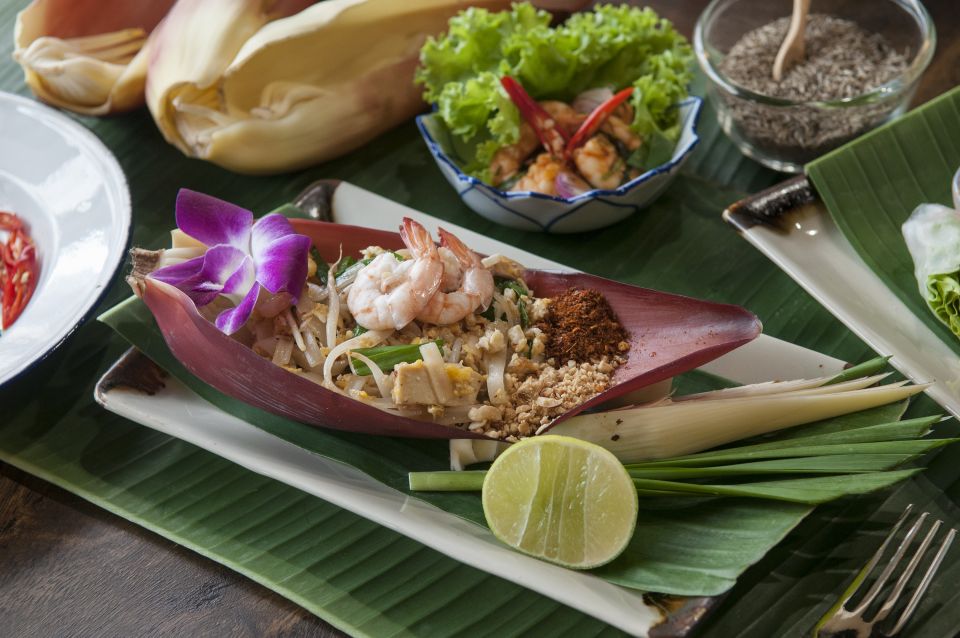
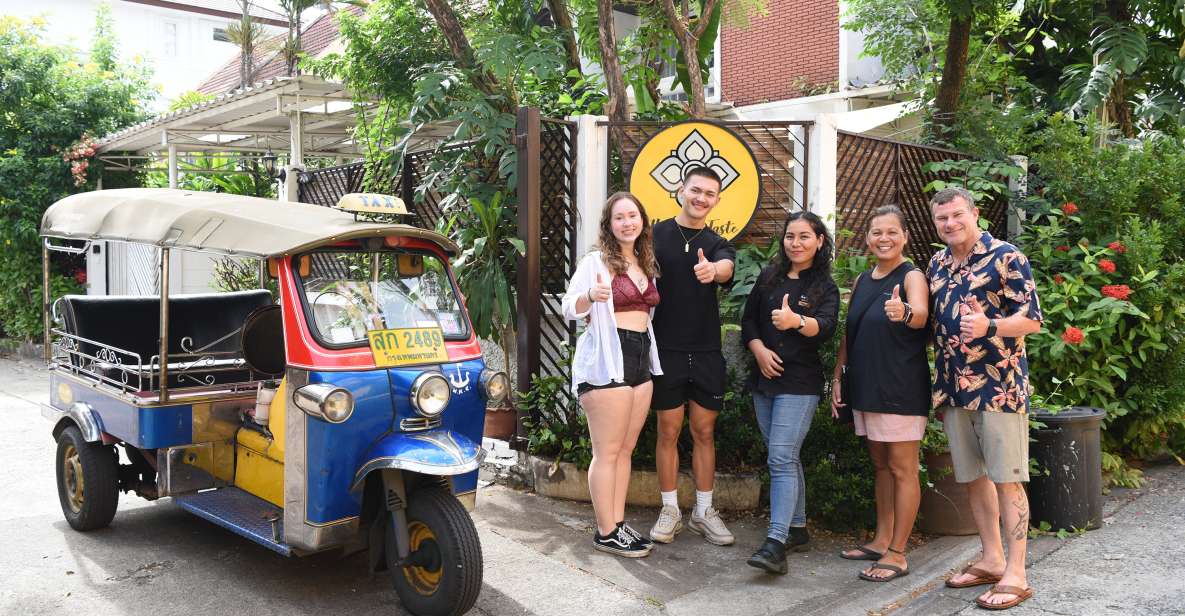
The experience starts at a very specific spot in central Sukhumvit: for the morning class, you meet at the street floor of BTS Asoke Exit 3 and MRT Sukhumvit Exit 3. If you’d rather, you can pin the meeting point to Hey! Coffee at MRT Sukhumvit.
Why I think that matters: in Bangkok, the difference between a smooth start and a stressful one is often just where you stand when the group assembles. A few people noted confusion when they arrived early and didn’t immediately see clear entry cues, so do two things: arrive close to your start time and have your confirmation handy. Comfortable shoes help too, because even the “easy” parts involve walking.
For the afternoon and evening classes, the meeting point shifts to the school in Sukhumvit 4. This matters because it changes the pace of your day: morning is about ingredients outdoors first; later sessions start inside with a Thai cooking school setup.
You can also read our reviews of more shopping tours in Bangkok


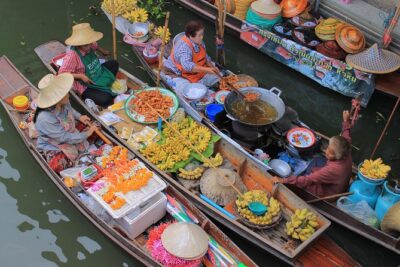
Market Tour Morning: How You Learn What to Buy
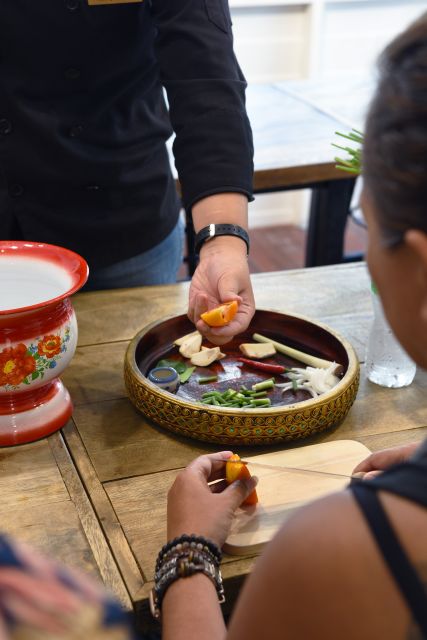
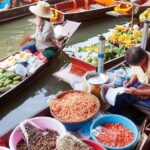
Only the morning class includes the market tour. You’ll head out to discover nearby ingredients with a guide, then come back to cook.
Here’s what you should expect to learn during the market portion:
- How to identify good vegetables and the right produce texture for Thai salads and stir-fries
- How herbs and spices behave in Thai cooking (not just what they are, but how they’re used)
- The practical side of sourcing items you may struggle to find at home, especially when it comes to Thai curry paste ingredients and flavor bases
This isn’t a museum-style talk. You’re looking at items that become part of what you’ll cook a few hours later, which makes everything stick. If you like cooking with real ingredients and not substitutions you made up on the spot, this is a strong reason to pick the morning session.
The Core Experience: Hands-On Cooking With Curry Paste From Scratch
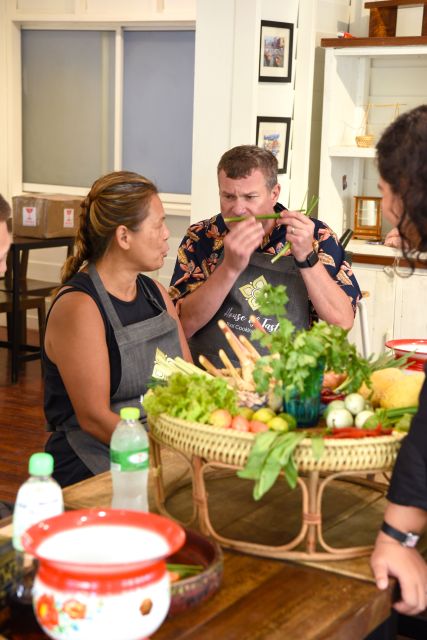
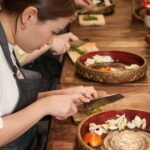
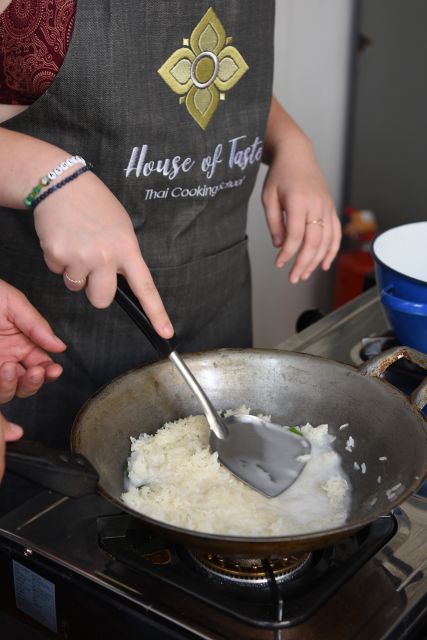
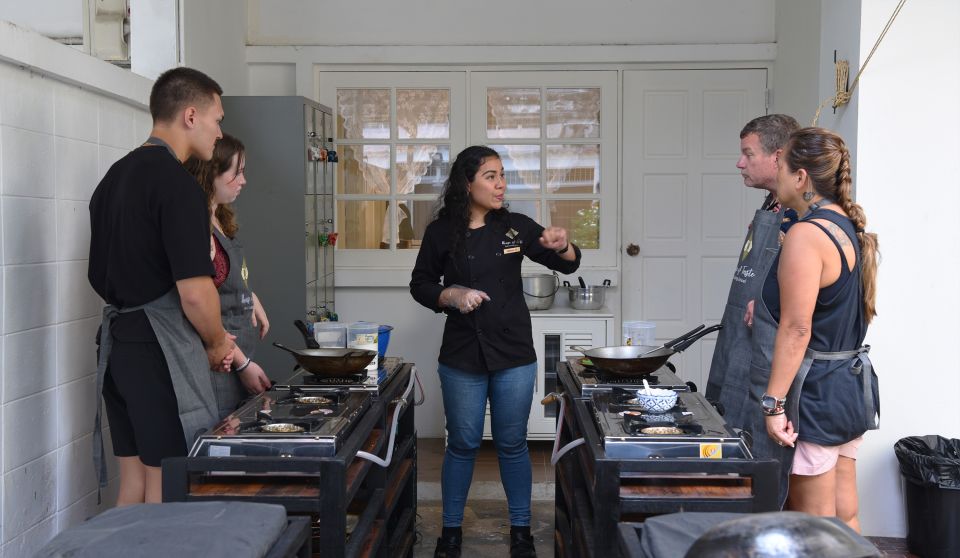
The heart of the class is the two hours of cooking, where you make four dishes and eat them hot and fresh. It’s structured so beginners don’t feel lost: instructors break tasks into clear steps, and the workstations stay organized so you can focus on flavors instead of logistics.
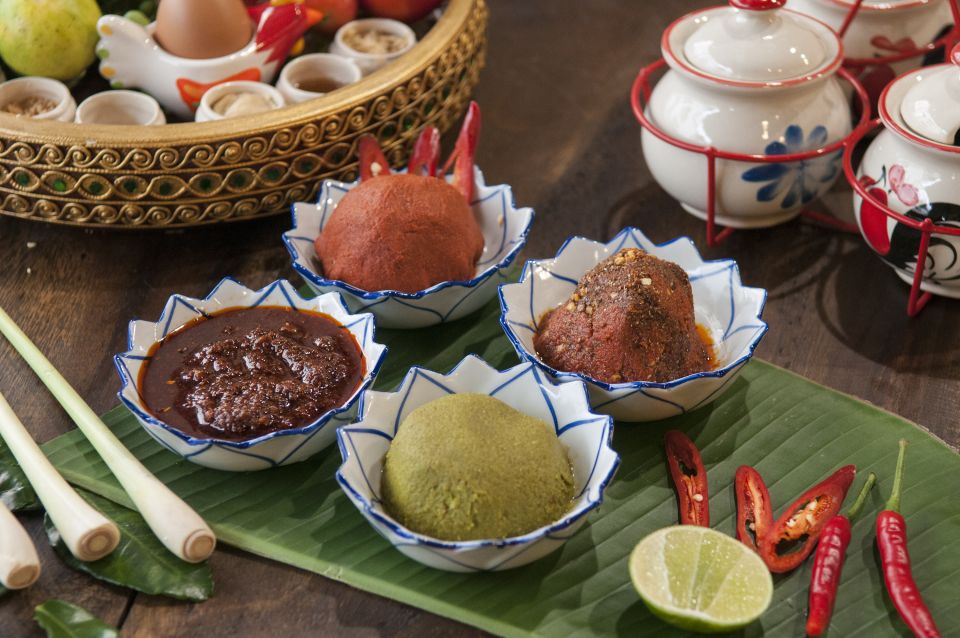
One of the biggest wins is the curry paste component. You’re not relying on a store-bought paste. You learn how to build curry flavor from scratch and how coconut milk fits into the process. That changes how you’ll cook later—especially if you ever tried green curry or red curry and thought, why doesn’t mine taste the same?
What your station work feels like
Most classes are either hands-on or instructional. This one aims for both:
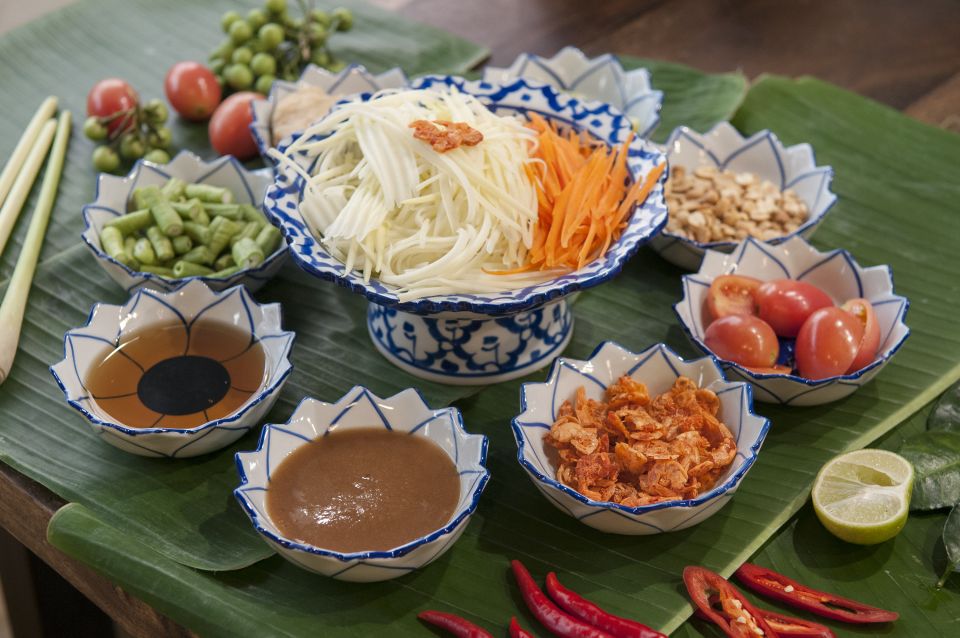
- You get ingredient trays and clear direction
- You learn what each flavor step is doing (spice base, balance, heat, aroma)
- You cook, plate, and taste the results as you go
From real experiences, the teaching style often includes humor and lots of back-and-forth. Guides like April, Jay, and Pitch were repeatedly described as upbeat, friendly, and very clear when explaining ingredients and technique. That tone matters, because Thai cooking can feel intense if you’re rushed or unsure.
Food you make while you’re there
You’ll get four dishes per session. The menu rotates by day (details below), but across the week you’ll see the same dependable Thai set pieces: papaya salad, stir-fried noodles, chicken curries, soups, and mango sticky rice.
You can also read our reviews of more tours and experiences in Bangkok




The Weekly Dish Rotation: Pick Your Favorite Day
The class changes dishes depending on the day you book. That’s useful: you can match your schedule to the Thai flavors you crave instead of hoping you’ll get the ones you want.
Here’s the weekly lineup of what’s scheduled:
Monday
- Thai Papaya Salad (Som Tum)
- Stir-Fried Noodles with Shrimp (Pad Thai)
- Green Curry with Chicken
- Mango Sticky Rice
Tuesday
- Spicy Coconut Soup with Chicken (Tom Kha Gai)
- Stir-Fried Thai Basil Chicken (Pad Krapow Gai)
- Red Curry with Chicken
- Mango Sticky Rice
Wednesday
- Hot and Sour Soup with Shrimp (Tom Yum Goong)
- Stir-Fried Flat Rice Noodles with Chicken (Pad See Ew)
- Green Curry with Chicken
- Mango Sticky Rice
Thursday
- Spicy Minced Chicken Salad (Larb Gai)
- Stir-Fried Noodles with Shrimp (Pad Thai)
- Panang Curry with Chicken
- Mango Sticky Rice
Friday
- Thai Papaya Salad (Som Tum)
- Stir-Fried Thai Basil Chicken (Pad Krapow Gai)
- Red Curry with Chicken
- Mango Sticky Rice
Saturday
- Spicy Coconut Soup with Chicken (Tom Kha Gai)
- Stir-Fried Noodles with Shrimp (Pad Thai)
- Green Curry with Chicken
- Mango Sticky Rice
Sunday
- Hot and Sour Soup with Shrimp (Tom Yum Goong)
- Stir-Fried Flat Rice Noodles with Chicken (Pad See Ew)
- Panang Curry with Chicken
- Mango Sticky Rice
A practical tip: if you’re a curry person, you’ll get multiple curry styles across the week (green, red, and panang). If you love soups, look for Tom Yum Goong or Tom Kha Gai days. And if you’re trying to hit the most classic Thai “taste journey,” most days include mango sticky rice, plus one noodle dish.
Afternoon and Evening Sessions: Mango Carving Instead of the Market
Not sure you want a morning start? The afternoon and evening classes swap the market tour for mango carving.
In these later sessions:
- You still get ingredient guidance, but the introduction happens at House of Taste Thai Cooking School in Sukhumvit 4
- You do not get the market walk
- You get the extra cultural craft piece: mango carving
If you’re choosing between them, think like this:
- Pick the morning if you care about ingredient selection and want to see the raw materials up close.
- Pick the afternoon/evening if you’d rather start cooking right away and add a dessert presentation skill.
Either way, the cooking core stays the same: you work through making dishes from scratch, including the curry paste element, and you eat what you make.
Eating What You Cook: Why This Class Feels Different
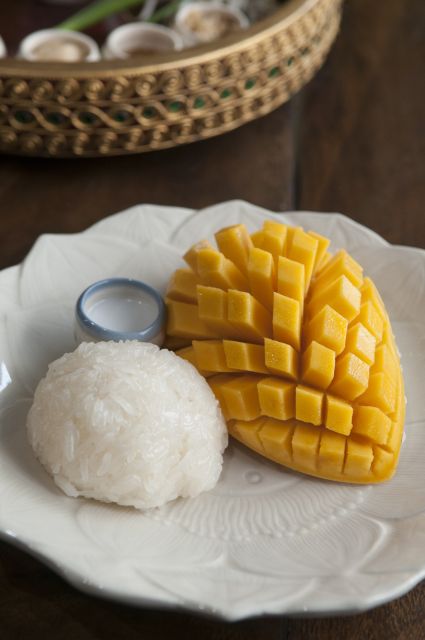
A lot of cooking classes give you a finished plate at the end. Here, you eat your results while they’re still hot and fresh, which changes how you understand seasoning and timing.
You’ll also notice the class setup is designed for speed without chaos:
- All ingredients and equipment are provided
- There’s a personal locker
- Drinking water is included
- You get standard recipes by follow-up email
One small thing you can plan for: the food quantities are enough that you may end up with leftovers if you’re careful. A few people suggested bringing a container (like a small box) if you want to take food home. The class does tell you to come with an empty stomach, but that doesn’t mean you can’t be strategic.
No MSG and Dietary Swaps: Helpful for Real Life
If you’re sensitive to additives, this is clearly a plus: the class states no MSG is used.
It also offers substitutions for different dietary needs, including vegetarian, halal, kosher, and allergy accommodations, as long as you notify them in advance. That’s important because Thai cooking relies heavily on balance—so replacing ingredients can’t be treated as an afterthought. When substitutions are planned ahead of time, it’s more likely your dish will still taste like Thai, not like a compromise.
Price and Value: Is $45 Fair for 210 Minutes?
At $45 per person for about 210 minutes, the value stacks up because you’re not paying only for a “lesson.” You’re getting:
- A full hands-on cooking session
- A four-dish meal (you make and eat)
- Curry paste and coconut milk work from scratch
- Ingredients, equipment, and water included
- A place setup with a locker
- Recipes sent afterward by email
In plain terms: you’re paying for the ingredients and the instruction. Most people would spend roughly the same order of money in a typical restaurant plus a tour/experience fee. Here, your kitchen time becomes the main event.
Who This Class Fits Best (and Who Should Think Twice)
This class is a great fit if you:
- Are a beginner and want clear, step-by-step cooking
- Want practical Thai technique you can repeat at home
- Like the idea of matching dishes to your day’s booking
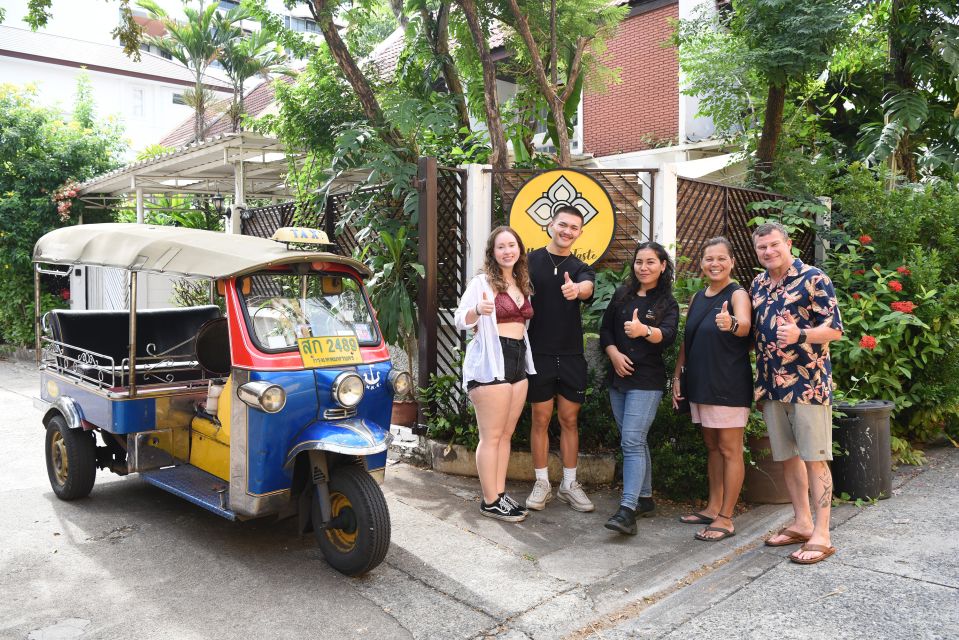
It can also work well for families. One experience included a parent cooking with a 14-year-old, and another involved teenagers enjoying the process. If you have kids, choose the day based on the dishes they’re most likely to enjoy (no one wants a silent plate of green curry if they were hoping for pad thai).
Possible downside, based on how the activity is described: it’s not suitable for people with mobility impairments, even though the listing also says wheelchair accessible. If that matters for you, ask direct questions before booking so you don’t get surprised by how the class flow works.
Should You Book This Sukhumvit Thai Cooking Class?
Book it if you want a Thai cooking experience that’s truly hands-on, not a passive show. The biggest reason is the combination of market-based ingredient learning (morning) and cooking four dishes you eat hot, plus the curry paste from scratch skill that’s hard to recreate without guidance. The price is also straightforward for what you get.
Don’t book it (or reconsider) if you prefer just one simple dish, because this is about doing a full set. Also be cautious if mobility limitations affect your ability to move through the cooking workflow.
If you want the best odds of loving it, pick a day based on the dishes you actually crave, wear comfortable shoes, and come hungry. You’ll do the cooking; your stomach will do the rest.
FAQ
Where do I meet for the morning class?
For the morning class, meet at the street floor of BTS Asoke Exit 3 and MRT Sukhumvit Exit 3 (you can also pin to Hey! Coffee MRT Sukhumvit).
Where do I meet for the afternoon or evening class?
For the afternoon and evening classes, meet at the school in Sukhumvit 4.
Is the market tour included?
Yes, but only for the morning class. Afternoon and evening sessions do mango carving instead of a market tour.
What dishes will I cook?
You cook four traditional Thai dishes, and the exact menu changes by day. Across the week you’ll see items like Som Tum, Pad Thai, Tom Yum Goong, Tom Kha Gai, green/red/panang curry, Thai basil chicken, Larb Gai, and mango sticky rice.
Does the class use MSG?
No MSG is used in the cooking.
Can you accommodate dietary needs or allergies?
Yes. Vegetarian, halal, kosher, and allergy requirements can be accommodated with advanced notification.