REVIEW · HISTORICAL TOURS
River Kwai Day Tour from Bangkok – History, Scenery & Culture
Book on Viator →Operated by Sunleisure World · Bookable on Viator
Some days you learn, but you also feel it.
This River Kwai tour mixes WWII sites with real-world train time, plus a walking stop on the bridge tied to the infamous Death Railway. With guides like Rach (and others such as Oom, Nina, and Jira), the day moves between heavy memorials and concrete details that help the story stick.
I love the small-group size (max 15), which keeps the rhythm from getting too rushed, and I also like that lunch is included at Wang Po station near the Burmese border—so you’re not scrambling for food in transit. The itinerary hits the big “must-see” points without turning into a checklist that skips the meaning.
One possible drawback: this is a long day with a lot of road time, and the museum stops can vary in how much English context you get—so you’ll get the most out of it if you’re comfortable reading, listening in bursts, and staying patient.
In This Review
- Key things to know before you go
- A movie-famous bridge, minus the movie shortcuts
- The small-group setup: why max 15 matters on a long day
- Stop 1: Kanchanaburi War Cemetery for the real weight of the story
- Stop 2: JEATH War Museum—recreation, documents, and a quick English reality check
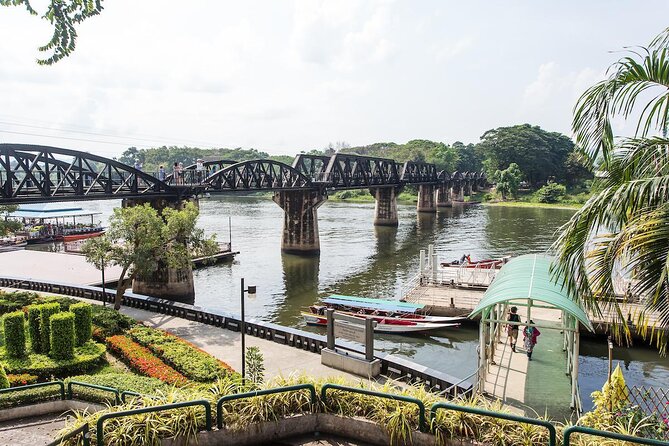
- Stop 3: Walking the River Kwai Bridge—one of the most memorable stretches
- Stop 4: Death Railway Museum and the ride along the route
- Stop 5: Wang Po station lunch and the calm after the rails
- Price and value: $97.77 for a full day that mixes meaning and motion
- Logistics that affect your comfort (and how to handle them)
- Who should book this River Kwai day tour?
- Should you book it?
- FAQ
- How long is the River Kwai day tour from Bangkok?
- Is hotel pickup included?
- What stops are included during the day?
- Is lunch included?
- How big is the group?
- Is there an English-speaking guide?
- What about children and height requirements?
- What’s the cancellation policy?
- Do I need to bring tickets or show something on my phone?
Key things to know before you go
- Max 15 people: easier photo stops, more time with your guide, and less waiting around.
- WWII memorial first: the Kanchanaburi War Cemetery sets the tone early, before the museum and bridge visits.
- JEATH War Museum + Bridge walk: you’ll see a recreated POW camp alongside a real crossing over the River Kwai.
- Train time on the Death Railway: you’re not just looking at history—you’re riding a stretch of the route.
- Lunch at Wang Po station: an included Thai-style meal with a scenic break near the railway area.
A movie-famous bridge, minus the movie shortcuts
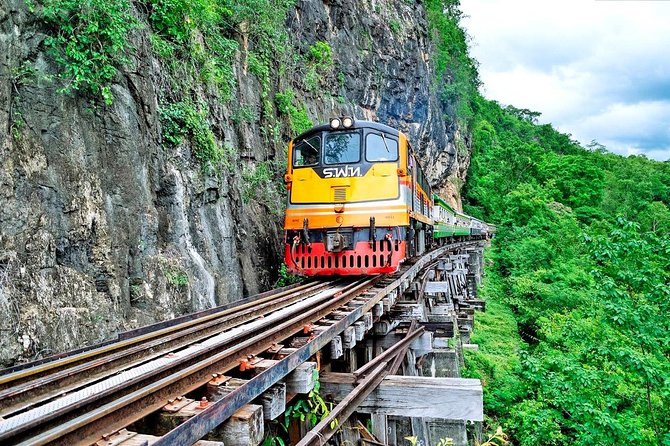
The Bridge on the River Kwai is one of those names that travels farther than the actual site. What’s powerful about this tour is that it grounds you in what the bridge and railway meant during WWII—forced labor, brutal logistics, and the human cost that doesn’t translate well to film.
The day is built to move from reflection to education to motion. You start with the Commonwealth war cemetery, then you move through the JEATH War Museum and the bridge itself, and finally you ride the railway route—so the story doesn’t stay theoretical. Even if you think you know the movie version, the physical details here make the difference.
If you like history you can see (and not just read), this kind of structured day is a good match.
You can also read our reviews of more historical tours in Bangkok

The small-group setup: why max 15 matters on a long day
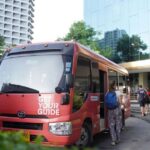
This tour runs about 11 hours and travels between Bangkok and Kanchanaburi by air-conditioned vehicle. On a day like that, group size changes everything: max 15 keeps the minibus from turning into a moving waiting room.
It also helps at the stops. At the bridge, at the cemetery, and around the rail views, you can typically move as a group while still having a moment to take photos and ask questions. Several guides in the feedback world stood out for doing exactly that—helping people photograph, explain what matters, and keep the flow under control.
Also, because it’s framed as a small-group experience, you’re less likely to feel like you’re part of a sprint. The day is long, but it doesn’t feel like it’s purely about getting you through doors.
Stop 1: Kanchanaburi War Cemetery for the real weight of the story
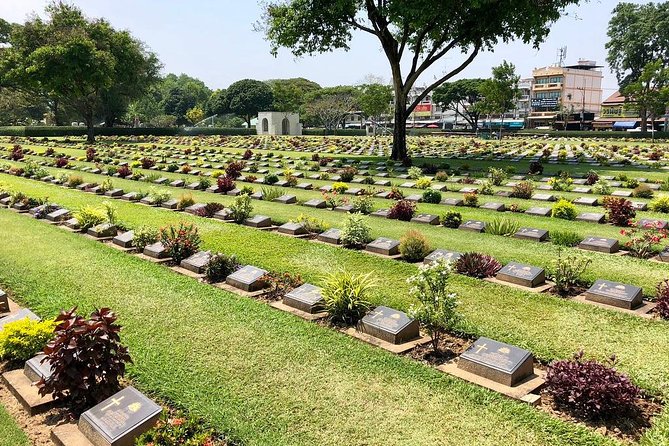
Kicking off at the Kanchanaburi War Cemetery is the right order. This isn’t an optional add-on; it sets the emotional context before any museum recreations show up.
You’ll spend around an hour here, and admission is listed as free. The experience is quiet and sobering by design, with the graves tied to Allied prisoners of war who died while building the railway. One detail that really helps visitors understand the scale: the cemetery is described as containing around 6,000 graves, mostly Australian soldiers.
Practical tip: wear something comfortable for walking and keep your expectations for silence. There’s not much “entertainment” here, and that’s the point. If you treat this as the main course, the rest of the day will land harder—in a useful way.
Stop 2: JEATH War Museum—recreation, documents, and a quick English reality check
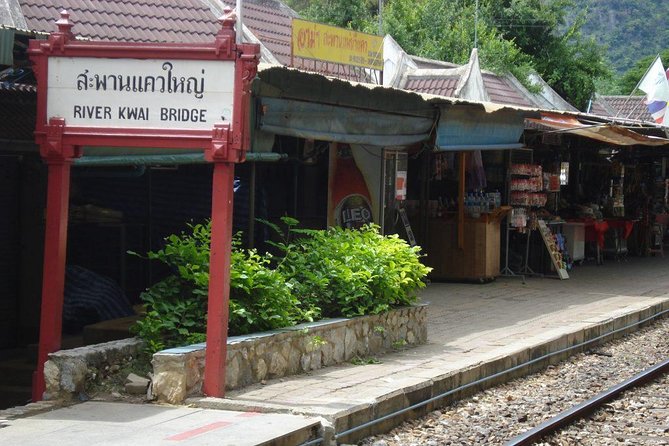
Next is the JEATH War Museum, a 1-hour stop with admission included. JEATH is built around WWII-era storytelling, including a recreated POW camp-style look and interpretive displays that help you picture what prisoners faced.
What I like about this stop is that it gives you shapes and setting. Even if you’ve only heard the basics, you’ll leave with a clearer mental image of the camp environment and the railway operation.
What to watch for: the depth of English interpretation can vary. Some people find the museum material easier to read on your own than to rely on guide commentary, and a few have felt it can be rushed or not in the best condition. So go in expecting a “see it, read it, let it explain itself” style of visit, not a lecture.
If you want to maximize this stop, bring a bit of curiosity. Look for the dates, the layout cues, and the way the museum connects POW labor to the railway’s military purpose.
Stop 3: Walking the River Kwai Bridge—one of the most memorable stretches
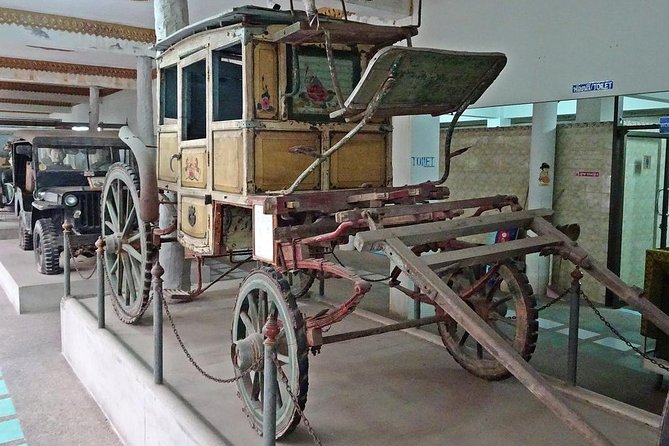
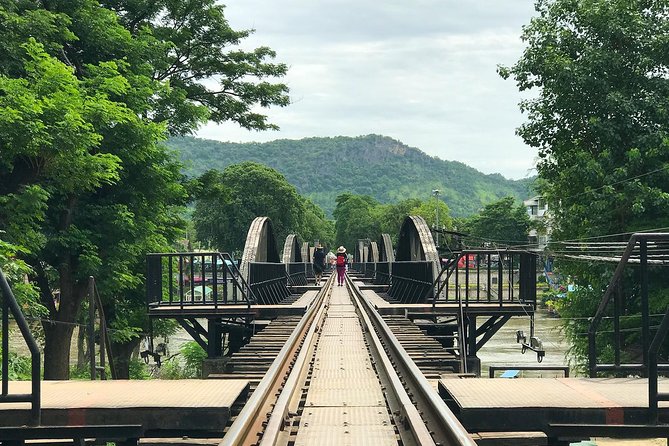
Then you get to the centerpiece for most first-timers: the River Kwai Bridge stop. You’ll have about one hour here, with admission included, and you’ll walk along the bridge over the river.
This is one of those “standing in the right place” moments. You’re not only seeing a structure; you’re crossing a route tied to forced labor and wartime strategy. It’s also visually rewarding even for people who aren’t obsessed with trains—views from the bridge and the river setting do a lot of work for your attention.
There’s also a helpful practical angle: the bridge stop is a great time to slow down and take photos in multiple angles. You may find the day’s pace moves faster later, so make this the place you really capture the moment.
Optional add-on note: some people add a boat ride on the river to see the bridge from the water. If that interests you, ask about it during the day since it can affect timing.

Stop 4: Death Railway Museum and the ride along the route
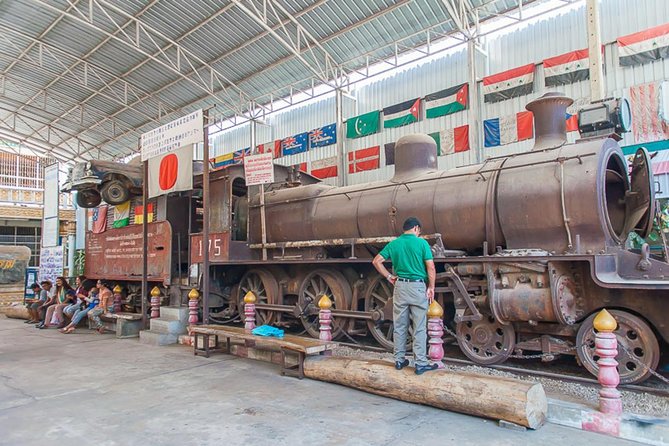
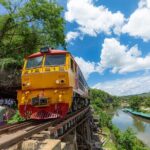
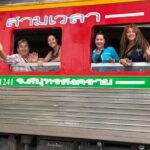
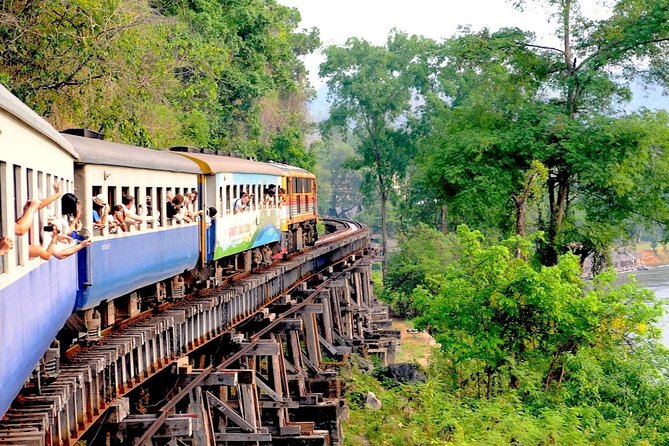
After the bridge, you shift into railway mode: the Death Railway Museum and Research Centre plus a train ride along a stretch of the Death Railway. The museum time is listed at about 30 minutes, with tickets included, and the train ride is the active centerpiece.
This is where the tour turns from “touring” into something more physical. The train route gives you real-time movement along the line where wooden viaduct sections and cliffs were part of the harsh build conditions for POWs and workers. You’ll also see countryside views while traveling, so it doesn’t feel like a museum hall on wheels.
Comfort and expectations matter here. Some people report things like dust/smoke on the train and a need to be ready for a less cushioned ride. Another recurring theme: seat upgrades can exist, but the economy setup may be limited (like hard benches) and not fully guaranteed.
Practical tip: if you’re sensitive to comfort, plan for it now. Bring a light layer and something for your face (even just a thin mask or scarf) in case the air feels dusty. And if seat quality matters to you, ask your guide about the upgrade option on the day so you can make the choice while you still can.
Stop 5: Wang Po station lunch and the calm after the rails
Finally, you arrive at Wang-Po railway station for lunch. The tour lists a Thai-style lunch provided at a local restaurant near the railway area, and this location is described as close to the Burmese border. Lunch is included and gives you a real break after the cemetery and train-time intensity.
One of the smartest aspects of this stop is that it’s not “just food between stops.” Lunch here comes with the atmosphere of the railway zone—people watching, a chance to decompress, and a calmer pace before heading back to Bangkok.
Also, there’s often time to do small wandering moments near the end of the meal. Some guides may encourage you to look around the nearby market area after lunch, depending on timing.
If you can, eat earlier in the lunch window. Bangkok traffic on the return trip can stretch your sense of time.
Price and value: $97.77 for a full day that mixes meaning and motion
At $97.77 per person, the value comes from the mix of items you don’t easily bundle on your own. You’re paying for:
- round-trip transfer from Bangkok in an air-conditioned vehicle
- an English-speaking guide to connect the stops
- included admission for key sites
- included lunch
- the included train experience along the Death Railway segment
The price is also more reasonable if you factor in how hard it is to coordinate a full day like this independently—especially when you want a guided story and a set sequence of sites.
Where the value can dip: you can’t control road time. This is a long day, and if you strongly prefer self-paced museum time or you dislike early starts, you may feel the cost for the bus ride rather than the sites.
Still, if your goal is a structured WWII experience plus a train ride, this package makes sense.
Logistics that affect your comfort (and how to handle them)
This tour starts with pickup at Bangkok hotels, offered on request, with a stated instruction to wait in the lobby 15 minutes before the scheduled pickup time. That matters because the driver can be delayed due to traffic (listed as potentially 15–45 minutes).
The schedule can also shift due to weather, equipment maintenance, or safety protocols. For a day that includes a train ride and walking stops, you’re wise to stay flexible. It’s not a tour built for strict-by-the-minute control.
Also, pack for warm weather and long sitting. Even with air-conditioning in the vehicle, you’ll spend time walking on-site and sitting during rail segments. Small things help: sun protection, a water plan, and something light to cover up if the day runs hot.
Who should book this River Kwai day tour?
This tour fits best if you want:
- a guided WWII itinerary with major sites in one day
- a train ride as part of the experience (not just a viewpoint)
- a small group that doesn’t feel like cattle processing
- an emotionally grounded starting point at the war cemetery
It may be less ideal if you:
- need very high comfort on trains (hard bench style is possible in basic seating)
- expect every museum display to be deeply explained in English
- dislike long road travel and early start days
If you’re somewhere in the middle, I think you’ll still enjoy it—especially if you go in ready for a heavy, reflective day rather than a fun sightseeing scramble.
Should you book it?
If you care about seeing the key WWII sites tied to the Death Railway—and you want the train ride as part of the story—this tour is a strong choice. The small-group format and the included lunch at Wang Po station make the day feel complete, not pieced together.
I’d book it if you’re willing to be flexible with timing, accept that museums may not always be perfect, and treat the cemetery stop as the emotional center of the day. If that sounds like your style, you’ll likely feel the bridge and railway in a way that a movie reference never quite can.
FAQ
How long is the River Kwai day tour from Bangkok?
The tour duration is listed as approximately 11 hours.
Is hotel pickup included?
Round-trip transfer is included, and Bangkok hotel pickup is available on request.
What stops are included during the day?
The tour includes Kanchanaburi War Cemetery, JEATH War Museum, River Kwai Bridge, Death Railway Museum and Research Centre (with a train ride along the Death Railway segment), and lunch at Wang-Po railway station.
Is lunch included?
Yes. Lunch is provided at Wang-Po railway station at a local restaurant.
How big is the group?
The maximum group size is listed as 15 travelers.
Is there an English-speaking guide?
Yes. An English-speaking guide is included.
What about children and height requirements?
The info provided uses height-based pricing. It states that children over 120 cm are charged at the adult rate, and it also notes a height threshold involving 110 cm, so you should double-check the exact rule for your child’s height before booking.
What’s the cancellation policy?
Free cancellation is offered. You can cancel up to 24 hours in advance for a full refund.
Do I need to bring tickets or show something on my phone?
The tour uses a mobile ticket. Confirmation is also received at the time of booking.