REVIEW · GRAND PALACE & TEMPLE TOURS
Private Grand Palace and Temple of Emerald Buddha & All Bangkok Highlights
Book on Viator →Operated by Idaytrip · Bookable on Viator
Bangkok’s temple circuit can be a lot. This private 9-hour tour ties together the big hitters—Grand Palace, Emerald Buddha, and Wat Arun—with stops like Chinatown and a Chao Phraya long-tail boat ride, so you get the full picture of the city. Two things I really like are the private air-conditioned transport that keeps you moving, and the fact that entrance fees and lunch are handled. One drawback to consider: you’ll be out in Bangkok’s heat during key walking stretches, so the pace matters.
You start at Wat Traimit (Golden Buddha) on Yaowarat Road, then work your way through Bangkok’s classic sights: Chinatown, Pak Khlong Flower Talat, Wat Pho, the Grand Palace, Wat Phra Kaew, and finally the river and Wat Arun. It’s a tight route, but it’s also smart because the day is built around how these areas cluster together.
For the price—$218.87 per person—it’s not just a sightseeing checklist. It’s structured like a day you can actually survive: a professional guide, bottled water, lunch, and a private vehicle, with no need to figure out tickets and timing on your own.
In This Review
- Key highlights worth planning for
- How this private Grand Palace day tour is set up (and why it matters)
- Morning start at Wat Traimit (Golden Buddha): a dramatic opener
- Chinatown on foot: markets, shophouses, and street life
- Pak Khlong Flower Talat: local color that runs nearly nonstop
- Wat Pho (Wat Phra Chetuphon): the Reclining Buddha and a temple for lessons
- Grand Palace + Wat Phra Kaew (Emerald Buddha): the core of the day
- The Grand Palace (built in 1782)
- Wat Phra Kaew (Emerald Buddha)
- Chao Phraya by long-tail boat: the cooler reset you need
- Wat Arun (Temple of Dawn): the sunset-ready pagoda moment
- Food, water, and pacing: what’s included and how to use it
- Price and value: is $218.87 per person actually fair?
- Who this tour is best for
- Should you book this Private Grand Palace and Emerald Buddha tour?
- FAQ
- How long is the tour?
- What time does the tour start?
- Is the tour private?
- What’s included in the price?
- What is not included?
- Which main attractions are covered?
- Is hotel pickup offered?
- Does it include a boat ride?
- What’s the cancellation policy?
Key highlights worth planning for
- Private van, air-conditioned comfort while you connect temple zones
- Wat Traimit’s 5.5-ton solid gold Buddha sets the tone for the day
- Pak Khlong Flower Talat’s near-24/7 energy for real local color
- Grand Palace + Wat Phra Kaew in one run so you don’t waste time hopping back
- Chao Phraya long-tail boat ride for “Venice of the East” views and cooler breaks
How this private Grand Palace day tour is set up (and why it matters)
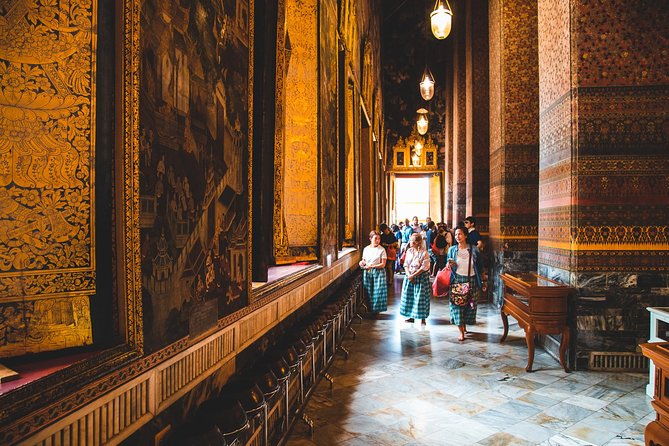
This is a private tour in Bangkok with pickup offered and a schedule built for efficiency. You’re looking at about 9 hours starting at 8:00 am, and the route hits a lot of major landmarks without making you spend your day figuring out logistics.
The big practical value is in the combo of private transportation and all entrance fees. When you’re doing the Grand Palace and the surrounding temple sites, the time cost can get messy if you’re trying to manage it solo. Here, you show up, walk, look, and move on.
Another underrated benefit is pace control. In Bangkok, the temperature and crowds can turn a “quick visit” into a slog. Guides like Peter (noted for clear English and knowing shortcut routes) and Araya (recognized for keeping things comfortable even in heavy heat) are the kind of support that can make a long day feel manageable instead of chaotic.
You can also read our reviews of more private tours in Bangkok
Morning start at Wat Traimit (Golden Buddha): a dramatic opener
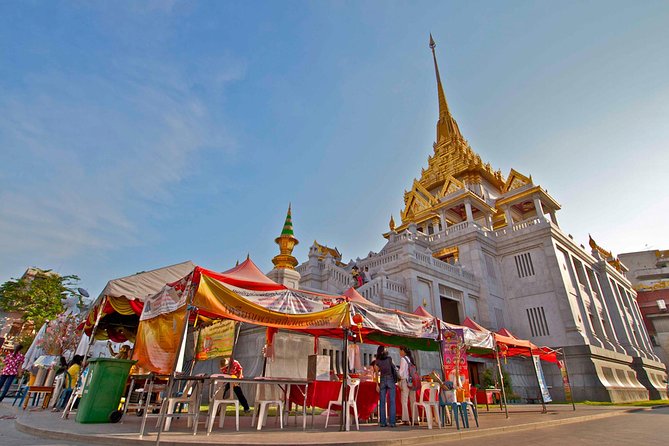
The tour begins with Wat Traimit (Wat Traimit / Golden Buddha). This stop is about 45 minutes, with admission ticket included, and it gives you an immediate wow-factor before the day gets even more intense.
What makes it special is the Buddha itself: a massive statue measuring about 5.5 tons made from solid gold. Even if you’re not the type who reads every plaque, the sheer scale changes how you look at the whole temple complex. It’s also a great first stop because it anchors your day in a specific, memorable visual landmark.
Practical tip: since you’re starting early, you’ll have more favorable light and generally less crush around the opening hours. Still, expect short walking indoors and outdoors depending on how the site is arranged.
Potential drawback: because the gold Buddha is such a focal point, it can feel like a single “moment,” and you’ll want your next stop to keep the momentum going. Luckily, the itinerary does.
Chinatown on foot: markets, shophouses, and street life
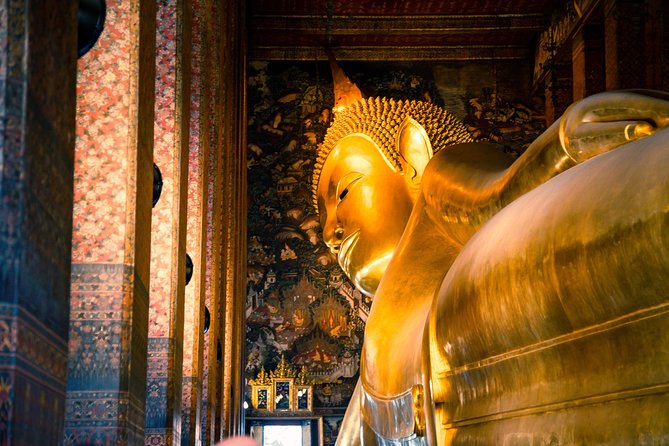
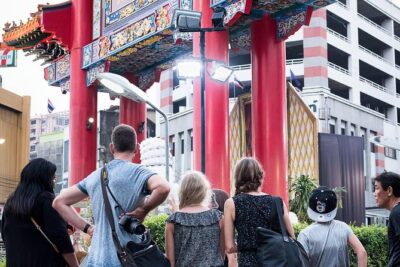
Next is Chinatown in Bangkok, also around 45 minutes. This is where you shift gears from temple grandeur to everyday city energy.
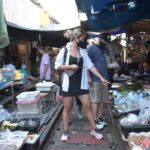
Chinatown is described as the busiest area in the city, and that matches what you’ll feel when you’re walking the old market stretches. You’ll see a mix of shophouses, market goods, and street-food-style offerings, which is exactly why this stop works well as a counterbalance to the temples.
Why it’s valuable on this tour: you’re not only visiting religious sites—you’re also seeing the urban “engine room” around them. In Bangkok, those two worlds often overlap in the real physical city layout.
Possible consideration: you’ll be exposed to street heat and crowds during this segment. If you’re sensitive to heat, use the short duration to your advantage—take photos fast, keep moving, and save your longer browsing for another trip. On a day like this, your time is better spent elsewhere.
Pak Khlong Flower Talat: local color that runs nearly nonstop
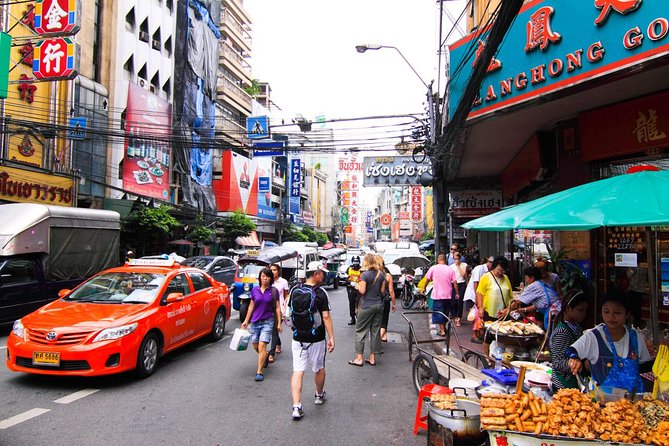
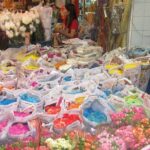
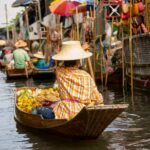
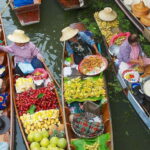
Stop 3 is Pak Khlong Flower Talat Original, about 40 minutes, admission included. This is a flower market that runs almost 24 hours a day, seven days a week. That one detail tells you everything: it’s not a “staged tourist market,” it’s a working market with steady demand.
What to expect is variety—cut flowers, leaves, orchids, and tropical plants—and enough motion that you can feel how locals use flowers day-to-day. Even if you just watch how stems move from stall to arrangement, it’s a nice sensory break before you head back into big monumental temple spaces.
Why this stop is more than a photo stop: flowers are part of the daily rhythm around ceremonies. So it ties the religious sights together with what’s happening on the street level.
Possible drawback: if you’re expecting quiet beauty, this market may feel intense. It’s busy and active by nature. Treat it like a quick, colorful “breather” rather than a slow browse.
Wat Pho (Wat Phra Chetuphon): the Reclining Buddha and a temple for lessons
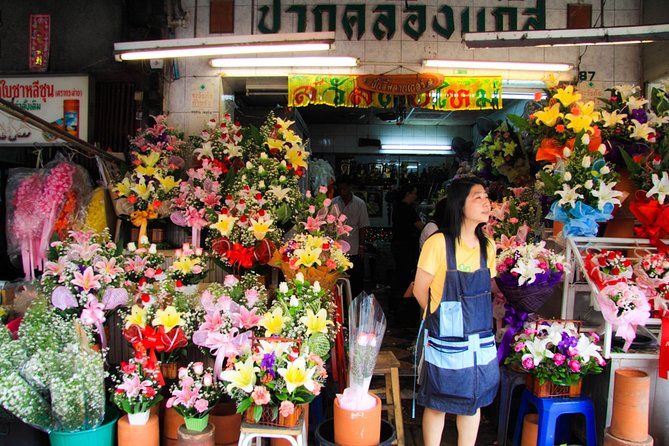
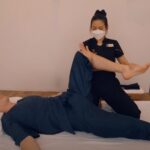
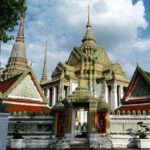
Stop 4 is Wat Phra Chetuphon (commonly known as Wat Pho in many contexts), around 1 hour. You’re going to see the massive Reclining Buddha, and the temple is also noted for being a leading school for Thai massage.
This is one of those stops where being there in person helps more than reading about it. The scale of the Reclining Buddha makes it hard to look away, and the temple setting creates a calm contrast to Chinatown and the flower market.
What I like about including Wat Pho on this route: it bridges the day. You move from local streets into major royal and symbolic religious sites, and Wat Pho sits in a big “temple hub” zone that makes logical sense before you head to the Grand Palace.
Possible drawback: Wat Pho can involve more walking and longer “stare time” than you expect because it’s visually demanding. If your legs fatigue, you’ll still have enough time in the rest of the day, but don’t rush your eyes—this is a good place to slow down.
Grand Palace + Wat Phra Kaew (Emerald Buddha): the core of the day
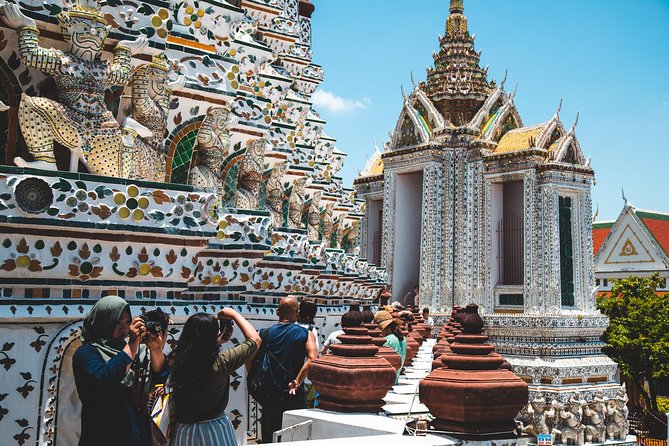
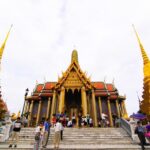
Stops 5 and 6 are the heart of the tour: The Grand Palace and Temple of the Emerald Buddha (Wat Phra Kaew).
The Grand Palace (built in 1782)
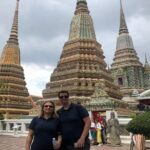
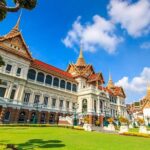
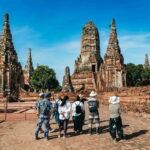
You get about 1 hour here, admission included. The Grand Palace was built in 1782 by King Rama I, and the complex is described as a series of buildings that function as works of art. This is where you can start to see why the palace and temple are treated as more than “just another attraction.” The architecture creates a visual hierarchy: you’re moving through spaces that feel intentionally designed to impress.
A practical note: one hour can feel short in the Grand Palace, but it’s the right length if the goal is highlights and not an all-day marathon.
Wat Phra Kaew (Emerald Buddha)
Then you continue right to Wat Phra Kaew, about 30 minutes. The Emerald Buddha is described as the palladium of Thailand, and it’s the most revered Buddha image in the Kingdom. That matters because it tells you how seriously the site is treated.
This pairing—Grand Palace right next to Wat Phra Kaew—is the smartest use of your time. If you try to do these separately on your own, you can lose half a day to route planning and ticket lines. Here, it’s already stitched together.
Possible drawback: these two stops are the most iconic and therefore the most intense for crowds and heat. If you’re prone to overheating, concentrate on what you most want to see inside those 90 minutes and let the rest be “good enough.” Your future self will thank you.
Chao Phraya by long-tail boat: the cooler reset you need
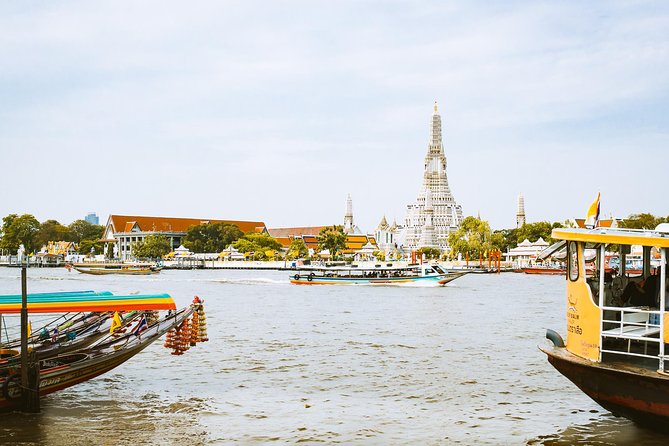
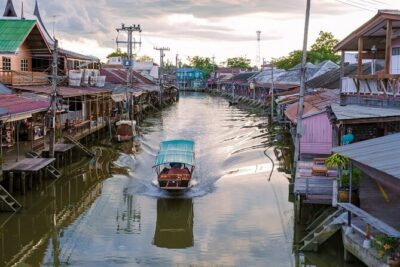
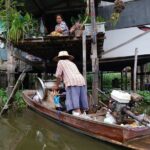
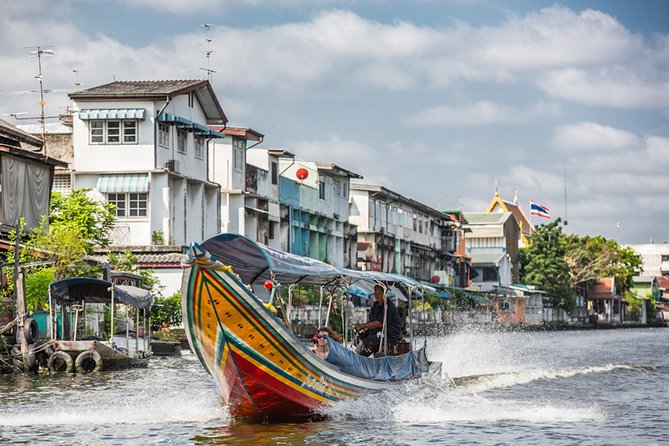
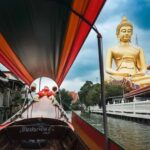
Stop 7 is the Chao Phraya River segment, about 45 minutes, admission included. You board a motorized long-tail boat for scenery along the river banks and small canals.
This is where you get a literal interpretation of the “Venice of the East” nickname for Bangkok. Even if you’ve seen photos before, the boat view changes how you understand the city. It’s also a useful temperature strategy: you’re not walking for a chunk of time.
What to look for: the mix of riverbank life and the canal geometry. That’s the “city layout” you don’t fully catch from land.
Possible drawback: river trips can feel long if you go in expecting a short highlight. Treat this as part transport, part sightseeing, part rest.
Wat Arun (Temple of Dawn): the sunset-ready pagoda moment
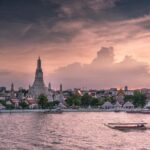
Stop 8 is Temple of Dawn (Wat Arun), around 45 minutes with admission included. Wat Arun is known for a magnificent pagoda that soars to about 280 feet, and it’s famous for its beauty day and night.
On a day tour like this, you might not see night lighting (since the schedule is capped at about 9 hours), but you’ll still get a strong sense of the structure’s scale. It’s the kind of stop that makes you want to pause and look up, then rotate slowly to see the silhouette from different angles.
Why it’s a good end point: after the palace-and-temple intensity, Wat Arun gives you a simpler “wow” shape—less about many buildings, more about one monumental focal point.
Possible drawback: you may do more standing and stepping to get photos and angles. If your feet are tired, plan to keep your photo mission tight.
Food, water, and pacing: what’s included and how to use it
Lunch is included, and bottled water is provided. That sounds basic, but on a full temple-and-market day, it’s a big deal. It reduces the chances you spend your best energy hunting for a meal you can afford and still hit the next stop.
Because the day covers multiple areas—Yaowarat, flower market zone, temple hub, palace complex, then river and Wat Arun—you’ll be in transit often. The private air-conditioned vehicle helps, especially in the afternoon heat.
My practical advice: treat lunch as refueling, not a lingering break. You’ll enjoy the sights more when you arrive fresh for the next segment.
Price and value: is $218.87 per person actually fair?
At $218.87 per person, this tour costs more than a basic group bus ride. The question is what you get that you can’t easily piece together yourself.
Here’s the value logic that matters:
- Private transportation plus air-conditioned vehicle saves time and stress across a long route
- Entrance fees are included for all listed stops
- Lunch and bottled water reduce on-the-go decision fatigue
- Professional guide keeps the day from turning into random photo stops
- Travel insurance is included, which is a helpful extra when you’re doing a full day of walking
If you’re visiting Bangkok for the first time and want the “greatest hits” without spending hours planning, the price starts to look reasonable. If you already know the city well and love DIY routes, you could spend less on transportation and tickets—but you’d be trading away the comfort and coordination that this tour is built around.
Who this tour is best for
I’d point you to this tour if any of these sound like you:
- You want Grand Palace + Emerald Buddha + Wat Arun in one day without backtracking
- You like your city days guided and structured, especially for major temple sites
- You prefer private comfort over squeezing into shared transport
- You’re short on time and want the core Bangkok highlights aligned in a logical route
It’s also a good fit if you’re traveling as a couple or small group and want the experience to stay your own, since it’s private for your group.
Should you book this Private Grand Palace and Emerald Buddha tour?
Book it if you want a one-day Bangkok hit list that still feels organized: Wat Traimit, Chinatown, Pak Khlong Flower Talat, Wat Pho, Grand Palace, Wat Phra Kaew, a Chao Phraya long-tail boat ride, and Wat Arun. The tour’s biggest win is the way it packages travel time, tickets, and guidance into a day that’s manageable, not random.
Skip it or adjust expectations if you’re the type who wants a slow, wandering temple day with long breaks. This schedule is full. You’ll get value by using the provided transport and water, and by keeping your focus on the key sights rather than trying to do everything in each stop.
If you want a clean way to see Bangkok’s most famous religious and river landmarks without DIY headaches, this is a strong choice.
FAQ
How long is the tour?
The tour runs for about 9 hours.
What time does the tour start?
It starts at 8:00 am.
Is the tour private?
Yes. It’s a private tour/activity, so only your group participates.
What’s included in the price?
Included are private transportation, an air-conditioned vehicle, all entrance fees, lunch, bottled water, a professional guide, and travel insurance.
What is not included?
Personal expenses are not included.
Which main attractions are covered?
The tour includes Wat Traimit (Golden Buddha), Chinatown, Pak Khlong Flower Talat, Wat Phra Chetuphon (Wat Pho), the Grand Palace, Wat Phra Kaew (Emerald Buddha), the Chao Phraya River boat ride, and Wat Arun (Temple of Dawn).
Is hotel pickup offered?
Pickup is offered.
Does it include a boat ride?
Yes. You’ll board a motorized long-tail boat on the Chao Phraya River.
What’s the cancellation policy?
Cancellation is free up to 24 hours in advance of the experience start time for a full refund.