REVIEW · KANCHANABURI & RIVER KWAI DAY TRIPS
Kanchanaburi River Kwai & Death Railway Small Group tour
Book on Viator →Operated by TripGuru Thailand · Bookable on Viator
Two bridges, one unforgettable WWII story. This Kanchanaburi River Kwai & Death Railway small-group tour turns Bangkok traffic into a day of real-world WWII stopping points, with a max nine travelers group and focused time at the Bridge over the River Kwai. It’s the kind of route where your camera gets breaks, and your guide gives context without rushing you.
I especially like the way the day is paced: you start at the Kanchanaburi War Cemetery, then you move through the River Kwai area with multiple short photo-and-walk stops. One watch-out: the JEATH War Museum can feel a bit run down, so go for the story and murals rather than expecting a polished gallery.
In This Review
- Key highlights at a glance
- 11-hour WWII route from Bangkok: what you actually see
- Getting to the start: meeting point vs. hotel pickup
- Kanchanaburi War Cemetery: the moment the day turns serious
- River Kwai time: short walks, photo stops, and an optional boat add-on
- Bridge over the River Kwai: two walks that actually help your photos
- JEATH War Museum: memorabilia, murals, and wall writing
- Tham Krasae Station views and the train passing by at Tiger Cave Temple
- Included value: guide, vehicle, water, and key entrance fees
- Price and logistics: why $99 can be a good deal here
- What kind of traveler this suits best
- Helpful tips to make the day easier
- Should you book this Kanchanaburi River Kwai and Death Railway tour?
- FAQ
- How long is the Kanchanaburi River Kwai & Death Railway small-group tour?
- What is the group size for this tour?
- Is hotel pickup included?
- Where does the tour meet?
- What are the main stops on the itinerary?
- Are entrance fees included in the price?
- Is lunch included?
- What’s included besides the guide and sightseeing?
- What if weather is poor?
- Is a mobile ticket provided?
Key highlights at a glance
- Max nine travelers means you’re not stuck listening to a guide from the back row
- Kanchanaburi War Cemetery is well maintained and a powerful first stop
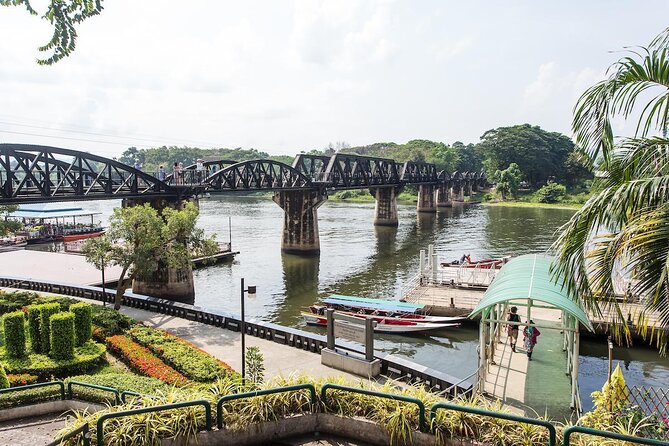
- Multiple Bridge over the River Kwai moments give you time for photos from different angles
- JEATH War Museum mixes memorabilia with murals and wall writing
- Tiger Cave Temple (Wat Tham Suea) train view adds drama when the train passes
11-hour WWII route from Bangkok: what you actually see
This is an 11-hour day trip that trades hours of transit for a handful of meaningful stops in Kanchanaburi. You’ll leave Bangkok and spend the day moving along the River Kwai corridor, then finish with a viewpoint where a train passes by. It’s not “see everything” sightseeing. It’s “see the key places” WWII visitors usually remember.
What makes this tour work is the sequencing. You begin with remembrance, then shift to the river and bridge area, then end with the rail spectacle from up near the cliffs. That arc matters because the sites aren’t just attractions—they’re tied to what happened here during WWII.
You can also read our reviews of more tours and experiences in Bangkok.

Getting to the start: meeting point vs. hotel pickup
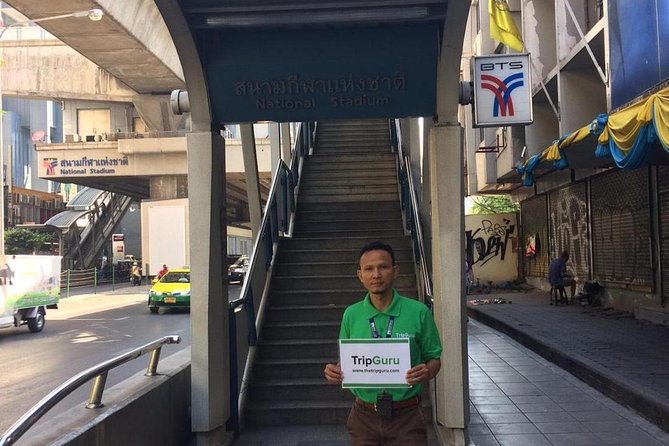
You have two ways to start: you can meet at the National Stadium BTS Station, or you can request Bangkok hotel pickup. Pickup is included, but it’s not automatic—you’ll want to confirm your exact location when you book so you don’t end up sprinting to the meeting point.
The meeting point is straightforward: National Stadium BTS Station. That’s convenient if you’re already using the BTS and don’t want to wait on a hotel call time. Either way, the tour is set up to be easy to join, which is rare for day trips that involve rural driving.
Kanchanaburi War Cemetery: the moment the day turns serious
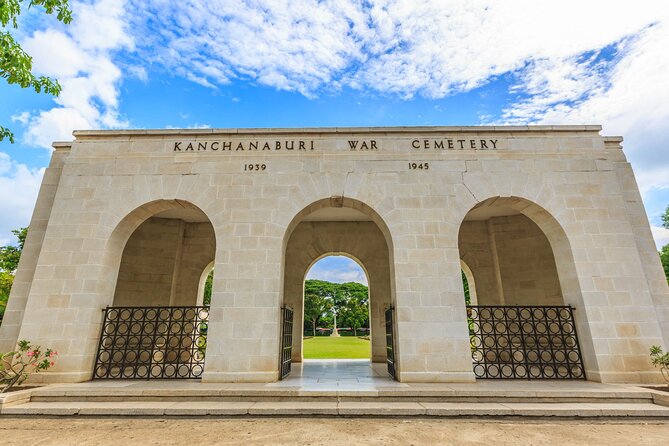
Your first stop is the Kanchanaburi War Cemetery. Expect about an hour here. This is a place for reflection, and it’s also a place where the exhibits help explain the story behind the graves and what brought people to this region.
I like that the cemetery is first. It sets the tone before you start taking photos on a famous bridge. The grounds are described as well maintained, and that’s a big deal: it helps you focus on the people rather than the logistics.
If you’re bringing kids (and this is one of those tours families sometimes choose), this is a strong first “teaching stop,” because it’s quiet and structured. You can ask questions without competing with the noise of the street.
River Kwai time: short walks, photo stops, and an optional boat add-on
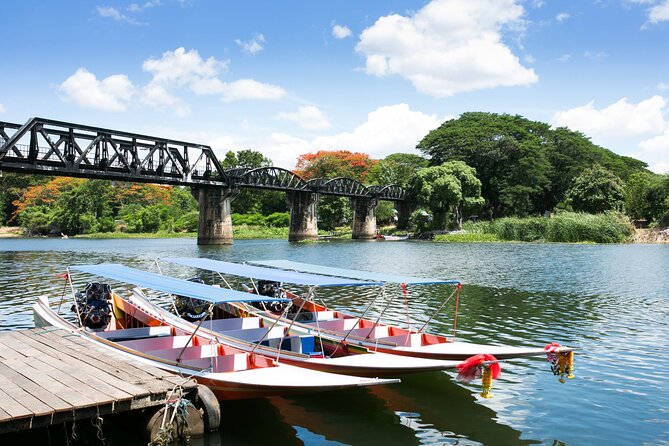
After the cemetery, you shift to the River Kwai area. You’ll get a stop that includes time to walk along the famous river scenery. The tour information even notes that boat visits are optional, which can be a nice way to break up the day if you enjoy being on the water.
You’ll also have a dedicated bridge-focused walk afterward. So instead of one quick “photo and go,” you get the chance to reframe shots—different angles, different distances, and different lighting depending on where you end up stopping.
The practical takeaway: wear shoes you don’t mind walking in. This part of the day is mostly on your feet, and the views will tempt you to wander a little longer than planned.
Bridge over the River Kwai: two walks that actually help your photos
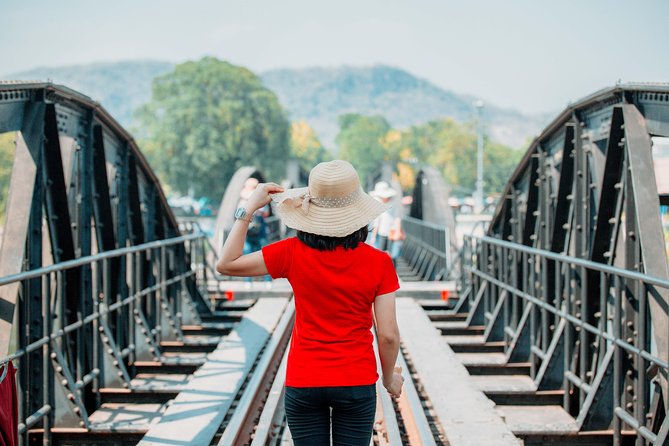
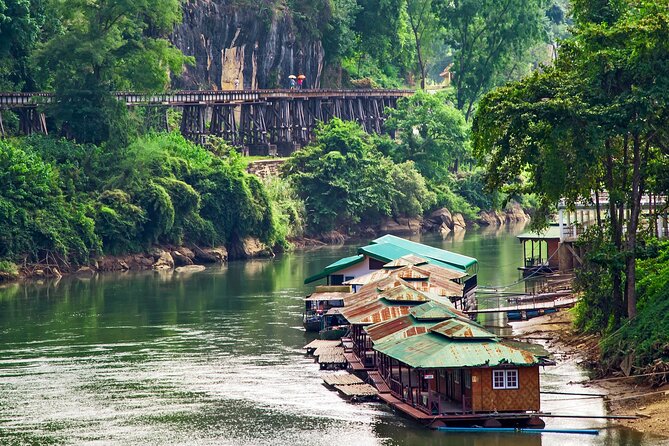
You’ll cross the iconic theme area with two bridge-related stops: one that’s longer and one that’s shorter. Together, they give you time to see the Bridge over the River Kwai from more than one angle and pause for photos without feeling like you’re on a factory conveyor belt.
This bridge is one of those places where your brain recognizes the scene even if you’ve never been. But the guide’s job is to connect the view to what it represented during WWII—so the bridge doesn’t become just a movie set.
One review mentioned a pause at a spot where Dutch POWs carved the trackway from rock. Even if you don’t know that detail going in, this is exactly the kind of moment a good guide will point out when you’re in the right location. It turns a photo stop into a memory with meaning.

JEATH War Museum: memorabilia, murals, and wall writing
The JEATH War Museum is next, with about 40 minutes set aside. It’s just around the corner from the famous bridge area, so the morning story doesn’t feel fragmented.
Here’s what to expect: the museum displays a collection of memorabilia, plus murals and writing on the walls. That “writing on the walls” piece matters because it’s more than background decoration. It’s the human layer—what people recorded and left behind.
Now, the drawback. One review specifically flagged that the JEATH museum can feel run down and not very well maintained. That doesn’t erase the value, but it changes how you should approach it. Go in expecting rough edges and focus on what the guide points out: the murals, the wall writing, and the objects that help explain the WWII connections.
Tip: if you’re the type who likes to read every label, you’ll be happy here. If you prefer quick highlights, ask your guide what’s most important to see in the time you have.
Tham Krasae Station views and the train passing by at Tiger Cave Temple
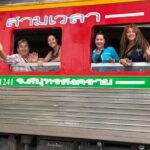
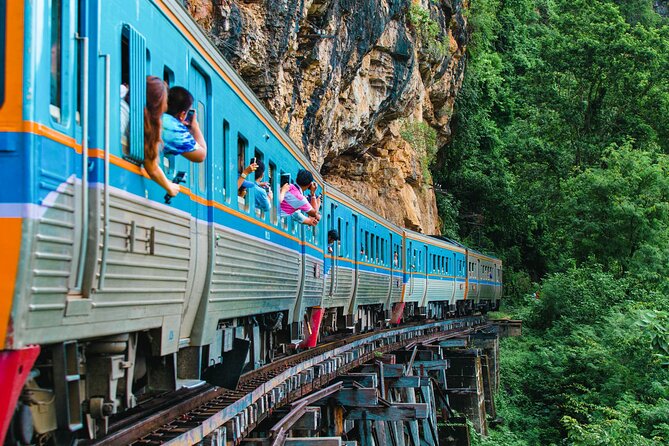
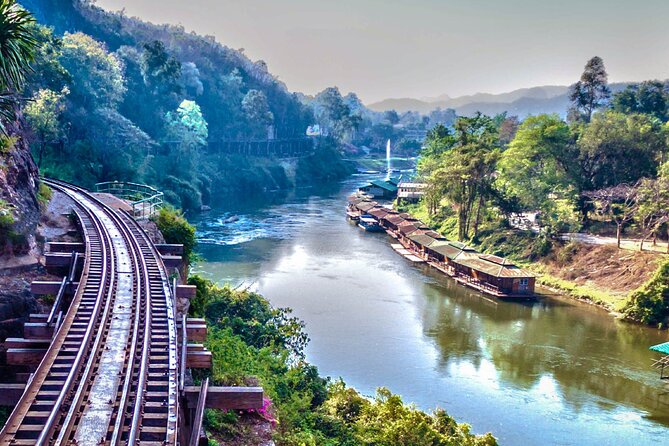
The last big stop is Tiger Cave Temple, also known as Wat Tham Suea. You’ll spend around 30 minutes here, with the payoff being a viewpoint where you can watch the train pass by. The timing is the magic. You’re not just visiting a temple; you’re waiting for the rail moment that makes this day feel unique.
This stop is tied to the Tham Krasae Station area, described as a picturesque railway section that snakes around a cliff. That cliff setting is what makes the passing train feel dramatic from the viewpoint. Even if you don’t know the technical details, your eyes will get it fast—rail line, cliff, and that moving “proof” that the region’s rail story is still visible today.
If you like photography, this is your second big camera moment after the bridge. If you’re traveling with kids, this is often the stop that gets smiles again because the train is moving and easy to point at.
Included value: guide, vehicle, water, and key entrance fees
At $99 per person, the value here isn’t just the attractions. It’s the basics that make a one-day trip actually work:
- An English-speaking guide who connects the stops into one story
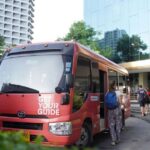
- An air-conditioned vehicle for the long Bangkok–Kanchanaburi drive
- Bottled water
- Hotel pickup and drop-off (on request)
- Entrance fees for the War Museum (listed as THB 50)
Lunch isn’t included, so plan for food on your own or bring simple snacks. The day is long enough that you’ll want at least one backup plan in your bag.
Also note the group size: up to nine travelers. That matters more than you might think. Smaller groups usually mean fewer “where are we standing?” moments and more flexibility for your guide to keep everyone together during short walks.
Price and logistics: why $99 can be a good deal here
Let’s talk value without the math pain.
For a day trip from Bangkok to a WWII-focused route, you’re paying for four things: a long-distance car ride, an English-speaking guide, small-group management, and entrance fees. The War Museum fee is explicitly included, and you’re not on your own to figure out how to connect the sites.
You’re also getting structure. Stops are timed—about an hour at the cemetery, plus shorter blocks for the bridge and museum. That structure makes it easier to see what you came for without burning half the day asking questions at random.
What could make it feel less like a deal? If you’re the independent type who already knows how to arrange transport and doesn’t care about a guided explanation, you may find cheaper options. But if you want the story connected to each place and you’d rather avoid the hassle, this price usually makes sense.
What kind of traveler this suits best
This is a strong match if you want an efficient day trip and you’re serious about the WWII sites. It’s also a good fit for families who can handle a reflective start at a war cemetery and still want a satisfying finish with the train passing by.
If you hate long days, you may want to think twice. This is about 11 hours, and it’s not broken into many short breaks. It’s also not a “lounge around” tour.
And if you expect museum perfection, adjust your expectations for the JEATH War Museum. The location and the wall writing matter more than the polish.
Helpful tips to make the day easier
A few practical things will make this tour smoother:
- Bring a small day bag with water and any snacks you like (lunch isn’t included)
- Wear comfortable walking shoes for river and bridge walks
- Have your camera ready for the bridge and the train passing moment—those are the best payoff windows
- If you’re sensitive to solemn spaces, mentally prepare for the cemetery stop first (it sets the tone)
One more thing: this is a WWII tour, so the best experience comes when you let the day slow down in your head. Photos are great, but the meaning is the main event.
Should you book this Kanchanaburi River Kwai and Death Railway tour?
I’d book it if you want a guided, small-group WWII day trip that hits the big locations without making you work for the connections. The cemetery start, the bridge photo-and-walk time, the JEATH museum murals and wall writing, and the train-view finale at Tiger Cave Temple create a full arc that feels more complete than a pick-and-choose self-guided day.
Skip it or consider another option if you’re mainly chasing modern comfort and museum polish. The JEATH War Museum may not match high-expectation standards, and the day is long.
If your goal is to see the River Kwai and Death Railway story through the places themselves—then this is a solid, well-structured way to do it from Bangkok.
FAQ
How long is the Kanchanaburi River Kwai & Death Railway small-group tour?
It runs for about 11 hours.
What is the group size for this tour?
The tour has a maximum of nine travelers.
Is hotel pickup included?
Hotel pickup and drop-off are included, and it’s offered on request.
Where does the tour meet?
The start meeting point is National Stadium BTS Station (Khwaeng Wang Mai, Pathum Wan, Krung Thep Maha Nakhon), and the tour ends back at the meeting point.
What are the main stops on the itinerary?
Key stops include Kanchanaburi War Cemetery, the Bridge over the River Kwai area, JEATH War Museum, and Tiger Cave Temple (Wat Tham Suea) with views of the train passing by.
Are entrance fees included in the price?
Entrance fees for the War Museum (THB 50) are included.
Is lunch included?
No. Lunch is not included.
What’s included besides the guide and sightseeing?
You get an English-speaking guide, an air-conditioned vehicle, bottled water, hotel pickup and drop-off, and the included entrance fee noted above.
What if weather is poor?
The tour requires good weather. If it’s canceled due to poor weather, you’ll be offered a different date or a full refund.
Is a mobile ticket provided?
Yes, a mobile ticket is listed as part of the experience.