REVIEW · BANGKOK
Full Day Kanchanburi Tour from Bangkok
Book on Viator →Operated by My Trip Maker · Bookable on Viator
A train ride, and a hard lesson. This full-day Kanchanaburi trip from Bangkok takes you to WWII-era sites tied to the Burma Railway, including the Kanchanaburi War Cemetery and the Death Railway train section. It’s a long day, but it has a clear story line—and it’s hard to forget once you see it in person.
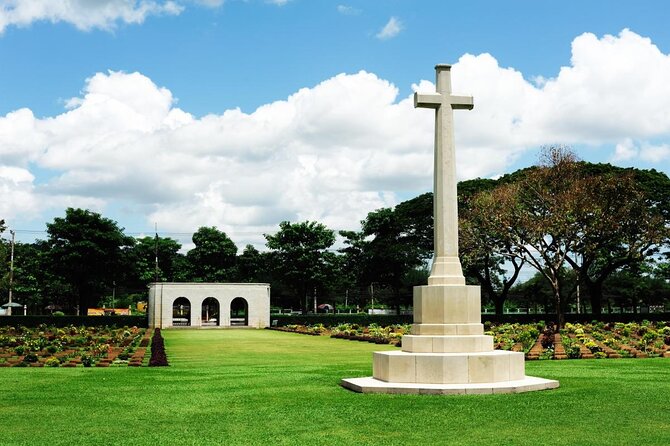
What I like most is the way the day connects the suffering to the infrastructure. The cemetery is quiet, well kept, and it gives you a real sense of scale with the graves of an estimated 9,000 Allied soldiers who died while building the bridge and the Death Railway.
Second, I really value the train journey along the railway’s famous stretch. It’s included as a formal part of the schedule, and that moving view helps you understand why this route became so infamous. One possible drawback: the JEATH War Museum can feel more like reading what’s already on the walls than hearing extra storytelling, so if you like context beyond the exhibits, you’ll want to ask questions.
In This Review
- Key points before you go
- A purpose-built itinerary for WWII on the Thailand–Burma route
- Bangkok pickup to Kanchanaburi: the early start math
- Kanchanaburi War Cemetery: a scale check that hits hard
- JEATH War Museum: replica POW camp, photos, paintings, tools
- River Kwai Bridge: memorial space, plus a seasonal rhythm
- The Death Railway train ride: why it’s the highlight
- Lunch in Kanchanaburi: fuel before the long return to Bangkok
- Price and logistics: is $109.60 good value?
- Who should book this tour (and who might not love it)
- Quick decision: should you book?
- FAQ
- How long is the Full Day Kanchanaburi Tour from Bangkok?
- What time is hotel pickup in Bangkok?
- What does the tour include for admissions and activities?
- Is the Death Railway train ride included?
- Is lunch included?
- What group size should I expect?
- What happens if weather is poor?
Key points before you go
- Small group size (max 10) keeps the day from feeling chaotic when schedules get tight.
- Early pickup (around 06:00–07:00) means you should plan for a very full morning.
- War Cemetery first gives emotional context before you see the memorial sites and train line.
- JEATH War Museum is included, with a replica POW-camp look, photos, paintings, and period tools.
- Death Railway train ride is the main event, but it’s weather dependent—go prepared.
- Lunch is built into the day, served buffet-style during the Kanchanaburi portion.
A purpose-built itinerary for WWII on the Thailand–Burma route
Most Bangkok day trips promise scenery. This one promises something tougher: an education you can’t skim. You start with a cemetery tied directly to the Burma Railway laborers’ losses, then move through a museum replica of a WWII POW camp, and finally travel the Death Railway by train.
That structure matters. If you see the bridge first, you might only remember the movie image. If you see the cemetery first, you remember why the infrastructure was built at such human cost. The day has a “timeline” feel—even though everything happens in one push—so you leave with a clearer picture of how the railway and crossings connected.
You can also read our reviews of more tours and experiences in Bangkok
Bangkok pickup to Kanchanaburi: the early start math
Pickup runs from 06:00 to 07:00 at the Century Park Hotel / Pratunam area near Victory Monument, and you return to the same meeting point in the late afternoon. Expect a total day of about 13 hours, with a big chunk of that spent on the road: roughly 3 hours to reach Kanchanaburi in the morning, then around 4 hours back to Bangkok after lunch.
This isn’t a “sleep in and relax” kind of outing. I’d treat the morning like a mini-commute: wear comfortable clothes, use sunscreen, and bring something to keep you occupied during the drive. You’ll be watching the world slide by, but you’ll also be building momentum for the stops that come later.
Two practical tips that help a lot:
- Bring water. The day is long, and hydration is your friend.
- Plan your camera storage. You’ll take photos at the bridge and cemetery, but also keep room for non-photo moments where you just need to look.
Kanchanaburi War Cemetery: a scale check that hits hard
The cemetery is usually the emotional centerpiece of this itinerary. You arrive around 09:00–09:30 and spend about 40 minutes here. This is described as the main POW cemetery for victims of Japanese imprisonment tied to work on what became known as the Burma Railway.
What’s powerful is the number. The graves represent an estimated 9,000 Allied soldiers who died while building the bridge and constructing the Death Railway. Even if you already know the broad WWII story, seeing the scale laid out in a dedicated burial ground changes how the facts feel in your body.
A note on pacing: 40 minutes can feel fast when you’re standing in place reading names and looking at headstones. If you want a slower, more reflective visit, keep a flexible mindset and don’t fill every second with photos. I also suggest not rushing to the next stop right away in your head—you’ll carry this context with you to the museum and bridge.
JEATH War Museum: replica POW camp, photos, paintings, tools
Next comes the JEATH War Museum, about a 40-minute stop. It’s built in the form of a prisoner-of-war camp from WWII, and you’ll see collections such as paintings and photographs plus period tools used during that era.
This is a good stop if you learn best by visuals. The replica setting can help you place the story in a “this is what it might have felt like” frame. But here’s my practical caution: the experience can feel like it sticks mostly to what’s displayed. If you want more commentary than the exhibits provide, don’t sit back and wait for it. Ask the guide questions when there’s a natural opening—especially about what you’re seeing and how it connects to the railway.
Also, allow yourself to move slowly through the sections that feel heavy. The museum’s value is not in speed; it’s in attention.
River Kwai Bridge: memorial space, plus a seasonal rhythm
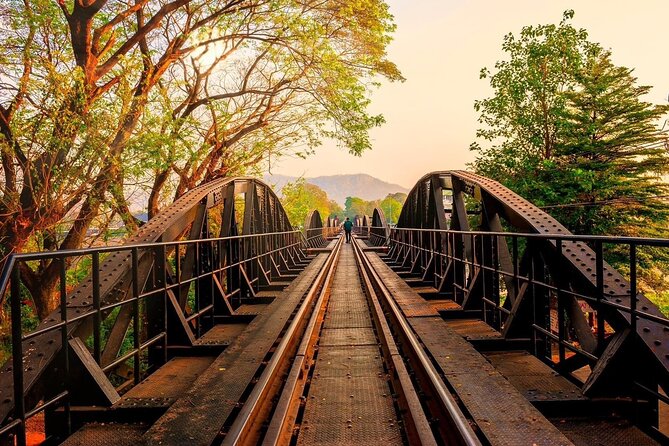
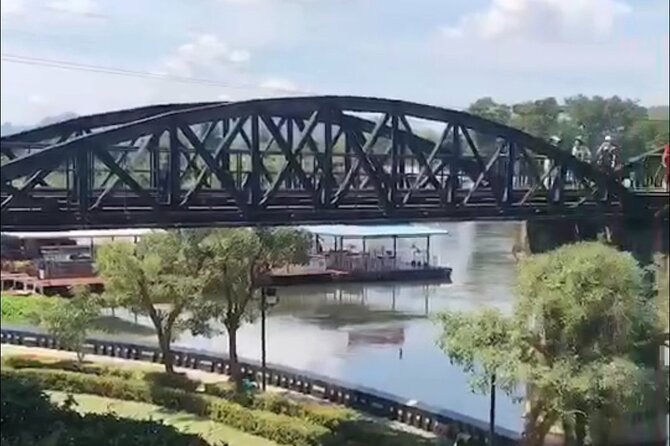
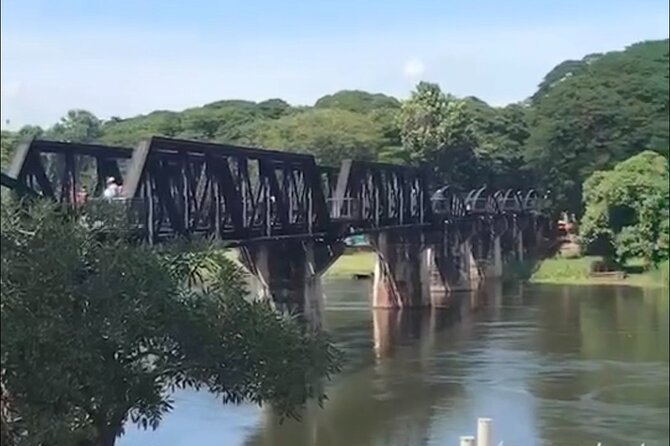
You then visit the Bridge over the River Kwai around 10:30 for about 40 minutes. Here, you’re not just looking at a structure—you’re stepping into a memorial zone linked to World War II. The schedule notes that the Bridge of the River Kwai Memorial Week runs during late November to early December, when there’s an exhibition tied to the history.
Even outside that season, the bridge stop works best as a moment to reconnect the earlier cemetery and museum material to something physical. The bridge is where the railway story becomes visible at human scale: a crossing point that enabled movement, supply, and labor under brutal conditions.
If you’re a photographer, go easy on the shutter habit. I’d take a few photos, then spend time just watching how the space is arranged. It’s one of those places where the setting and signage do a lot of the explanation—so your mental job is to stay present.

The Death Railway train ride: why it’s the highlight
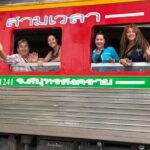
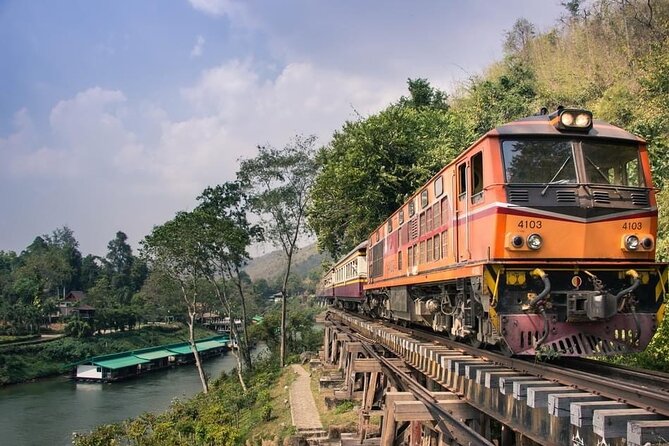
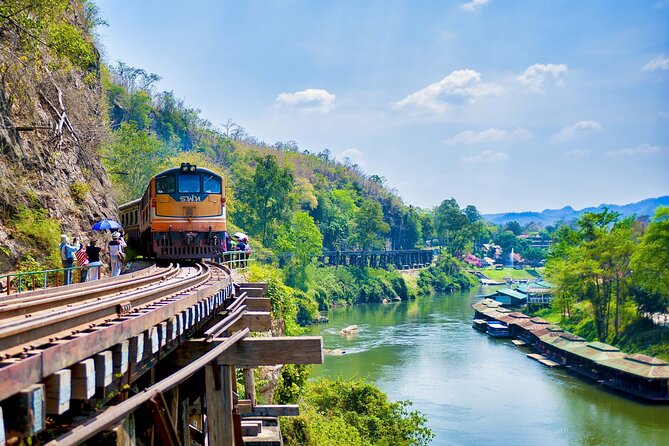
This is the reason many people choose the trip: the train ride on the Death Railway (about 2 hours 10 minutes), included in the tour. You’ll head to the departure area around 11:15, after the bridge stop.
Why this part matters: a train line is different from a museum. You aren’t just looking at history—you’re moving through the corridor that made the whole operation possible. Even without extra narration, the experience gives you a sense of distance and geography that pictures can’t fully capture.
Weather matters here. The overall tour notes that it requires good weather, and the train portion can be affected if conditions aren’t right. So pack with that in mind: bring a light layer in case the air turns cool, and keep rain protection handy.
Also, think about comfort for the ride. Two hours plus is long enough that small inconveniences become big. If you’re prone to seat discomfort, bring a thin cushion or wear supportive shoes.
Lunch in Kanchanaburi: fuel before the long return to Bangkok
After the train section, you’ll have Thai lunch at around 13:40, described as a restaurant in Kanchanaburi province. The tour overview also describes a buffet lunch served upon arrival at Wang Po station, so the meal is clearly built into the schedule rather than something you scramble to find.
This is an underrated part of the day because it’s your energy reset before the return drive. Don’t treat it as an afterthought—choose a pace that keeps you comfortable for the afternoon. If you eat lightly before the ride, you’ll likely enjoy this lunch more; if you eat heavy, just plan for a slower, gentler afternoon.
Price and logistics: is $109.60 good value?
At $109.60 per person, this day trip isn’t the cheapest way to reach Kanchanaburi. But it is one of the more “time-efficient” options because you’re paying for the full package: round-trip transfer, an English-speaking guide, entry to the JEATH War Museum, and the Death Railway train journey.
The best value angle here is simple: you’re not just buying tickets. You’re buying someone else’s coordination for a long day. With a maximum group size of 10 travelers, you’re also less likely to feel like you’re trapped in a big bus herd.
Where value can feel weaker is the guide style. One caution I’d give based on what’s typical for this kind of stop: if you expect deep, storytelling-level commentary at every museum wall, you might not get it consistently. The itinerary includes key sites and admissions, but it doesn’t promise an expert-level lecture at each room. If you’re the type who loves to ask questions, that turns the “basic” moments into useful moments.
Bottom line: for most people who want history plus practical transport in one day, the price feels fair—especially once you remember the train ride and museum entry aren’t extra add-ons.
Who should book this tour (and who might not love it)
This experience fits best if you:
- want a structured day with WWII sites tied to the Burma Railway
- like learning through multiple stops (cemetery → museum → bridge → train)
- prefer a guided, English-language explanation rather than planning everything yourself
It may feel like a tough match if you:
- hate early mornings and long days (you’re looking at roughly 13 hours)
- strongly prefer very talkative guiding at every stop and museum room
- get very restless on long train and road segments
Quick decision: should you book?
I’d book this tour if you want a focused history day without the hassle of figuring out transport across multiple sites and then paying for the train separately. The Death Railway train ride and the War Cemetery context make the day feel like more than a checklist.
I wouldn’t book it if you’re only in it for scenery or if you need lots of extra museum-style explanation. Here, the exhibits and sites do much of the talking. If you’re okay with that—and you come ready to pay attention—it’s a powerful day.
FAQ
How long is the Full Day Kanchanaburi Tour from Bangkok?
The tour lasts about 13 hours.
What time is hotel pickup in Bangkok?
Pickup starts between 06:00 and 07:00 from the meeting point in the Bangkok area.
What does the tour include for admissions and activities?
Entry admission fees include the JEATH War Museum and the train journey at the Death Railway. The war cemetery stop is listed as free admission.
Is the Death Railway train ride included?
Yes. The train ride along the Death Railway is included and lasts about 2 hours 10 minutes.
Is lunch included?
Lunch is included in the day schedule as Thai lunch in Kanchanaburi province, and the overview also describes a buffet lunch served during the Kanchanaburi portion.
What group size should I expect?
The tour has a maximum group size of 10 travelers.
What happens if weather is poor?
The tour requires good weather. If it’s canceled due to poor weather, you’ll be offered a different date or a full refund.