REVIEW · FLOATING & RAILWAY MARKET DAY TRIPS
Floating Market – Train Market – Flower Market and China Town
Book on Viator →Operated by Arlymear Travel · Bookable on Viator
Four markets in one day, and you’ll feel Bangkok’s pulse. This tour strings together the Damnoen Saduak Floating Market, Mae Klong Railway Market, Bangkok’s flower hub, and Chinatown, plus a local lunch, so you don’t have to plan three separate outings. I especially like the way you learn market negotiating and bartering traditions with help from your guide, and how Mae Klong gives you a front-row view of how commerce works right next to a working train line. The main drawback is the pace: it’s a fast, long day that starts early, and the market areas involve walking and crowd flow.
You’ll also be out of the city center for part of the day, with a drive that builds context before the stops start. One other consideration: your guide and your group’s decisions (including whether to add any extra stop outside the plan) can affect how you experience the schedule.
In This Review
- Key points before you go
- Why this Bangkok markets day makes sense
- 7:00 am pickup and an 8-hour schedule that stays busy
- Damnoen Saduak Floating Market: coconut sugar and water-side life
- Mae Klong Railway Market: the track-side market with train timing
- Lunch in a local restaurant: your mid-tour reset
- Chinatown after lunch: gold shops, street markets, and shop houses
- Pak Khlong Flower Talat Original: wholesale energy and fresh-cut color
- What you learn about bartering and market etiquette
- Optional extras: when a detour makes sense
- Price and value: what $169.27 buys you
- Who should book this tour?
- Should you book it? My practical take
- FAQ
- What time does the tour start and how long is it?
- Which markets are included?
- Is lunch included?
- Does hotel pickup and drop-off happen?
- Are drinks included?
- What if I need to cancel?
Key points before you go
- Hotel pickup and drop-off keeps this day manageable, especially with an early 7:00 am start
- Bartering etiquette lessons help you shop without feeling lost or rude
- Damnoen Saduak includes a stop for coconut sugar production, adding more than just photo time
- Mae Klong Railway Market centers on the track, where shop awnings and stalls respond to approaching trains
- Pak Khlong Flower Talat focuses on fresh wholesale and retail flowers, including orchids, lilies, and roses
- Chinatown wraps it up with gold shops, street markets, and shop houses, plus your lunch in the middle
Why this Bangkok markets day makes sense
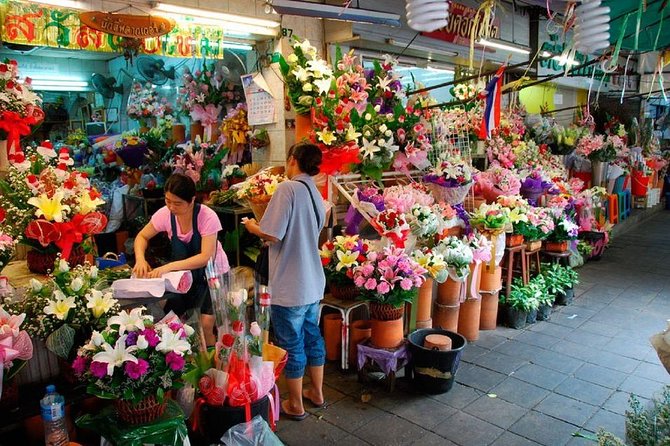
If you only have one solid day, this kind of multi-stop tour is a smart way to get variety fast. Instead of only seeing one market, you see four different market “worlds” that show how daily life shifts by setting: water markets, rail markets, flower wholesale, and dense neighborhood retail.
The value isn’t just the geography. It’s the guide-led context. Markets in Bangkok can feel like controlled chaos, especially when you’re trying to buy something while everyone around you knows exactly what to do. The tour is built to help you understand how bartering works and how to behave while you’re there.
This also helps if you want photos, but not at the cost of missing what’s going on. You’ll be moving through the action with a plan, so you aren’t left guessing where to go next.
You can also read our reviews of more shopping tours in Bangkok


7:00 am pickup and an 8-hour schedule that stays busy
The day starts at 7:00 am, and it runs about 8 hours total. That means an early wake-up, but it also means you get into the market rhythm while things are still getting going.
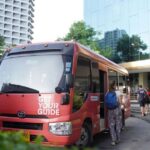
You’ll travel in a private vehicle with hotel pickup and drop-off, which is a big deal in Bangkok. It keeps time focused on the stops instead of negotiating transport, and it reduces stress for a day that involves several time blocks.
The tour is private in the sense that it’s only your group. You still need to expect a “group-tour pace,” meaning you’ll be on a timeline from one market to the next, but you won’t be shuffled into a huge mix of strangers.
One more small but practical note: you’ll have a mobile ticket, so you won’t be hunting for printed vouchers before you leave.
Damnoen Saduak Floating Market: coconut sugar and water-side life
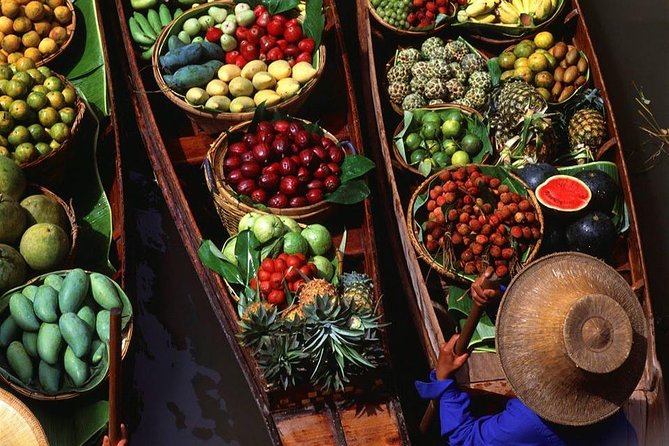
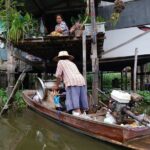
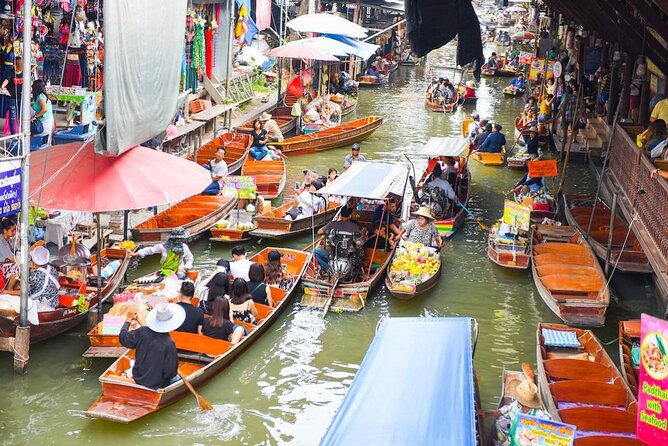
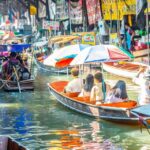
Your day kicks off with Damnoen Saduak Floating Market, but the experience starts on land. The drive passes rice paddies and salt fields, then you visit a farmhouse along the way. That farmhouse stop matters because it gives you a taste of how local food and ingredients are made before you hit the market scene.
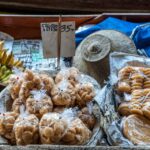
A standout detail here is watching locals produce sugar from coconut. It’s not just a random photo stop; it adds a “how it’s made” layer that makes the later market visits feel more real. When you understand where a product comes from, shopping becomes easier to read.
You’ll spend about 2 hours at this stop. That’s usually enough time to walk around, see what’s sold, and observe how transactions happen on the water-side setup. It’s also long enough that you can step back when the crowd compresses and then come forward again.
Potential drawback: this is a floating-market environment, so it can be crowded and fast-moving. Wear shoes that handle uneven surfaces and be ready for a lot of sensory input in a short window.
Mae Klong Railway Market: the track-side market with train timing
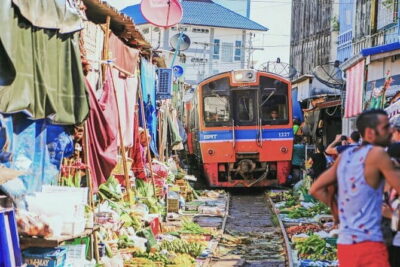
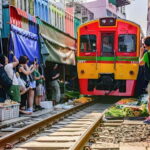
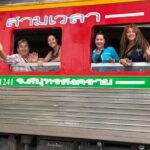
Next up is Mae Klong Railway Market (Hoop Rom Market), and this is the stop most people remember. The market is centered on the train track, and when trains approach, stall fronts and awnings get adjusted so trains can pass.
You’ll have about 45 minutes here. That time block is short on paper, but it works because the “wow moment” repeats each time a train comes through. With a guide, you’re not just standing around hoping you caught the timing—you’re directed through the best viewing angles and the right moment to watch the adjustments.
It’s also described as one of Thailand’s larger fresh seafood markets, so it’s not only about the spectacle. You’ll see what people are buying and selling right by the rails, which is a reminder that this is normal daily commerce, not just a tourist performance.
What to keep in mind: because the train is part of the action, the market’s rhythm isn’t fully under your control. Expect a bit of waiting and crowd shuffling, and don’t plan to browse like it’s a museum gift shop.
Lunch in a local restaurant: your mid-tour reset
After Mae Klong, the tour includes lunch at a local restaurant. This matters more than it sounds, because the day is packed: floating market, rail market, then Chinatown and the flower market.
The lunch timing also gives you a chance to slow your brain down. You’ll likely need it, since you’ll be returning to Bangkok for the rest of the tour, and Chinatown plus Pak Khlong can feel like a full-on sensory shift after the rail-track stop.
If you’re picky with spices or want to control heat, this is where you can set yourself up for the afternoon. The tour data confirms lunch is included, but drinks and alcohol are not included, so if you want a specific drink, plan to purchase it on site.
You can also read our reviews of more tours and experiences in Bangkok
Chinatown after lunch: gold shops, street markets, and shop houses
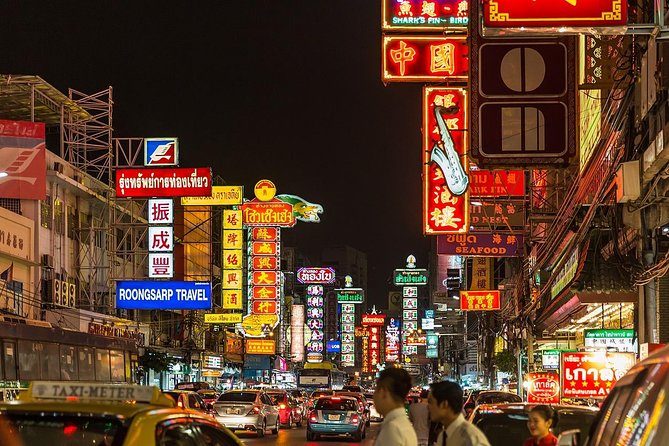
Once you’re back in Bangkok, you head to Chinatown. Your guide leads you through local market areas with street markets, street-side restaurants, shop houses, and gold shops.
This is your “city neighborhood” moment: less about spectacle like the train market, and more about how a long-established commercial district feels when you’re walking through it on foot. Chinatown is also usually where you can spot the contrast between everyday browsing and bigger-ticket retail, like gold.
You’ll have about 1 hour at this stop. In market time, that’s a decent window: long enough to get a feel for the streets around you and to stop for quick purchases, short enough that the tour doesn’t drag.
Practical consideration: Chinatown can be intense for navigation. If you’re someone who wants to stop often and browse slowly, you might feel the clock. That said, the guide structure helps you stay oriented, especially when you’re switching from one section to the next.
Pak Khlong Flower Talat Original: wholesale energy and fresh-cut color
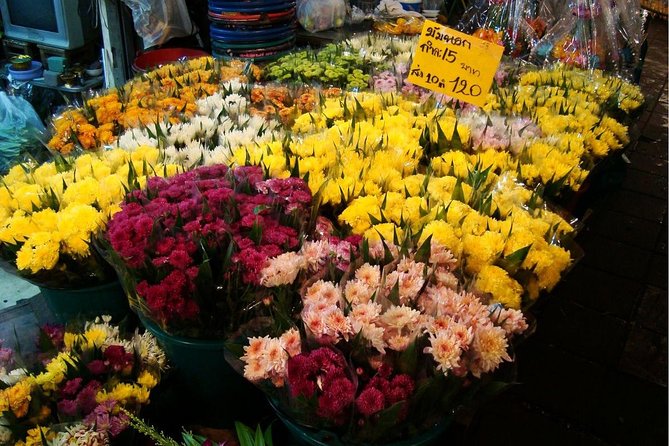
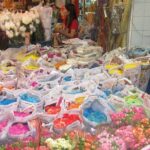
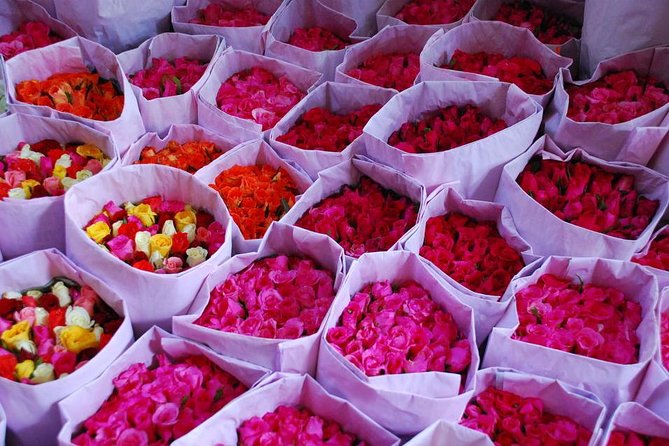
Near Chinatown is Pak Khlong Flower Talat Original, described as the biggest wholesale and retail fresh flower market in Bangkok. If you want a change of pace—something visual and fragrant rather than seafood and street food—this is the perfect late-day contrast.
You’ll spend about 30 minutes here, and the list of what you might see is specific: roses, forget-me-nots, orchids, and lilies, plus other flora-related items.
This stop is especially valuable if you want to understand Bangkok’s supply chain for flowers. Wholesale markets can feel chaotic, but they also show you what’s actually available and how the market supports daily life—from decorations to offerings.
Potential drawback: 30 minutes goes fast. If you love flowers and want deeper browsing, prioritize what you came for (a bouquet idea, a specific flower type, or flower-themed souvenirs) before you arrive.
What you learn about bartering and market etiquette
The tour’s marketing says you’ll learn negotiating and bartering traditions, but here’s what that really means for you on the ground: you get a sense of what’s normal, what’s expected, and how to respond when someone quotes a price.
Without guidance, a market transaction can feel awkward or confusing. With guidance, you’ll be more likely to:
- ask in a way that fits local rhythm
- understand when it’s worth continuing to negotiate
- know how to keep things polite even when prices move
This is also where having a guide with strong English helps a lot. In the experience feedback you can hear a pattern: guides like Kat get praised for being attentive and informative with excellent English. Even if the guide you get is different, you’ll still have the advantage of having someone guide your interactions.
Optional extras: when a detour makes sense
One detail to know: some days include opportunities for extra stops that are not part of the main tour plan. For example, you may hear about adding a stop at a safari park for photos with tigers and lions, but it’s described as up to you and not included in the tour.
If you’re considering anything like that, remember it can change your pacing and how much time you have in each market. If your priority is seeing all four markets with breathing room, skip the extras.
Price and value: what $169.27 buys you
At $169.27 per person, this tour isn’t the cheapest way to see markets, but it can be good value because it includes several things that cost real money and time if you do them yourself: hotel pickup and drop-off, transport by private vehicle, a local guide, and lunch.
Also, most of the market stops list admission tickets as free, and only the train market indicates an admission ticket as included. In other words, a good portion of what you’re paying for is the guide, logistics, and timing—not just entrance fees.
The day is also timed well for visitors who want structure. You start early, hit the most time-sensitive moments (especially at Mae Klong), and then finish with Pak Khlong and Chinatown.
One more value note: the tour lists group discounts, which can make this more affordable if you’re traveling with friends or family.
Who should book this tour?
This tour is a great fit if you:
- want four major market experiences in one day
- like learning how people do business, not just taking pictures
- prefer guided help with bartering and market etiquette
- can handle an 8-hour day starting at 7:00 am
It may not be ideal if you want a slow, wandering day with lots of downtime. This schedule is designed to keep you moving, and the markets are active places.
Should you book it? My practical take
Book this tour if your goal is simple: see Damnoen Saduak, Mae Klong, Pak Khlong Flower Talat, and Chinatown without getting stuck in transport and timing puzzles. The included lunch, guide support, and hotel pickup make the day easier, and the itinerary is built around the moments that are hardest to time on your own—especially the train market.
Skip it if you’re easily overwhelmed by crowds or you hate early starts. You’ll still enjoy the sites, but the pace can feel like sprinting between highlights.
If you do book, you’ll get the most out of it by using the guide for interactions—not only directions. Ask questions, learn how the bargaining vibe works, and keep your shopping priorities in mind so you don’t lose time to decision fatigue.
FAQ
What time does the tour start and how long is it?
The tour starts at 7:00 am and runs about 8 hours.
Which markets are included?
You’ll visit Damnoen Saduak Floating Market, Mae Klong Railway Market (Hoop Rom Market), Chinatown, and Pak Khlong Flower Talat Original.
Is lunch included?
Yes. Lunch is included at a local restaurant.
Does hotel pickup and drop-off happen?
Yes. Hotel pickup and drop-off are included, and transport is by private vehicle.
Are drinks included?
Drinks are not included, and alcoholic drinks are available to purchase.
What if I need to cancel?
You can cancel for a full refund up to 24 hours before the experience’s start time. If you cancel less than 24 hours before, the amount paid isn’t refunded.