REVIEW · ELEPHANT SANCTUARY TOURS
Erawan Waterfall and Elephant Care: Private Tour to Kanchanabur
Book on Viator →Operated by Idaytrip · Bookable on Viator
A waterfall day that also teaches Thailand’s WWII story. This private tour balances nature and history with a day that feels tailored, not rushed. I especially like that you get lunch plus entrance fees handled, and the transport is comfortable for the long haul out of Bangkok. The main drawback is simple: it’s a full day with a lot of driving and some stairs at Erawan, so plan for an early start and a bit of physical effort.
You’ll start at 6:30am, then spend time swimming and climbing at Erawan’s seven levels, before shifting to the Thai–Burma Death Railway and World War II sites. The elephant stop is the emotional peak for many people, and the best part is how hands-on it can be, as long as you’re ready to get wet and involved.
In This Review
- Key takeaways before you go
- Six-Thirtyam pickup and the long drive out of Bangkok
- Erawan Waterfalls: swim in the emerald pools and climb seven levels
- Death Railway Museum and Research Centre: a short walk with heavy meaning
- Tham Kra Sae Bridge: the POW bridge and the Buddha cave
- Kanchanaburi Elephant Sanctuary: rescued elephants, feeding, and bathing
- Bridge Over the River Kwai: a famous WWII walk you can actually do
- Guides make the day: Peter, Ann, Yokie, Preecha, and even Bella
- Value and practicalities: what you get for $227.66 and why it can be worth it
- Should you book this Erawan and elephant private day trip?
- FAQ
- What time does the tour start?
- Is hotel pickup and drop-off included?
- What’s included in the price?
- Do you swim at Erawan Waterfalls?
- What physical demands should I expect?
- What happens during the elephant sanctuary visit?
- Is there free cancellation?
Key takeaways before you go
- Erawan Waterfall swim time on real pools, not just a look-and-leave stop
- Death Railway walk along the River Kwai, with context about POW labor
- Tham Kra Sae Bridge cave with a Buddha image and a POW-camp setting
- Elephant sanctuary care focused on rescued elephants, feeding, and bathing
- Bridge of the River Kwai gives WWII history a clear, walkable ending
- Long day logistics: early pickup, lots of road time, and some steps
Six-Thirtyam pickup and the long drive out of Bangkok
This is a 12-hour private day built for travelers who want to escape the city and still pack in big sights. You’re picked up from your Bangkok hotel and sent to Kanchanaburi area attractions in one air-conditioned vehicle, so you don’t have to coordinate trains, taxis, or ticket lines on your own.
Yes, the drive is long. It shows up in how your day feels. If you’re the type who needs lots of breaks, bring your best patience. If you’re okay reading, napping, or just settling in with good cold AC, you’ll likely find the day flies by because the stops are varied: waterfall → WWII sites → elephants → a final famous bridge.
The tour is also described as customizable. That matters because a private schedule can help you move at a pace that fits your group—especially around the waterfall and elephant time, where timing can affect comfort and photo opportunities.
You can also read our reviews of more private tours in Bangkok


Erawan Waterfalls: swim in the emerald pools and climb seven levels
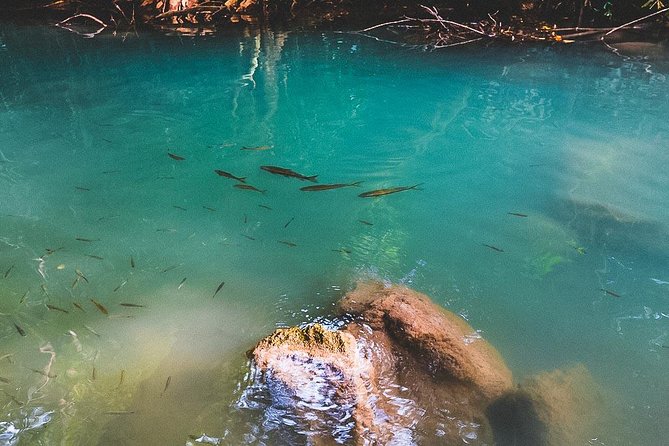
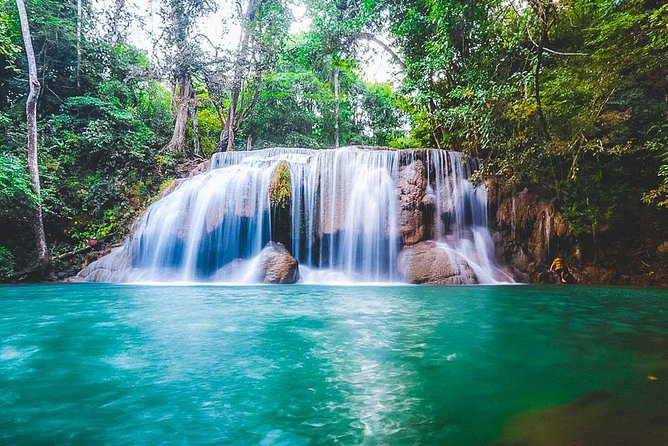
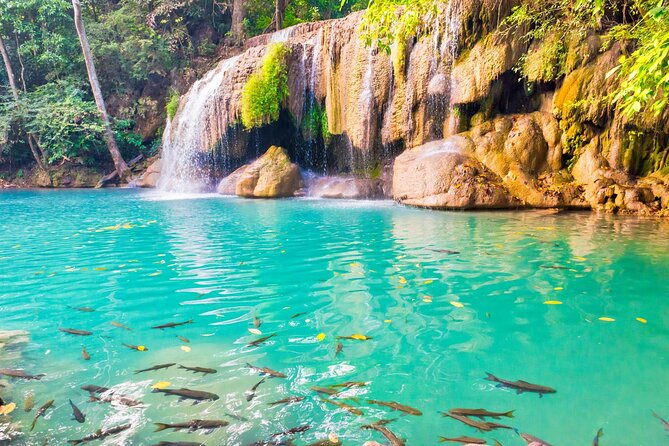
Erawan Waterfall is the kind of place where you quickly understand why people build trips around it. You’ll arrive and get a dedicated block of time to move through the seven levels and cool off in the pools. The water is described as emerald-green, and the day’s “fun factor” ramps up fast once you’re in swim mode.
Erawan is not just a flat walkway. You climb between falls, and the higher you go, the more you’ll feel the steps. One practical detail: from around the mid-levels upward, you’ll notice more climbing and uneven ground. If you’re moderately fit, you’ll be fine. If you don’t like stairs, you can still enjoy the lower pools, but you won’t get the full top-to-bottom experience.
A few small tips that make a huge difference:
- Bring a swimsuit and water shoes. People do get wet, and it’s easier with grip.
- Consider dry clothes for afterward. Your day won’t feel ruined, but you’ll be happier if you can warm up on the drive.
- If you’re stepping into the pools, you might spot small fish nibbling at your feet. It’s not described as painful—more like a slightly weird sensation.
Death Railway Museum and Research Centre: a short walk with heavy meaning
After you leave the waterfall, the tone shifts. You’ll head to the Death Railway area and take a short walk along the Thai–Burma Death Railway route by the River Kwai. This isn’t a long hike—think around half an hour—but it’s dense with context.
The value here is that the guide helps you understand what you’re seeing. You’re not just walking a path and taking photos. You’re learning about how the railway was built and what the work cost. That context turns ordinary scenery into something you remember, because you’re connecting the ground under your feet to the human story behind it.
This stop can feel emotionally heavy, but it’s also one of the most meaningful parts of the day. If you like history that’s explained clearly instead of just listed on plaques, you’ll likely appreciate how the tour frames this section of WWII Thailand.
Tham Kra Sae Bridge: the POW bridge and the Buddha cave
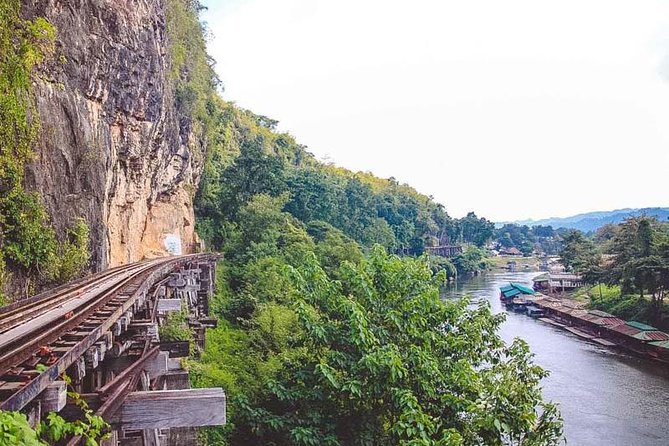
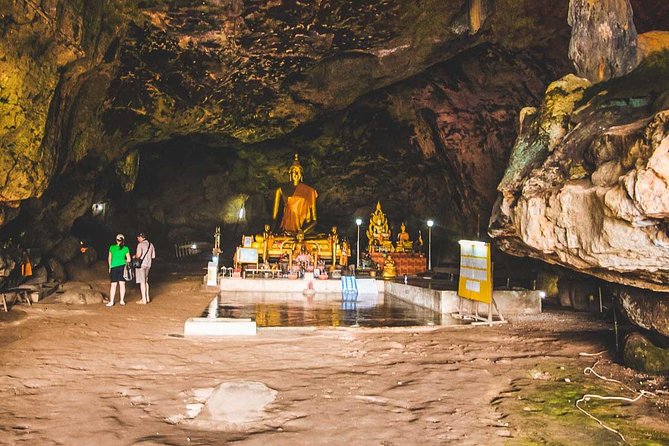
Next comes Tham Kra Sae Bridge, where the stop is brief but striking. You’ll visit a cave setting that includes a Buddha image. The cave is tied to the WWII period: it was formerly a camp for POWs connected to the railway construction.
Because the time is short (about 15 minutes), this is best treated as a “quick stop with a big emotional punch.” You’ll see enough to grasp the meaning without having to commit to a long wandering session.
If you’re the type who likes to understand symbolism, this stop is a nice counterpart to the railway walk. One place is about forced labor and suffering tied to a major transportation project. The other uses a religious image inside the cave to show how places can hold layers of time and meaning.
Kanchanaburi Elephant Sanctuary: rescued elephants, feeding, and bathing
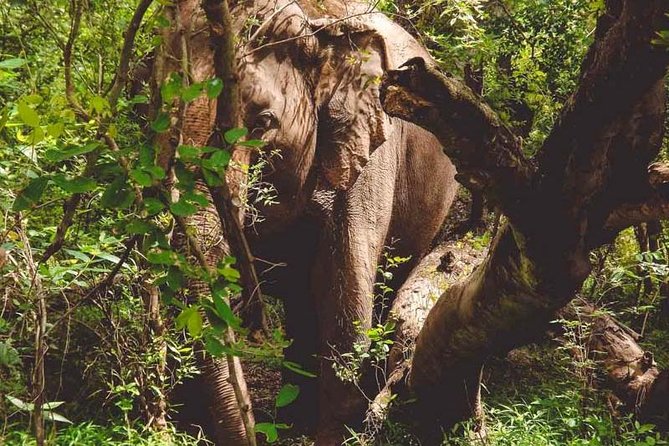
This is the stop most people remember long after the bridges fade. You’ll meet elephants at the Kanchaburi Elephant Sanctuary and learn about rescued animals. The experience is hands-on, and for many animal lovers it’s the reason to choose a structured tour instead of a DIY day.
What you do here is the key detail:
- You get time to interact through activities like feeding.
- You can also be part of bathing and cleaning routines.
- You may also join daily tasks like preparing food and fruit for the elephants, depending on what’s happening that day.
One review-style takeaway I found consistent: people describe the sanctuary as protective and not focused on riding or forced labor. The emphasis is on care and safe interaction. That helps a lot if you’re picky about animal ethics.
Practical reality check: this is a wet experience. Even if you’re careful, you’ll likely get splashed. People recommend wearing a bathing suit and having a plan for getting dry later—especially if you hate the feeling of cold clothes after the elephant bathing part.

Bridge Over the River Kwai: a famous WWII walk you can actually do
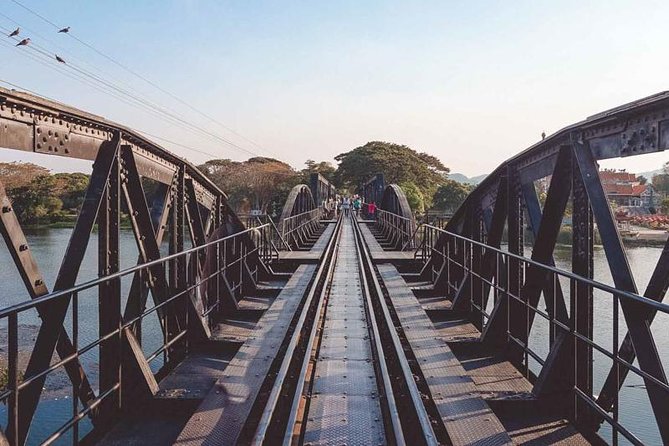
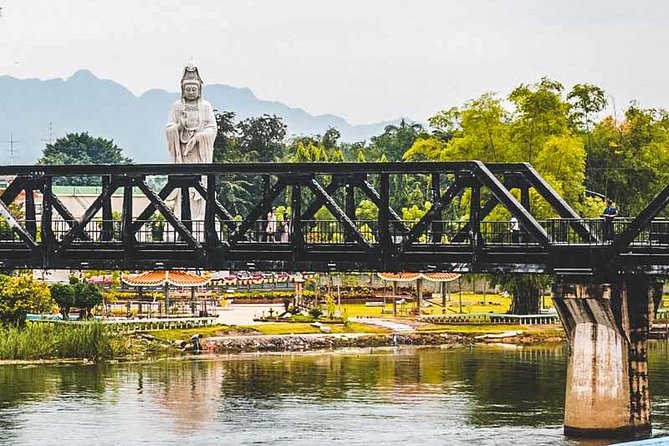
Your day ends at the Bridge Over the River Kwai. This is the iconic iron bridge connected to WWII events in Thailand. You’ll spend about an hour walking along the bridge and taking it in.
This is a good “wrap-up stop” because you’ve already seen the railway history and POW connections earlier. Now the story becomes visible in a single place you can walk through. It’s a reminder that WWII in this region wasn’t only fought in battlefields; it was also enforced through infrastructure, labor, and control.
The bridge stop is short enough to stay enjoyable, even if you’re tired from the earlier climbing and elephant time. Still, do bring your energy. This is the kind of place where your photos will look good partly because the setting is dramatic and partly because you’ll likely slow down once you see what the guide is pointing out.
Guides make the day: Peter, Ann, Yokie, Preecha, and even Bella
With a private tour, the guide has a bigger impact than you might expect. The day’s flow depends on how clearly they explain the sites and how well they manage timing across a long route.
The most enthusiastic guide notes include names like Peter, who’s praised for being very knowledgeable and for keeping everyone comfortable, and Yokie, who’s highlighted for caring attention and practical help when someone felt unwell midday. Preecha also shows up with strong praise for storytelling and pacing. Nan and Ann are similarly mentioned as informative and attentive.
Then there’s the realistic wrinkle: at least one person reported that Bella didn’t narrate or communicate the schedule as well, and another felt her language skills weren’t engaging. That doesn’t mean the tour is inconsistent, but it does mean guide quality can vary by assignment.
If you care a lot about the narration, consider asking whether you can request a guide by name when booking, especially if you’ve seen strong references to someone like Peter or Preecha. In a private setup, that kind of request can matter.
Value and practicalities: what you get for $227.66 and why it can be worth it
At $227.66 per person, this isn’t a budget day trip. But it includes a lot that costs time and money if you try to DIY:
- Hotel pickup and drop-off from Bangkok
- Air-conditioned private transport
- A professional guide
- Lunch and bottled water
- All entrance fees
That bundled setup is the value. You’re paying for someone else to handle transport logistics, ticket access, and on-the-ground interpretation—while you focus on enjoying Erawan, the elephant sanctuary interaction, and the WWII stops.
You also get a private-group experience, which helps on a day like this. A smaller, controlled group makes it easier to move through crowded waterfall areas, and it typically makes elephant time less chaotic.
The main practical consideration is how you handle the physical part and the wet part. The day assumes you can manage stairs and uneven paths at Erawan, and it assumes you’ll accept that you might get soaked during elephant bathing.
Should you book this Erawan and elephant private day trip?
If your ideal day trip includes all of these—a real waterfall swim, WWII history tied to the River Kwai region, and an elephant sanctuary experience that’s focused on care and interaction—then this tour makes strong sense. It’s especially a good fit for animal lovers who want a guided, structured encounter instead of a random stop with unclear rules.
Skip or rethink it if:
- You dislike early mornings and long drives.
- You don’t want to climb stairs or spend time moving between Erawan’s levels.
- You’d be miserable if you got wet and didn’t want to deal with dry clothes afterward.
If you can handle a long day with a mix of nature and history, you’ll likely come away with one unforgettable nature memory (those waterfall pools) and one unforgettable emotional memory (the sanctuary care time).
FAQ
What time does the tour start?
The start time listed is 6:30am, with an approximate total duration of 12 hours.
Is hotel pickup and drop-off included?
Yes. Pickup is offered, and the tour ends with hotel drop-off.
What’s included in the price?
Included are a professional guide, air-conditioned private transportation, lunch, bottled water, and all entrance fees.
Do you swim at Erawan Waterfalls?
Yes. The itinerary includes time to swim in the waterfall’s pools, so packing a swimsuit is a good idea.
What physical demands should I expect?
The tour is described as suitable for moderate physical fitness. That includes moving around Erawan’s levels and stair areas.
What happens during the elephant sanctuary visit?
You’ll meet rescued elephants and learn about them, with an experience that includes hands-on activities like feeding and bathing as part of the sanctuary routine.
Is there free cancellation?
Yes, free cancellation is allowed up to 24 hours in advance for a full refund. If the tour is canceled due to poor weather, you’ll be offered a different date or a full refund.