REVIEW · CHAO PHRAYA DINNER CRUISES
CTB Unlimited Hop CHAO PHRAYA RIVER: All Day River Pass
Book on Viator →Operated by Chao Phraya Tourist Boat · Bookable on Viator
This river hop really cuts through the chaos. You get unlimited get on, get off rides on the Chao Phraya Tourist Boat, plus onboard restrooms and WiFi, so it feels like a day that runs on your schedule, not Bangkok traffic. I especially like how it lines up big-ticket sights along the river—Wat Arun, the Grand Palace area, and Khaosan Road—without making you constantly switch transport. One thing to watch: the day can feel fast-paced, so you’ll want a plan for which stops are must-dos and which ones are quick photo breaks.
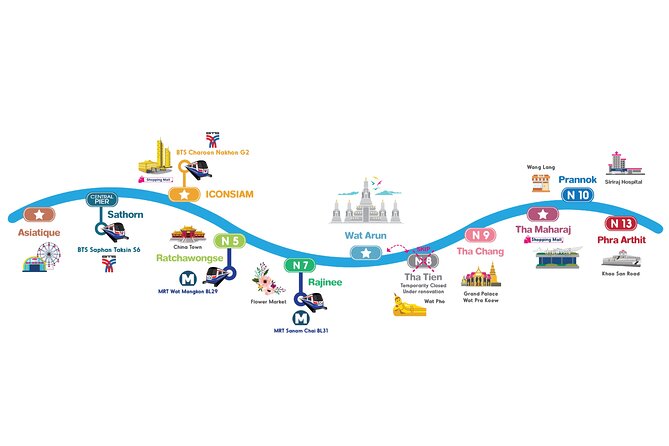
What makes this pass practical is choice. You can pick multiple departure timings from early morning to early evening and board from several piers, including Sathorn Pier (linked to BTS Saphan Taksin station, S6 Exit 2). The boat is also built for sightseeing days, with a route that pairs culture and shopping like a greatest-hits reel—Chinatown herbs and street food, ICONSIAM shopping, and temple landmarks in between.
The vibe is smooth, but you should expect that afternoon service tends to feel more convenient than later in the day. And if your voucher/QR code doesn’t scan smoothly at the pier, bring a backup plan so you’re not stuck waiting.
In This Review
- Key things to know before you ride
- Why a Chao Phraya hop pass beats jumping between transport
- Price and value: what you really get for about $5
- How the unlimited 24-hour plan works in real life
- Boarding points and getting oriented fast (Sathorn to the rest)
- Stop 1: Sathorn Pier and Yannawa Temple (a calm warm-up)
- Stop 2: ICONSIAM for shopping and a breather between sights
- Stop 3: Chinatown via Ratchawongse Pier for street food energy
- Stop 4: Tha Tien / Rajinee area for Wat Pho, flowers, and Museum Siam
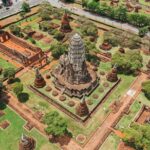
- Stop 5: Wat Arun (Temple of Dawn) and the 50 THB entry fee
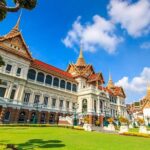
- Stop 6: The Grand Palace area for the big-ticket cultural site
- Stop 7: Khaosan Road via Phra Arthit for street life at night pace
- Onboard details that make or break a day
- Who this pass is best for
- Should you book this Chao Phraya all-day river pass?
- FAQ
- How long can I ride with the all-day river pass?
- Where can I board the Chao Phraya Tourist Boat?
- Are restrooms and WiFi available onboard?
- Which major stops are included, and are tickets required?
- What are the operating hours?
- Can I cancel for free?
Key things to know before you ride
- Unlimited 24-hour hop-on hop-off using one day pass, so you control the order of stops
- Nine departure points along the river, including Sathorn Pier and several tourist-heavy piers
- Onboard restrooms and WiFi, which are genuinely useful on a long sightseeing stretch
- Most major sights are paired on one route, from Chinatown to Wat Arun to the Grand Palace area
- Max group size is 190 travelers, so you’re not on a tiny boat, but it’s still manageable
Why a Chao Phraya hop pass beats jumping between transport
Bangkok’s roads can be a patience test. A river boat flips the script: you’re traveling on the water while your day’s highlights line up like stops on a checklist.
This all-day pass is built for that exact goal—see a lot of the Chao Phraya corridor with less stress. Instead of piecing together BTS, MRT, buses, and random tuk-tuk negotiations, you let the boat handle the main connection. You still walk at each stop, but the hard part—getting between far-apart sights—is simpler.
I also like that the boat approach makes the day feel more like sightseeing than commuting. You’ll pass along the river toward places that are iconic even from a distance. It’s a nice change of pace when you’re tired of being stuck indoors in heat and noise.
One more practical point: the route mixes neighborhoods, not just temples. So you can go from a religious landmark vibe to shopping-heavy ICONSIAM, then to the street-food energy of Khaosan Road without feeling like you’re traveling in circles.
You can also read our reviews of more tours and experiences in Bangkok

Price and value: what you really get for about $5
At about $4.84 per person, this pass is priced for people who want value, not a premium guided experience. What you’re buying is transportation efficiency and reduced friction at the pier—plus the chance to cover multiple major stops in one day.
Here’s the real value math: Wat Arun’s entry fee is 50 THB (not included), and the Grand Palace area also has tickets not included. So yes, you may still pay for major entrances you choose to do. But a big portion of the day’s “getting there” is handled, and several listed stops are admission-free for the boat portion.
If your plan is to hit at least 4–5 river-side highlights, the cost usually pencils out quickly compared with paying separate rides and repeatedly re-orienting yourself around Bangkok’s transit web. Even if you only do the most famous stretches—Wat Arun and the Grand Palace area, plus a Chinatown/shopping stop—this pass can save you time and hassle.
It also matters that the boat starts and ends back at the meeting point, and you’re free to choose multiple timings. That flexibility often makes the pass feel more worth it than fixed tour schedules.
How the unlimited 24-hour plan works in real life
This is an all-day river pass with unlimited get down, get on rides. That means you’re not locked into one continuous ride. You can hop off, do your walk, then catch the next boat that fits your timing.
The total time window you’ll spend is listed as about 2 to 8 hours, which is a big range for a reason: your day depends on how long you linger at each stop. If you’re the type who likes photos and a quick look, you’ll cover more. If you want deeper wandering at temples and palaces, you’ll likely lean toward the longer end.
Because it’s unlimited for 24 hours, you have room for your day to change. Want to start early and end around dinner? Easy. Want a later return hop? Also possible during the operating window.
One smart approach: decide your “non-negotiables” first (for most people, that’s Wat Arun and the Grand Palace area), then fill the rest with a “nice if time allows” mindset. This keeps the day enjoyable instead of turning it into a sprint.
Also keep an eye on timing rhythm. The service can feel faster in the afternoon than later at night, so if you’re aiming to do shopping stops plus temple landmarks, planning them earlier can make the logistics less annoying.
Boarding points and getting oriented fast (Sathorn to the rest)
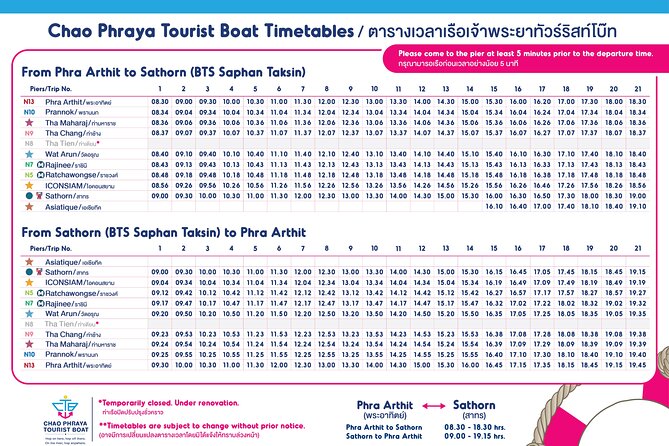
The pass is designed for easy pier hopping, with nine different departure points. For a straightforward start, look for Sathorn Pier, which connects to BTS Saphan Taksin station (S6, Exit 2).
Why that matters: starting from a major rail station reduces the “how do I get there?” stress. Once you’re on the river side, the boat system is built for tourists—docks have signage and stop information, and the route colors/flags help you know which boat you’re boarding.
You’ll also see that the route ties into other transit points around key sights. For example, the area labeled around Tha Tien / Rajinee pairs with MRT Sanam Chai station. And stops for major landmarks are named clearly so you know where to get off for your next walk.
Practical tip: when you arrive at the pier, confirm your direction and the stop names before you board. It’s a small moment that can save a lot of backtracking.
Stop 1: Sathorn Pier and Yannawa Temple (a calm warm-up)
Your first named stop is Yannawa Temple near Sathorn Pier. It’s listed as about 30 minutes, with free admission.
This is a good warm-up because it’s short and it helps you get your bearings. After that, you jump into the larger “must-see” river corridor. I like starting with something manageable—temple-light rather than temple-heavy—so you’re not burning your energy before the big ones.
Also, this stop is useful if you want a relaxed start in the morning. You can come off the boat, take a quick look, and keep moving before the crowds intensify at the flashier landmarks later in the day.
Stop 2: ICONSIAM for shopping and a breather between sights
Next up is ICONSIAM, the major riverside shopping complex. It’s listed as about 1 hour, with admission free for your visit to the area.
ICONSIAM works as a practical breather. After temples and street-level walking, you get air-conditioned space, food options, and a place to reset without changing your transportation plan. If you’re traveling with people who want both sights and shopping, this stop helps keep everyone happy.
One downside to expect: it can be busy—shopping centers usually are. If you’re sensitive to crowds, aim for a quicker browse rather than trying to “fully explore everything” in the time you have.
Still, as a river-boat stop, it’s smart. You’re not fighting traffic to reach it, and you can return to the boat when you’re done with your break.
Stop 3: Chinatown via Ratchawongse Pier for street food energy
From the boat, you can get off at Ratchawongse Pier for Chinatown (Bangkok). The listed time is about 1 hour, and admission is free.
This is where the day feels most like Bangkok. You’ll find street food, and you’ll also see traditional medicine-style shops with herbs and spices. It’s a different kind of “site-seeing” than temples: you’re observing smells, displays, and the hustle of a neighborhood that’s alive all day.
If you’re hungry, this is a strong place to snack instead of saving all your food for later. If you’re not a street-food person, you can still treat it as a sensory walk—watching the market flow and picking up small items that feel local.
Just don’t try to do Chinatown and also go full speed through multiple other stops back-to-back. Chinatown deserves the hour you give it, or you’ll rush and miss what makes it fun.
Stop 4: Tha Tien / Rajinee area for Wat Pho, flowers, and Museum Siam
This stop clusters several sights around the Tha Tien / Rajinee area, tied to MRT Sanam Chai station. The listed time is about 1 hour, with admission free for the boat stop itself.
What you can do in this area includes:
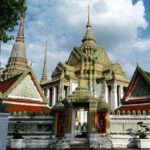
- Wat Pho
- Flower Market
- Museum Siam
This stop is valuable because it gives you options. If you want a big temple, you can aim at Wat Pho. If you want color and shopping-by-way-of-souvenirs, you can focus on the flower market. If you want something lighter or family-friendly, Museum Siam is on the same orbit.
Possible drawback: because it bundles several choices into one stop, it can be easy to spread yourself too thin. If Wat Pho is your priority, commit to that. If you care more about photos and market browsing, lean into the flower market and keep museum time shorter.
This is also one of those areas where walking takes more time than you expect, especially when you’re trying to see multiple things in an hour. If you’re timing the rest of your day carefully, give yourself a little buffer to re-board without stress.
Stop 5: Wat Arun (Temple of Dawn) and the 50 THB entry fee
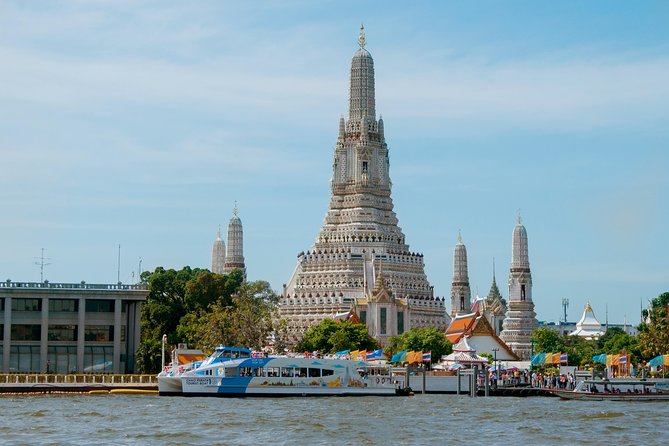
Next is Wat Arun, one of Bangkok’s most recognizable landmarks. The boat stop is Wat Arun Pier.
You’ll get about 1 hour for this stop, but the key detail is the temple entrance fee of 50 THB, which is not included. The temple is listed as open daily 8:30–17:30.
Wat Arun is the kind of place where even a short visit feels worth it. You’ll see why it’s photographed constantly—especially from the river side—because its shape reads so clearly from multiple angles.
Planning tip: if you’re going for the classic photos, try not to arrive at the last minute. Even in an hour, you need a few minutes to move, look up, and find an angle that works.
Also, keep in mind that you’re mixing a ticketed attraction with a hop-on hop-off schedule. That’s totally fine, but it means your time should be structured: pay, enter, and then explore efficiently so you don’t get stuck deciding what to do right at re-boarding time.
Stop 6: The Grand Palace area for the big-ticket cultural site
The boat also covers the Grand Palace area. The listed time is about 1 hour, and admission is not included.
This is the main event for many people, and for good reason. The highlights are Chakri Mahaprasat Hall, Dusit Mahaprasat Hall, and Wat Phra Kaew. Those names aren’t just fancy labels—they’re the core “why” behind this place.
Since the palace has ticketed entry, treat this stop like a mini itinerary. Decide beforehand what you want to prioritize in the time you have. One hour is enough to see a lot if you move steadily, but it’s not enough to “tour slowly like you have all day.”
If you’re short on time, the smart strategy is to focus on the must-see buildings and the key areas that match what you’re most excited about. If you’re not sure, do a quick scan when you enter, pick your top sights, and commit.
The upside of arriving by boat: you’re already in the right zone, and the river approach makes the whole day feel connected rather than chopped into random taxi hops.
Stop 7: Khaosan Road via Phra Arthit for street life at night pace
Finally, the pass reaches Khaosan Road. You get off at Phra Arthit Pier. The listed time is about 1 hour, with the boat stop itself marked as free.
Khaosan Road is your shift from culture mode to street-life mode: food, cafes, bars, and clubs. It’s a great last stop because it lets you end the day doing something more relaxed and social rather than another ticketed attraction.
This is also the place where your “how I want to spend my evening” matters. If you want to eat and people-watch, one hour is plenty. If you’re trying to bar-hop, you’ll probably extend beyond the hour, using the unlimited nature of the pass as your safety net.
Just remember: Khaosan can get loud. If you want the vibe but not the chaos, plan a quieter corner for snacks and keep your re-boarding time in mind.
Overall, ending here feels like a natural Bangkok story arc: temples and palaces by daylight, then street energy as night begins.
Onboard details that make or break a day
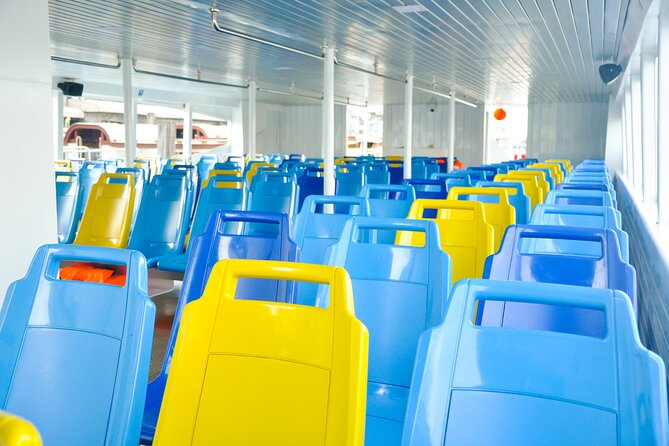
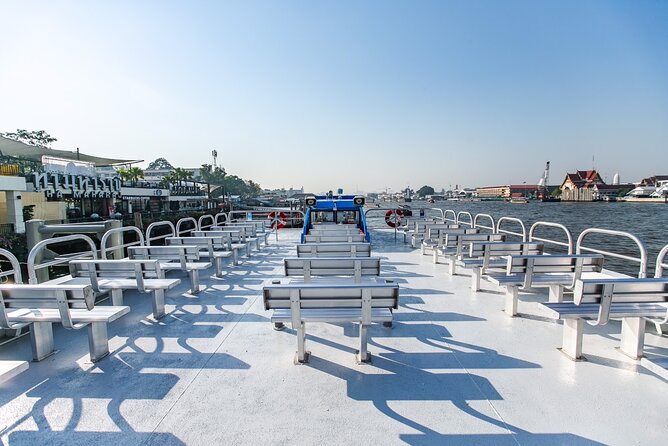
The boat is set up for comfort enough to matter on a long run. You have onboard restrooms and WiFi, and there are maps/signage at docks to help you understand where to stop next.
That’s not a small detail. On a hop-on hop-off day, the hardest part is often re-orienting yourself. When you can check information quickly and use the restroom without hunting for a place on land, the whole day runs smoother.
Also, the boat route is designed around sightseeing pace, not commuter precision. The day is structured with multiple timings and the ability to hop between stops, so you’re not trapped into one rigid schedule.
One more tip from real-world experience: when service varies, plan your most time-sensitive stops first. Ticketed spots like Wat Arun and the Grand Palace area are the ones where you’ll feel the squeeze if you run late.
If the check-in uses QR codes, don’t assume you’ll be able to fix everything on the spot. Keep your voucher accessible, and have it ready before you reach the attendant at the terminal. If anything feels off, you may need to handle ticketing directly at the pier rather than relying only on a scanning step.
Who this pass is best for
This is a strong choice if you want:
- A low-stress way to hit major river landmarks without repeated ground transfers
- A day that mixes temples + shopping + street life
- Flexible pacing with multiple start times and unlimited hop rides
- A more scenic travel experience than buses and metro rides alone
It may be less ideal if you prefer slow travel with lots of time at one single site. Because the route covers several major stops, it can tempt you into doing too much in too little time. If you’re the type who likes to linger, pick fewer stops and treat the rest as bonus.
The boat isn’t a tiny experience, either—there can be up to 190 travelers. Expect some crowding at the biggest sights, especially around ticketed entry points and popular walking areas.
Should you book this Chao Phraya all-day river pass?
If your goal is to see a lot of Bangkok along the river without the constant hassle of switching transport, yes, book it. The value is strong for the price, and the stop mix makes it easy to build a full day: Yannawa Temple for a quick start, ICONSIAM as a reset, Chinatown for street energy, Wat Arun and the Grand Palace area for the headline culture, then Khaosan Road to finish your evening.
Skip it only if you’re traveling with a strict schedule to one major site and you don’t care about the rest. Otherwise, this pass is one of the simplest ways to make the Chao Phraya feel like part of your itinerary, not just a route between places.
FAQ
How long can I ride with the all-day river pass?
The pass is listed as an all-day option with unlimited get on, get off rides for up to 24 hours. The overall time you’ll spend is typically about 2 to 8 hours, depending on which stops you choose.
Where can I board the Chao Phraya Tourist Boat?
You can board from nine different departure points. One clear connection is Sathorn Pier, which links to BTS Saphan Taksin (S6 Exit 2). Other stops include Ratchawongse Pier, Wat Arun Pier, and Phra Arthit Pier.
Are restrooms and WiFi available onboard?
Yes. The boat includes onboard restrooms and WiFi services.
Which major stops are included, and are tickets required?
Wat Arun has an entrance fee of 50 THB and is not included. The Grand Palace is also not included ticket-wise. Other listed areas and stops on the route are marked as free for admission on the pass.
What are the operating hours?
The listed opening hours are Monday through Sunday from 8:30 AM to 7:00 PM.
Can I cancel for free?
Yes. Free cancellation is available if you cancel at least 24 hours in advance of the experience start time for a full refund.