REVIEW · KANCHANABURI & RIVER KWAI DAY TRIPS
Bridge on the River Kwai and Thailand-Burma Railway Tour
Book on Viator →Operated by Tour East Thailand · Bookable on Viator
The Bridge on the River Kwai is history you can see. This day trip links WWII memorials with a real-world view of the bridge, plus a train ride on the Thailand–Burma Railway. You’ll get a guide who connects the dots, so the day doesn’t feel like a checklist.
I especially like the Kanchanaburi War Cemetery and JEATH War Museum, because they set the tone with a direct, sobering look at POWs and forced labor tied to the rail line. The tour also scores points for the pacing and variety: cemetery, museum, river boat, bridge time, then the railway train.
One consideration: it’s a very long day with a very early start, and the museum time is brief—so if you expect lots of hands-on exhibits, you might want to plan extra reading.
In This Review
- Key Points You’ll Care About
- Bangkok 6:30am Start: The Real Deal on Getting Out to Kanchanaburi
- Kanchanaburi War Cemetery: A Sobering Start That Changes How You See the Bridge
- JEATH War Museum: Short Time, Clear Focus, and Some People Want More
- Long-Tail Speedboat on the River Kwai: A View of the Bridge You Can Feel
- Bridge Over the River Kwai: Your Independent Time to Walk, Frame Photos, and Take It In
- Death Railway Train Ride Through the Jungle: Where the Day Really Connects
- Lunch and Small Extras: The Value Math Behind the $108.17 Price
- Timing, Comfort, and What to Expect When Your Day Is Long
- Who Should Book This Death Railway and Bridge Tour
- Should You Book This Bridge on the River Kwai Tour?
- FAQ
- What time does the tour start, and how long is it?
- Is hotel pickup and drop-off included?
- What are the main stops during the day?
- Is lunch included?
- Do you take a boat and a train?
- Is admission included for the cemetery and museums?
- Can I upgrade my seat on the train?
- How many people are on the tour, and can it be cancelled for low numbers?
- What is the cancellation policy for a full refund?
Key Points You’ll Care About
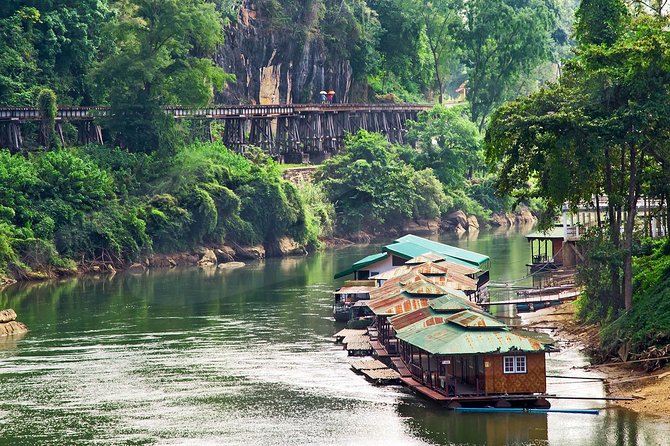
- War cemetery first: you start with graves, so the bridge and railway feel earned, not staged.
- Long-tail boat ride to the bridge: it’s fast, scenic, and a nice break from the road.
- Actual bridge viewing time: you get a real window to walk around and take photos on your own.
- Train ride along the Death Railway route: you’ll travel through the jungle/countryside feel of the line.
- Guide makes or breaks it: names like Betty, Luck, Tiny, Peter, Jenny, and Suki are repeatedly praised for clear timing and history.
- Value is in what’s included: lunch and admissions are part of the price, while beverages stay separate.
Bangkok 6:30am Start: The Real Deal on Getting Out to Kanchanaburi
This is an early departure day. Pickup is scheduled from selected Bangkok hotels starting around 6:30am, and you’ll spend about 9 to 10 hours total on the outing (including travel time). That start matters. You’re leaving Bangkok before the day gets hot, and you’re also back later than you’d like if you’re trying to fit in evening plans.
The drive west to Kanchanaburi is part of the experience too. You’ll pass through rural scenery—rice paddies, sugarcane, and pineapple plantations are part of the route—so it’s not just a highway transfer. It gives you a sense of how the region sits away from the capital, which helps when you later see the river and the railway line cutting through the area.
Group size is capped (max 99 travelers), and you’re in an air-conditioned vehicle. You should still expect a classic day-trip rhythm: early loading, a few fixed-time stops, then a few stretches where you’re on your own. The good news is the itinerary includes built-in time windows at the main sites, so you’re not rushing every minute.
You can also read our reviews of more tours and experiences in Bangkok.

Kanchanaburi War Cemetery: A Sobering Start That Changes How You See the Bridge
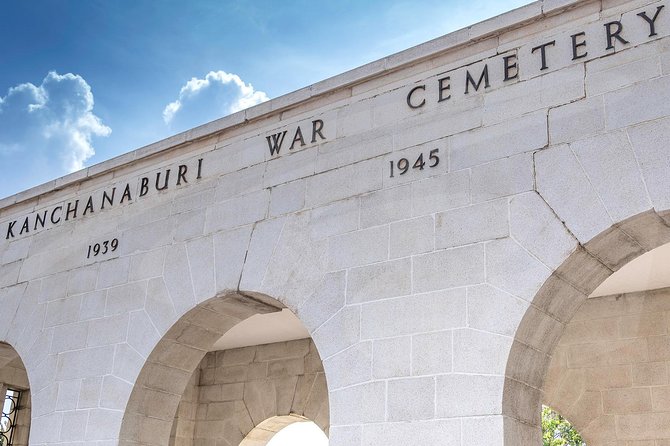
The day begins at Kanchanaburi War Cemetery, and the order is important. You’re not shown the famous bridge first. You’re shown the graves first, which puts the day’s story in the right emotional gear.
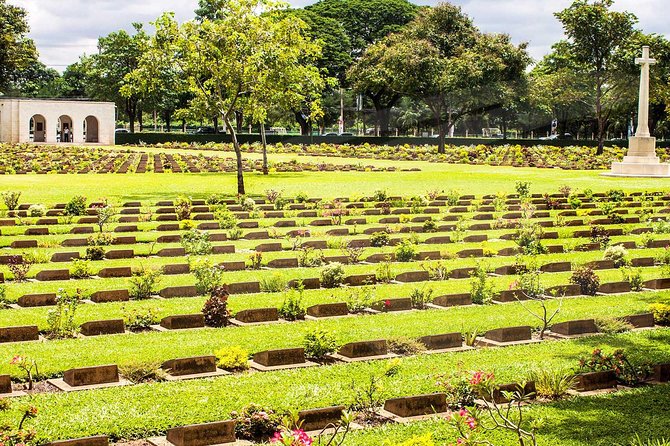
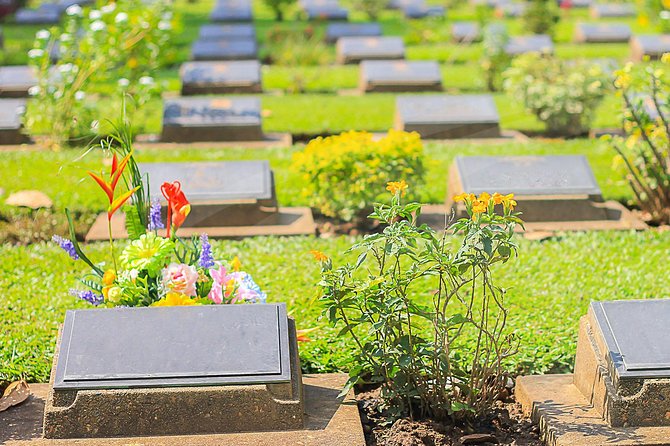
You get about 30 minutes here, and admission is included. This cemetery is described as the main POW cemetery linked to Japanese imprisonment of victims who were involved in building the Burma Railway during WWII. Even if you already know the broad facts, standing in a place built for remembrance makes the history feel concrete.
Practical tip: give yourself permission to slow down. Thirty minutes can go fast, but it’s enough time to walk the grounds, read key inscriptions if you want, and take a few minutes of quiet before the day turns to museums and rides.
JEATH War Museum: Short Time, Clear Focus, and Some People Want More
After the cemetery, you’ll head to the JEATH War Museum for about 20 minutes. Admission is included, and the museum is aimed at the construction of the Death Railway and how it was built by POWs during WWII.
This stop is often where expectations can clash. Some visitors feel it’s well organized for a quick visit, while others find it a bit basic. If you’re the type who loves deep, artifact-heavy museums, you may wish you had extra time. If you mainly want context fast, this brief stop can still do its job.
I like pairing a short museum visit with a later ride, because it keeps the day moving. You’re not stuck inside too long before you go outdoors. And if your guide is strong (and many are called out by name), they can tie the museum images and photos to what you’re about to see.
Long-Tail Speedboat on the River Kwai: A View of the Bridge You Can Feel
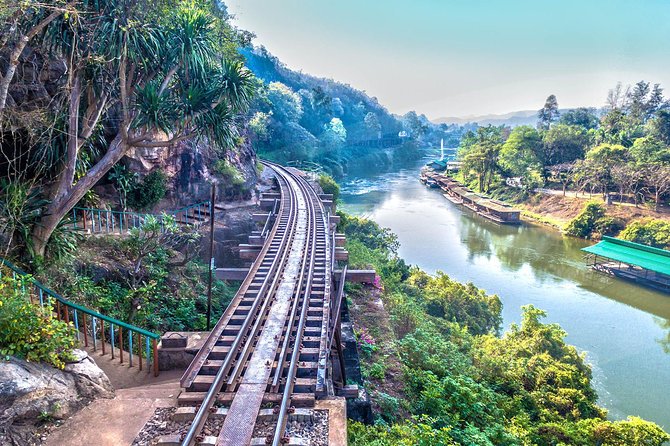
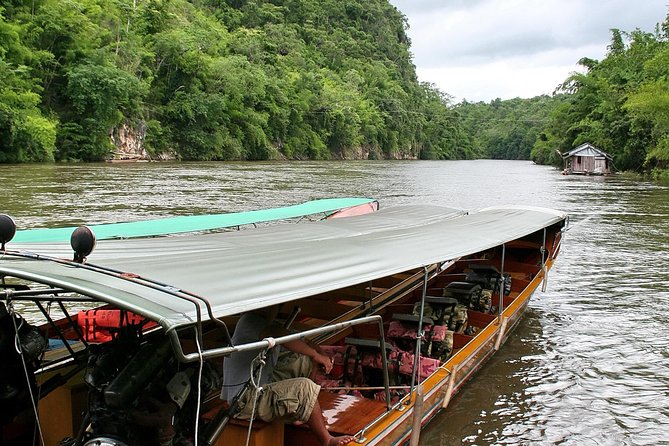
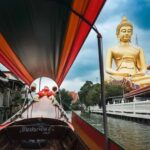
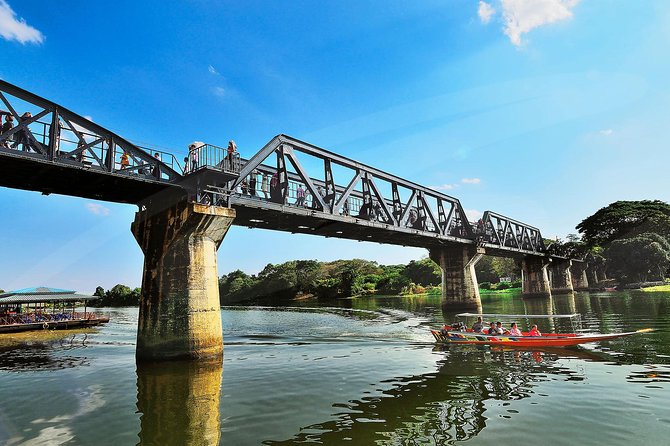
Next comes the river. You’ll take a long-tail boat ride for about 20 minutes, with the ride described as cruising under the bridge area. This is one of the more memorable parts of the day because it’s both scenic and lively.
Long-tail boats have that distinct, slightly noisy, quick-turn feel. It can feel more like an action scene than a transport transfer. One reason this works: the boat puts the bridge in front of you from a moving perspective, so you’re not just seeing a photo landmark. You’re seeing the bridge as part of the river scene it was built to dominate.
If you’re sensitive to wind spray, plan for it. The ride is short, but you’ll be on open air most of the time. Also, if you’re traveling on a hot day, sun and river wind can still be drying—bring a water plan in your head, even though drinks aren’t included.
Bridge Over the River Kwai: Your Independent Time to Walk, Frame Photos, and Take It In
After the boat, you’ll have about 20 minutes at the River Kwai Bridge itself. This is your chance to explore on your own—walk around, check angles, and grab photos.
That independent chunk is helpful because it prevents your entire experience from feeling guided-only. You can go straight for the best viewing spot, or you can just wander a bit and absorb the setting at a slower pace.
One thing I’d keep in mind: this part of the day is tied to train timing later. In practice, you may be early enough to cross areas on foot before the railway portion, which can make your photos and pacing easier. Either way, treat your bridge time like a short window. Don’t over-plan it.
Death Railway Train Ride Through the Jungle: Where the Day Really Connects
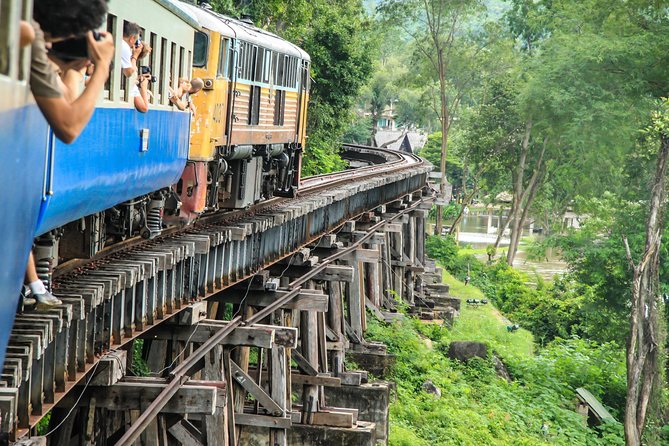
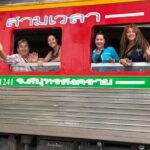
The heart of the tour is the railway segment. You’ll visit the Death Railway Museum and Research Centre and then ride a train described as showing the jungle feel of the region while you experience the Thailand–Burma Railway.
Plan for about 1.5 hours here, and admission is included. People who love trains usually perk up at this stage, because you’re not just hearing stories—you’re moving through the corridor that made those stories possible.
A strong point from traveler feedback: you can actually sense the hard work involved when you see how the track follows difficult terrain—tight curves and rocky areas come up in the explanation and the ride itself. Even without being a railway engineer, you’ll understand that this wasn’t a simple line laid down on easy ground.
This section is also a good place to listen carefully to your guide. A great guide helps you connect the ride to why the bridge and railway mattered in the 1943 plan to link Bangkok and Rangoon to support Japanese occupation in Burma (now Myanmar). Without that connection, the train can become just scenery. With it, it becomes a moving history lesson.
Lunch and Small Extras: The Value Math Behind the $108.17 Price
The listed price is $108.17 per person, and for a day trip from Bangkok that includes a lot, it can feel fair—especially because several big-ticket items are included. You get hotel pickup and drop-off (selected hotels only), air-conditioned transportation, a local guide, long-tail boat ride, the train ride, lunch, and admission fees.
The one recurring “not included” item is beverages. That’s normal for day tours, but it means you should budget a little for water or other drinks once you’re on the ground.
Lunch is a real plus. People describe the lunch as tasty and the restaurant as a strong part of the day. That matters more than you’d think. After a long early start and a full day of mental load, having a decent meal makes the return trip feel easier.
Optional extras on the train can add cost. There are upgrades roughly 200 baht and 300 baht, depending on whether you want a guaranteed seat. These upgrades also add perks like a cold towel, drinking water, and (for the higher option) tea/coffee plus a certificate. If you tend to hate “first-in-best-dressed,” it may be worth paying for the seat guarantee.
Timing, Comfort, and What to Expect When Your Day Is Long
This is not a relaxed half-day. It’s an all-day operation with set start and stop times, starting at 6:30am. You’ll likely want to treat the day like a small expedition: energy in the morning, patience through the road portions, and an easygoing mindset for outdoor time on the river and at the bridge.
Comfort is mostly handled by the included air-conditioned coach, plus planned restroom breaks at least being available. Still, don’t expect airline-seat luxury for the long transfer days. One piece of feedback noted the car could be less comfortable than expected, so if you’re sensitive to ride quality, it’s worth going in with realistic expectations.
Moderate physical fitness is recommended. You’re not being asked to hike for hours, but you will be moving around at sites and boarding the boat and train. If you know you tire quickly with stairs or uneven surfaces, plan your pace.
Who Should Book This Death Railway and Bridge Tour
You’ll likely love this tour if you want a day trip that balances emotion and action: memorial sites first, then the bridge and river experience, then a real train ride that ties it together.
This works well for:
- WWII history fans who want context and a respectful start
- train lovers who enjoy the feel of a route, not just photos
- first-time visitors who want the iconic Bridge on the River Kwai without stitching together multiple tickets
It may be less ideal if:
- you want an all-day museum deep dive (museum time is short)
- you get frustrated by long road hours in a single day
- you need lots of beverage inclusions (drinks aren’t included)
Should You Book This Bridge on the River Kwai Tour?
If you’re choosing between seeing the bridge as a quick photo stop versus doing the full emotional-and-historical arc, this one is a strong pick. Starting at the Kanchanaburi War Cemetery sets the tone. The JEATH War Museum keeps the context tight. Then the long-tail boat and train ride turn history into something you can experience with your eyes and ears.
My call: book it if you can handle a long day and you want the bridge experience paired with the railway story. Pass if you’re mainly museum-only and you’re hoping for long, detailed exhibits.
If you book, do one simple thing: plan your mindset. This trip is both moving and scenic, and that mix is exactly why it’s worth doing.
FAQ
What time does the tour start, and how long is it?
The start time is 6:30am. The duration is about 9 to 10 hours.
Is hotel pickup and drop-off included?
Yes. Hotel pickup and drop-off are included, but only from selected Bangkok hotels.
What are the main stops during the day?
You visit Kanchanaburi War Cemetery, JEATH War Museum, take a long-tail boat on the River Kwai, spend time at the River Kwai Bridge, and visit the Death Railway Museum and Research Centre with a train ride.
Is lunch included?
Yes. Lunch is included. Beverages are not included.
Do you take a boat and a train?
Yes. The tour includes a long-tail boat ride and a train ride along the Death Railway.
Is admission included for the cemetery and museums?
Yes. Admission fees are included for the cemetery and museum stops.
Can I upgrade my seat on the train?
Yes. There are optional train upgrades listed at about 200 baht or 300 baht to guarantee a seat, with different added perks.
How many people are on the tour, and can it be cancelled for low numbers?
The tour has a maximum of 99 travelers. There is a minimum number required, and cancellation is possible if the minimum isn’t met, with an alternative date or a full refund offered.
What is the cancellation policy for a full refund?
You can cancel up to 24 hours in advance for a full refund. If you cancel less than 24 hours before the start time, the amount paid isn’t refunded.