REVIEW · CRUISES & BOAT TOURS
Bangkok Long Boat Canal a Big Buddha & Culture Markets Tour
Book on GetYourGuide →Operated by Best Local Experiences · Bookable on GetYourGuide
Bangkok on a long tail boat feels like a cheat code. You get a calmer, local view of klong life while still ticking off a classic Big Buddha photo stop and a floating-market break. I especially like how the route blends boat time with real walking—village lanes, old paths, and conversations that make the city feel human.
Two things I like a lot: the tour runs with a licensed English-speaking guide, and you’re not stuck only at postcard spots—you’ll see daily canal houses and meet people along the way. One drawback to plan for is timing: the boat route can run a bit flexible due to water height and watergate schedules, so you’ll want extra buffer if you’re catching a flight or train.
In This Review
- Key highlights you’ll feel right away
- Bangkok klongs: why this tour feels more real than a checklist
- Price and timing: what $44 buys, and when you should plan buffer time
- Getting started at Golden Place by the Tha Chang Pier
- Thonburi water taxi: a quick warm-up before the long tail boat
- Big Buddha photo stop from the boat: you get the view, not the temple line
- Khlong Bang Luang Floating Market: the break that turns into culture
- Walking the canal village: Klong Bangluang and the old-path feel
- How the guide changes the day: local hosts and real questions
- Crowds, boats, and watergates: what to expect in real conditions
- What to bring (and what to skip)
- Who should book this canal tour—and who might prefer something else
- Should you book the Bangkok Long Boat Canal with Big Buddha and Culture Markets Tour?
- FAQ
- What is the duration of the tour?
- What does the price include?
- Is lunch included?
- Where is the meeting point?
- How can I reach the meeting point by ferry?
- Is hotel pickup available?
- Will I visit the Big Buddha temple inside?
- Is the canal timing flexible?
- Is this tour suitable for wheelchair users?
- What languages are the guide speaking?
Key highlights you’ll feel right away
- Local guide stories that connect canal life to how Bangkok grew over time
- Long tail boat + water taxi mix that keeps the pace light and scenic
- Big Buddha view from the boat (photo-focused, not temple entry)
- Khlong Bang Luang Floating Market stop for photos, guided explanation, and shopping time
- Klong Bangluang village walk through wooden canal-area homes and pathways
- Expect crowd slowdowns at busy season and use the guide time well while waiting
Bangkok klongs: why this tour feels more real than a checklist
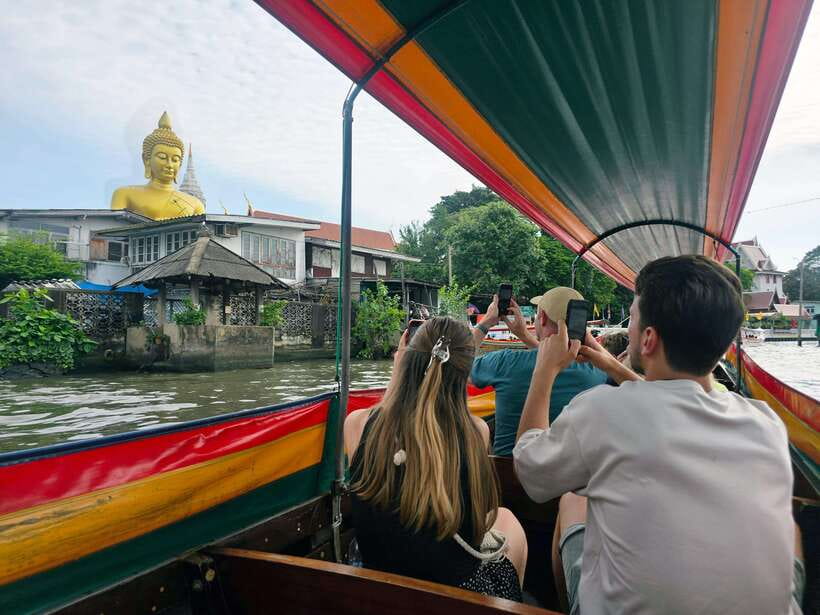
If you want Bangkok without the white-knuckle traffic, this kind of canal day is a smart move. The trip is built around older water routes on the West Bank, where daily routines are still tied to the water—homes, small businesses, and the rhythm of boat travel.
What makes it especially worth your time is the balance. You get motion on the water, then you step onto land for a guided walk through a village-style area called Klong Bangluang. That mix helps you understand what you’re seeing instead of just snapping photos and moving on.
And you’ll notice the tone of the tour: it’s presented by someone who lives with these canals, not a script read off a page. If you like asking why things are the way they are, this style of tour usually clicks fast.
You can also read our reviews of more boat tours in Bangkok
Price and timing: what $44 buys, and when you should plan buffer time
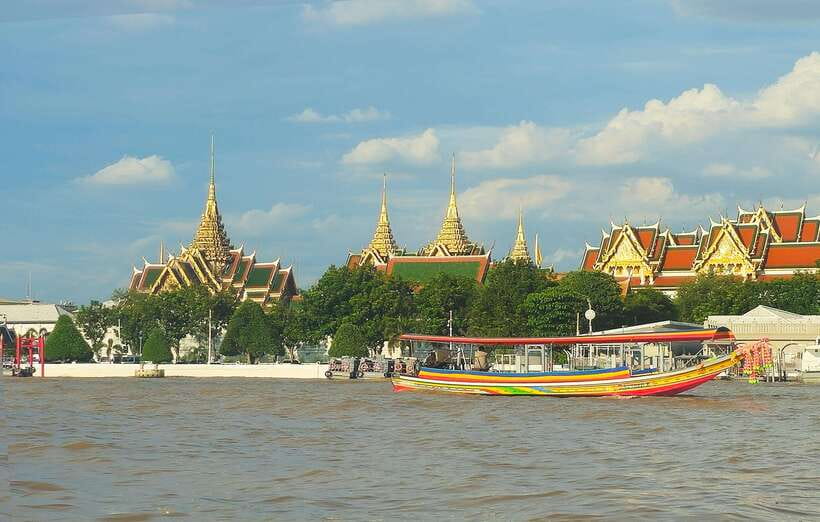
At $44 per person for a roughly 2–3 hour experience, you’re paying for more than transport. Your money covers a long tail boat, licensed English-speaking guide, and the main water transfers that get you to the canal stops and market area.
Is it expensive for a short activity? No. But it’s also not the kind of bargain tour where you get minimal effort and minimal guidance. The guide-led explanations and the walking segment are the value engine here.
The timing is the part you should respect. The schedule can shift based on water level and watergate close/open processes. Some locks can slow things down, and the tour guide can’t always force water to behave. Build in extra time—aim for a 3–5 hour buffer if you need to catch a flight, bus, or train after the tour ends.
Getting started at Golden Place by the Tha Chang Pier
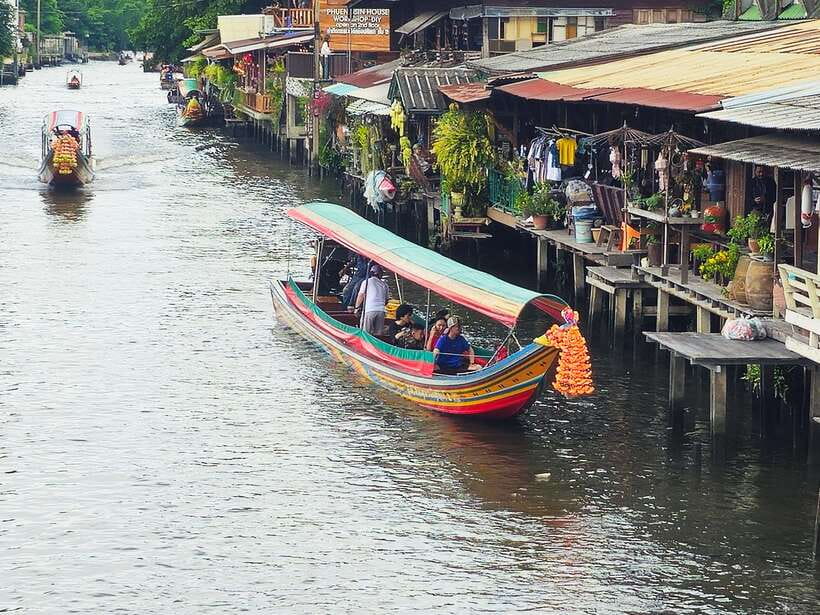
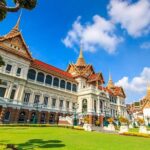
Meet up is straightforward, but it’s in a busy pocket of central Bangkok. Your guide stands by the Golden Place (Tha Chang Pier Branch) coffee, located beside the road in front of Bangkok Grand Palace.
If you’re arriving by ferry, you can get off at Tha Chang Pier (N9) and then walk to the coffee shop. Do yourself a favor and arrive early, because this is the kind of pickup point where it’s easy to waste time trying to find the right booth.
If you choose pickup optional service, the tour uses standard (non-luxury) vehicles for hotel lobbies in the Old Bangkok or downtown service areas. You’ll want to be ready about 15 minutes before the pickup time, since Bangkok traffic can be unpredictable.
Thonburi water taxi: a quick warm-up before the long tail boat
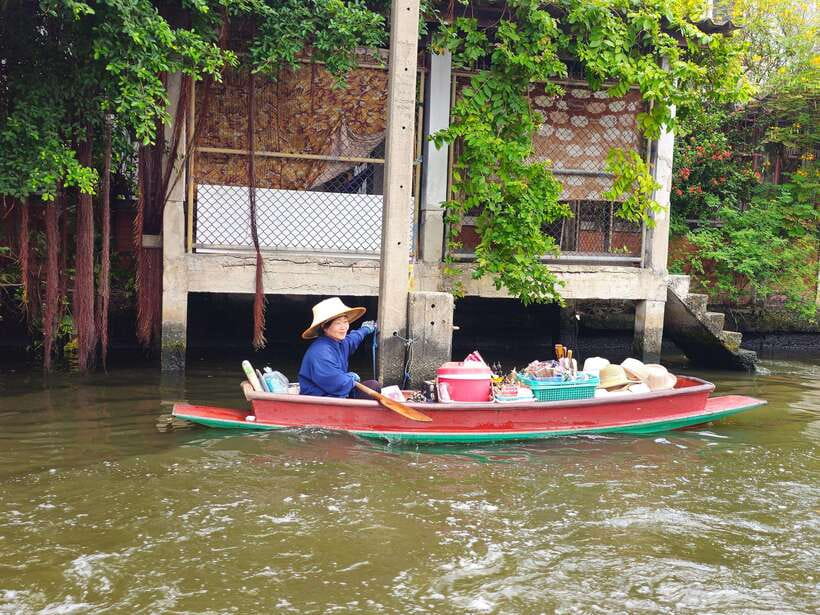
Right after check-in, the tour moves with a short water taxi hop (about 15 minutes). It’s a useful warm-up because you feel the waterways before the longer boat segment starts.
Then you’ll have a pass-by at Wat Paknam Phasi Charoen (about 30 minutes). This is not billed as a deep temple visit where you spend hours inside. Instead, it’s a viewpoint and orientation moment—time to spot landmarks and understand where you are in the broader canal network.
After that, another water transfer (about 15 minutes) helps transition you into the canal portion. That back-and-forth between water routes is part of the charm: you’re moving through Bangkok like it’s a city of rivers, not a city of traffic.
Big Buddha photo stop from the boat: you get the view, not the temple line
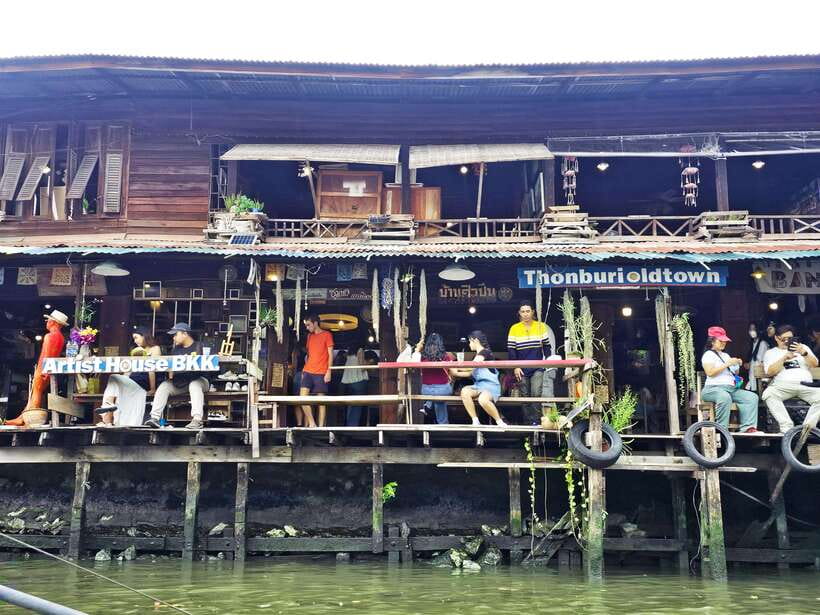
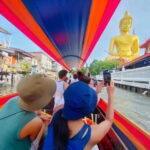
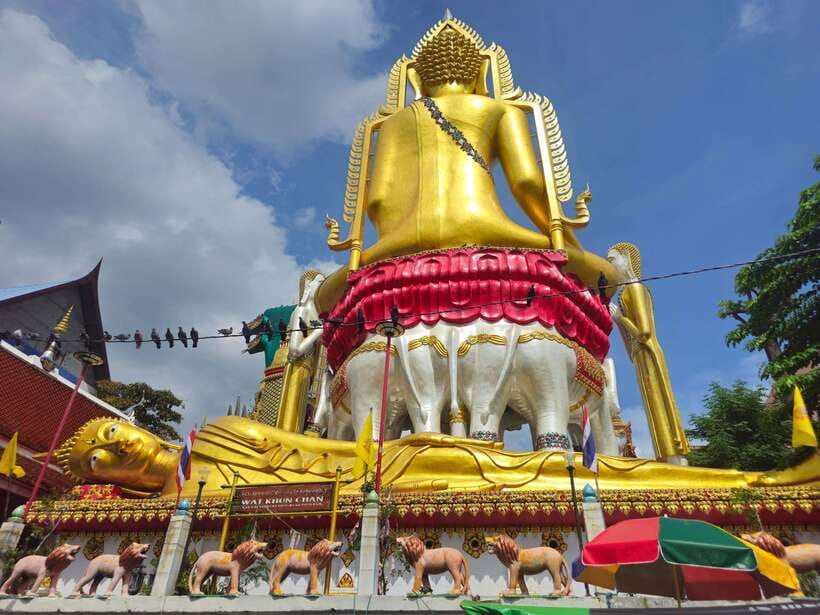
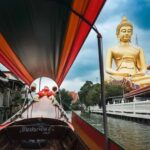
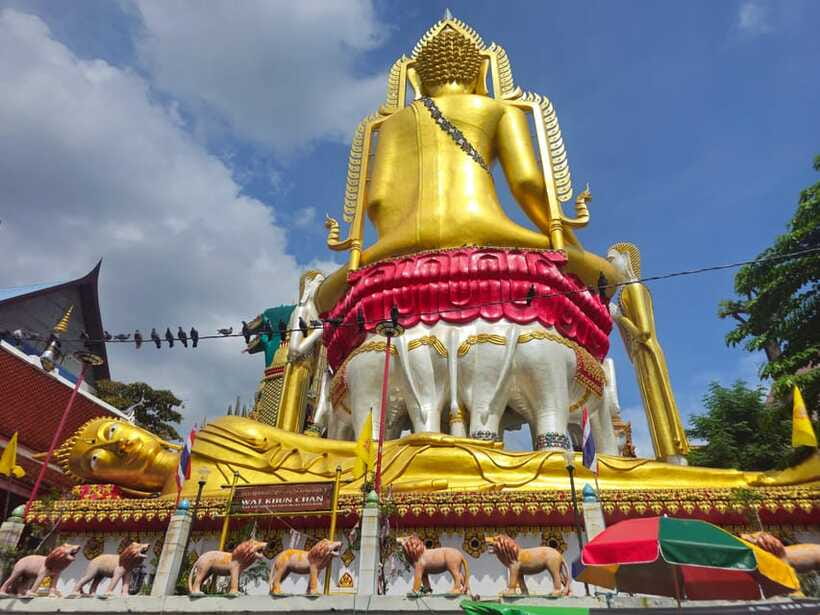
The tour includes a stop to see the Largest Buddha in Bangkok, and the important detail is this: you’re seeing it from the boat, and you’re not visiting inside the temple.
That approach makes sense for a short tour. You get the big visual moment without spending your limited time on indoor pacing, entry logistics, or waiting.
One practical note: conditions can change. During one recent season, the Buddha area was under scaffolding, but the guide still worked with the viewing angles so you could get an acceptable photo view from the alternate perspective. So if you’re booking for the photo, keep your expectations flexible and trust the guide to position the group.
Also, since this is a long tail boat ride, you’ll often be taking photos while the boat is moving or while pausing. Bring your camera-ready mindset and be ready to act quickly when the guide cues the best angles.
Khlong Bang Luang Floating Market: the break that turns into culture
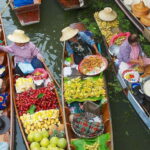
The first true break is at Khlong Bang Luang Floating Market (about 30 minutes). This stop mixes a few things: guided tour explanation, photo opportunities, and free time for shopping.
It’s a smart time box. You get enough guidance to know what you’re looking at, but you’re not stuck feeling pressured through a long market loop.
This is also where you can plan your food moment. While the tour price doesn’t list lunch as included, the market stop is exactly the kind of time slot where you can grab Thai snacks or a meal from local vendors. If you’re hungry, don’t treat it like a sit-down restaurant break—think small bites, quick choices, and learning by tasting.
If you like souvenirs, this is where you can browse without derailing the whole day. If you don’t, focus on photos and ask questions—why certain items are sold here, and how the canal market setup works.
Walking the canal village: Klong Bangluang and the old-path feel
After the market, you spend time on khlongs sightseeing (about 30 minutes). This keeps the canal focus while slowing down enough to look at the waterline world around you.
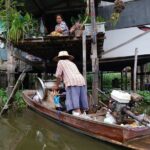
Then comes the part that most people remember: getting off the boat and walking through a local village area called Klong Bangluang village (also shown as Baan Sillapin – Bangluang). You’ll move through older path surroundings and see homes along the canal.
The guide leads you into the space between Wat Kampeng Temple and Wat Kuhasawan (as described for the house area visited). You’re not looking at a museum model of village life. You’re seeing real wooden houses and the daily canal-house pattern that still shapes how locals live and travel.
This is also where the tour’s tone becomes conversational. The experience is built around you talking with people when opportunities happen, so come with curiosity, not a rigid plan to just photograph everything. If you treat it like a slow neighborhood walk with a knowledgeable local host, you’ll get more out of it.
How the guide changes the day: local hosts and real questions
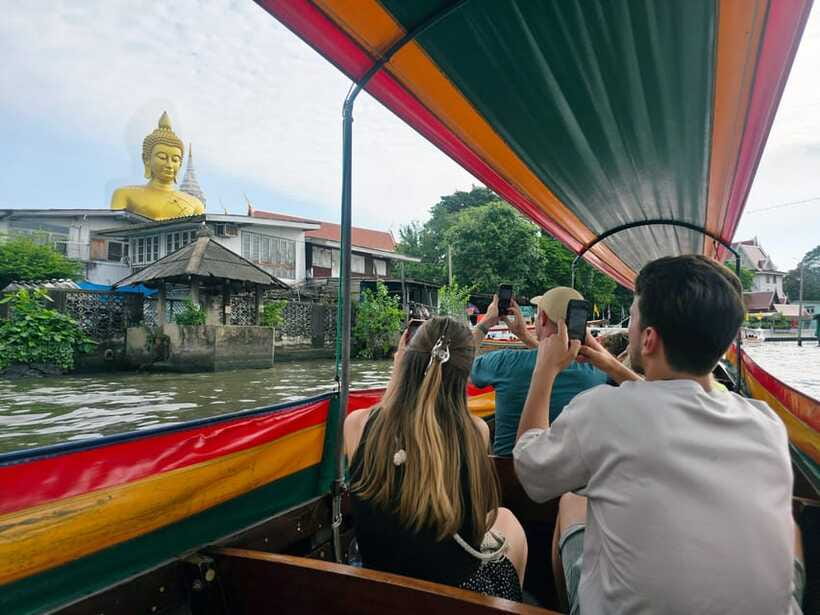
This tour runs with a licensed English-speaking tour guide. In past tours, guides included names like Elena, Enjoy, Anjoy, Jazzy, and Joker. While each guide brings their own style, the common thread is enthusiasm and local storytelling.
One practical thing to know: on the long tail boat, the engine noise can make live explanations harder while the boat is moving. The upside is that when you stop, your guide typically has room for Q&A and clearer explanations.
So here’s how to get the best payoff:
- Ask your main questions during stops, not while cruising
- Use the market and village walking moments for deeper curiosity
- If you’re interested in how people live with canal flooding or boat access, ask directly
When the guide is doing well, you feel like you’re learning how to read the canal scene. You stop seeing random sights and start seeing systems: transport, housing placement, and why certain areas function like they do.
Crowds, boats, and watergates: what to expect in real conditions
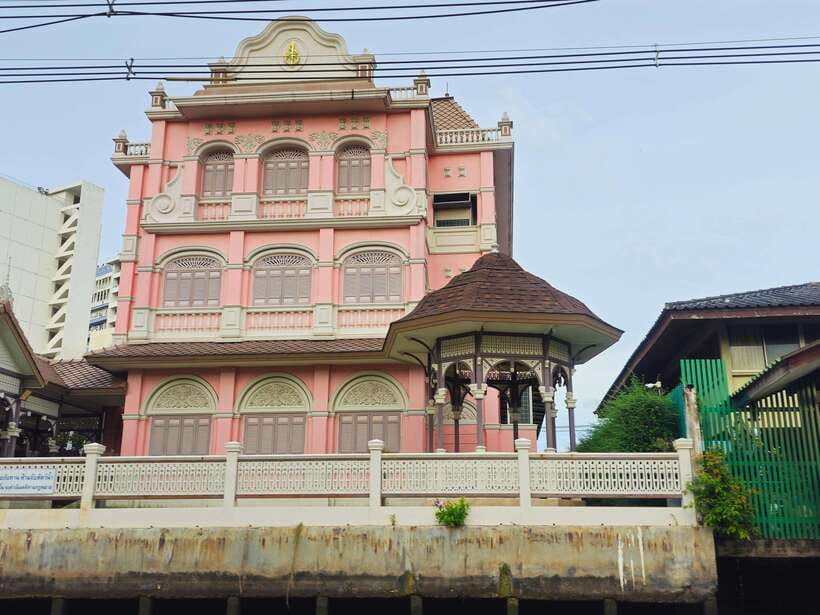
Some days the canal is calm; some days it’s crowded. During major periods like Chinese New Year, the canal can be busy and waiting times can happen while boats line up.
When that happens, the guide isn’t just letting time pass. A good guide keeps the group engaged with facts about the culture and area while you’re waiting, which turns a potential frustration into a learning moment.
Watergates are another factor. The tour notes that timing can be flexible based on water level and the opening/closing process. That’s normal for canal systems, but it means you should not book a tight connection.
If you hate uncertainty, choose a day with fewer schedule pressure points. If you can give yourself a wide window, the flexibility stops feeling like a problem and starts feeling like part of canal reality.
What to bring (and what to skip)
Because this is a boat-and-walk tour, plan for both sun and boat-air. Wear comfortable shoes for walking in village paths near the canal area.
Bring:
- Light rain protection if you’re traveling during wet weather
- A hat and sunglasses for bright canal sunlight
- A charged phone/camera for the photo-heavy Buddha and market moments
Skip:
- Anything that makes you worry about balance while you’re on the boat
- A tight-timeline mindset (watergate delays can happen)
Also note that this tour isn’t suited for wheelchair users. It’s also marked not suitable for hearing-impaired people, likely due to the nature of boat noise and guide communication style.
Who should book this canal tour—and who might prefer something else
This works best if you:
- Want Bangkok culture beyond the main roads
- Like small-group feel and guide-led conversation
- Enjoy photos but also want context, not just views
- Have time flexibility for a half-day activity
It may not be your best match if you:
- Have a strict schedule for later flights or trains
- Need step-free or wheelchair-friendly routing
- Prefer indoor temple time over boat-and-market exploration
If you’re a first-time Bangkok visitor, this type of tour is a helpful orientation to how the city breathes through canals. It’s also a good “first morning” option if you want a different Bangkok angle before the bigger sightseeing plans.
Should you book the Bangkok Long Boat Canal with Big Buddha and Culture Markets Tour?
If your goal is real Bangkok—canals, local village lanes, and a floating market break—this tour is a strong value buy. For $44, you get guided structure, real-world sights, and enough variation (boat, water taxi, market, walking) to feel like a full experience instead of a single photo stop.
I’d book it if you can handle the one essential rule: plan extra time. Watergate timing and occasional canal crowding are part of the deal. But if you give yourself that buffer, you’ll likely come away with more than pictures—you’ll come away with a better sense of how Bangkok actually lives.
FAQ
What is the duration of the tour?
The tour runs about 2–3 hours, and the total experience is stated as around 2 hours from check-in start to tour end.
What does the price include?
It includes a long tail boat, a licensed English-speaking tour guide, and drinking water.
Is lunch included?
Lunch is listed as not included. The market stop gives you time to eat on your own if you want.
Where is the meeting point?
Meet at Golden Place (Tha Chang Pier Branch) coffee, beside the road in front of Bangkok Grand Palace. The guide will check you in there.
How can I reach the meeting point by ferry?
Take the ferry and get off at Tha Chang Pier (N9), then walk to Golden Place (Tha Chang Pier Branch).
Is hotel pickup available?
Pickup is optional. If you book it, you’ll be collected from your hotel lobby in the Old Bangkok or downtown service area using a standard vehicle (non-luxury).
Will I visit the Big Buddha temple inside?
You’ll see the Largest Buddha in Bangkok from the boat, and you’re not visiting inside the temple.
Is the canal timing flexible?
Yes. The route time can be flexible depending on water height and watergate open/close process, so the tour may run longer than planned.
Is this tour suitable for wheelchair users?
No. It’s listed as not suitable for wheelchair users.
What languages are the guide speaking?
The tour guide provides service in English and Thai.