REVIEW · TUK-TUK TOURS
Bangkok: Guided Tour in a Typical Thai Tuk-Tuk
Book on GetYourGuide →Operated by CanalTour x ExploreSiam · Bookable on GetYourGuide
Bangkok hits fast. A typical Thai tuk-tuk ride through landmark areas is the quickest way to feel the city’s energy without getting stuck in traffic. I like that you get photo stops at big sights with just enough time to orient yourself, and I also like the included lotus-folding activity that adds a bit of real Thai culture to the ride. One catch: you only see several famous temples from the outside, so if you want ticketed interiors, you’ll need separate plans.
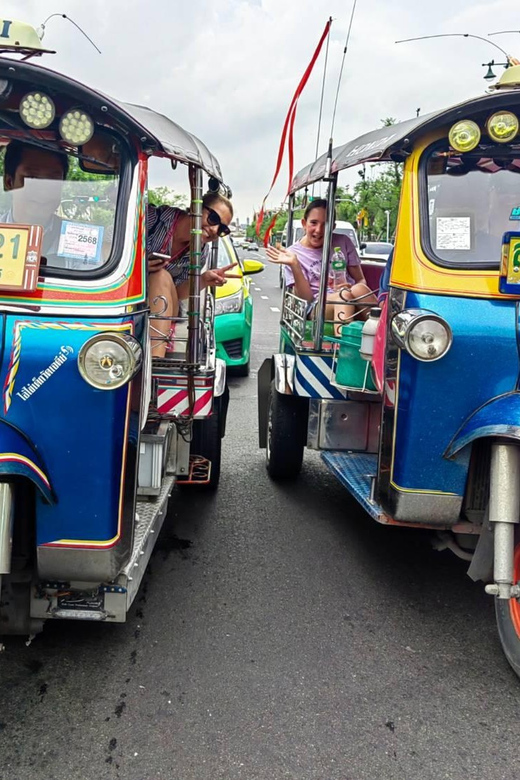
This tour is built for a short Bangkok window. You start at Museum Siam near MRT Sanam Chai, ride in a small setup (often 2 people per tuk-tuk, according to past groups), and then hop between landmark photo points before finishing in Chinatown. Your licensed English guide tells stories as you move, so the city stops being a list of names and starts feeling like a place with neighborhoods, routines, and history you can actually picture.
In This Review
- Key points before you go
- Why a 2-hour tuk-tuk circuit makes sense in Bangkok
- Meeting at Museum Siam: arrive at the correct exit
- What the tuk-tuk ride feels like (and how to ride smart)
- Photo stops that actually help: Grand Palace area (outside views only)
- Giant Swing and Wat Suthat: the swing you can picture later
- Wat Ratchanatdaram: a quieter temple stop with big photo payoff
- Wat Pho and river-side views: great sights without inside time
- Chinatown finish: use the last minutes on the right side of your day
- The guide + lotus flower: the small extras that make it feel real
- What the price gets you (and what might feel pricey)
- Who should book this tuk-tuk tour?
- Should you book this Bangkok tuk-tuk tour or skip it?
- FAQ
- What is the duration of the tour?
- Where do I meet the guide?
- Does the tour include an English-speaking guide?
- Will I go inside the Grand Palace, Wat Pho, or Wat Arun?
- What sights are included in the route?
- What’s included in the price besides the tuk-tuk ride?
- Is Chinatown the end point?
- Can I cancel and get a refund?
Key points before you go
- 2 hours, many photo stops: quick orientation without burning half a day
- Outside-only at major sights: you save time on lines and dress-code stress
- Licensed English guide stories: the ride comes with context, not just driving
- Lotus flower folding included: a hands-on cultural moment
- Chinatown finish: convenient for food and street browsing right after the tour
Why a 2-hour tuk-tuk circuit makes sense in Bangkok
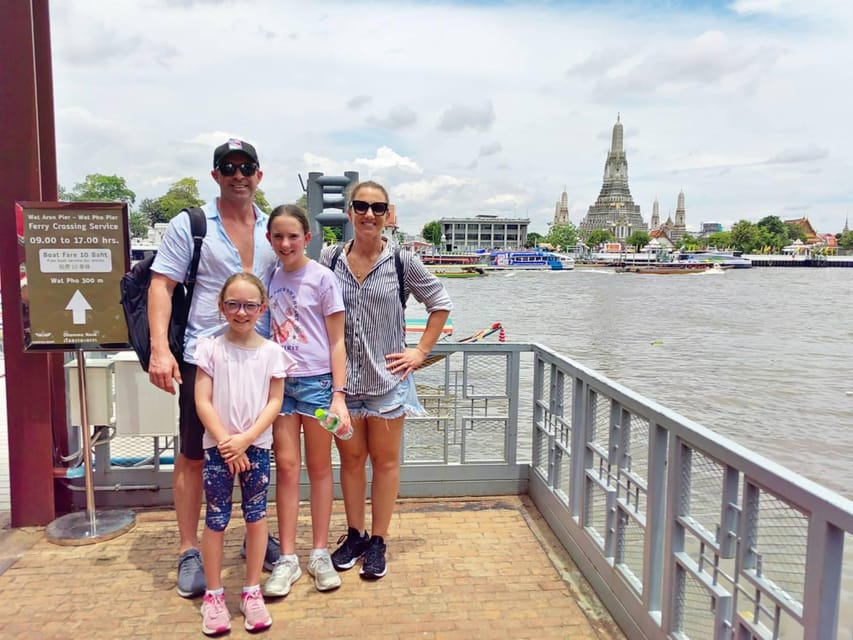
Bangkok can be overwhelming fast. You land, you look at maps, and suddenly the city feels like it’s made of one-way roads, rivers, and temples that all blur together. This kind of guided tuk-tuk loop works because it gives you a mental map in a short time.
You also avoid a common Bangkok headache: figuring out transport on your own while traffic and river crossings eat your schedule. Instead, you get a driver doing the weaving, and a guide doing the storytelling. That combo matters if you’re here for a few days and want to spend your limited time actually seeing things.
Most importantly, tuk-tuks aren’t just transport here. They’re part of the Bangkok soundscape and street life. The ride’s jolt, the noise, the close-up views of shopfronts and pedestrians, all make you feel like you’re moving through real streets, not just between points on a route.
You can also read our reviews of more guided tours in Bangkok
Meeting at Museum Siam: arrive at the correct exit
Your meeting point is at MRT Station Sanam Chai, EXIT Museum Siam (outside). That’s the address-style detail that saves you from standing around guessing in Bangkok heat.
One very practical tip from a past guest: Museum Siam has more than one exit. If you’re aiming to be easy to find, get to the front exit rather than wandering to the back route. It’s the difference between your guide spotting you right away or you doing the awkward “is this the group?” routine.
Plan to arrive a few minutes early. Bangkok isn’t hard, but it is busy. Even a small delay can mess up the timing of a tight 2-hour tour.
What the tuk-tuk ride feels like (and how to ride smart)
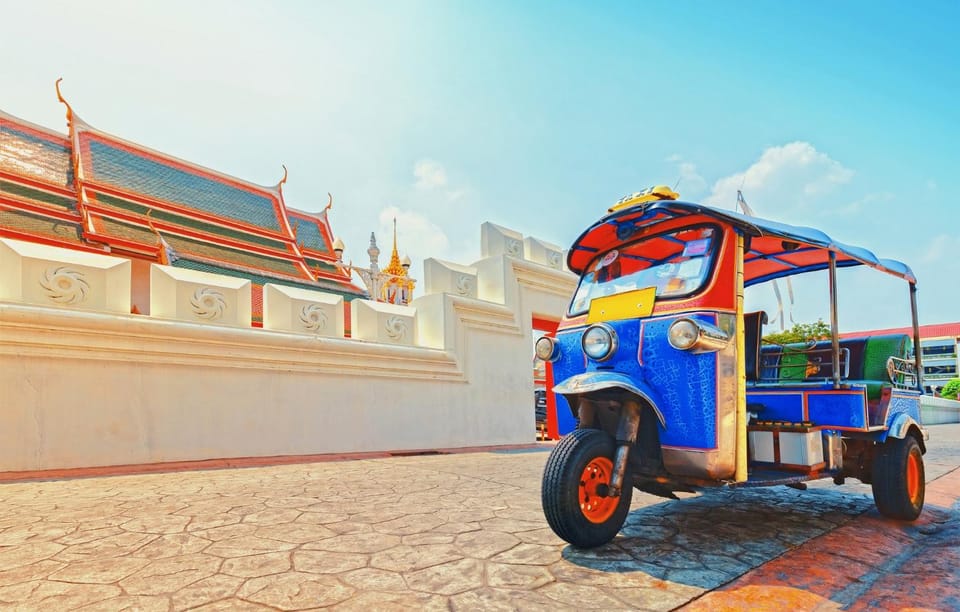
This isn’t a slow sightseeing cruise. It’s a guided street ride. Expect turns, short bursts of speed, and lots of street-level views—people, motorbikes, shop signs, temple silhouettes, and everyday life rolling past close enough to feel it.
A few things make the experience smoother:
- Keep your phone/camera secure when you’re bouncing around. A strap helps more than you think.
- Bring sunglasses or a hat if you’re doing a daytime departure. Bangkok light can be intense.
- If you’re prone to motion discomfort, sit in the most comfortable position for you and keep your gaze steady when the tuk-tuk changes lanes.
Past guests also liked the format where groups are split so you’re not packed in. One review called out how having 2 people per tuk-tuk made it comfortable. That’s not a guarantee for every departure, but it’s a good sign that this company thinks about ride comfort, not just numbers.
Photo stops that actually help: Grand Palace area (outside views only)
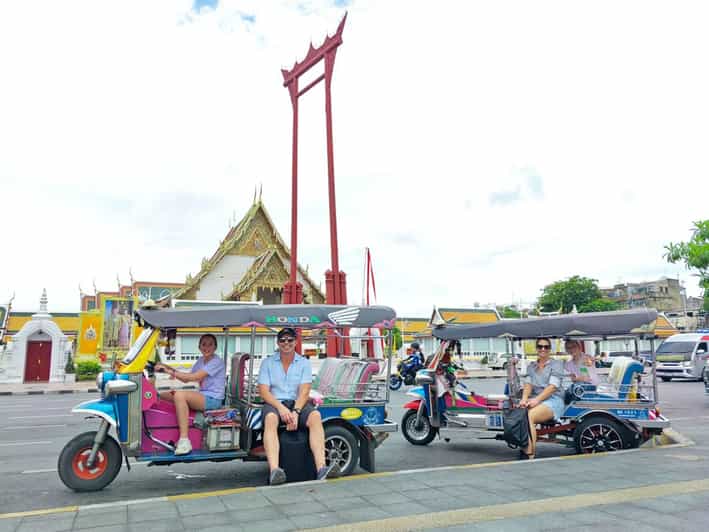
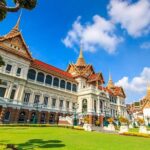
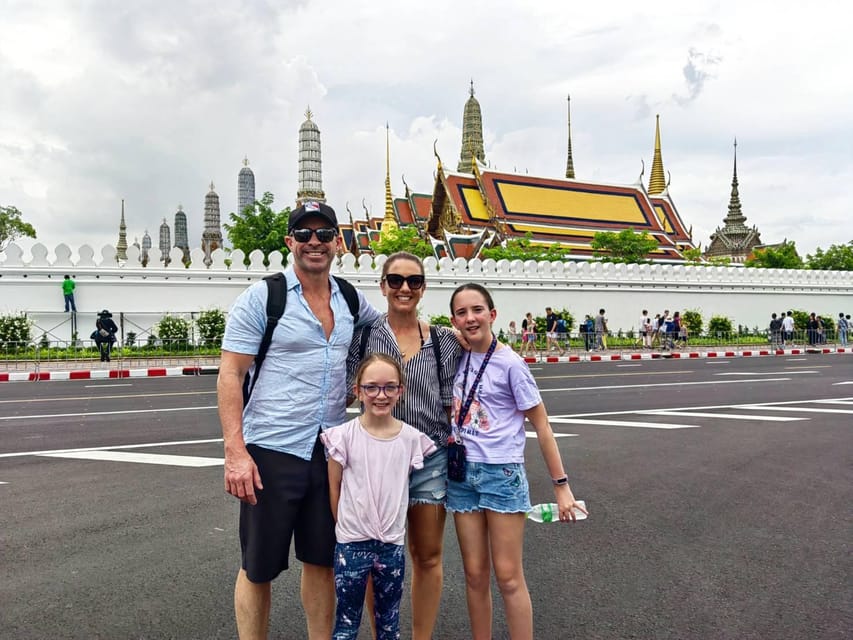
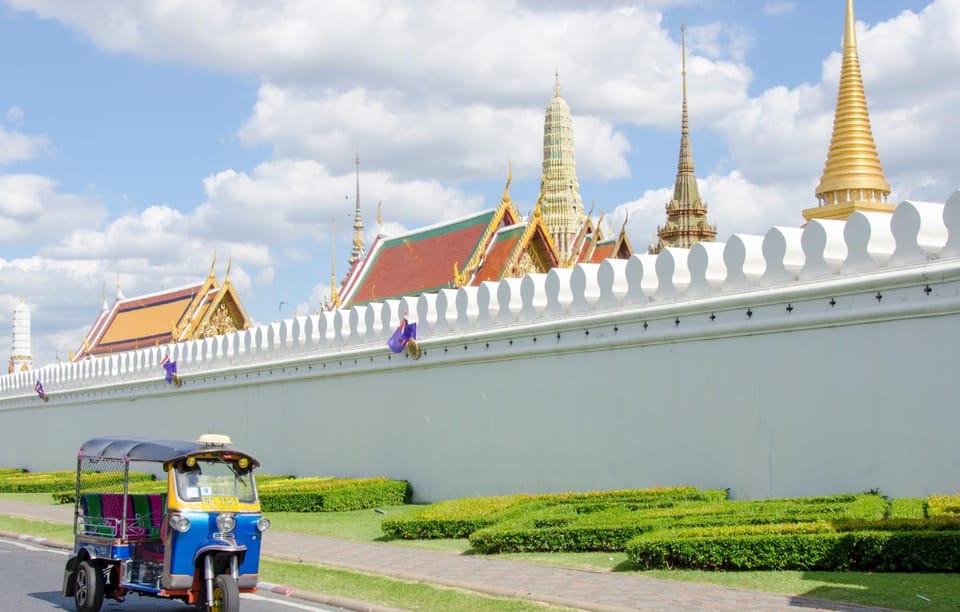
You’ll stop at the Grand Palace Bangkok area for a quick photo moment. The goal here isn’t to tour the inside halls at a slow pace. It’s to help you recognize what you’re looking at later, whether you come back for a full visit or just want to understand the city at street level.
Because this tour is outside-only for places like the Grand Palace (and others on the route), you should treat it like orientation. You’ll get the big visual impression without spending time dealing with entry lines, ticketing, and long walking routes inside.
What I like about this approach: you still see the scale and the style cues that make the Grand Palace area so iconic. Then you can decide later whether you want the full interior experience.
Tip: bring something you can use to handle crowds and photos—small tripod? Usually unnecessary on a moving tuk-tuk route. But a steady stance and a quick photo plan will help you use the time.
Giant Swing and Wat Suthat: the swing you can picture later
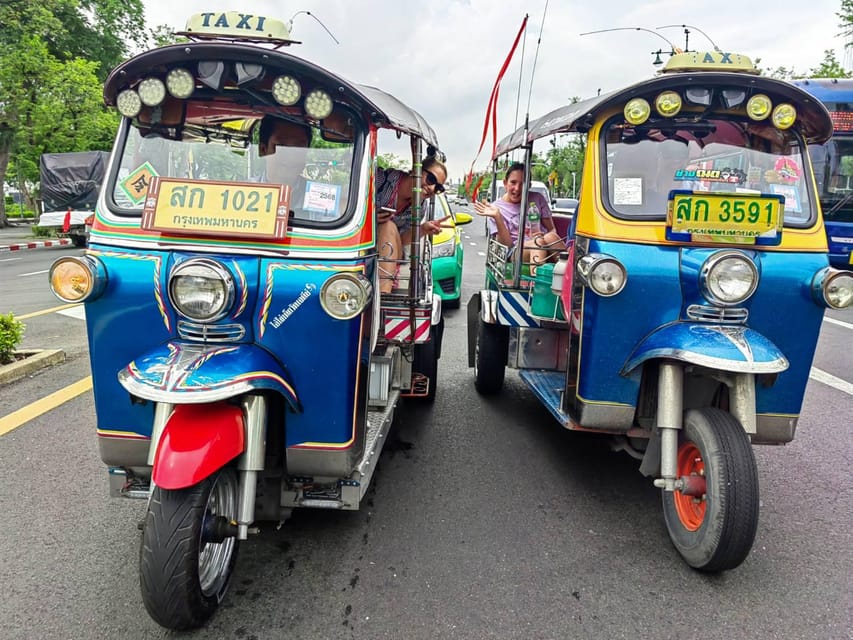
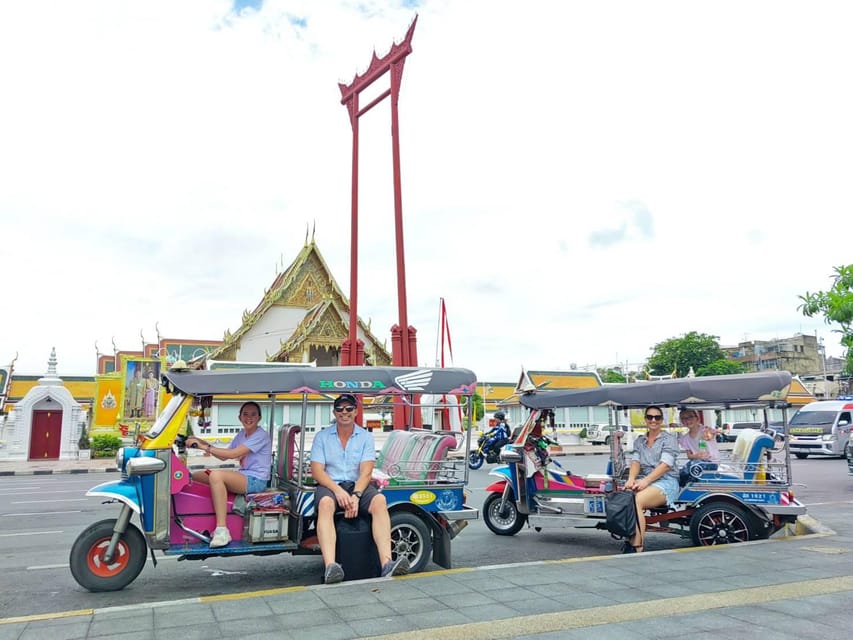
Next up is Wat Suthat and the Giant Swing area. This is one of those spots that looks like it belongs on a postcard but also makes more sense when you see it in context with the streets around it.
The tour gives you a photo stop here (about 10 minutes). That’s enough to grab a few angles and listen to what your guide shares about why the location matters. You’re not going deep inside the temple complex, but you are learning what to pay attention to.
One of the best uses of a short stop like this is mental. When you later walk past a landmark on your own, you’ll know which details are the ones worth photographing and remembering.

Wat Ratchanatdaram: a quieter temple stop with big photo payoff
Then you hit Wat Ratchanatdaram for another outside photo stop (also around 10 minutes). This is the kind of stop that helps you see Bangkok’s temple culture beyond the headline names.
What you’re really doing here is building variety. You start at the Grand Palace area, then you shift to Wat Suthat/Giant Swing, then you add another temple in the mix. Even without entering, you’ll notice differences in layout and visual style.
This is also where a good guide earns their pay. The best tours don’t just point. They explain what you’re looking at as you move past it, so the street scenes don’t turn into random temple photos.
Wat Pho and river-side views: great sights without inside time
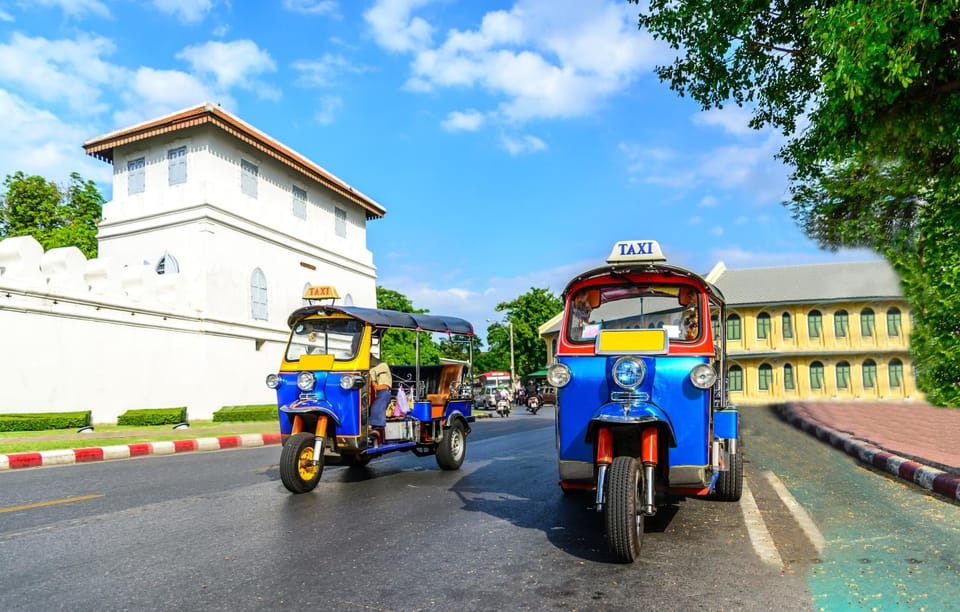
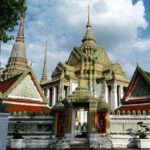
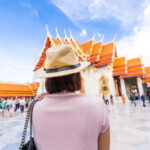
You’ll also stop at Wat Pho for a photo stop, with another outside-only viewing style. The tour does not go inside Wat Pho, and it also notes outside views for other major sights on the route.
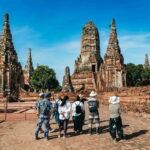
Still, Wat Pho is one of those places where the outside can be enough to spark interest. You’ll see why it’s famous and what makes this temple complex visually distinct. If you’ve got limited time, outside photos plus guide explanations can be a smart way to make sure you’re not missing the biggest impression.
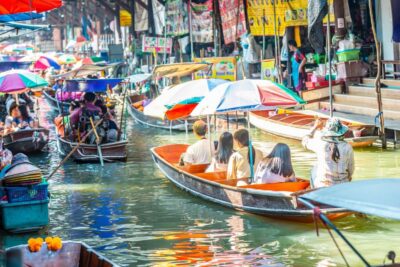
Also, the overall tour description includes a glimpse of Wat Arun seen from the other side of the river. Even if you aren’t stopping directly at Wat Arun itself, river-side viewing gives you that classic Bangkok pairing: temples across the water, city movement in the foreground.
If you want interiors, you can plan separate visits. But if you want orientation plus a fast “wow” factor, outside viewing is a practical trade.
Chinatown finish: use the last minutes on the right side of your day
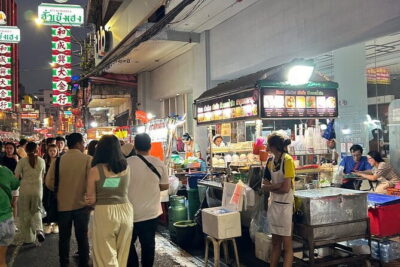
The tour ends in Chinatown. The schedule includes a photo stop here (about 20 minutes). In plain terms: it’s time to soak in the area, grab a few photos, and start your next chapter without rushing.
What to do right after depends on your energy. But Chinatown is a great place to eat when you’re already dressed for street movement and you’re done with temple etiquette routines. You’ll likely be in the perfect mood for snacks, street food, and just wandering.
One past guest specifically called out timing on an afternoon departure—finishing around 6pm was ideal for food right after. If you can choose your departure time, going later in the day can add atmosphere.
The guide + lotus flower: the small extras that make it feel real
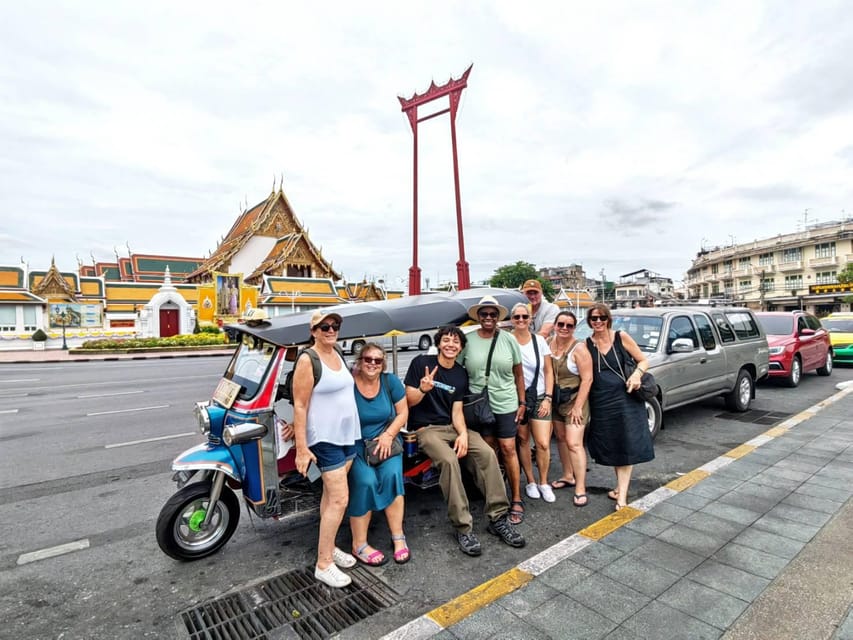
The core of this experience is transportation plus context. Your licensed English-speaking guide tells stories about places you pass and about Bangkok in general. Names from past guides you might meet include Ana/Anna, Johan/Yohan, Enjoy, and Ken. Different guides have different styles, but the common thread in the feedback is that they keep things friendly and engaging.
That guide role matters because tuk-tuks move fast. Without context, you’d be catching flashes of temple roofs and street signs. With good narration, you learn what you’re seeing and why it matters.
Then there’s the included folding lotus flower activity. Several reviews called it a personal favorite. It’s short, hands-on, and it gives you something to do besides photograph. You leave with a small piece of the culture, not just images stored in your camera roll.
Also included: a bottle of water. In Bangkok, that’s not a luxury. It’s just smart planning.
What the price gets you (and what might feel pricey)
The tour costs $28 per person for 2 hours. At that price, you’re paying for four things bundled together:
- The guided route and narration in English
- Licensed guide support
- Transport via typical tuk-tuk ride
- Included extras like water and the lotus-folding activity
Is it the cheapest way to move around Bangkok? No. One review even flagged it as slightly pricey for the type of activity. But price isn’t just about cost. It’s about how much friction you remove.
If you’re trying to coordinate transport, find the right photo spots, and avoid wasting time figuring out logistics, $28 can feel fair. You get a ready-made “first Bangkok orientation” that saves mental energy—and that’s real value when you’re on a tight schedule.
Who should book this tuk-tuk tour?
This fits best if you:
- Are in Bangkok for a short time and want big highlights fast
- Like street-level city energy and want to ride through it, not just view from inside a bus
- Want a guide-driven orientation so you know what you’ll want to revisit
- Prefer a lighter, photo-focused approach rather than long temple interior tours
If you’re the type who must enter every major site, you’ll be happier booking this as a first step and then scheduling separate visits. Since the tour explicitly keeps visits outside-only for several key landmarks, it’s not designed as a full temple deep dive.
Should you book this Bangkok tuk-tuk tour or skip it?
Book it if you want Bangkok to feel understandable in a hurry. This is one of those rare short tours that hits the right balance: famous landmark areas, meaningful guide context, and a fun ride style that feels distinctly Thai.
Skip it only if you already know you want to spend most of your temple time inside major complexes. In that case, you may get more value from tickets and longer guided visits that include interiors.
My practical call: if you’re planning your first day in Bangkok—or you’re fitting in a quick “see the city” block—this tour is a strong use of two hours. It helps you get your bearings fast, then you can decide what deserves your longer attention later.
FAQ
What is the duration of the tour?
The tour runs for 2 hours.
Where do I meet the guide?
Meet at MRT Station Sanam Chai, EXIT Museum Siam (outside). The guide waits there.
Does the tour include an English-speaking guide?
Yes. The tour includes a licensed English-speaking tour guide.
Will I go inside the Grand Palace, Wat Pho, or Wat Arun?
No. The tour does not go inside the Grand Palace, Loha Prasat, Wat Arun, or Wat Pho. You only see them from the outside.
What sights are included in the route?
You’ll have photo stops around major areas including the Grand Palace area, Wat Suthat and the Giant Swing, Wat Ratchanatdaram, Wat Pho, and Chinatown, with a view of Wat Arun from the other side of the river noted in the tour description.
What’s included in the price besides the tuk-tuk ride?
Included are the typical Thai tuk-tuk ride, a bottle of water, a licensed English-speaking guide, and a folding lotus flower activity.
Is Chinatown the end point?
Yes. The tour finishes in Chinatown after the Chinatown photo stop.
Can I cancel and get a refund?
Free cancellation is offered up to 24 hours in advance for a full refund.