REVIEW · BIKE & CYCLING TOURS
Electric Scooter Tour of Bangkok
Book on Viator →Operated by Go Bangkok Tours · Bookable on Viator
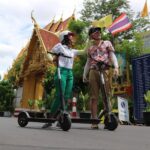
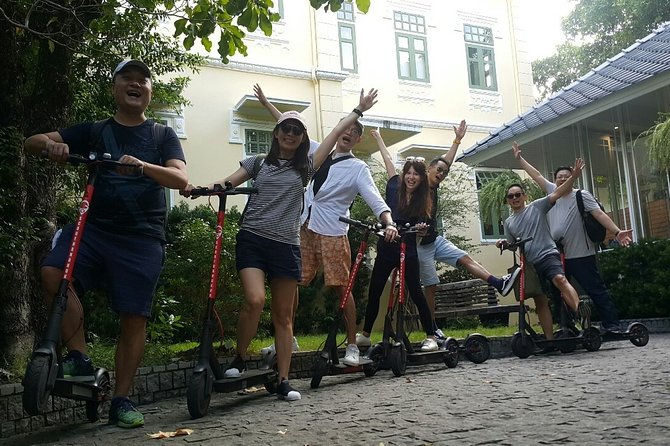
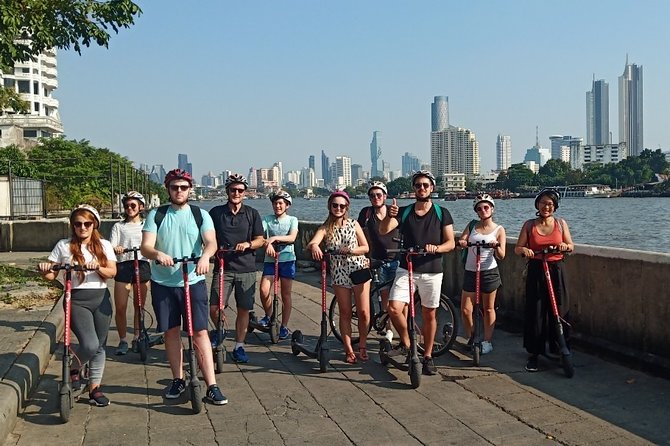
Bangkok moves at scooter speed. This half-day tour uses a smart, low-stress format: training first, then a guided loop through old neighborhoods, wats, and market alleys. The best part is how you travel by footpaths and side streets instead of sitting on a bus. The other thing I like is the small group cap (max 3), which means you can actually hear your guide and ask questions while you ride.
You’ll also get breaks built in—snacks, coffee or tea, and plenty of time at major stops like the flower market. One consideration: scooter tours depend on your comfort level and attention. If you want long, nonstop narration, note that guide styles can vary.
In This Review
- Key things to know before you ride
- Scooter training in Bang Rak: start simple, then go
- Grand Postal Building and old-town landmarks, without the bus feeling
- Wat Chakrawatrachawat and crocodiles: temple stop with a twist
- Pak Khlong Flower Talat: the market that runs on time and smells
- Wat Kalayanamit and the big Buddha: the river crossing moment
- Baan Kudichin Museum and Portuguese cookies: a softer side of Bangkok
- Talad Noi wall art, Lhong 1919 murals, and the Chinatown maze
- How long is 3 hours, really? Where the time goes
- Price and value: what $36.58 buys you
- Guide style matters: what to watch for
- Who this tour fits best (and who should choose differently)
- Getting ready: temple attire and practical comfort
- Should you book the Electric Scooter Tour of Bangkok?
- FAQ
- How long is the electric scooter tour?
- What’s the group size limit?
- Where does the tour start and end?
- What’s included in the price?
- Do I need hotel pickup or drop-off?
- Is there a minimum age or height requirement?
- Are there weight or clothing requirements?
- Can I cancel for free?
Key things to know before you ride
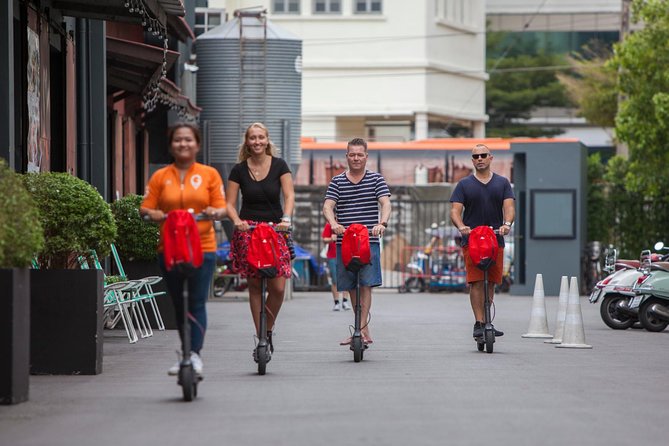
- Max 3 riders per group: you’ll feel more like you’re cruising with a guide than following a crowd.
- Training happens first: you start in Bang Rak with a short practice so the ride stays calmer.
- Temple stops mean temple attire: bring clothes that cover up; it matters for the wats.
- Ferry crossing is part of the route: you’ll cross the river once, breaking up the scooter time nicely.
- Most entrances are free: many stops are listed with admission-free access during your visit.
- Helmet and snacks are included: you can focus on the route instead of logistics.
Scooter training in Bang Rak: start simple, then go
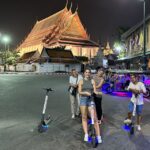
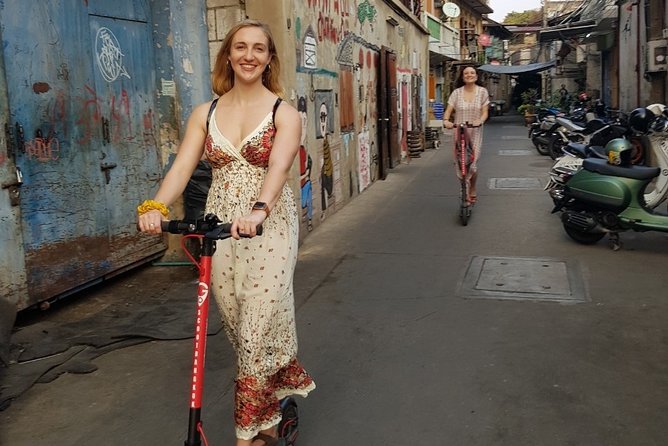
Your tour begins at the Thai Cooking School meeting point in Bang Rak, then quickly moves into the most important moment: getting comfortable with the scooter. Before you roll, you practice until the guide feels you’re ready. It’s a short setup, but it changes the whole experience. Bangkok traffic can feel chaotic from the sidewalk; on this tour, you’re essentially learning your rhythm first, then using the scooter to access places most people only see by bus—or not at all.
Bang Rak is a good launch district. It’s close to the older market areas and the kind of neighborhood energy that makes Bangkok feel real instead of staged. You’re not just driving past landmarks; you’re starting where locals shop and move.
Practical note: there are clear limits. Minimum age is 12 (or 140 cm), weight must be under 120 kg, and you’ll need a helmet. If you’ve never ridden an electric scooter before, this “practice first” approach is exactly what you want.
You can also read our reviews of more tours and experiences in Bangkok
Grand Postal Building and old-town landmarks, without the bus feeling
After training, the route threads into old-town Bangkok with a mix of culture and everyday life. One stop is the Grand Postal Building area, once a working post office and now a cultural center. Even if you only spend a few minutes there, it’s a strong reminder that Bangkok’s modern identity overlaps with its former jobs and institutions.
Right in the old town area, you’ll also pass by Haroon Mosque. It’s one of the early mosques in Thailand, tucked into the neighborhood fabric rather than isolated in a tourist bubble. And you’ll taste that neighborhood feel further in Talad Noi, where street art meets older architecture. This stop is more than photos: the area is connected to early church presence and historical banking in Thailand (including Siam Commercial Bank’s early role). The tour takes you through back streets and alleys—small lanes where you actually slow down and notice details.
Here’s what makes these stops valuable: they help you understand Bangkok as a living city. You see places that still function as community spaces, not only as sightseeing sets.
Wat Chakrawatrachawat and crocodiles: temple stop with a twist
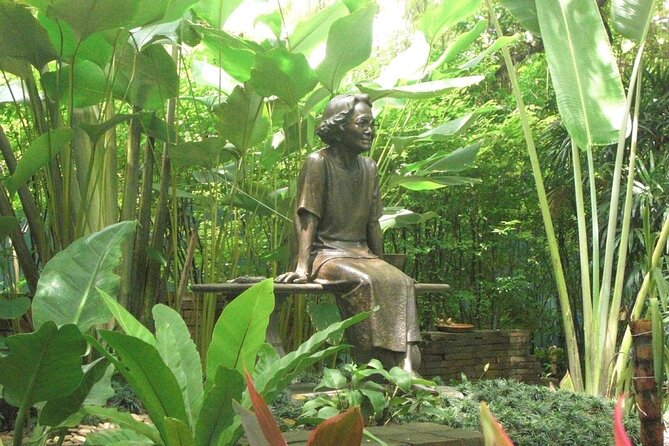
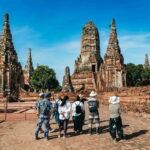
Temples can be hit-or-miss if you’re expecting one style of temple experience. This one adds a memorable fact that makes your time feel purposeful: Wat Chakrawatrachawat Woramahawihan dates back to the 1800s and is known for housing crocodiles. The story is part of why the place exists the way it does. In early times, traders along the river would capture crocodiles and kill them—so the temple became a kind of protection site.
Even if you only spend around ten minutes, this stop gives you a different lens on the city’s relationship with the river and local livelihoods. Bangkok’s temples often connect to survival, commerce, and animals as much as they connect to spirituality.
Pak Khlong Flower Talat: the market that runs on time and smells
If your idea of Bangkok includes markets with real motion, you’ll appreciate Pak Khlong Flower Talat. It’s Thailand’s biggest wholesale flower market, and it’s open 24 hours. The main selling streets kick into higher gear in the evenings, so the market has a pace that feels tied to the city’s rhythms. On this tour you’ll have time to stroll—just long enough to take it in, not so long that you lose momentum.
What I’d plan for: this is a sensory stop. Flowers, spices, vegetables—plus heat and crowds in the busier areas. Wear breathable clothes and keep your phone handy for photos, but don’t treat it like a photo safari only. Walking through wholesale spaces shows a side of Bangkok most visitors miss.
The tour also provides bottled water, snacks, and coffee or tea, which helps here. Markets are where your energy can drop fast, especially in Bangkok’s weather.
Wat Kalayanamit and the big Buddha: the river crossing moment
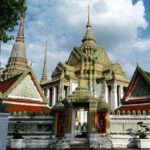
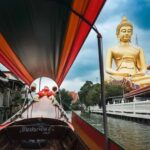
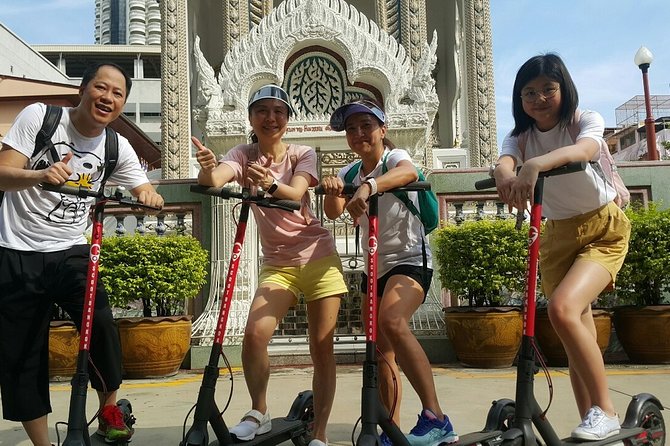
From the flower market, you cross the river by ferry and land at Wat Kalayanamit Woramahawawihan. This is one of those stops that gives you instant scale: it’s known for one of the biggest sitting Buddha images in Thailand, and it also houses a large bell.
The ferry ride itself is a small break in the scooter day. Instead of compressing everything into riding time, the route uses water travel to change the pace. That makes the whole day feel more like a loop through neighborhoods than one long ride session.
This is also a temple stop, so temple attire matters. Plan for covered shoulders and legs. If you show up in shorts or thin layers that don’t meet the dress code, expect you’ll spend time sorting it out before you even get to see the statue and bell.


Baan Kudichin Museum and Portuguese cookies: a softer side of Bangkok
One of the more interesting cultural stretches on the route is the Portuguese settlement area. The tour includes Baan Kudichin Museum and also highlights how Portuguese influence shaped local food culture. You’ll have time in the area, including coffee shops and a bakery that still bakes cookies introduced more than 200 years ago.
This is the kind of stop that works well if you like your history to show up in everyday life—like what people eat and sell now, not only what’s written on a plaque. It also gives you a change from temples and markets, while keeping the day’s theme: Bangkok’s communities overlap and layer.
If you’re the type who likes to pause, sip something warm, and watch the neighborhood move, this is a great moment to slow down.
Talad Noi wall art, Lhong 1919 murals, and the Chinatown maze
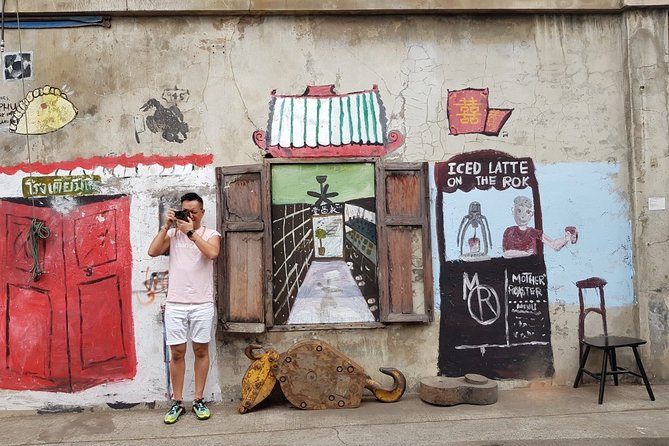
Later in the route, the tour leans into Bangkok’s visual side. Talad Noi is known for wall art and street culture, and the tour spends time cruising through those back streets and alleys. It connects the art scene to earlier landmarks too, including the area’s early church and first bank role.
Then you have an additional highlight stretch around Lhong 1919. It used to relate to Chinese immigrant life, and now it’s a complex with restaurants and shops. The key detail here is the almost forgotten murals. Even if you’re not an art expert, it’s worth treating this stop like a short gallery walk. The atmosphere tends to be calmer than the biggest markets, which makes it easier to actually look.
Finally, you pass through an area connected to one of the world’s biggest Chinatowns. The description focuses on a maze-like network connecting parts of the larger area. The tour doesn’t stop as much here as at the temples and the flower market, but the scooter route helps you see how the connections work without needing to navigate on your own.
How long is 3 hours, really? Where the time goes
This tour runs about three hours. In that window, you’re balancing training, riding, short visits, and a couple of longer stops where you can walk and look.
Here’s the timing logic that helps you enjoy it:
- Early practice means you won’t feel stressed later.
- Short temple visits keep the day moving while still letting you see what makes each temple distinct.
- Market time gives you enough wandering to feel the place, especially at Pak Khlong Flower Talat.
- A river crossing breaks up the scooter time so you don’t feel trapped on the scooter the whole day.
If you’re hoping for a deep, slow study of every site, this is not built like that. But for first-time visitors who want a smart slice of Bangkok across neighborhoods, it’s a good match.
Price and value: what $36.58 buys you
At about $36.58 per person for roughly three hours, the value is strongest when you look at what’s included. You’re not paying extra for the basics of a comfort-forward tour:
- Bottled water, snacks, and coffee or tea
- Helmet
- Professional and local guide time
- Insurance
- Admission listed as free for most stops
That combination matters. Bangkok can be pricey for “small extras” if you’re doing this kind of route on your own. A scooter tour also gives you access through side streets and between neighborhoods without the time sink of private transport.
So the question isn’t just cost. It’s whether you’d pay the time, hassle, and navigation effort to replicate this route. In most cases, you won’t.
Guide style matters: what to watch for
One thing I’d pay attention to is your guide’s communication style. In the feedback I saw, guide performance ranged from very hands-on and adaptable (one guide named Nic is specifically mentioned for being knowledgeable and adjusting to the group) to a less chatty style in at least one instance.
That doesn’t mean the tour is bad—small-group scooter tours are often more about pacing and safety than lecture time. Still, if you care a lot about commentary, you can make it easier on yourself:
- Ask a clear question early, like what to look for at the next stop.
- Tell the guide what you want most (street scenes, temple stories, markets, food culture).
- If you want more narration, request it at the start.
With a cap of three, you’ll usually get more attention than you would on a bigger tour.
Who this tour fits best (and who should choose differently)
This tour is a solid match if you:
- Want to see Bangkok’s old neighborhoods without a full-day commitment
- Like a mix of temples, markets, and everyday streets
- Feel comfortable riding scooters once you get short training
- Prefer small groups (max 3) and guided structure
- Want included snacks and drinks so you don’t hunt for them during stops
It may be less ideal if you:
- Hate scooter riding or get anxious in tight spaces
- Need hotel pickup because your schedule doesn’t work with the meeting point
- Want lots of time at only one big attraction rather than a variety of short stops
Getting ready: temple attire and practical comfort
Bangkok temples require temple attire, and the tour follows that rule. Plan for covered shoulders and legs, and bring something that won’t make you miserable if it’s hot.
Also keep the scooter basics in mind:
- Weight limit is 120 kg
- Minimum age is 12 or 140 cm
- You’ll wear a helmet
- The experience starts and ends back at the meeting point (no hotel drop-off or pickup)
The meeting location is Thai Cooking School, 69, 2 Soi Charoen Krung 44, Bang Rak. If you’re using public transportation, the start point is near public routes, which helps. It also means you can arrive a little earlier without feeling rushed.
Should you book the Electric Scooter Tour of Bangkok?
Book it if you want a well-paced, small-group way to get street-level Bangkok across multiple neighborhood types—old-town landmarks, temple moments, a major flower market, and a river ferry break—without the dead time of a bus. The included snacks, drinks, helmet, and insurance add up in value.
Skip it if you’re scooter-averse, you need hotel pickup, or you expect long guided lectures at every site. This is more about motion, access, and short, meaningful stops.
If you can handle scooters after a quick practice and you’re okay with a mix of brief sights, this tour is a smart way to spend three hours in Bangkok.
FAQ
How long is the electric scooter tour?
It lasts about 3 hours.
What’s the group size limit?
The experience caps the group at a maximum of 3 travelers.
Where does the tour start and end?
It starts at Thai Cooking School, 69, 2 Soi Charoen Krung 44, Bang Rak, and ends back at the meeting point.
What’s included in the price?
Included are bottled water, snacks, coffee and/or tea, professional and local guides, helmet use, and insurance. The experience also lists taxes, fees, and handling charges.
Do I need hotel pickup or drop-off?
No. Hotel pickup and hotel drop-off are not included.
Is there a minimum age or height requirement?
Yes. Minimum age is 12 years or 140 cm in height.
Are there weight or clothing requirements?
You must be under 120 kg. You’ll also need temple attire for the temple stops.
Can I cancel for free?
Yes. You can cancel up to 24 hours in advance for a full refund. If you cancel less than 24 hours before the start time, it is not refunded.