REVIEW · GRAND PALACE & TEMPLE TOURS
Bangkok: Grand Palace, Wat Pho, and Wat Arun Guided Tour
Book on GetYourGuide →Operated by WINDOWS OF ASIA COMPANY LIMITED · Bookable on GetYourGuide
Bangkok’s temple trio hits hard. This guided tour strings together the Grand Palace, Wat Pho, and Wat Arun with a real human guide who can translate royal meaning into something you can walk through. I especially like how the stops connect into one story of Thai kings, sacred Buddhism, and public instruction. I also like having a helpful English guide named Meng, who makes the details easier to remember.
The main trade-off is practical: entrance fees are not included, and the dress code is strict. You’ll also need to remove shoes inside temple buildings, which can slow you down if you aren’t ready for it.
In This Review
- Key Things You’ll Notice on This Tour
- A Smart Temple Route Through the Royal and Sacred Heart of Bangkok
- Getting Started Near the Grand Palace and Moving by Local Transport
- Wat Phra Kaew (Emerald Buddha Temple): the Sacred Core You Respect by Understanding
- What to expect at this stop
- Photo and inside-building rules
- Grand Palace: Kings’ Official Residence Still Used for State Events
- Why I like this stop on a guided tour
- Wat Pho (Temple of the Reclining Buddha): Marble Education and the Roots of Thai Massage
- The royal temple status
- The marble inscriptions that teach the public
- Thai massage connection
- On the way: Tha Thien Market
- Wat Arun (Temple of Dawn): the 70-Meter Tower and River-Edge Drama
- What to enjoy most
- Price and Entrance Fees: What $17 Actually Covers
- Is it good value?
- Practical Etiquette: Dress Code, Shoes Off, and Smart Photo Planning
- What to bring
- What you can’t wear
- Shoes off inside buildings
- Photography basics
- Who This Guided Tour Suits Best (and Who Should Skip)
- The Biggest Upside: A Guide You Can Ask Questions To
- Should You Book This Bangkok Temples Tour?
Key Things You’ll Notice on This Tour
- Guide Meng brings the royal context to life, not just a checklist of buildings
- Wat Phra Kaew (Emerald Buddha Temple) is treated as the most sacred temple in Thailand
- Wat Pho’s marble inscriptions tie Buddhism, education, and the tradition behind Thai massage together
- Wat Arun’s 70-meter tower gives you the classic Temple of Dawn photo angle by the Chao Phraya River
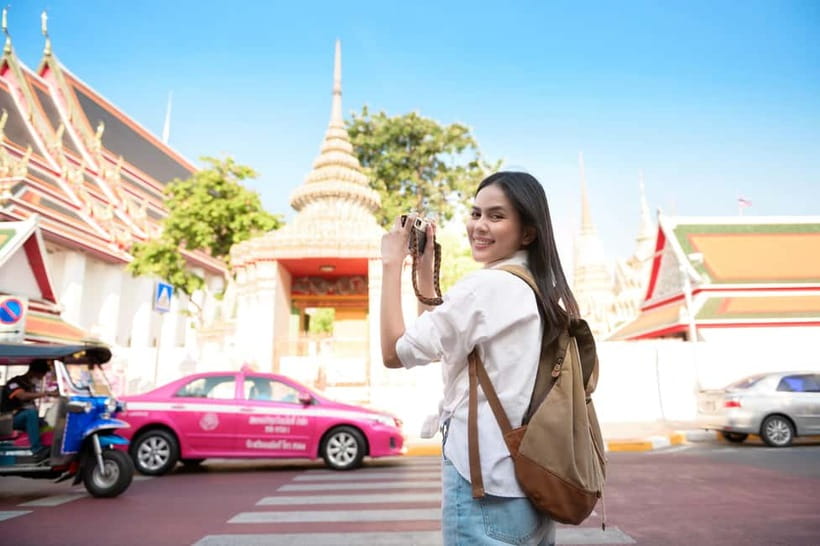
- You pass well-known local markets like the amulet market and Tha Thien Market, which helps you feel Bangkok beyond the main gates
A Smart Temple Route Through the Royal and Sacred Heart of Bangkok
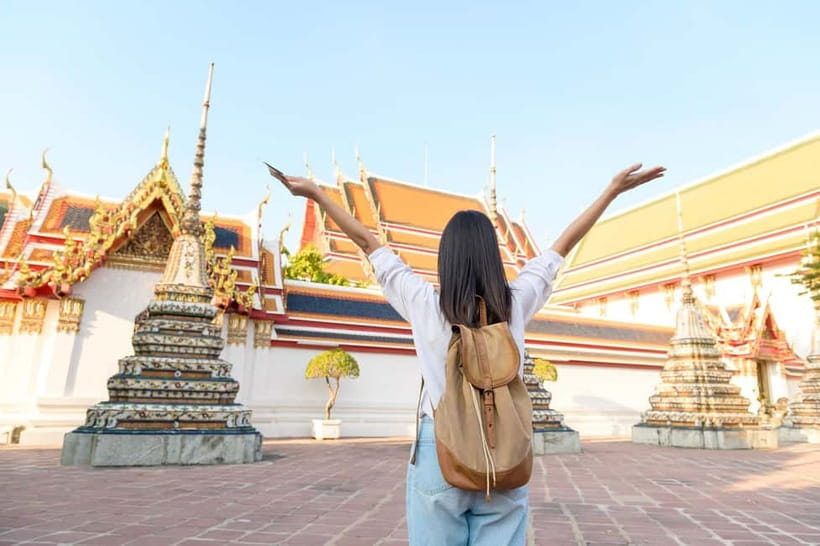
If you’re doing Bangkok temples for the first time, this kind of focused route is a win. The Grand Palace area, Wat Pho, and Wat Arun aren’t random stops—they’re linked by the way Bangkok presents power (royal court) and faith (Buddhism) in the same city.
You’ll go where the symbolism is thickest. The Emerald Buddha Temple sits at the very center of Thailand’s sacred Buddhist traditions. Wat Pho is known for its Reclining Buddha—but it’s also famous for education: you’re looking at marble inscriptions used for public instruction. Then Wat Arun closes the loop with the Temple of Dawn and those iconic tower views over the Chao Phraya.
One of the best parts is how a good guide changes your pace. Instead of staring at details and guessing what matters, you’re guided into what’s worth your attention first—and what you can safely let your eyes skim.
You can also read our reviews of more guided tours in Bangkok
Getting Started Near the Grand Palace and Moving by Local Transport
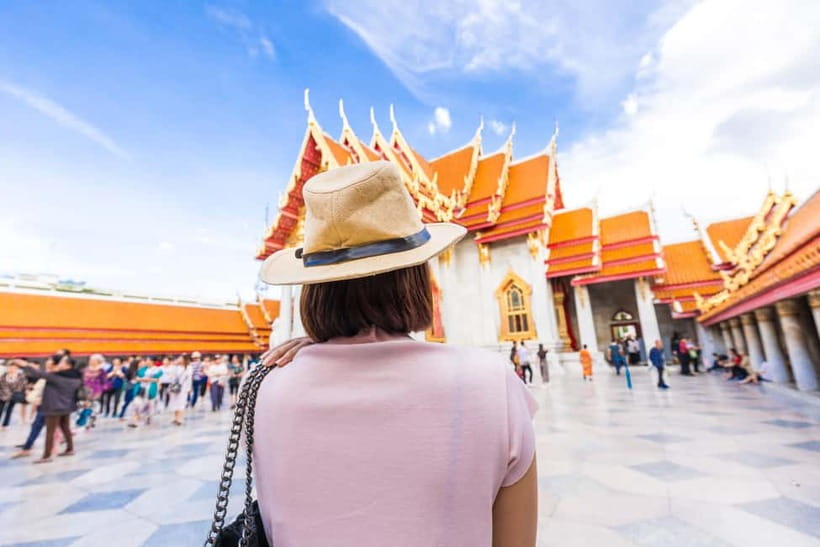
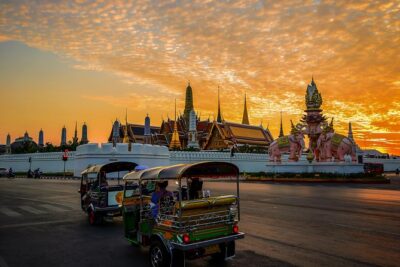
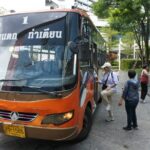
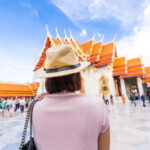
This tour starts in the Grand Palace area, at the front of the Tha Chang ferry pier, next to the Grand Palace. You’ll meet your guide there and then head toward the first major temple stop using local transport.
That matters more than you might think. Grand Palace and the river-side temples are spread out enough that walking alone can turn into a long, hot slog. Local transport also helps you see short, real slices of Bangkok in between the big-ticket sights.
On the way, you’ll pass by the amulet market on Rattanakosin Island. It’s one of the best-known community markets in the historic core. Even if you don’t buy anything, it’s a reminder that temples aren’t just monuments here—they sit inside living neighborhoods with traditions and commerce running right next door.
Wat Phra Kaew (Emerald Buddha Temple): the Sacred Core You Respect by Understanding
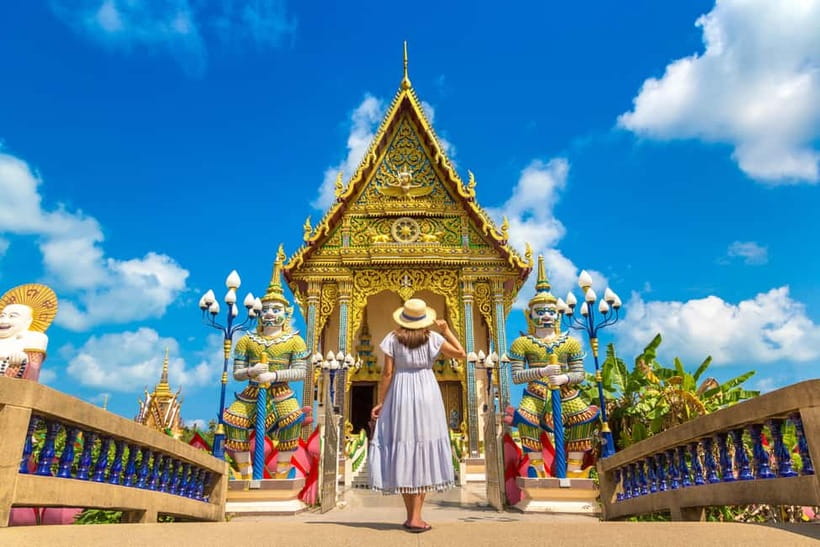
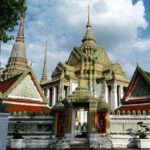
Your first big temple experience is the Emerald Buddha Temple, officially Wat Phra Si Rattana Satsadaram, commonly called Wat Phra Kaew or the Temple of the Emerald Buddha.
This is the stop to take seriously. The Emerald Buddha Temple is regarded as the most sacred Buddhist temple in Thailand. That respect isn’t just a vibe—it changes what you do inside. You’ll notice the way your guide frames the space: what’s sacred, what’s ceremonial, and why visitors should treat the buildings like a national-level shrine, not a photo spot.
What to expect at this stop
- You’ll explore the first stop at Wat Phra Kaew with your guide.
- You’ll learn the temple’s role in Thailand’s most revered Buddhist traditions.
Photo and inside-building rules
Photography is permitted in the Royal Palace Grounds and in the compounds of the Emerald Buddha Temple, but not inside the buildings. So plan for pictures around open areas and courtyards, not in the interior rooms.
Grand Palace: Kings’ Official Residence Still Used for State Events
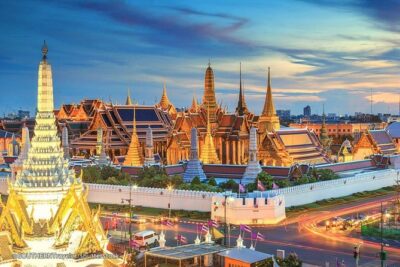
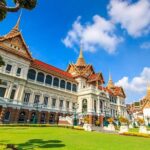
After the Emerald Buddha Temple, you’ll move into the Grand Palace, which served as the official residence of Thailand’s kings. Even today, it’s not frozen in time. The complex still hosts official events, including royal ceremonies and state functions held within the walls every year.
This is where the tour becomes more than religious tourism. You’re not just seeing ornament. You’re seeing how Thai kings built legitimacy through space—where power was displayed, ritual unfolded, and official events still happen.
Why I like this stop on a guided tour
Without guidance, the Grand Palace can turn into “big buildings, lots of gold.” With a guide, you start noticing patterns: what royal spaces are used for, how the layout signals hierarchy, and why some structures matter more than others for understanding Thai history.
It’s also a practical stop for context. Once you understand that this is the royal stage, Wat Pho and Wat Arun feel less like separate attractions and more like parts of the same Bangkok worldview.
Wat Pho (Temple of the Reclining Buddha): Marble Education and the Roots of Thai Massage
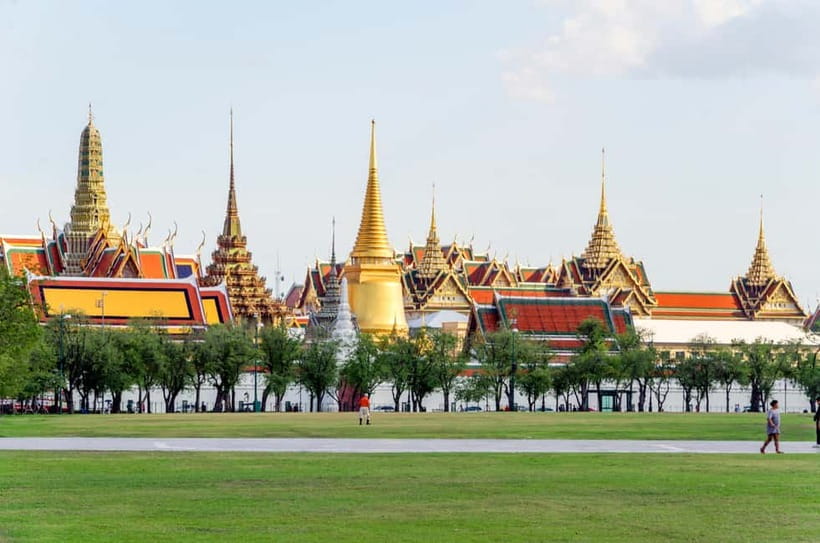
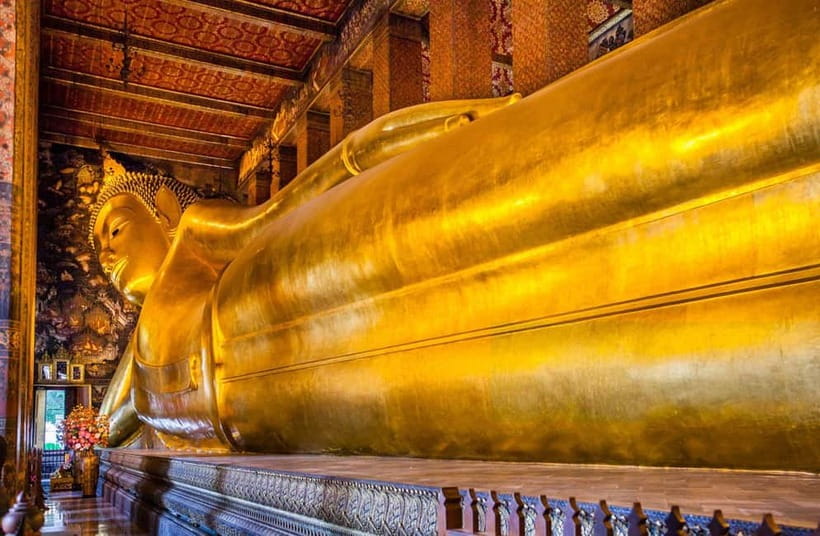
If you selected the Wat Pho option, this is one of the most meaningful temples to see with a guide. You’ll visit the Temple of the Reclining Buddha (Wat Pho), known for its marble inscriptions and for being an early center for medical public education.
The royal temple status
Wat Pho is listed among six temples in Thailand classified as the highest grade of first-class royal temples. Your guide connects it to King Rama I, who rebuilt the temple complex on an earlier site. Some of his ashes are enshrined here, which explains why the space has weight beyond sightseeing.
The marble inscriptions that teach the public
This temple is famous for marble illustrations and inscriptions placed for public instruction. That public-focus detail matters: it’s not only about worship. It’s about teaching people—how knowledge was shared in a place people could come to.
Wat Pho is also recognized by UNESCO in its Memory of the World Programme for this kind of instructional material. That’s your clue that you’re looking at something historically important, not just decorative stone.
Thai massage connection
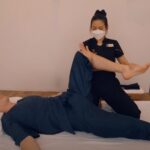
Here’s the practical cultural link you’ll remember after you leave: Wat Pho is considered the birthplace of traditional Thai massage, and the tradition is still taught and practiced at the temple today. Even if you never book a massage session later, the context helps you understand why Thai massage feels like a living tradition rather than a tourist service.
On the way: Tha Thien Market
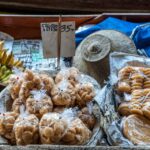
On the route to Wat Pho, you’ll pass Tha Thien Market, a cultural food market known for dried, salted seafood and wholesale products. It’s not a must-shop stop, but it gives you a real sense of neighborhood life between the big temple gates.
Wat Arun (Temple of Dawn): the 70-Meter Tower and River-Edge Drama
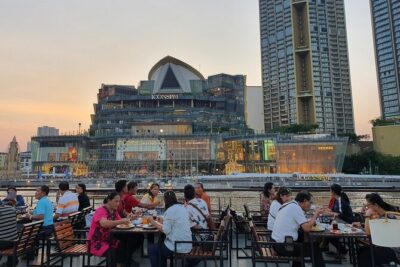
Your final temple stop is Wat Arun, the Temple of Dawn, one of Bangkok’s most famous landmarks. The big visual here is the giant tower—about 70 meters—rising beside the Chao Phraya River.
Wat Arun is decorated with tiny pieces of colored glass surrounded by Chinese porcelain. This is the kind of surface detail that makes you slow down, because it’s hard to capture fully in a single photo. With a guide, you’ll know where to look so the decorations aren’t just random sparkle.
What to enjoy most
- The tower itself, with that river-side scale
- The way the decoration pattern creates texture you can actually see up close
- The “Temple of Dawn” identity—this place feels designed for light and reflection
If you’re building a Bangkok memory, Wat Arun is the one that usually sticks because it looks like Bangkok from a distance and still rewards you up close.
Price and Entrance Fees: What $17 Actually Covers
The tour price is listed at $17 per person, which is a reasonable deal when you think about what’s included: a professional licensed guide plus drinking water.
But here’s the math that you should plan for. Entrance fees are not included:
- Grand Palace and Wat Phra Kaew: THB 500 per person
- Wat Pho: THB 300 per person
- Wat Arun: THB 200 per person
That’s a total of THB 1,000 if you do all three temple fee categories, and Wat Pho is only relevant if you selected the Wat Pho option. So your real budget is the $17 tour fee plus those Thai baht temple charges.
Is it good value?
Yes, mainly because your guide is doing the heavy lifting: turning sacred rules, royal history, and temple education into something you can understand while you’re standing there. If you’re the type who wants to read plaques only after you’re already tired, a guided format pays off fast.
Practical Etiquette: Dress Code, Shoes Off, and Smart Photo Planning
This is where you win or lose time on temple days in Bangkok.
What to bring
- Comfortable shoes
- Hat
- Sunscreen
- Cash
Cash matters because those entrance fees aren’t included.
What you can’t wear
- Shorts
- Short skirts
- Sleeveless shirts
You’ll also be required to wear proper attire because the chapel is a national shrine. That means no bare shoulders and knees, and strapless-heel shoes aren’t allowed.
Shoes off inside buildings
Shoes must be removed before entering the temple buildings as a matter of respect. Plan clothing and shoes that are easy to remove and put back on. It sounds basic, but it changes how smoothly you move.
Photography basics
Photography is permitted in the Royal Palace Grounds and in the compounds of the Emerald Buddha Temple, but not inside the buildings. This is one of those rules that helps you avoid stress—take your shots in the open areas, and don’t argue with signage you can’t win.
Restrooms are available, so you’re not scrambling.
Who This Guided Tour Suits Best (and Who Should Skip)
This tour is built for you if:
- You want Grand Palace, Wat Pho, and Wat Arun in one planned route
- You appreciate context (royal history, temple meaning, and why these sites matter)
- You like the idea of learning something specific, not just walking past landmarks
It’s also a strong match for families and first-timers who can handle a strict dress code and some walking over temple grounds.
Not for everyone:
- It’s not suitable for people with mobility impairments and wheelchair users. Temple sites often involve steps and uneven surfaces, and this tour format doesn’t label itself as accessible.
The Biggest Upside: A Guide You Can Ask Questions To
The stand-out feedback from the experience is simple: the guide helps. Meng gets named for being very helpful, and that tracks with what matters at these temples—your questions aren’t optional. What does this mean? Why is this place treated differently? Where should I look first?
A licensed English guide adds value immediately at the Emerald Buddha Temple and Grand Palace, where the meaning is easy to miss if you’re just scanning. And at Wat Pho, understanding the marble inscriptions and the Thai massage birthplace connection makes the whole complex feel more purposeful.
Should You Book This Bangkok Temples Tour?
Book it if you want a guided, structured way to see the top temple trio—Grand Palace, Wat Pho, and Wat Arun—with a licensed English guide and clear temple etiquette. The $17 fee isn’t the full cost, but the guide coverage and water included help offset that, especially when you factor in entrance fees.
Skip or reconsider if you don’t want a dress-code day with shoes-off rules, or if you need wheelchair-level accessibility. Also, if you’re comfortable DIY-ing temple sites with printed guides and you know your history already, you might prefer self-guided. But if you want the story while you’re standing in the story, this tour is a smart way to do it.
If you’re ready for temple rules and you like learning as you go, this is one of the more practical ways to experience Bangkok’s most famous sacred corners.