
REVIEW · STREET FOOD & CHINATOWN TOURS
Bangkok Chinatown: Self-Guided Mystery Puzzle Quest
Book on Viator →Operated by Questo · Bookable on Viator
One clue leads to the next spot. This outdoor, app-led mystery puzzle quest in Bangkok Chinatown sends you from place to place at your own pace, with story moments built into the challenges. I like that it mixes temple sightseeing, street-level snacks, and problem-solving without needing a live guide. I also like the offline setup, so you can roam without hunting for data.
A fair heads-up: if your phone’s map view is off or the directions feel confusing, it can turn into a slog, and one past participant reported inaccurate Google Maps guidance. If that happens to you, go slow, keep the app open, and be ready to troubleshoot rather than force it.
In This Review
- Key highlights you’ll feel fast
- How this self-guided Chinatown mystery quest really works
- Starting points, pace, and how long 1.5 hours feels
- Stop 1: Kan Kee Nam Tao Thong herbal drinks and the first clue
- Stop 2: Wat Traimit and the 5.5-ton Golden Buddha puzzle
- Stop 3: Eiah-Sae coffee shop for a nearly-century-old pause
- Stop 4: Wat Lokanukroh, a small temple inside Sampeng Market
- Stop 5: Leng Buai Ia Shrine, refuge and prosperity since 1658
- Stop 6: Wat Leng Noei Yi, renamed by King Chulalongkorn
- Offline, no-guide, and phone-only: the real value of this concept
- Price check: $6.99 for Chinatown puzzles and temples
- Tips to help you avoid the rough edges
- Should you book Bangkok Chinatown: Self-Guided Mystery Puzzle Quest?
- FAQ
- What is the duration of Bangkok Chinatown: Self-Guided Mystery Puzzle Quest?
- How much does it cost per person?
- Do I need an internet connection to play?
- Is there a human guide with you during the quest?
- Can I start the experience at any time?
- Can I take breaks during the quest?
- Where does the experience start and end?
- What are some of the main stops included in the quest?
- Can groups play together, and is there a group option for buying tickets?
- What if I need to cancel?
Key highlights you’ll feel fast

- No live guide: step-by-step prompts on your phone, with no group shuffling.
- Offline play: you don’t need internet while exploring.
- Chinatown stops that actually matter: Wat Traimit, Chinese shrines, and long-running shops.
- Start anytime: the quest is available 24/7, and you can pause and resume.
- Group-friendly: one person can buy access for everyone on a smartphone ticket.
How this self-guided Chinatown mystery quest really works

This is an outdoor escape-style game you play on your phone while walking through Bangkok’s Chinatown. The app is your guide: it shows you what to do next, and it gives exact directions on screen to the next location. Each challenge is tied to a real place, and as you solve it, you get the story behind that stop.
The biggest practical difference from a traditional tour is control. You decide when to move, when to pause, and how long you spend at each site. That matters in Chinatown because the streets and markets can feel like a living maze. With an app-led flow, you’re not waiting on a group schedule—you’re solving at the speed your feet and your attention allow.
You also get a built-in way to reduce friction. You’re not coordinating a meeting time with a person. And the experience is designed as phone-only: no human contact, avoiding crowds is part of the concept, and the quest works as a mobile ticket.
You can also read our reviews of more guided tours in Bangkok



Starting points, pace, and how long 1.5 hours feels
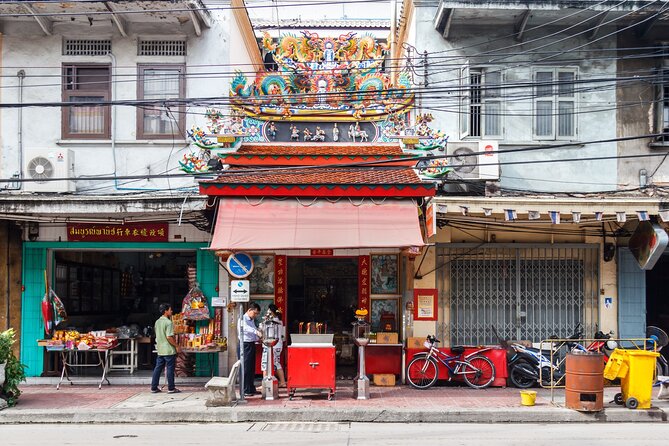
The quest is designed so you can start at any time. It’s permanently available 24/7, and it even notes that you can take a break and resume later. The duration is listed as about 1 hour 30 minutes, but in practice the time you spend will depend on how quickly you solve puzzles and how long you want to linger for photos or a quick snack.
Your start point is Rong Muang, Pathum Wan, Bangkok 10330, Thailand. Your end point is 586 ถ. เจริญกรุง, Khwaeng Pom Prap, Khet Pom Prap Sattru Phai, Krung Thep Maha Nakhon 10100, Thailand. The app guides you step by step to the Wedding store using the Questo app instructions.
That means you should plan for a bit of wandering in the first minutes while you get oriented. If you’re the type who hates being stuck, build in a buffer so you’re not rushing when you begin.
Stop 1: Kan Kee Nam Tao Thong herbal drinks and the first clue
Your first puzzle stop is Kan Kee Nam Tao Thong, known as a 100-year-old maker of Chinese herbal drinks. This is a classic Chinatown kind of place: old-school, practical, and tied to routines that repeat across generations.
In the quest, you’re asked to look around to find the answer to the challenge so you can move forward. That approach is a big part of the fun: you’re not just passing the shop window—you’re actively searching, reading, and noticing details you might otherwise skip.
What to expect here:
- You’ll be scanning the surroundings for clues, not sitting down.
- The location theme sets the tone for the whole experience: Chinese traditions in Bangkok, but experienced at street level.
- It pairs well with a quick drink pause if you’re curious about local flavors (the quest specifically sets you up to sample popular local spots).
Possible drawback at this start point: if you’re trying to solve while walking quickly, you may miss visual details. Slow down, check your phone directions, and give yourself enough time to look.
Stop 2: Wat Traimit and the 5.5-ton Golden Buddha puzzle
Wat Traimit is one of the anchors of this quest. It’s known for housing a 5.5-tonne seated Buddha statue, a gold sculpture dating back to the 13th century. It measures nearly 5 meters in height, which is hard to process until you’re standing in front of it.
The temple is also conveniently located about 450 meters west of Hualampong Railway Station, so it’s a real, reachable landmark—useful if you want to connect this with other nearby stops.
As with the other locations, the challenge here asks you to look around to answer and advance. That’s where the app-led format earns its keep. Instead of just admiring the scene, you’re using the setting to solve a question. That tends to make the visit feel more memorable and less like a quick check-the-box.
What you’ll like if you enjoy architecture or religious art:
- You’re spending focused time in a major Chinatown temple.
- The scale of the statue gives your puzzle-solving a sense of place, not just screen-time.
- Even if you solve quickly, the temple is a worthy stop on its own.
What to watch for: temples can have busy areas depending on the day and time. The quest design leans toward avoiding crowd stress by using phone prompts rather than a live group tour, but you’ll still be in an active public setting.
Stop 3: Eiah-Sae coffee shop for a nearly-century-old pause
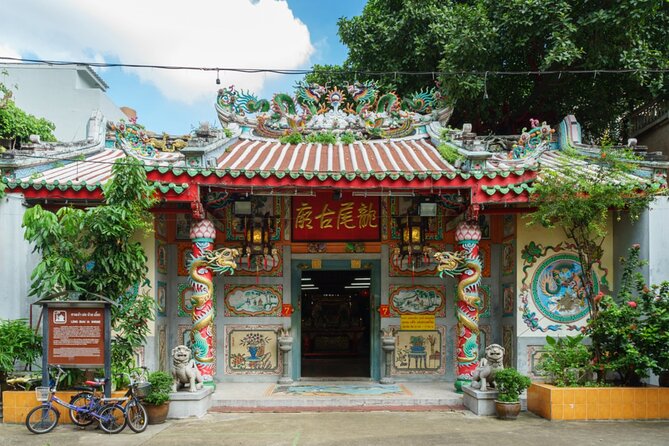
After the heavy wow-factor of Wat Traimit, the next stop shifts into everyday comfort: the Eiah-Sae coffee shop. It’s described as almost a century old and passed down through generations. The game also highlights the homey, noisy atmosphere that still feels alive.
This is a smart placement in the route. A puzzle quest can feel mentally tiring. A coffee shop stop gives your brain a breather and your feet a rest, while still keeping you in the quest flow.
Here’s how it typically works at a place like this:
- You’re prompted to look around to find the answer.
- You can treat it like a short reset before you move again.
- It fits the quest’s larger promise: sample local drinks and food at places popular with locals.
If you’re planning your day, this stop is a good moment to do something you often skip on walking tours: slow down, sip, and let the streets around you become part of the experience rather than a corridor you’re trying to cross.
You can also read our reviews of more tours and experiences in Bangkok



Stop 4: Wat Lokanukroh, a small temple inside Sampeng Market
Wat Lokanukroh is described as one of the smallest temples in Bangkok. No monks live here, but many people come to pray and offer ceremonies, even though it’s in the heart of Sampeng Market.
This is the kind of stop I like most on self-guided quests: it’s not just famous. It’s lived-in. The game frames it as a place with Chinese and Thai beliefs and customs happening right in the middle of commerce.
What you should expect:
- You’ll look around for the puzzle answer, which means paying attention to details instead of rushing through.
- You get a different temple vibe than the big-ticket sites: smaller scale, more local rhythms.
- Because it’s near Sampeng, you’ll likely feel Chinatown as a working neighborhood.
The only consideration is mental switching. Market areas can be noisy and visually busy. That can be great for atmosphere, but if you hate distractions, take longer breaks and do one clue at a time.
Stop 5: Leng Buai Ia Shrine, refuge and prosperity since 1658
Next comes Leng Buai Ia Shrine, an ancient Tae Chew shrine and described as the oldest Chinese shrine in Thailand. It was built in 1658 during the Central Ayutthaya period. The quest story adds context: Chinese businessmen would come for refuge and pray for prosperity for their business.
Architecturally, it’s traditional Chinese in style. That matters for your quest because puzzles like this often rely on noticing symbols, shapes, and patterns—things that are easier to spot when you slow down and look directly at the shrine, not just at the entrance.
Why this stop is valuable for your understanding:
- It connects religion to commerce, which is one of Chinatown’s defining themes.
- It shows how older communities used faith as protection and hope.
- It gives you a human scale to the history, even though the dates are centuries old.
In the game, you’re again asked to look around to answer and move on. Plan to give yourself enough time to read details you might otherwise walk past.
Stop 6: Wat Leng Noei Yi, renamed by King Chulalongkorn

The final temple stop on the quest is a place with a name history and a visual identity. It opened as Wat Leng Noei Yi in the 1870s, serving as an introduction of Mahayana Buddhism in Bangkok. Later, King Chulalongkorn renamed it to its present title.
The decorations are described as animal and floral motifs plus Chinese dragon motifs. The ordination hall houses the temple’s gold-colored Buddha.
For a puzzle quest, this kind of richly decorated setting can be an advantage. If the challenge is based on what you see, you have more visual anchors—patterns, colors, and repeated motifs you can compare while you search.
Practical note: if you’re feeling mentally tired at this point, don’t force speed. The best way to solve puzzle-style tasks is often to slow down and check what the app wants you to notice.
And when you finish, you’ll end at 586 ถ. เจริญกรุง. That sets you up to keep exploring on your own, rather than feeling like the day ends the moment the quest stops.
Offline, no-guide, and phone-only: the real value of this concept
This experience is built around safety and convenience. It’s described as the safest experience you can book because there’s no human contact, and it avoids crowds with a phone-only approach. You only need your smartphone, and the game can be played offline.
That offline detail is a big practical win in Bangkok. Even if you have data, you don’t want to gamble on signal while you’re following app directions between temples and alleyway shops. With offline play, you can focus on the streets and the clues rather than refreshing a connection.
Then there’s the pricing structure. At $6.99 per person, it’s clearly priced as a budget activity. The value isn’t just the cost—it’s the blend of walking time, multiple meaningful stops, and an interactive element that turns sightseeing into a quest. Compared with a guided tour that costs much more, this gives you a lot of access for a low entry fee.
Group discounts are also mentioned. If you’re traveling with friends or family, one person can purchase access for everybody by selecting the total number of people, and everyone plays on their own smartphones. If you’re traveling as a couple or small group, this is a sensible way to reduce the hassle of coordinating with a guide.
Price check: $6.99 for Chinatown puzzles and temples
Let’s put the math in plain terms. At $6.99 per person and about 1 hour 30 minutes, you’re paying for:
- A self-paced route through several named stops
- An app that provides exact directions on screen
- Offline puzzle play
- A storyline wrapper that connects the locations
You’re not paying for a person to lead you. So if you want a narrative tour with deep explanations from a guide, this isn’t that. But if you like learning by looking, and you enjoy solving a small mystery while you walk, the price is likely to feel fair.
Where it can feel less good is if the app directions don’t match what you see on the ground. One past participant said instructions were confusing and that locations were inaccurate on Google Maps, which made the quest exhausting enough to stop. That’s not the experience you want for $6.99, and it’s worth treating as a caution flag.
My practical advice: download everything ahead of time, keep your phone brightness up for reading directions, and don’t assume Google Maps will make the app’s path obvious. Use the app prompts as the main guide, and let your patience do the rest.
Tips to help you avoid the rough edges
This is a self-guided puzzle, so you need to work with it a little. Here are the most useful habits if you want it to feel smooth:
- Start slowly: the first minutes can involve orienting yourself to the Wedding store meeting guidance from the app.
- Keep your phone charged: offline doesn’t fix a dead battery.
- Treat each stop as a mini scavenger hunt: look around before you decide the puzzle is impossible.
- Don’t rush answers: if you’re skipping details, puzzles can feel unfair fast.
- If something seems off, pause and reassess rather than moving blindly. Chinatown streets can trick navigation.
And if you run into confusing directions, you’re not stuck forever. You can take a break and resume later, which is a rare kind of flexibility for a walking puzzle.
Should you book Bangkok Chinatown: Self-Guided Mystery Puzzle Quest?
Book it if you want a low-cost way to see Wat Traimit, Chinese shrines like Leng Buai Ia, and temple stops such as Wat Lokanukroh and Wat Leng Noei Yi, all while playing an outdoor puzzle on your phone. It’s especially good for couples, solo travelers, and groups that prefer autonomy over meeting a guide at the last second.
Skip it if you strongly dislike tech-dependent instructions, or if you know you get frustrated when maps don’t line up with reality. In that case, you’ll likely need a backup plan or a more traditional tour format.
If you can bring a calm mindset and a bit of curiosity, this is an engaging way to turn Chinatown wandering into a series of small discoveries—shop by shop, shrine by shrine.
FAQ
What is the duration of Bangkok Chinatown: Self-Guided Mystery Puzzle Quest?
The duration is listed as approximately 1 hour 30 minutes.
How much does it cost per person?
It costs $6.99 per person.
Do I need an internet connection to play?
No. You can play offline, and you do not need an internet connection while exploring.
Is there a human guide with you during the quest?
No. There is no physical tour guide. You follow the app step by step.
Can I start the experience at any time?
Yes. You can start at any hour, and it’s available 24/7.
Can I take breaks during the quest?
Yes. You can take a break at any time and resume later.
Where does the experience start and end?
It starts at Rong Muang, Pathum Wan, Bangkok 10330, Thailand, and ends at 586 ถ. เจริญกรุง Khwaeng Pom Prap, Khet Pom Prap Sattru Phai, Krung Thep Maha Nakhon 10100, Thailand.
What are some of the main stops included in the quest?
The quest includes Kan Kee Nam Tao Thong, Wat Traimit, Eiah-Sae coffee shop, Wat Lokanukroh, Leng Buai Ia Shrine, and Wat Leng Noei Yi (Wat Leng Noei Yi is noted with a later renaming by King Chulalongkorn).
Can groups play together, and is there a group option for buying tickets?
Yes. There are group discounts. One person can purchase access for everybody by selecting the total number of people, and each person plays on their smartphone.
What if I need to cancel?
Free cancellation is available. You can cancel up to 24 hours in advance for a full refund, based on local time.