REVIEW · KANCHANABURI & RIVER KWAI DAY TRIPS
Train trip death railway Bridge on river Kwai from Bangkok to Kanchanaburi trip
Book on Viator →Operated by Trip Thai Tour · Bookable on Viator
History hits hard on the River Kwai. I love the way this Death Railway day trip stitches the story together with real stops, and I especially liked having guide Rach explain what you’re looking at. I also enjoyed the included walk along the Bridge over the River Kwai and the train ride that takes you through the countryside with the history right behind it. One thing to keep in mind: early pickup and vehicle condition can vary, so give yourself a little buffer if comfort isn’t your top priority.
You start from Bangkok at 6:00 am, ride west to Kanchanaburi, and return the same day after lunch. The group stays small, with a maximum of 10 travelers, which makes it easier to hear explanations and ask questions when the topic gets heavy.
In This Review
- Key Highlights You’ll Actually Care About
- Bangkok Pickup to Kanchanaburi: A Big Day With a Clear Flow
- Don-Rak War Cemetery: Quiet, Direct, and Included
- JEATH War Museum: How the Death Railway Story Gets Put Together
- Walking the Bridge Over the River Kwai: Views, Then Weight
- Train on the Death Railway: Countryside Views With a Heavy Backdrop
- Lunch Around 13:45 and the Timing Back to Bangkok
- Price and Value: Is $80.67 Worth It?
- Small-Group Tours: The Best Part, and the Risk
- Who Should Book This Tour (and Who Might Not)
- Should You Book This Bangkok to Kanchanaburi Death Railway Trip?
- FAQ
- What time does the tour pickup start in Bangkok?
- How long is the tour?
- What are the main stops on the itinerary?
- Are admission tickets included for the cemetery and museum?
- Is hotel pickup included?
- Is there a train ride included?
- Is lunch included?
- How big is the group?
- How much does the tour cost?
Key Highlights You’ll Actually Care About
- Small-group format (max 10): Easier pacing and better chances to hear your guide during the stops.
- Guide-led context: Rach’s commentary helps you connect the cemetery, museum, bridge, and train into one story.
- Don-Rak War Cemetery visit: A focused, included stop centered on POW victims connected to the Burma Railway.
- JEATH War Museum timing: Enough time to read, look around, and understand how the Death Railway story is presented.
- Train trip on the Death Railway line: You get the sight-seeing part without losing the historical weight.
Bangkok Pickup to Kanchanaburi: A Big Day With a Clear Flow
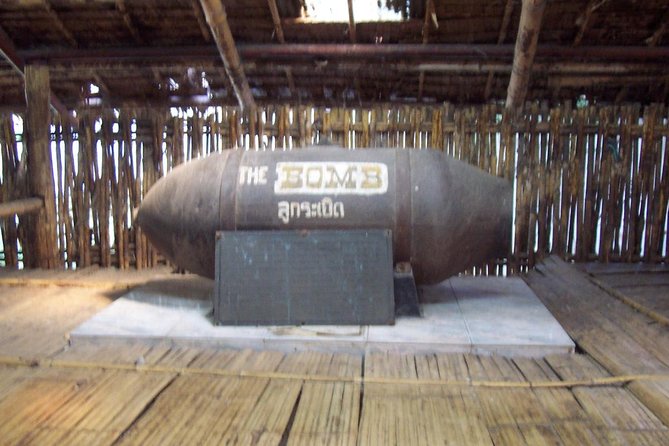
This tour runs as a full day—about 10 hours—built around one logical storyline: POW imprisonment, the Burma Railway’s construction, and what it looks like today. You’ll be picked up from your hotel in Bangkok city area starting at 6:00 am, and then you’re on the road toward Kanchanaburi.
The schedule is tight but realistic: cemetery first, then the museum, then the bridge, followed by the train, lunch, and the return to Bangkok around 15:00. That structure matters because it keeps you from bouncing randomly around town—you stay in the same emotional and historical lane all day.
You can also read our reviews of more tours and experiences in Bangkok.

Don-Rak War Cemetery: Quiet, Direct, and Included
The day starts at the Kanchanaburi War Cemetery, locally known as the Don-Rak War Cemetery. This is the main POW cemetery connected to victims of Japanese imprisonment while building the Burma Railway, so the mood is naturally somber.
What I like about starting here is that it gives you something solid to hold onto before you move into the more interpretive parts of the trip (museum displays, bridge views). You get around 50 minutes here, and since the admission ticket is included, you’re not scrambling to figure out logistics while you’re already processing the setting.
A practical note: this stop can hit emotionally, especially if you’re sensitive to military history. I recommend slow down and give yourself a few minutes before you move on—take in the layout and the names, even if you only read some of them.
JEATH War Museum: How the Death Railway Story Gets Put Together
Next up is the JEATH War Museum, with about 30 minutes on the clock. JEATH focuses on the Death Railway built from 1942 to 1943, created by Allied POW labor under Japanese direction as part of the Thai-Burma railways.
This is the stop where the facts start to line up in your head. Seeing the cemetery first helps you understand why the museum’s content feels personal instead of abstract. And because your time here is limited, it’s best if you approach it like a guided orientation—listen closely, look for the details your guide points out, and then move on before fatigue sets in.
If you prefer history with a human face, JEATH is often the most “explainer-friendly” part of the day. If you prefer sites with minimal reading, you might wish you had more time—but with included tickets and a guided flow, it still works.
Walking the Bridge Over the River Kwai: Views, Then Weight
Around 10:40 am, you walk along the Bridge over the River Kwai—a key visual moment of the itinerary. The Death Railway was built during World War II using forced labor from war prisoners and Asian laborers under Japanese troop control, and the bridge is where that story becomes concrete.
What you’ll experience here is a mix of scenery and gravity. From the bridge area, you get that famous River Kwai setting, plus the sense that you’re looking at infrastructure that once carried tremendous suffering. The tour includes about 2 hours for this portion, including admission.
Quick reality check: the bridge itself is an outdoor, photo-friendly environment. That’s great, but don’t let picture-taking steal the meaning. I’d keep photos as a reward after you’ve listened to your guide’s framing—this is one of those places where the context matters more than the angle.
Train on the Death Railway: Countryside Views With a Heavy Backdrop
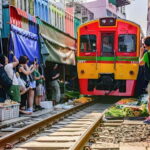
The schedule then moves to the train trip along the Death Railway, starting around 11:10 am. This is the tour’s most unique “you’re actually on it” component: you’re not just looking at history—you’re experiencing the journey along the line through the countryside.
Your guide’s job here is important. When you’re on a train, it’s easy for the experience to turn into scenery-only. But with the day’s cemetery-and-museum context, the train ride lands differently. You’ll likely notice how the route cuts through the region, which makes it easier to imagine why this transportation corridor mattered so much during the war.
The tour description frames it as sight-seeing along the countryside, and that balance is part of the value. It’s not just dark history with no release; it’s history with a moving view that helps you understand the geography.
Lunch Around 13:45 and the Timing Back to Bangkok
Lunch is provided at about 13:45 at a restaurant. In at least one experience, the lunch is described as a buffet and served with views over the river, which sounds like exactly the right reset after the cemetery and museum.
Timing is also a hidden value here. By feeding you around the early afternoon, the tour avoids the worst part of day trips: arriving hungry and scattered and then trying to find food on your own. You can eat, recover your energy, and then make the 15:00 departure back toward Bangkok.
If you’re picky about meals, I’d still plan for a typical tour-restaurant buffet style rather than a tailored, restaurant-date experience. The focus of the day is clearly the historical route, not fine dining.
Price and Value: Is $80.67 Worth It?
At $80.67 per person, this isn’t a budget “just go see the bridge” outing. It’s a structured, full-day tour that bundles hotel pickup, multiple included admissions (cemetery, museum, and bridge), and the Death Railway train portion plus lunch.
Here’s how I’d judge value for your money:
- If you want a guided storyline that connects the cemetery, JEATH Museum, and bridge before you board the train, the price starts to make sense quickly.
- If you’d rather wander independently and skip admissions, you could potentially DIY parts of the route for less. But you’d lose the tight pacing and the context.
The group size cap at 10 travelers also nudges the value upward. You’re not in a huge bus crowd, which improves the experience for an event where listening matters.
Small-Group Tours: The Best Part, and the Risk
With a maximum of 10 travelers, you get a more personal pace. That matters for sites connected to suffering during WWII—your guide can slow down when questions come up, and you’re less likely to feel like you’re being herded through.
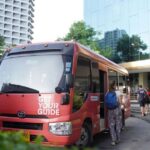
Still, there’s a practical risk with any day trip that depends on early starts: schedules are complicated. One issue reported in a separate instance involved a hiccup with guides and a vehicle described as in rough shape. I’d treat that as a caution to manage expectations about comfort, not a reason to panic—but it’s worth packing a little patience if you’re sensitive to transport quality.
If you’re the type who needs everything perfectly smooth, consider what matters most to you: the train ride and guided stops, or a comfortable ride and near-flawless coordination.
Who Should Book This Tour (and Who Might Not)
This is a strong fit if you:
- Want a one-day structure that takes you from cemetery to museum to bridge and then onto the train.
- Like learning with a guide in a small group (especially for WWII-related sites).
- Want history that you can see and move through, not just read about.
You might reconsider if you:
- Struggle with early starts and long days (it’s about 10 hours and begins at 6:00 am).
- Have very low tolerance for vehicle comfort issues.
- Prefer free time to explore on your own rather than guided pacing.
Should You Book This Bangkok to Kanchanaburi Death Railway Trip?
If your goal is to experience the River Kwai and the Death Railway in one efficient, guided day, I think you should book it. The combination of Don-Rak War Cemetery, JEATH War Museum, a walk on the Bridge over the River Kwai, and then the train ride is exactly the kind of route that turns information into understanding.
I’d book especially if you value interpretation and a guide like Rach who can make the connections clearer. Just go in ready for a serious topic and an early start, and you’ll get the best version of the experience.
FAQ
What time does the tour pickup start in Bangkok?
Pickup starts at 6:00 am from hotels in the Bangkok city area.
How long is the tour?
The duration is about 10 hours.
What are the main stops on the itinerary?
You’ll visit the Kanchanaburi War Cemetery, JEATH War Museum, walk along the Bridge over the River Kwai, take a train trip along the Death Railway, and have lunch before returning to Bangkok.
Are admission tickets included for the cemetery and museum?
Yes. Admission tickets are included for the Kanchanaburi War Cemetery and the JEATH War Museum, and admission is also included for the bridge stop.
Is hotel pickup included?
Yes. Pickup is offered from your Bangkok hotel in the city area.
Is there a train ride included?
Yes. The itinerary includes a train trip along the Death Railway for sightseeing.
Is lunch included?
Yes. Lunch is provided around 13:45 at a restaurant.
How big is the group?
The maximum group size is 10 travelers.
How much does the tour cost?
The price is $80.67 per person. Free cancellation is available up to 24 hours in advance for a full refund.