REVIEW · KANCHANABURI & RIVER KWAI DAY TRIPS
Kanchanaburi Day Trip: WWII Death Railway & Erawan Falls
Book on Viator →Operated by Roam Wander World Tour · Bookable on Viator
WWII gets real fast in Kanchanaburi. You’ll walk a war cemetery, cross the Bridge over the River Kwai, and ride the Death Railway’s train stretch. I also like how the day finishes with real water time at Erawan Falls, not just photos. The trade-off: it’s a long day (about 10 to 12 hours), so you’ll move briskly between stops.
What makes this tour work well is the pacing and support. You’re picked up in an air-conditioned vehicle, guided by a multilingual pro, and kept comfortable with bottled water and even a cooling towel. In the best cases, guides like Lily and drivers like Mr. Wat run the day like a smooth relay—on time, organized, and calm, even with kids.
One more practical note: lunch is not included. You’ll have an international buffet included as part of the day plan, but the tour doesn’t list a specific lunch inclusion in the standard details, so I’d plan to confirm what you personally will be served and where you’ll eat.
In This Review
- Key highlights worth caring about
- Why this Kanchanaburi day feels like more than a checklist
- Getting out of Bangkok: comfort for a 10 to 12-hour grind
- Don Rak War Cemetery and the Thai-Burma Railway Museum: start with meaning
- River Kwai Bridge: iconic photos, guided context, and a workable walking window
- The Death Railway train segment: Thakilen to Krasae Cave and the wooden bridge payoff
- Krasae Cave stop: short, scenic, and photo-friendly
- Erawan National Park: swim time, emerald pools, and tiered hikes
- Lunch plans: don’t let hunger hijack the schedule
- Price check: $183.28 and what you’re really paying for
- Guide and driver impact: Lily and Mr. Wat make the difference
- Who should book this tour (and who might not)
- Should you book this Kanchanaburi WWII and Erawan Falls day trip?
- FAQ
- How long is the Kanchanaburi day trip?
- What’s included besides the guide and transport?
- Is lunch included?
- Does the tour offer pickup from Bangkok?
- Do I need to pay for tickets at stops like the bridge or park?
- What is the cancellation window?
Key highlights worth caring about
- A guided POW-focused start at Don Rak War Cemetery plus the Thai-Burma Railway Museum, so you’re not just sightseeing war ruins.
- Bridge over the River Kwai time for photos with guided context and a short, workable walking window.
- Thakilen to Krasae Cave by train with the famous wooden Krasae Bridge moment and dramatic river-and-cliff views.
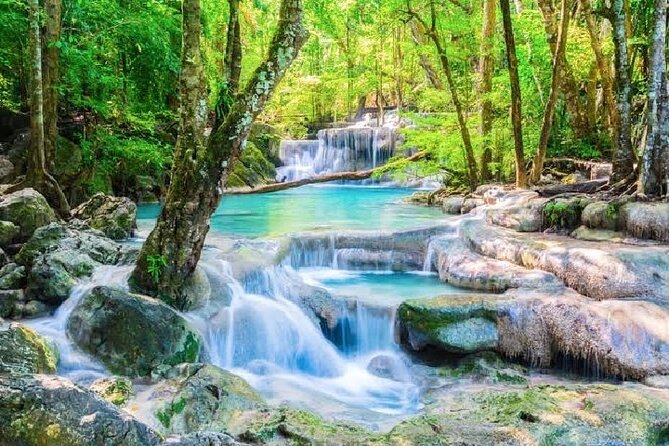
- Erawan National Park with swim time and a chance to hike up toward the second and third tiers.
- Comfort perks that actually help: bottled water, cooling towel, and private transport in air-con.
- Lily and Mr. Wat style service: patient, organized, and ready to adjust if weather changes your waterfall plans.
Why this Kanchanaburi day feels like more than a checklist
Kanchanaburi is one of those places where history doesn’t sit in a box behind glass. It’s on the ground, along the river, and in the trains that still run. This day trip strings the story together in a way that makes it easier to understand the suffering and the scale of what happened during World War II.
I like that the tour balances heavy facts with a physical reset. You’ll begin with memorials and museums, then switch gears to rail heritage and classic war landmarks, and finally end at Erawan Falls where you can cool off. That change matters. If your only Kanchanaburi stop is the bridge and then you leave, you’ll miss the way the area also breathes with nature.
The flow is also practical. You get a set order of stops with realistic time blocks, not a loose day where you wonder if you’re going to get where you’re going.
You can also read our reviews of more tours and experiences in Bangkok
Getting out of Bangkok: comfort for a 10 to 12-hour grind
This is a full-day outing, so the first value is simple: you’re not doing the logistics yourself. You’re picked up from Bangkok, and you ride in a private air-conditioned vehicle. That’s important because the day has long stretches of travel time.
Expect a schedule that feels like a relay race: museum, bridge, then the Death Railway train segment, then lunch, then Erawan. If you’re the kind of traveler who loves long, lingering dinners and slow mornings, this won’t be that vibe. But if you like structured days with a guide keeping you on track, it fits well.
Also, it’s worth booking with some breathing room in your overall trip plan. With 10 to 12 hours on the clock, you’ll want nothing heavy scheduled the next morning.
Don Rak War Cemetery and the Thai-Burma Railway Museum: start with meaning
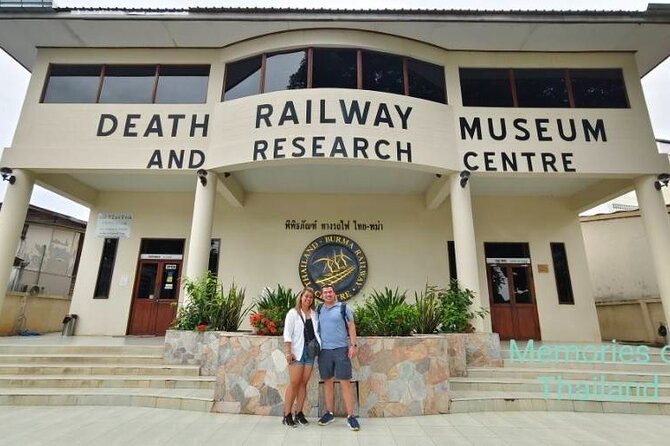
The tour begins by paying tribute to the Allied POWs who lost their lives building the Death Railway. You’ll start at Don Rak War Cemetery and the Thai-Burma Railway Museum, where the tone shifts from travel mode to reflective mode fast.
What I like here is the framing. You’re not just looking at trains and bridges as famous film locations. You’re learning why the Death Railway has that name and what it cost the people who worked under brutal conditions.
A cemetery can feel heavy on a short vacation. But on this itinerary, the museum context helps you connect the locations. You’ll also have the chance to see plaques from places like the UK, Australia, and the Netherlands—small details that make the story feel personal rather than abstract.
Practical tip: if you tend to get emotional at memorials, give yourself a moment before the day starts so you don’t rush through it. I find that slow breathing before the first stop makes the rest of the tour hit differently, in a good way.
River Kwai Bridge: iconic photos, guided context, and a workable walking window
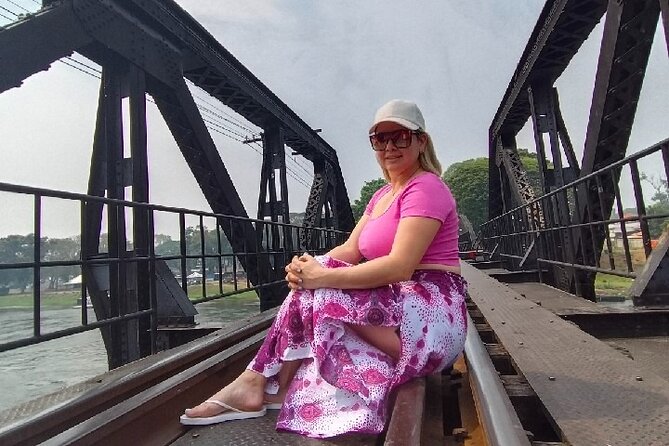
Next is the River Khwae Bridge, the famous iron bridge that’s been captured in films and history books. Yes, you’ll get the classic views. But the best part is that you don’t stand there like a tourist with a camera. You get the role it played during the war, and you walk across with context in your head.
The time window is about 30 to 45 minutes for the bridge area. That’s a sweet spot: enough time to cross, take photos, and not feel like you’re being rushed. And because you’re on a guided schedule, you’re less likely to get stuck waiting around for the perfect photo moment.
Another bonus: the bridge stop is listed as having free admission. Even if you’re not trying to optimize costs, it reduces the “ticket hassle” feeling so you can focus on the place.
If you care about photos, I’d think about your shoes. A bridge is one more reason to avoid slippery soles. You’ll walk, and you might want stable footing even if the weather is warm.
The Death Railway train segment: Thakilen to Krasae Cave and the wooden bridge payoff

This is the part that turns the history into motion.
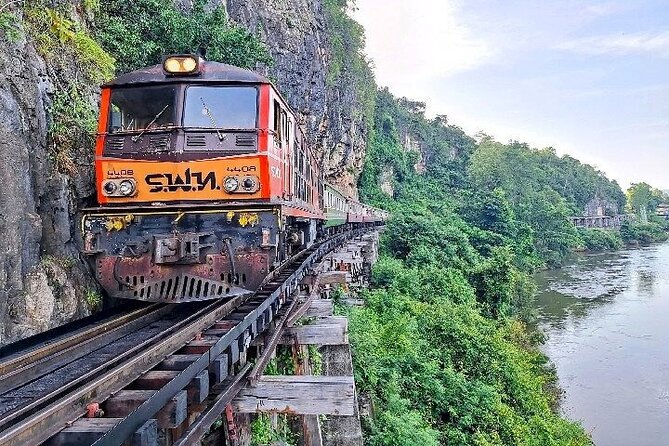
You’ll experience a historic train journey from Thakilen Station to Krasae Cave. The ride is short—about 15 to 20 minutes—but it’s packed with the kind of scenery that makes you understand why this route mattered. You pass lush forests, steep cliffs, and views along the Khwae Noi River.
Then comes the highlight: the wooden Krasae Bridge. It’s the moment people come for, and it’s the kind of thing that feels both delicate and daring. In the tour rhythm, it doesn’t drag. You get just enough time to feel the significance without losing the rest of the day.
You’ll also have about 40 minutes at the Krasae Cave stop area, and admission for the train segment is listed as included. That helps you avoid the mental load of figuring out what’s paid and what isn’t.
Practical tip: bring something small for motion comfort. Even a short train ride can feel bumpy. If you’re prone to motion sickness, it’s worth planning for that before the ride starts.
Krasae Cave stop: short, scenic, and photo-friendly
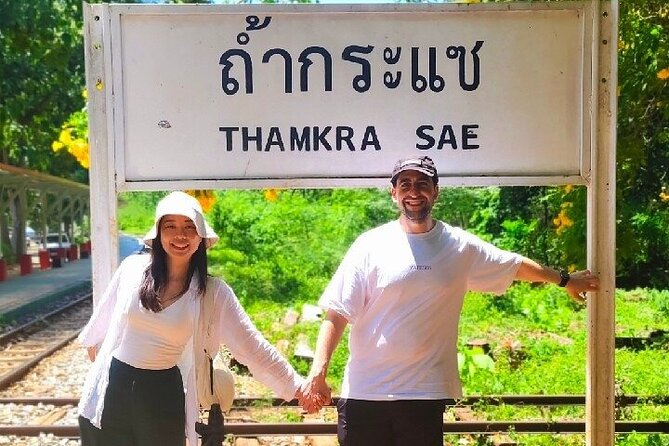
After the train segment, you transition to the Krasae Cave area. The tour gives you a compact chunk of time—around 40 minutes—so treat it like a short orientation stop, not a full sightseeing day inside the cave complex.
What you can expect is a mix of views and a sense of the route’s dramatic terrain. The cave area is part of why the train here is memorable: it feels tied to cliffs and river bends rather than just an urban rail line.
If you’re traveling with kids, this is a good moment. The train breaks up the history-heavy portions, and the scenery provides plenty to look at without requiring a long hike.
Erawan National Park: swim time, emerald pools, and tiered hikes
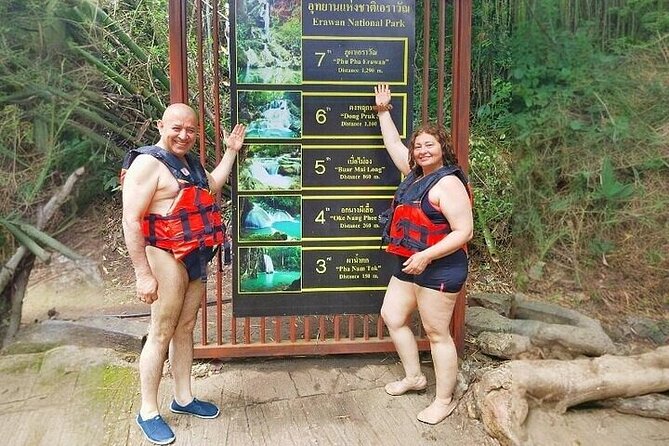
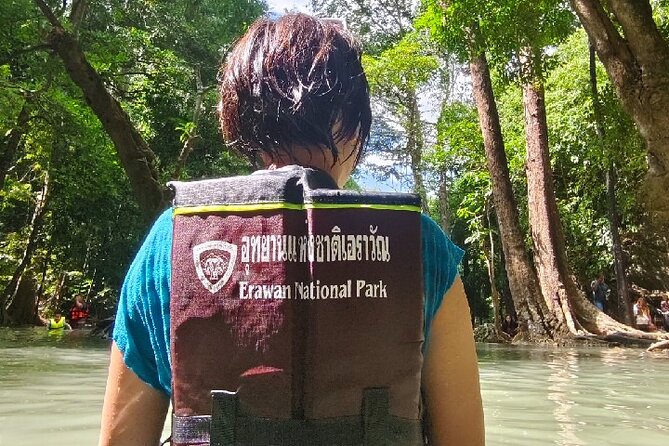
By the time you reach Erawan National Park, your day’s tone changes. Instead of plaques and rail heritage, you get emerald pools, seven cascades, and the chance to actually get in the water.
The stop is listed at about 2 hours, and that’s enough time to do at least one hike up toward the higher tiers—especially if you focus on the second and third tiers for great photo angles. The tour also includes time to swim in natural ponds.
A key detail: the tour notes Erawan’s clear water pools. That’s part of why people remember the place. But clear water also means you’re likely to be wearing swim gear and dealing with wet terrain, so plan smart.
Practical tips I’d follow:
- Bring footwear you can trust on slick surfaces.
- Pack a dry bag if you don’t want your phone and camera to spend the day in danger.
- Bring quick-dry clothing or a towel, since you’ll be wet at least once if you swim.
If weather shifts, the plan can adapt. One outing included a replacement option named Hellfire when rain affected the waterfall plans. So if the forecast looks messy, don’t assume the day will collapse. You might get an alternate stop.
Lunch plans: don’t let hunger hijack the schedule
The day includes a delicious international buffet lunch of Thai food. That’s a good setup after the history-heavy early portion and before the waterfall hike and swim.
Still, the standard details say lunch is not included in the overall list of inclusions, so I’d treat this as a “confirm before you go” item. In practice, you likely eat as part of the itinerary, but you want clarity on what’s included for your specific booking.
If you do bring snacks, keep it light. You’ll be moving through multiple stops, and you don’t want to carry more than you need.
Price check: $183.28 and what you’re really paying for
At $183.28 per person, this tour isn’t trying to be the cheapest way out of Bangkok. But it also isn’t priced like a luxury private guide-with-a-chauffeur-and-layers-of-assist.
So where’s the value?
- Private transportation in air-con for a long day
- Multi-language tour guide (English, Chinese, Japanese)
- Entrance fees handled as part of the tour inclusions
- Bottled water and a cooling towel
- A guided itinerary that hits the major WWII locations plus the Erawan Falls swim/hike portion
The biggest “hidden cost” for DIY travel here is time. If you’re figuring out rail timing, getting between sites, and dealing with museum/entry logistics on your own, you’ll spend energy that this tour solves for you.
The biggest “cost risk” is what doesn’t come with everything. Lunch isn’t clearly listed in the inclusions section, and tips for guide and driver are optional. If you’re budgeting tightly, those can matter.
Overall, I’d call it good value if you want a one-day combo of WWII sites plus nature, without the planning stress.
Guide and driver impact: Lily and Mr. Wat make the difference
The most praised part of this experience is how smoothly it runs, and that comes down to people.
Multiple days highlight Lily as the guide—friendly, patient, and focused on explaining what you’re seeing. There’s also mention that Lily supports families with kids and even helps with small in-the-moment cultural touches like fish feeding at a temple when it fits the flow.
Mr. Wat is repeatedly described as an excellent driver who keeps the day moving and handles long driving stretches. That matters more than it sounds. A long day can feel tiring if you’re always waiting. Here, the emphasis is on being on time and staying organized.
If you want that VIP feeling—someone managing the schedule so you can just enjoy the places—this tour seems built for it.
Who should book this tour (and who might not)
This is a strong fit if:
- You want WWII history plus an outdoor finale in one day
- You’d rather have someone else handle transportation and site order
- You’re traveling with family and want a guide who can adjust pacing when kids need patience
- You like structured sightseeing but still want a real nature break at Erawan
It may be less ideal if:
- You hate long days and want lots of downtime
- You’re hoping for a deep, slow museum-only experience with minimal travel
- You don’t do well with heat and humidity, since Erawan time includes outdoor activity and swimming potential
Should you book this Kanchanaburi WWII and Erawan Falls day trip?
If your ideal day is: history with context, the River Kwai locations, a train ride with the wooden bridge moment, then a chance to swim and hike at Erawan, I’d book it. The guided structure saves you from the “where do we go next” stress and gets you to the best parts of the region in a realistic time block.
I’d decide based on two questions:
- Can you handle a 10 to 12-hour day with travel between stops?
- Are you okay confirming what’s included for your meal plan at lunch?
If yes, this is a memorable way to see Kanchanaburi without turning your vacation into a logistics project.
FAQ
How long is the Kanchanaburi day trip?
It runs about 10 to 12 hours total.
What’s included besides the guide and transport?
The tour includes a tour guide (English, Chinese, and Japanese speaking), private transportation in an air-conditioned vehicle, entrance fees, bottled water, and a cooling towel.
Is lunch included?
Lunch isn’t listed as included in the main inclusions. The itinerary description mentions an international buffet lunch, so you should confirm what your booking specifically includes.
Does the tour offer pickup from Bangkok?
Yes. Pickup is offered.
Do I need to pay for tickets at stops like the bridge or park?
Entrance fees are included in the tour package, and the bridge and national park stops are shown as free on the itinerary details.
What is the cancellation window?
You can cancel for a full refund if you cancel at least 24 hours before the experience start time (local time). Free cancellation ends at that 24-hour mark.